Artwork
Recipient sferic cu gât îngust, gura bilobată, toartă cu țâță, piatră sunătoare și ciur. Ornamentat prin stropire cu smalț. Cromatică: fond: galben; decor: dungi verzi stropite.
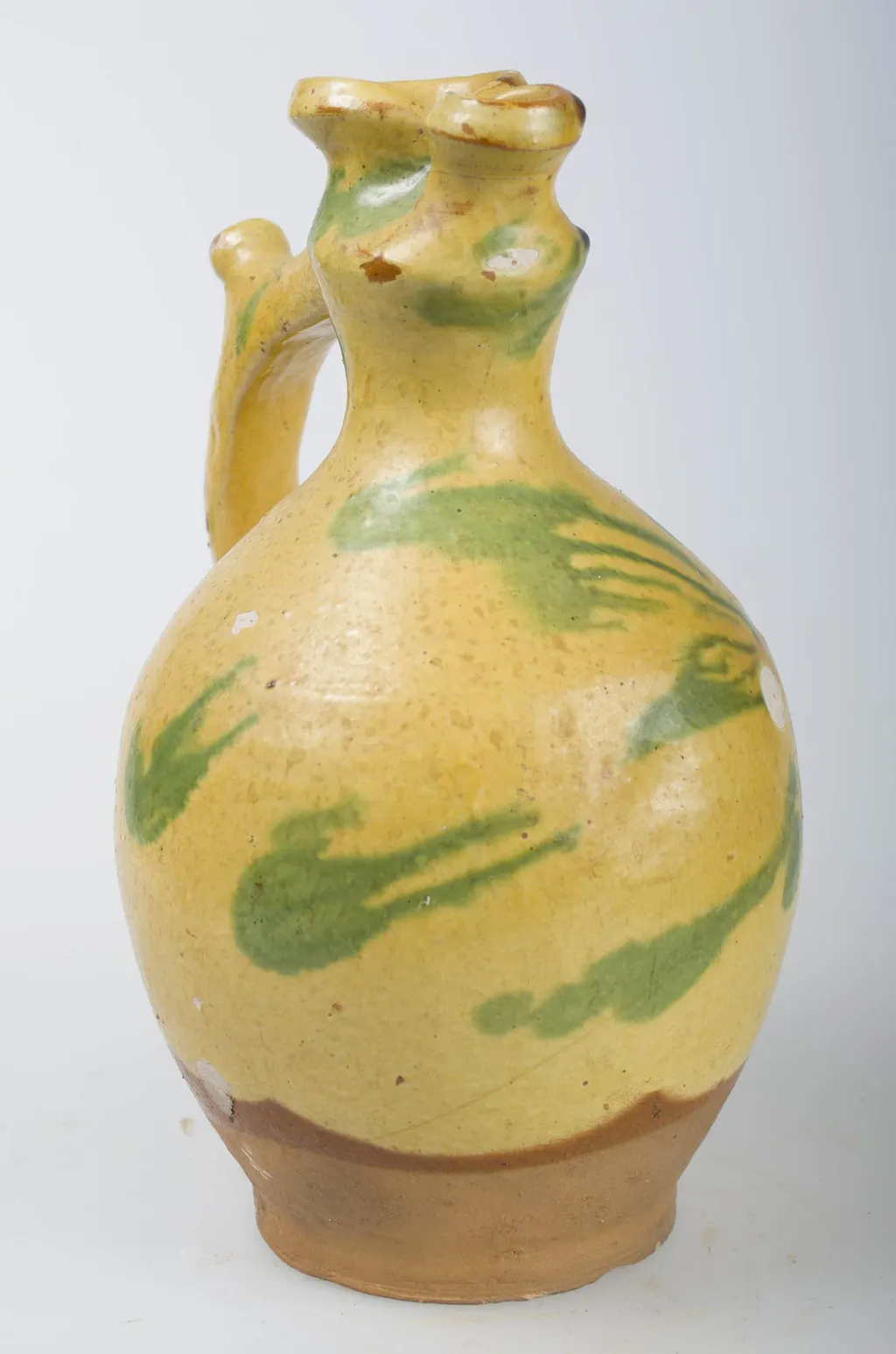
Recipient sferic cu gât îngust, gura bilobată, toartă cu țâță, piatră sunătoare și ciur. Ornamentat prin stropire cu smalț. Cromatică: fond: galben; decor: dungi verzi stropite. is a photography by Dănilă Ion. It is held in the collection of the ASTRA National Museum Complex.
About this work
Overview
This ceramic vessel is a narrow-necked jug with a bilobed rim and a handle shaped like a breast, crafted from resonant stone and perforated at the base.
This ceramic vessel is a narrow-necked jug with a bilobed rim and a handle shaped like a breast, crafted from resonant stone and perforated at the base. Its surface is glazed with splashed enamel, creating a contrast between a yellow ground and irregular green markings. The brown base suggests exposure to heat or earth contact. The form and decoration reflect a utilitarian tradition, blending practical design with symbolic ornamentation common in regional folk pottery.
Subject & Meaning
The breast-shaped handle may allude to nurturing or fertility, a motif recurring in folk ceramics across Eastern Europe. The perforated base could indicate ritual use, perhaps for straining liquids or allowing airflow during storage. The green splashes, applied without precision, may symbolize vegetation or natural abundance. These elements together suggest the object served both daily and ceremonial roles within its cultural context.
Technique & Style
The vessel was formed from locally sourced, resonant stone clay and fired to achieve durability. Decoration was applied by splashing green enamel over a yellow glaze base, creating an irregular, spontaneous pattern. The narrow neck and bilobed mouth reflect standard functional forms for pouring and storage. The absence of molded detail or fine brushwork points to a handcrafted, non-industrial process typical of rural ceramic traditions.
History & Provenance
The object originates from a folk pottery tradition in the Carpathian region, likely produced in the late 19th or early 20th century. Its materials and methods align with rural workshops that supplied households with utilitarian wares. It entered institutional collections through ethnographic surveys, possibly collected by early 20th-century anthropologists documenting regional material culture before industrialization transformed craft practices.
Context
This jug belongs to a broader category of domestic ceramics made in small, family-run kilns across rural Eastern Europe. Similar vessels were used for storing milk, water, or fermented drinks. The breast handle and perforated base distinguish it from purely decorative items, reinforcing its role in everyday life. Its color scheme—yellow and green—echoes natural pigments available locally, avoiding imported dyes.
Legacy
Though no longer in active use, such vessels are preserved in ethnographic museums as markers of pre-industrial domestic life. They inform contemporary studies of folk symbolism, gendered craft roles, and the relationship between form and function in rural economies. Their survival underscores the resilience of artisanal traditions amid modernization, offering insight into material culture beyond elite art histories.
Artist & collection
Artist
Ion Dănilă shaped clay in a rural workshop where the morning light turned the red dust on his hands the same color as the pots he made.

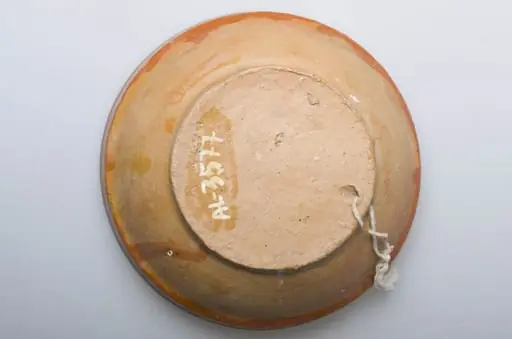 Blid de formă tronconică, cu gura largă, înaltă și dreaptă, smălțuit integral în partea interioară și în exterior doar la nivelul buzei. Este decorat din interior cu motive florale: trei flori - una albă central încadrată de doi brăduți și două verzi lateral; motive geometrice: trei linii ondulate deasupra florii albe și unghiuri de diferite dimensiuni între cele două flori verzi. Fundul este circular și prezintă un orificiu pentru agățare. Cromatică: fond: cărămiziu; motive: alb; verde; negru.
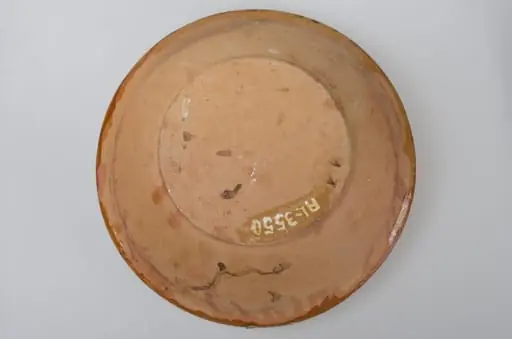 Vas de formă tronconică cu buza dreapta. Decorul este amplasat pe toată suprafața interioară și parțial în exterior, pe buză. Acesta este compus din motive geometrice (val); motive fitomorfe, plasate pe fund (frunza) și motive florale, tot pe fund (pansea). Blidul este smălțuit la interior și pe zona exterioară a buzei. Cromatică: fond: maron; motive: alb, verde.
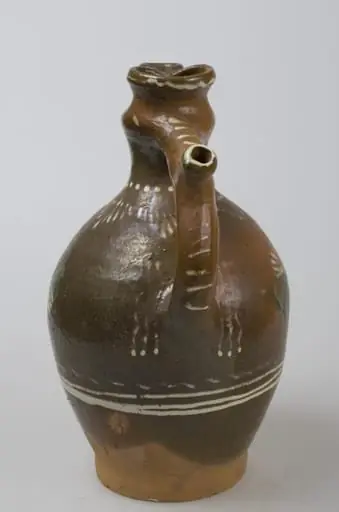 Recipient bitronconic cu gura bilobată. Prezintă mâner cu ”țâță”. Smălțuit până aproape de bază. Decorul este amplasat pe toată suprafața și este format din motive geometrice (linie); motive florale (pansea); motive fitomorfe (brad). Cromatică: fond: cărămiziu; motive: verde; maron; alb.
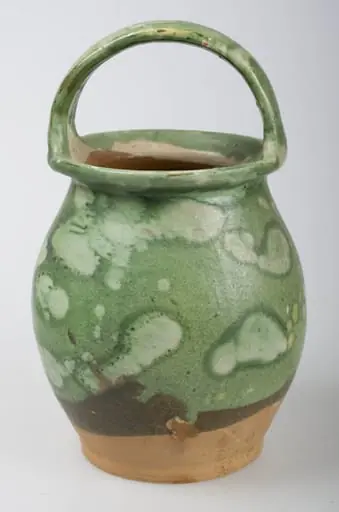 Oală de formă bitronconică cu baza plată cu pereții puternic arcuiți îngustându-se ușor în partea superioară. Buza este puțin răsfrântă la exterior. Prezintă o toartă de susținere plasată diametral, peste gură (mănușă). Angobat, stropit cu verde, smălțuit în interior și exterior. Cromatică: verde; maro; alb.
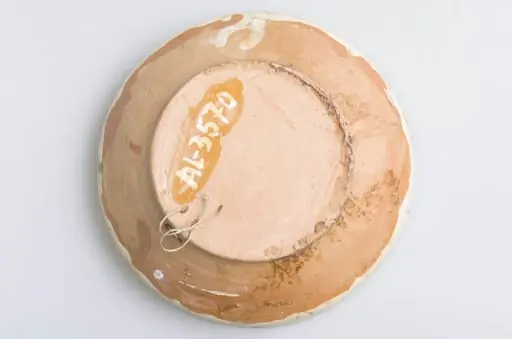
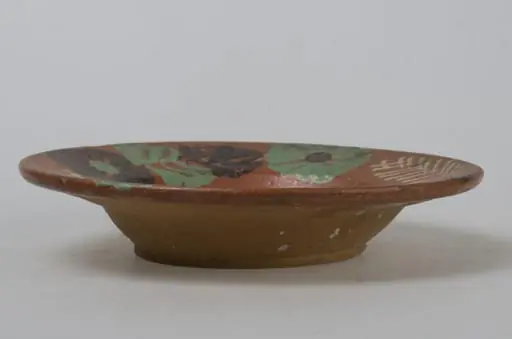 Vas de formă tronconică cu buza largă și evazată. Decorul este amplasat pe toată suprafața interioară a farfuriei. Acesta este compus din motive florale. Blidul este smălțuit la interior și pe zona exterioară a buzei. Cromatică: fond: maron; motive: alb, verde, maron închis.
 Vasul are forma tronconică, având buza înaltă și ușor evazată. Obiectul este smălțuit în interior și exterior numai la buză. Acesta este decorat în interior și exterior cu pete realizate prin stropire. Cromatică: fondul este alb în interior, cărămiziu în exterior, iar motivele sunt pictate cu verde și maro.
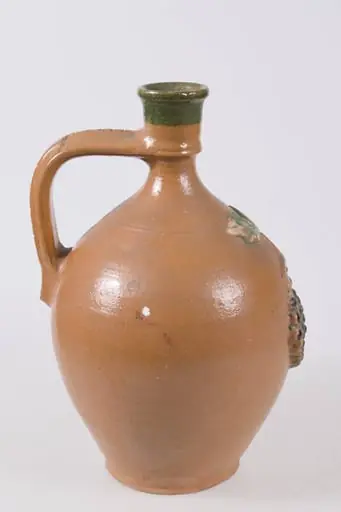 Recipient de lut de formă sferică cu gâtul lung și buza rasfrântă. Prezintă o toartă ce pleacă de la baza gâtului spre partea mediană a vasului. Decorat frontal, în relief, cu doi ciorchini cu frunze. Smălțuit la gură. Cromatică: fond: cărămiziu; motive: verde; negru.
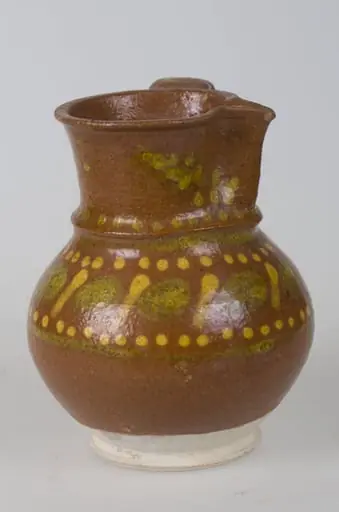 Vas cu corpul de formă cilindrică, cu fundul plat, corpul pântecos, gâtul înalt și gura largă, este prevăzută cu un cioc de scurgere așezat la nouăzeci grade față de toartă. Decorul pictat a fost realizat cu pensula în zona pântecului și a gâtului, format din motive geometrice. Pe pântecul vasului a fost pictat un registru încadrat între două linii de culoare verzuie, între care se află alte două linii realizate din puncte de culoare galbenă. În interiorul liniilor menționate anterior se află registre circulare format din pete de culoare verzuie, separate de linii galbene orizontale înclinate. Pe marginea vasului și pe toartă au fost pictate trei flori de culoare verde, de tipul „spicului de grâu”. Cromatică: alb (fund), maro-roșcat restul suprafeței; motive: galben; verde.
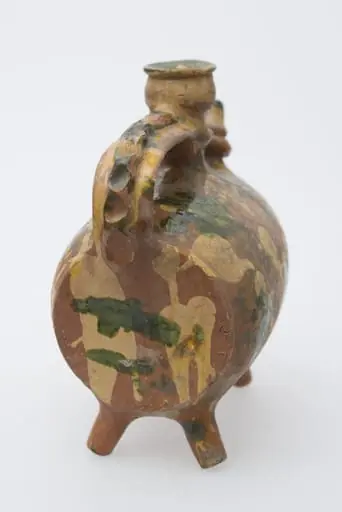 Recipient ceramic sub formă de butoiaș cilindric, dispus pe orizontală, asemănător corpului de rață. Sprijinit pe patru picioare tubulare dispuse oblic câte două la capete. Prezintă toartă. Scurgere printr-un cioc cu vârful conic care este legat prins printr-un inel de mijlocul gâtului cilindric și strâmt dispus la mijlocul vasului, având la capăt reliefată o față umană în relief terminată cu gura cu buză dreaptă pentru introducerea lichidelor. Opus ciocului, prezintă o toartă lată, puternic arcuită, de-a lungul căreia se suprapune, o bandă reliefață decorată prin presare cu degetul. Pe corpul vasului, dispuse aleatoriu, pete albe și de smalț verde și galben. Cromatică: fond: cărămiziu; motive: alb; galben; verde.
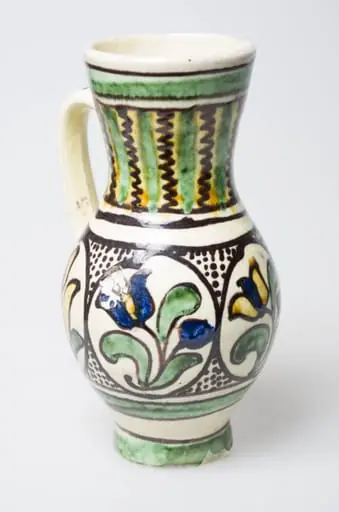 Recipient ceramic de formă ovoidală, smălțuit, cu gâtul lung, fund inelar și buza dreaptă. Prevăzut cu o toartă arcuită, care pleacă din mijlocul gâtului spre partea inferioară a vasului. Intens stilizat cu motive florale, vegetale și geometrice, pictate cu pensula, în două registre diferite. În primul registru, situat în zona gâtului, sunt pictate dungi late și linii meandrice dispuse pe verticală, alternativ. Aproape de gura vasului, sunt prezente dungi late și linii circulare. În al doilea registru întâlnim patru flori încadrate în cercuri și între acestea, puncte mici, umplând astfel cu decorații toată zona bombată a recipientului. Registrele sunt delimitate între ele de trei linii circulare. În partea inferioară, întâlnim ca și la gură, o dungă lată încadrată de două linii circulare. Prezent motiv geometric pe toartă sub formă de linie vălurită. Cromatică: fundal: alb; motive: galben; albastru; verde; maro închis.
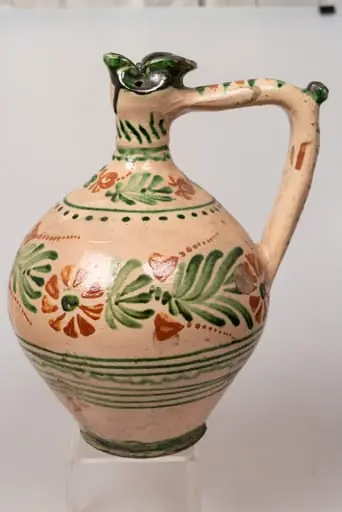 Piesă cu corp sferic bombat, cu gât profilat, cu gât și gură îngustă, bilobată, cu cior. Din pântecul vasului pornește o toartă tubulară cu orificiu pronunțat pentru băut (cu țâță), care se unește cu vasul sub buza acestuia. Fața exterioară a ulciorului este acoperită cu un strat de angobă albă peste care este pictat decorul, cu pensula și cu cornul, astfel: pe partea superioară a vasului apare o bandă decorată cu motiv floral (o floare rotundă cu multe petale) alternând cu motivul fitomorf caracteristic centrului: frunze alungite, de culoare verde. Pe cant, delimitată de banda decorativă de pe burta vasului de către o linie și un șir de puncte concentrice, este dispusă o bandă decorativă mai îngustă cu motiv floral și motiv fitomorf, delimitat de gât de un brâu colorat. Sub buza bilobată sunt realizate o serie de linii oblice paralele pictate, care continuă pe toată suprafața torții. Partea inferioară a vasului este decorată cu linii orizontale și o linie în valuri dispuse concentric. Cromatica: alb, maro, verde. Vasul este smălțuit cu un strat de smalț transparent.
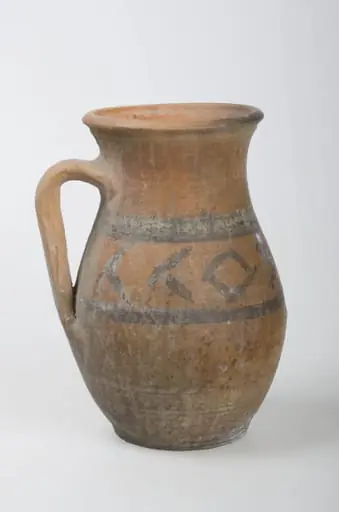 Recipient cilindric ușor bombat ce se îngustează în zona gâtului și apoi se continuă cu gura lată și buza evazată. Prezintă o toată ce pornește imediat din mijlocul gâtului și se termină în zona maximă de bombare. Structura ornamentala este realizată pe partea mediană, trecând pe sub toartă. Ornamentația se face cu ajutorul a două linii circulare, paralele între care sunt pictate motive geometrice de linii drepte așezate în unghi și romburi. Cromatică: cărămiziu; negru.
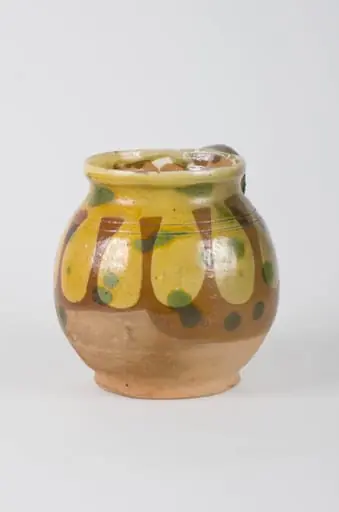 Vas din lut cu corp foarte bombat, cu gât scurt, buză evazată și ridicată. O toartă pornește din buză și este fixată pe corp la nivelul diametrului maxim. Pe umăr este decorată cu motive geometrice: două linii incizate. Din buză pornesc vertical loburi de angobă. Partea de jos nesmălțuită. Partea de sus smălțuită galben și stropită cu verde. Interior neangobat dar smălțuit. Cromatică: fond: cărămiziu; motive: galben; verde.
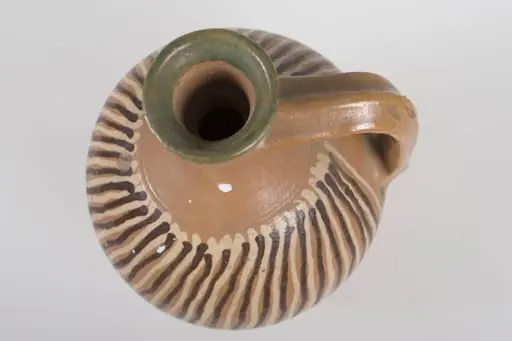 Recipient din lut de formă ovoidală cu gâtul scurt și buza avazată. Pe toată suprafața, pornind de pe umărul vasului, alternanțe de linii pictate albe și maro închis, dispuse vertical. Buza și partea superioară a gâtului sunt smălțuite în verde. Cromatică: fond: cărămiziu; motive: verde; alb; maro închis.
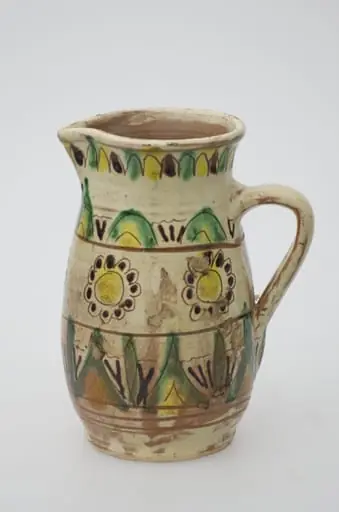 Recipient tronconic smălțuit, pe bază inelară, de formă aproximativ ovoidală cu gura largă prevăzută cu cioc. Prezintă toartă laterală. Decor delimitat de trei linii dispuse circular, ilustrând șiruri de linii arcuite, triunghiuri, semiovaluri, buline maron înscrise în cercuri. Cromatică: fond: alb; motive: verde, galben, maron.
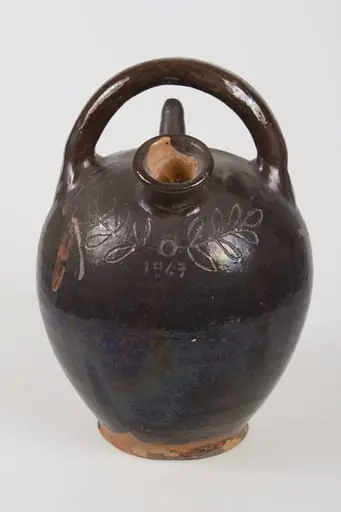 Recipient din lut de formă sferică, prevăzut cu două orificii la partea superioară și toartă. Sub gură, frontal, sunt incizate motive vegetale - o creangă cu frunze și anul ”1967''. La capătul opus, țuțul subțire este încadrat de două flori incizate cu tulpini și frunze. Cromatică: brun închis.