Artwork
Untitled
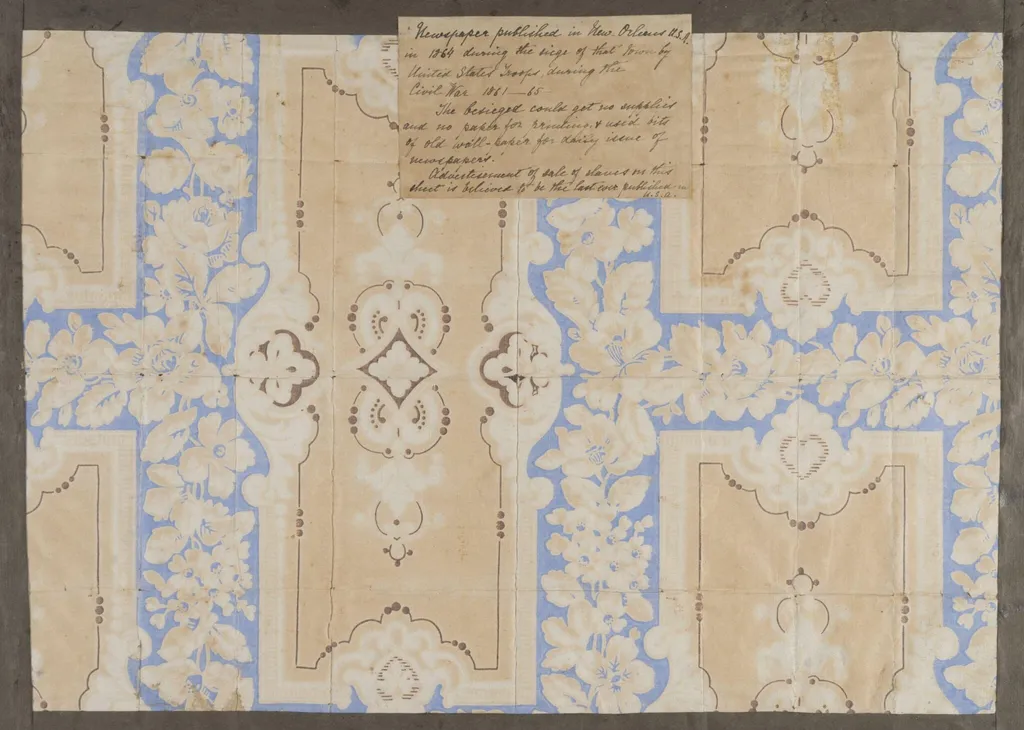
Untitled is a print by the Impressionist artist Unknown. It dates from 1864 and is held in the collection of the Victoria and Albert Museum. This print consists of a March 1864 issue of The Opelousas Courier, printed on the reverse side of a decorative wallpaper fragment.
About this work
The fact that it was printed in New Orleans, which was under siege, makes it a unique document from the American Civil War.
This print is a newspaper from 1864, printed on the back of a piece of wallpaper.
It's interesting because it was made during a time when paper was scarce, so they used whatever they could find.
The fact that it was printed in New Orleans, which was under siege, makes it a unique document from the American Civil War.
To learn more about similar prints, check out the museum: Victoria and Albert Museum.
Overview
This print consists of a March 1864 issue of The Opelousas Courier, printed on the reverse side of a decorative wallpaper fragment. Created in New Orleans during Union occupation, it reflects material scarcity in the Confederate South. The reuse of wallpaper as printing substrate illustrates the logistical constraints faced by publishers under siege conditions, transforming everyday household items into unexpected archival media.
Subject & Meaning
The newspaper contains an advertisement that may be among the final commercial listings for enslaved people published in an American newspaper. Its presence alongside routine news and local notices underscores the persistence of slavery’s economic infrastructure even amid wartime collapse. The juxtaposition of domestic wallpaper and commercial slavery ads reveals the normalization of human bondage within everyday life.
Technique & Style
The print was produced using standard letterpress methods, but on an unconventional substrate: a patterned wallpaper backing. The ink has slightly bled into the paper’s fibrous surface, and the decorative floral design shows through faintly on the reverse. This hybrid material challenges conventional notions of print media, blending domestic aesthetics with journalistic function under duress.
History & Provenance
Produced in occupied New Orleans in March 1864, the newspaper was printed by a local press adapting to wartime shortages. The wallpaper likely came from a civilian home, repurposed out of necessity. Its survival suggests it was preserved not as a news item but as a curiosity or relic, possibly collected during or after the war by a Union soldier or local resident.
Context
During the Civil War, paper shortages forced Confederate printers to use alternative materials, including wallpaper, linen, and even fabric. New Orleans, captured by Union forces in 1862, remained a contested hub of information and supply. This artifact exemplifies how civilian life adapted to scarcity, and how the machinery of slavery persisted even as the Confederacy’s infrastructure crumbled.
Legacy
This object serves as a material witness to the intersection of commerce, conflict, and domestic life in the Civil War South. It is rarely cited in mainstream narratives of the era, yet its dual nature—journalistic and decorative—offers a quiet but potent commentary on the normalization of slavery and the improvisational realities of wartime survival.
Artist & collection

 Domestic Scene
 Giacomo and Cardinal Marco, investing Andrea, Abbot of San Zeno, with his Benefice
 The Nymph of Fontainebleau
 Portrait of a Woman
 Madonna and Child with Saints in the Enclosed Garden
 Venus and Minerva
 Family Group of Four on Sofa
 Wall painting from Room H of the Villa of P. Fannius Synistor at Boscoreale
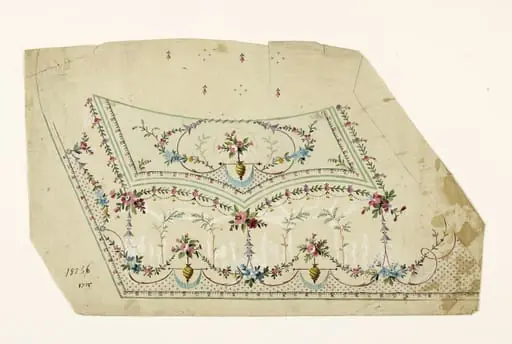 Composition de guirlandes de fleurs, de clochettes et de perles, motifs de culots torsadés et suspendus, projets de broderies de gilet, XVIIIème siècle
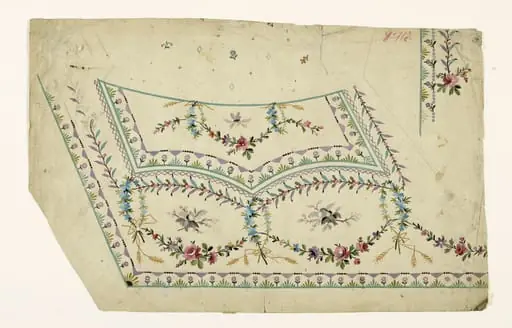 Scènes de becquées d'oiseaux dans des cartouches de fleurs et d'épis, frises de croisillons, de motifs géométriques et de fleurs stylisées, projets de broderies de gilet, XVIIIème siècle
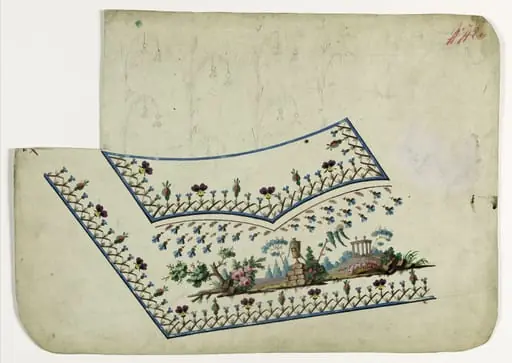 Paysage avec urne et ruine antique, projets de broderies de gilet, XVIIIème siècle
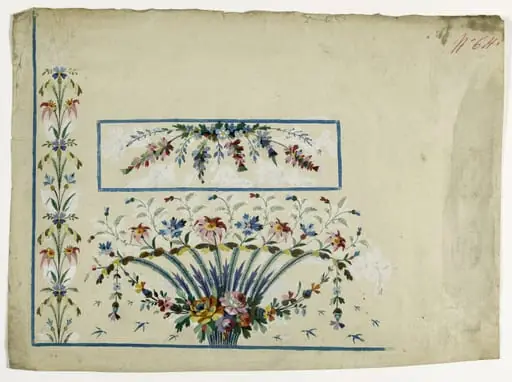 Gilet décor bouquet oeillets et églantines, projets de broderies de gilet, XVIIIème siècle
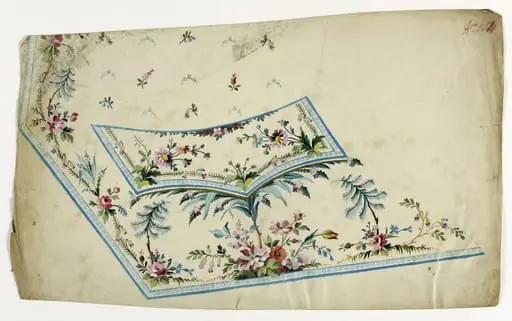 Gilet aux perles bleues, projets de broderies de gilet, XVIIIème siècle
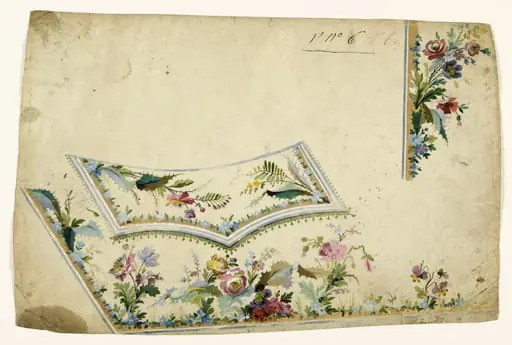 Composition florale aux bleuets, projets de broderies de gilet, XVIIIème siècle
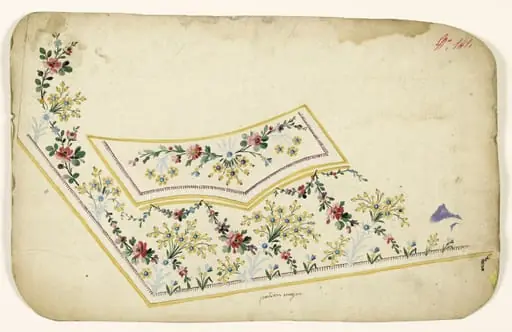 Composition de bouquets de fleurs jaunes, guirlandes de fleurs roses, frises de perles blanches et de franges pourpres et bandes jaunes, projets de broderies de gilet, XVIIIème siècle
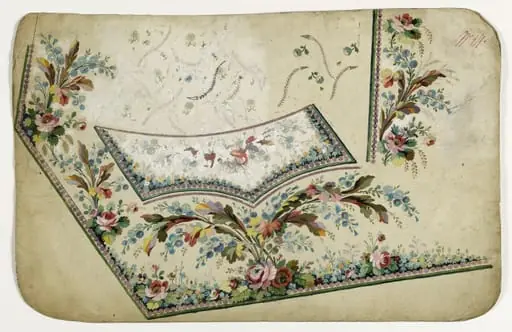 Gilet fleurs et feuilles multicolores, projets de broderies de gilet, XVIIIème siècle
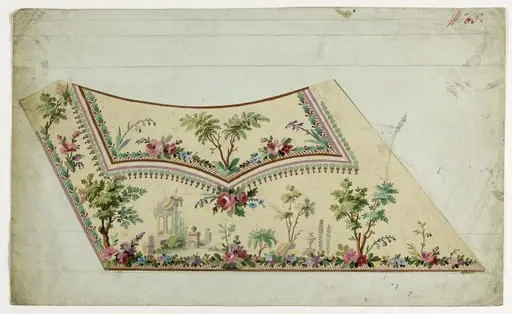 Gilet décor paysage architecture antique, projets de broderies de gilet, XVIIIème siècle
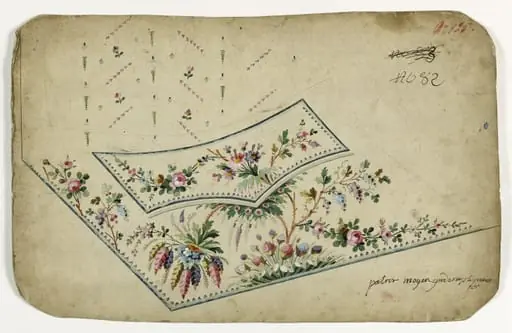 Gilet aux fleurs roses, projets de broderies de gilet, XVIIIème siècle
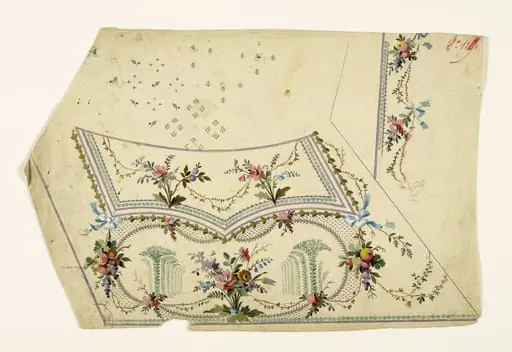 Composition avec bouquet de fleurs, guirlandes stylisées avec rubans bleus et grappes de fruits suspendues, projets de broderies de gilet, XVIIIème siècle
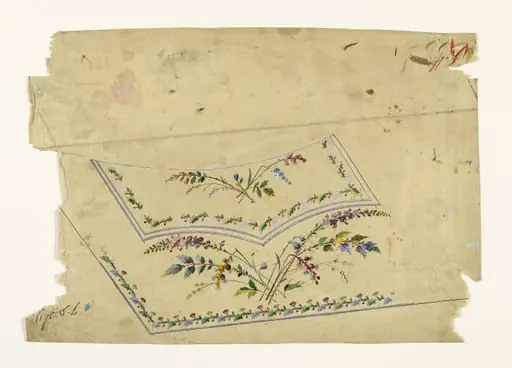 Composition avec brins de fleurs champêtres et guirlandes de feuilles et de fleurs, projets de broderies de gilet, XVIIIème siècle