Artwork
Untitled
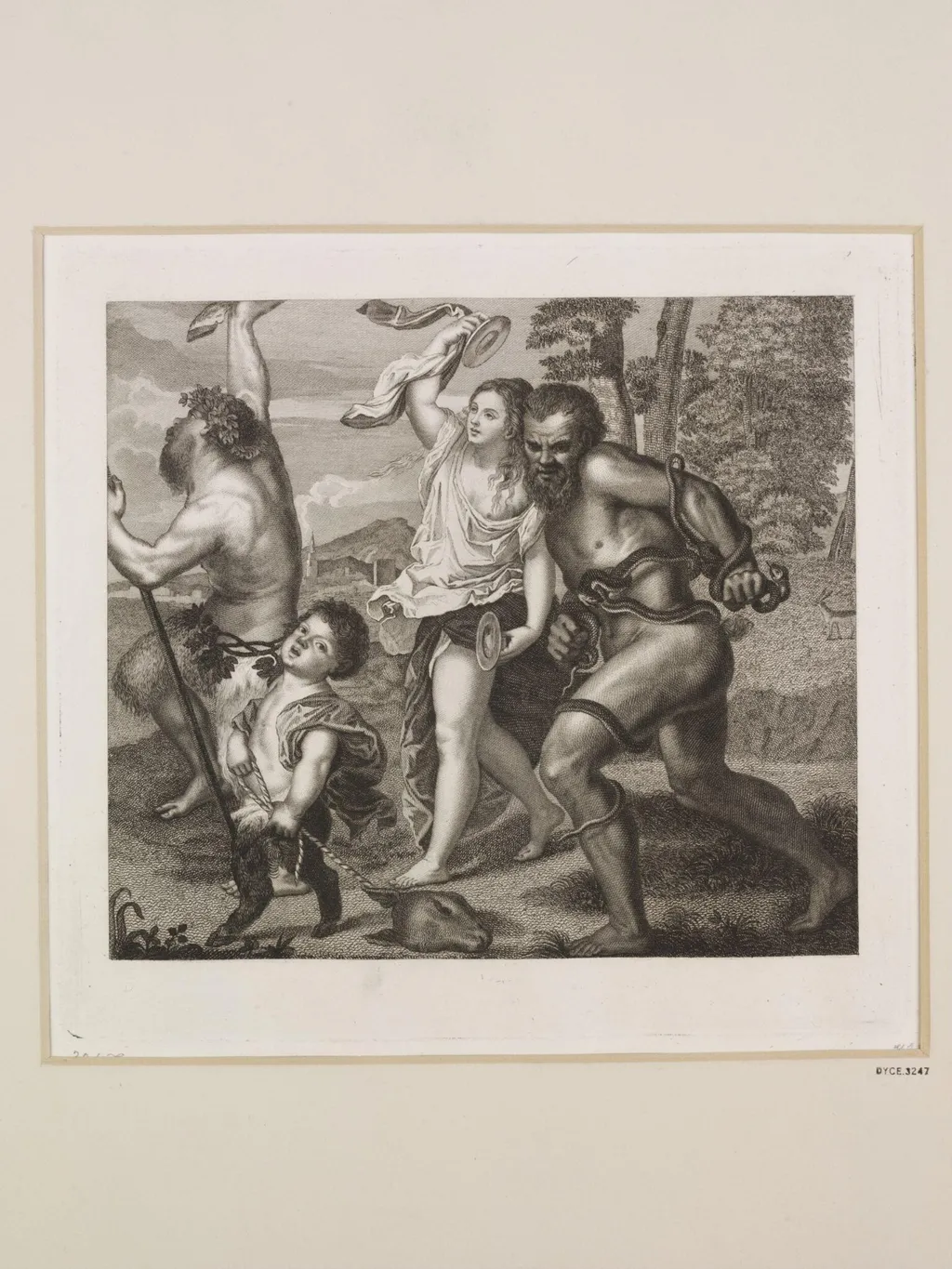
Untitled is a print by the Impressionist artist Unknown. It dates from 1869 and is held in the collection of the Victoria and Albert Museum.
About this work
Overview
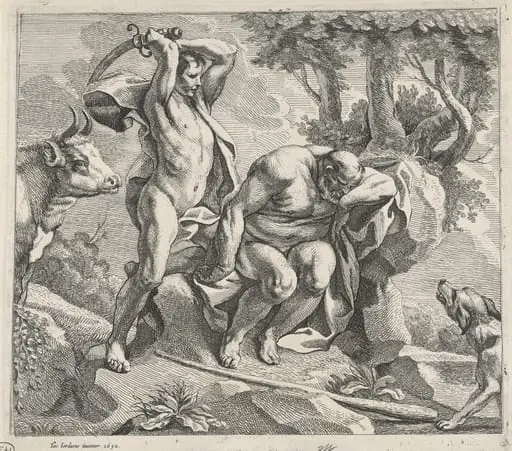
The composition centers on four distinct characters arranged in a wooded setting, rendered with deliberate contrast and spatial depth.
This print reinterprets figures from Titian’s *Bacchus and Ariadne*, translating the original oil painting’s mythological scene into a monochromatic graphic form. The composition centers on four distinct characters arranged in a wooded setting, rendered with deliberate contrast and spatial depth. The medium is a paper print, emphasizing line and tonal variation over color, allowing the artist to focus on form and gesture.
Subject & Meaning
The figures reference Dionysian mythology: a woman with a child, a bearded man resting, a muscular figure raising a club, and another with a bow. These suggest attendants of Bacchus—satyrs, nymphs, and followers—engaged in a moment of quiet repose amid revelry. The woman’s composed expression contrasts with the rugged postures of the men, hinting at a tension between serenity and primal energy.
Technique & Style
The artist employs chiaroscuro to model the figures, using sharp light and deep shadow to define musculature and fabric. Lines are controlled yet expressive, capturing texture in skin, hair, and foliage. The background is simplified to trees and a hazy sky, directing attention to the group’s dynamic interplay. The print’s tonal range enhances volume without relying on color.
History & Provenance
The print derives from Titian’s 1520–23 painting held at the National Gallery, London. Its creation likely occurred in the 19th or early 20th century, when reproductive prints were common tools for disseminating Renaissance imagery. The Victoria and Albert Museum holds similar works, indicating its place within a broader tradition of printmaking that made classical art accessible beyond elite collections.
Context
During the period when this print was made, there was widespread interest in reproducing Old Master compositions for educational and decorative purposes. Artists and publishers used engraving and etching to translate paintings into portable formats. This print reflects that cultural practice, serving as both homage and adaptation, bridging Renaissance ideals with modern print culture.
Legacy
Though not widely attributed to a single renowned printmaker, the work contributes to the ongoing dialogue between Renaissance painting and later graphic arts. Its preservation in institutional collections underscores its role in shaping public familiarity with classical themes. The print remains a quiet example of how mythological narratives were sustained through mechanical reproduction.
Artist & collection

 Domestic Scene
 Giacomo and Cardinal Marco, investing Andrea, Abbot of San Zeno, with his Benefice
 The Nymph of Fontainebleau
 Portrait of a Woman
 Madonna and Child with Saints in the Enclosed Garden
 Venus and Minerva
 Family Group of Four on Sofa
 Wall painting from Room H of the Villa of P. Fannius Synistor at Boscoreale
 Adam cultivating the Earth
 The March of Silenus
 Paradise Lost
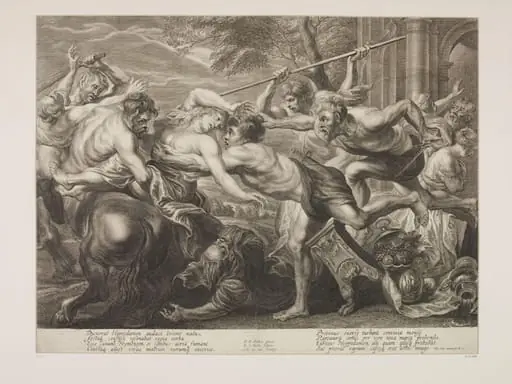 The Rape of Hippodamia
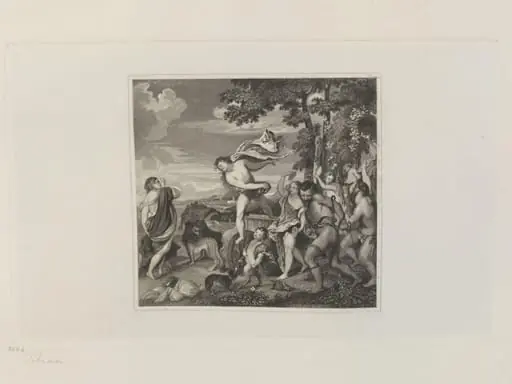 Bacchus and Ariadne
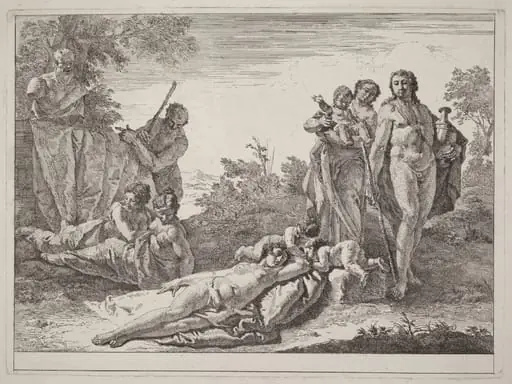 Apollo and Nymphs in a Landscape with a Bust of Pan
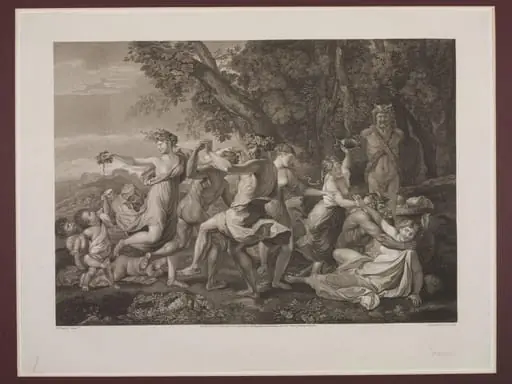 Bacchanalian Dance
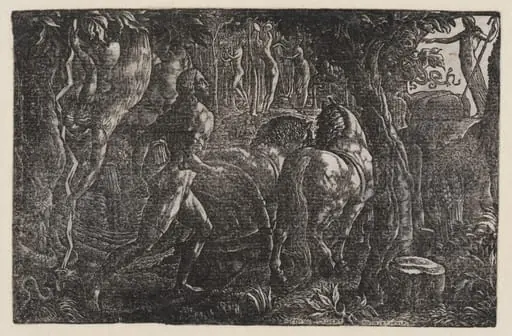 The Ploughman
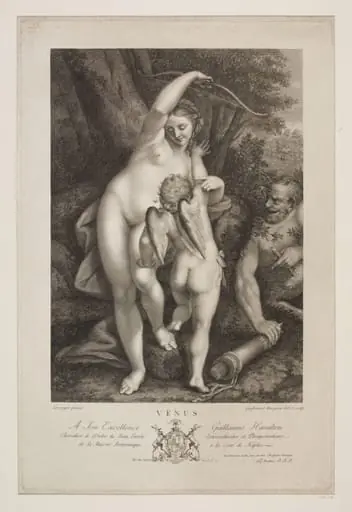 Venus disarming Love
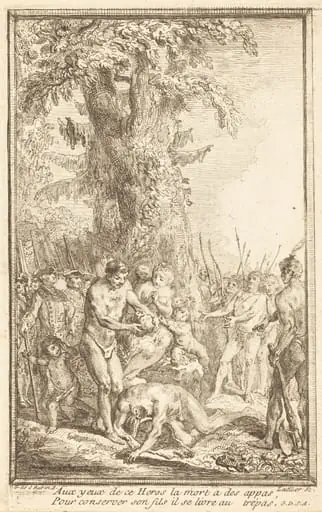 Heroic Act of a Father Who Sacrifices for His Son (Trait heroique d'un pere qui se sacrifie pour son fils)
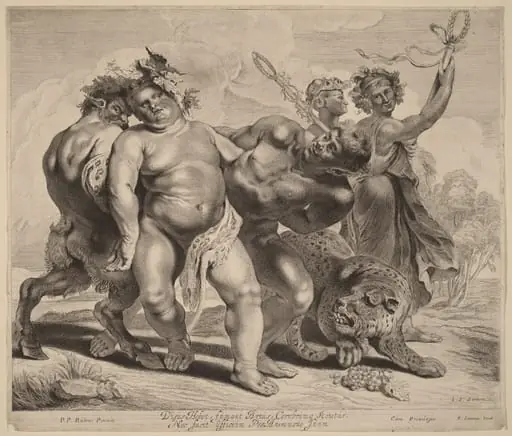 Drunkenness of Bacchus
 Mercury Killing Argus