Artwork
Untitled
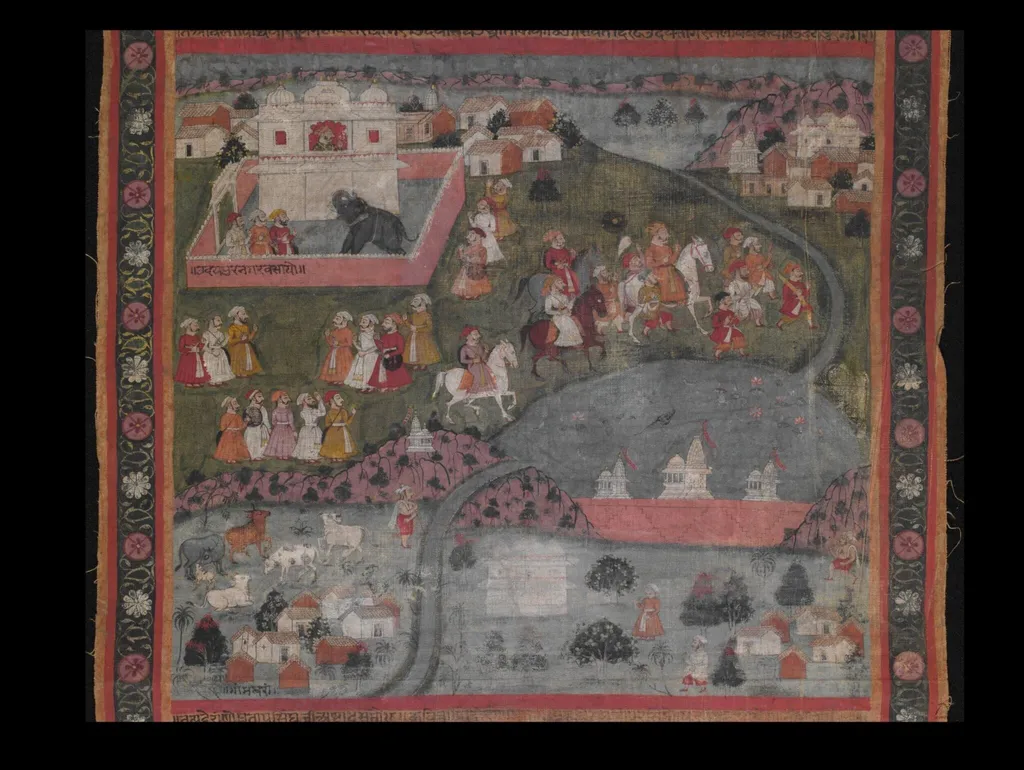
Untitled is a paint painting by the Baroque artist Unknown. It dates from 1732 and is held in the collection of the Victoria and Albert Museum.
About this work
Overview
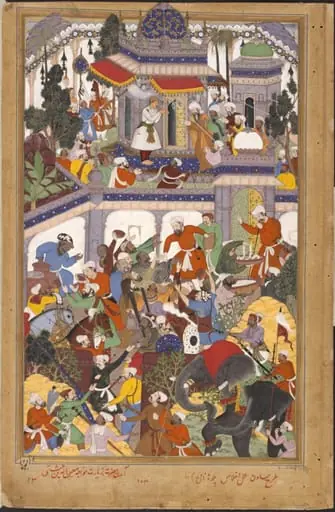
Created in 1732, this opaque watercolour on paper forms part of a longitudinal scroll documenting the lineage and deeds of the Sisodiya rulers of Mewar.
Created in 1732, this opaque watercolour on paper forms part of a longitudinal scroll documenting the lineage and deeds of the Sisodiya rulers of Mewar. The scene captures a moment of courtly activity within an architectural setting, blending natural and built environments. Its format suggests it was intended for sequential viewing, likely unrolled during private or ceremonial occasions to recount historical narratives through imagery.
Subject & Meaning
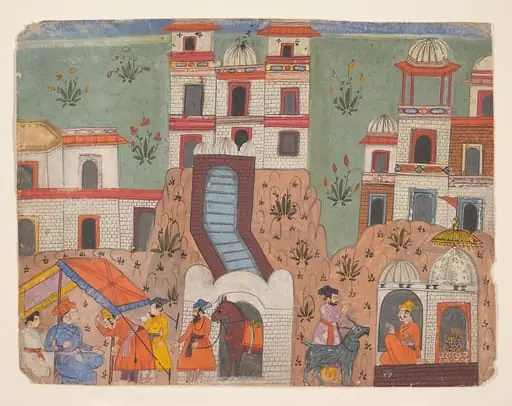
The composition portrays a gathering of equestrian figures, attendants, and animals within a fortified courtyard, suggesting a ceremonial or administrative moment. The presence of an elephant, often symbolic of royal authority, alongside seated individuals and bustling crowds, implies a scene of governance or tribute. The inclusion of architectural elements and riverine activity situates the event within a specific, recognizable landscape tied to Mewar’s territorial identity.
Technique & Style
Executed in opaque watercolour, the painting employs flat planes of vivid pigment—reds, blues, and golds—applied with precision despite some pigment fading over time. Figures are rendered with stylized proportions, emphasizing status through posture and attire rather than naturalism. The decorative border of floral motifs frames the scene, while the script at the top, likely in Devanagari or a regional variant, provides contextual annotation, reinforcing the work’s function as a historical record.
History & Provenance
This panel originates from a continuous scroll commissioned by the Sisodiya court to preserve dynastic memory. Likely produced in a royal atelier in Udaipur or nearby, it was part of a series documenting battles, ascensions, and courtly rituals. Its survival suggests careful stewardship within the royal family or their retainers, possibly passed down through generations before entering institutional collections in the 19th or early 20th century.
Context
Produced during a period of relative stability for Mewar under Rajput rule, the painting reflects a tradition of illustrated chronicles that merged historical record with aesthetic refinement. Similar scrolls were common in western Indian courts, where painting served both as art and archive. The emphasis on royal figures, animals, and architecture aligns with broader Rajput visual culture, which valued lineage, martial prowess, and sacred geography.
Legacy
As part of a larger narrative scroll, this work contributes to a corpus of Indian manuscript painting that preserved regional histories through visual means. Its survival offers insight into how Rajput courts constructed identity through imagery. Today, it stands as a representative example of 18th-century Mewar painting, studied for its formal qualities and its role in sustaining historical memory beyond textual records.
Artist & collection

 Domestic Scene
 Giacomo and Cardinal Marco, investing Andrea, Abbot of San Zeno, with his Benefice
 The Nymph of Fontainebleau
 Portrait of a Woman
 Madonna and Child with Saints in the Enclosed Garden
 Venus and Minerva
 Family Group of Four on Sofa
 Wall painting from Room H of the Villa of P. Fannius Synistor at Boscoreale
 Maharana Sangram Singh receives the embassy of Johan Josua Ketelaar
 Cow Worship
 Basu beheads Namadpush and enters Acre Castle
 Rustam and Mihrafroz prepare for their wedding
 Maharana Sangram Singh
 Krishna and Balarama
 Untitled
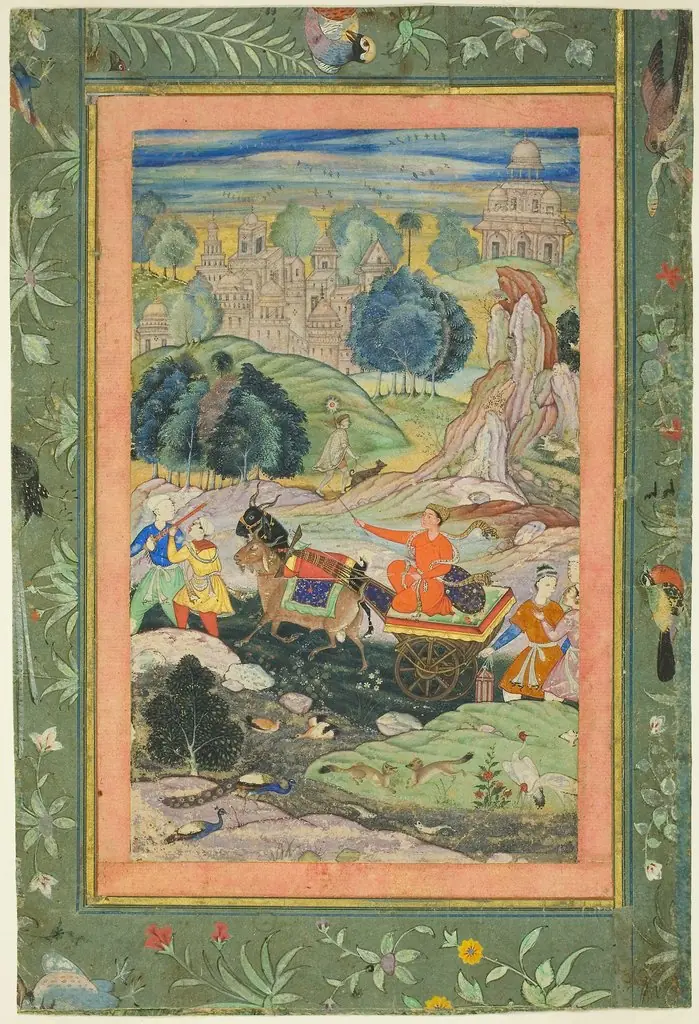 Prince Riding in Chariot Drawn by Goats
 Untitled
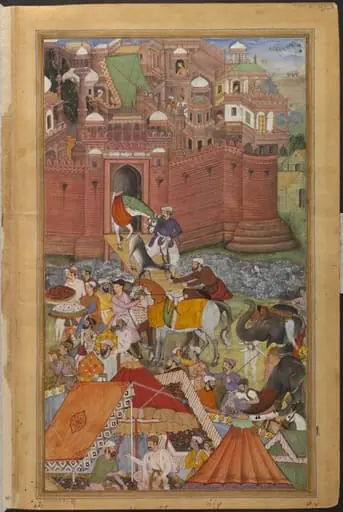 Akbar and Asaf Khan
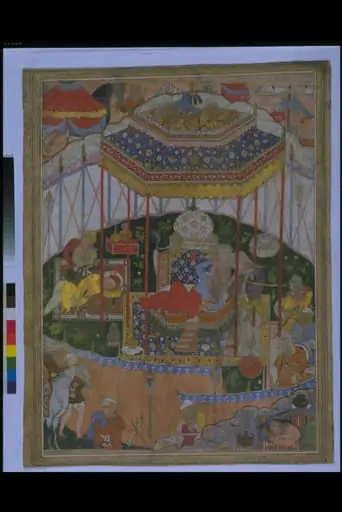 An Ayyar murders Qubad in his sleep
 Akbar
Akbar