Artwork
Akbar
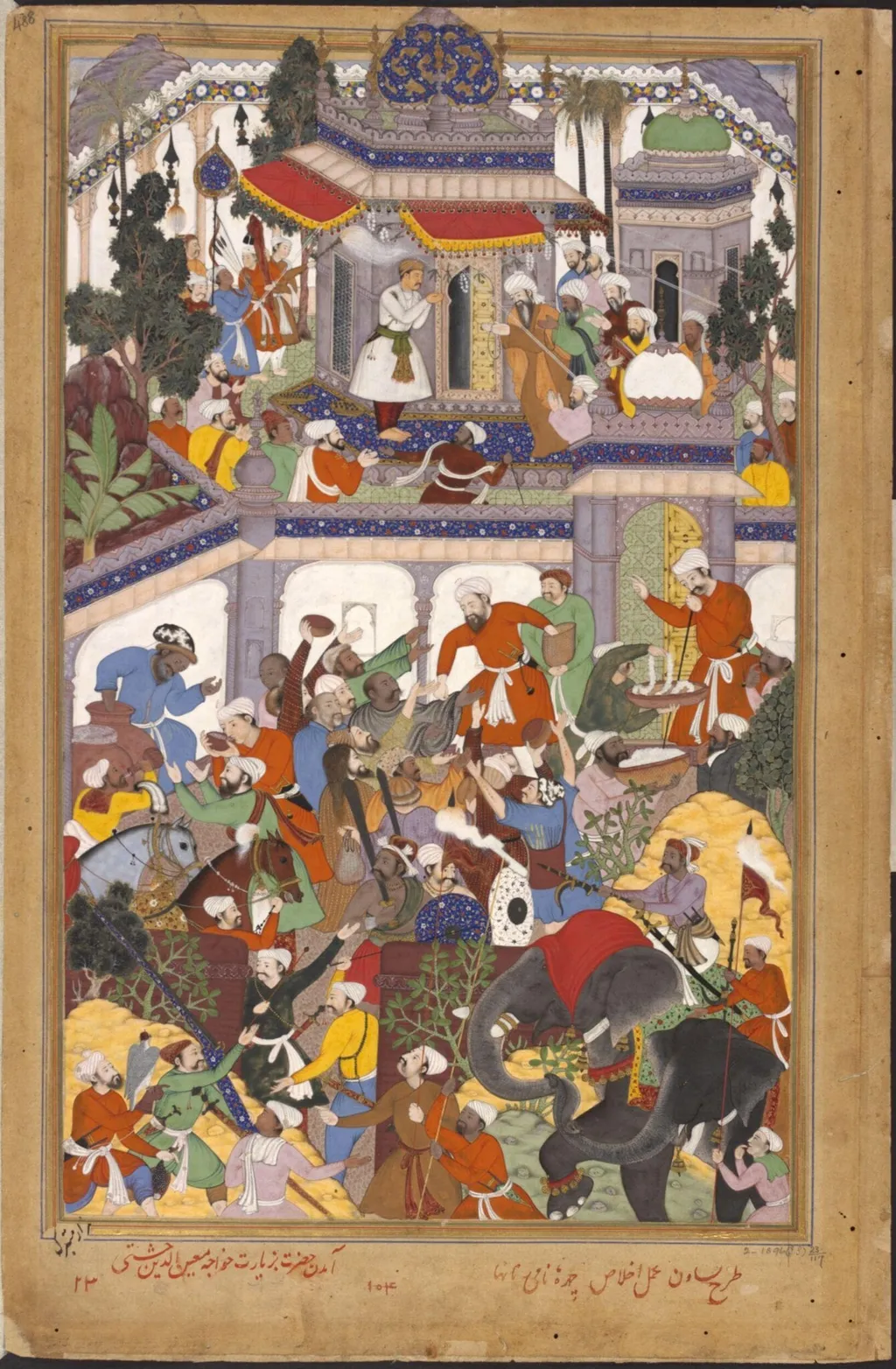
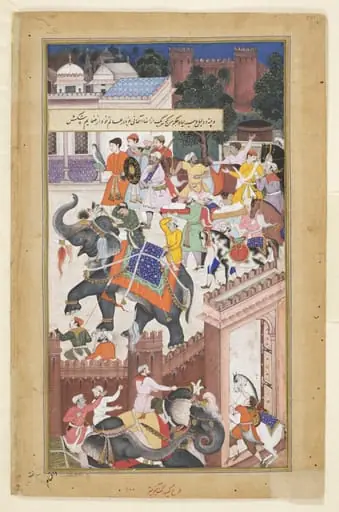
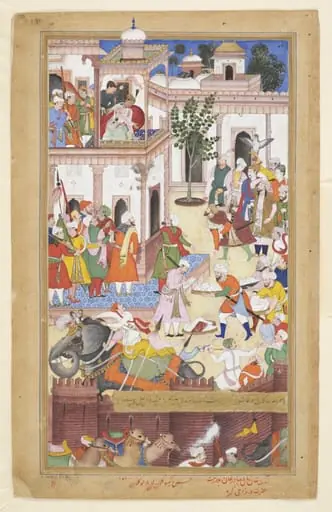
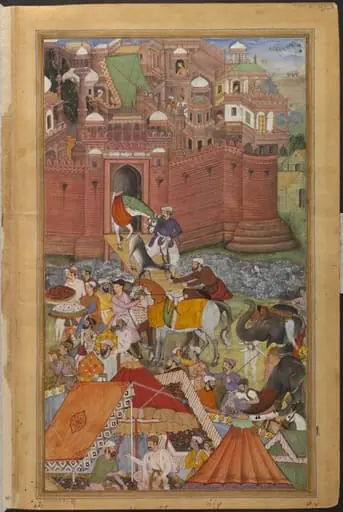
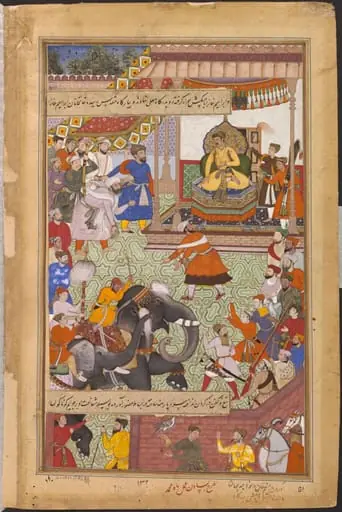
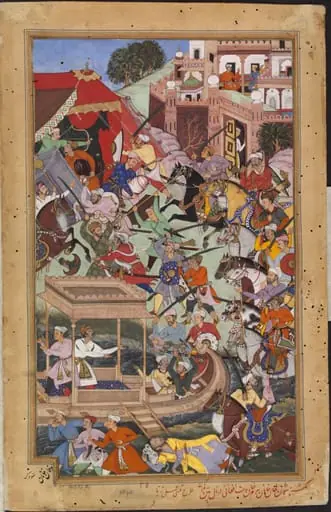
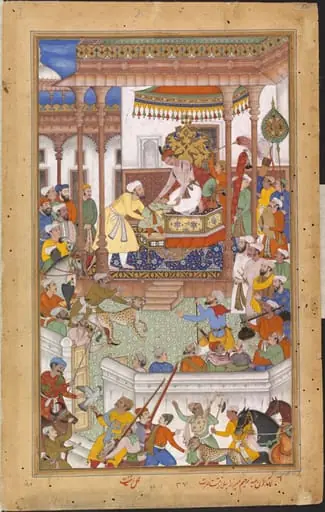
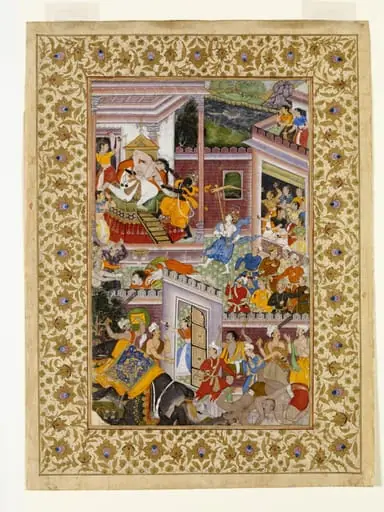
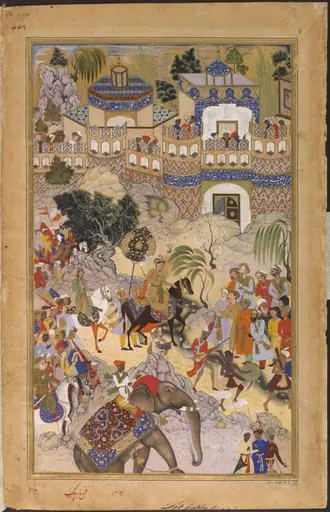
Akbar is a paint painting by the Mughal Painting artist Ikhlas. It dates from 1592 and is held in the collection of the Victoria and Albert Museum.
About this work
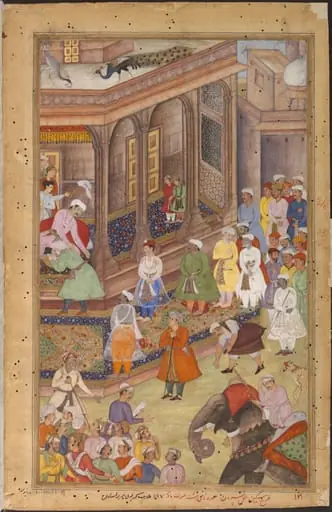
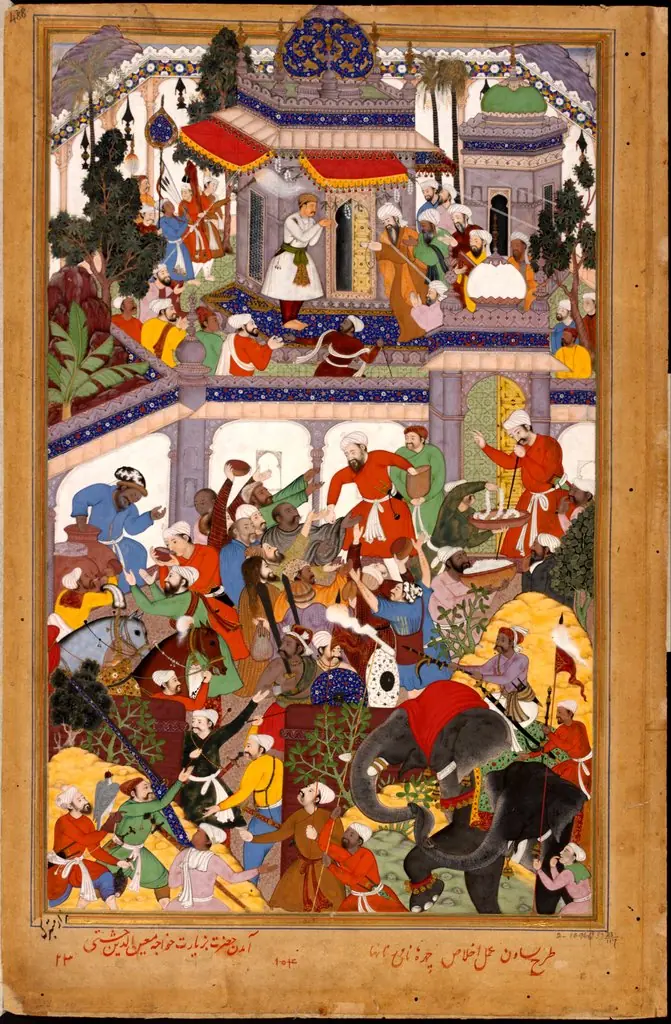
A man kneels in prayer outside a marble tomb. He wears a white robe and a gold turban. Around him, riders on horses and camels fill the scene.
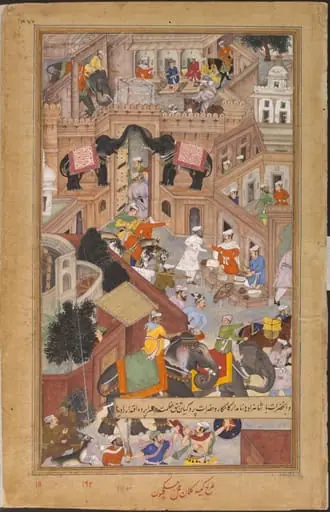
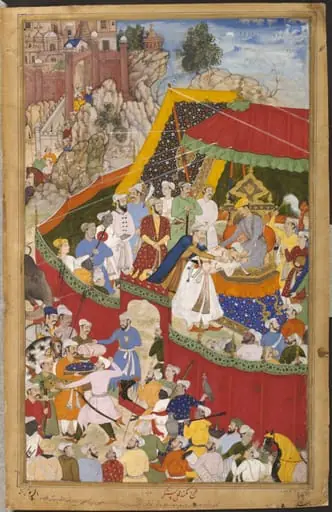
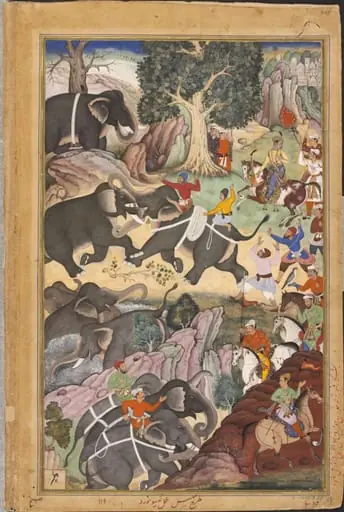
This page comes from the Akbarnama, a book about Emperor Akbar’s life. Akbar is shown visiting a holy man’s tomb in India in 1562. Below, servants hand out food and money to poor people.
Look up Ikhlas to see more art from this book.
Overview
Commissioned by Akbar and written by Abu'l Fazl, the manuscript was produced between 1592 and 1594 by a team of artists in the imperial atelier.
This painting is one of many illustrations created for the Akbarnama, the official chronicle of Emperor Akbar’s reign. Commissioned by Akbar and written by Abu'l Fazl, the manuscript was produced between 1592 and 1594 by a team of artists in the imperial atelier. This particular folio depicts Akbar’s 1562 pilgrimage to the tomb of the Sufi saint Mu'in ad-Din Chishti in Ajmer, blending historical record with devotional imagery.
Subject & Meaning
The scene captures Akbar in prayer at the entrance of the saint’s tomb, a gesture affirming his respect for Sufi traditions and reinforcing his image as a ruler aligned with spiritual authority. Below, the distribution of alms to the poor underscores themes of imperial benevolence and social responsibility. The inclusion of courtiers and animals suggests a ceremonial procession, framing the visit as both personal devotion and public spectacle.
Technique & Style
The composition reflects the collaborative nature of Mughal manuscript production: Basawan designed the layout, Ikhlas handled color and background elements, and Nanha rendered the facial features of key figures, including the emperor. The detailed rendering of textiles, architecture, and natural elements demonstrates a synthesis of Persian precision with Indian sensibility, while the spatial arrangement balances narrative clarity with decorative richness.
History & Provenance
After its completion, the Akbarnama manuscript remained in the imperial library, passed from Akbar to his son Jahangir and later to Shah Jahan. In the 19th century, it entered private hands through Major-General John Clarke, who acquired it during his service in Oudh. The Victoria and Albert Museum purchased the volume in 1896 from his widow, Frances Clarke, securing its place in a major Western collection.
Context
The Akbarnama was part of Akbar’s broader effort to legitimize his rule through historical documentation and visual culture. By commissioning a lavishly illustrated chronicle, he aligned himself with Persian literary traditions while asserting Mughal authority. The pilgrimage scene reflects his policy of religious tolerance and his engagement with diverse spiritual communities across his empire.
Legacy
The Akbarnama’s illustrations set a standard for Mughal painting, influencing later courtly art under Jahangir and Shah Jahan. Its collaborative process and attention to detail became a model for imperial manuscript production. Today, the surviving folios, including this one, are studied as key artifacts of early modern Indian art and as records of Mughal political and spiritual ideology.
Artist & collection
Artist
Al-Ikhlāṣ, also known as the Declaration of God's Unity and al-Tawḥid, is the 112th chapter (sūrah) of the Quran, considered to be equal of one third of the Quran in terms of its core meaning.