Artwork
Untitled (Pifferari)
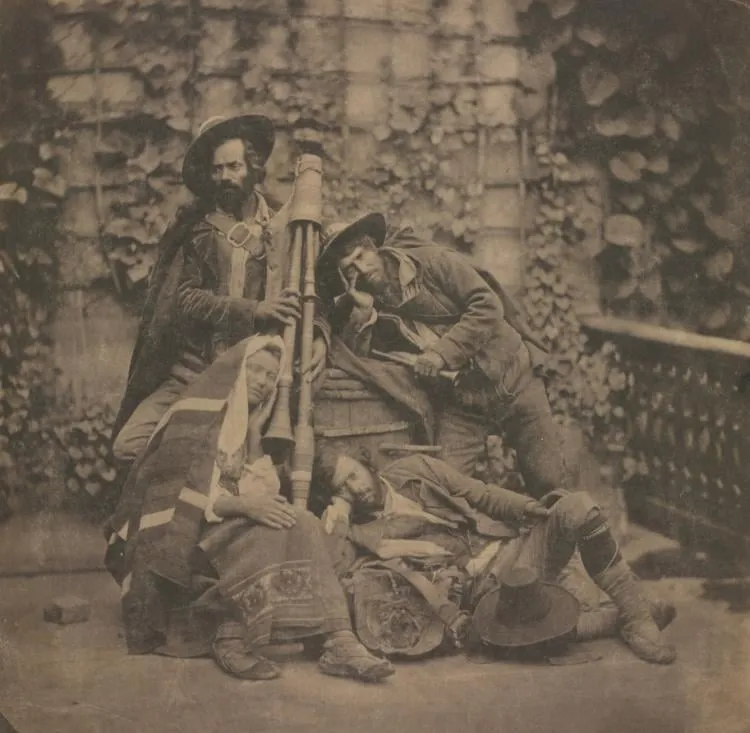
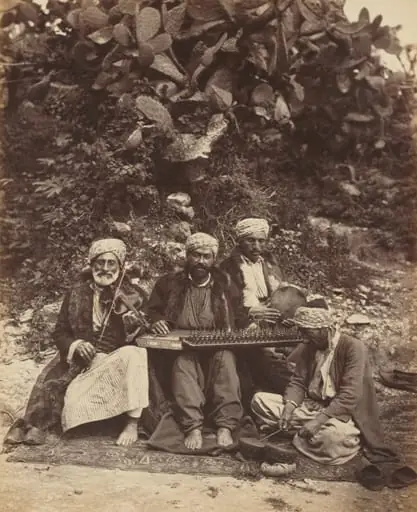
Untitled (Pifferari) is a photography by the Romanticist artist Unknown. It dates from 1853 and is held in the collection of the Cleveland Museum of Art. This photograph belongs to a mid-19th-century genre that sought to record social roles rather than individual identities.
About this work
Overview
Their presence in European cities became a recurring motif in visual culture, reflecting broader interests in folkloric traditions and street life.
This photograph belongs to a mid-19th-century genre that sought to record social roles rather than individual identities. It depicts two itinerant musicians, known as pifferari, who traveled from rural regions to urban centers during the Christmas season. Their presence in European cities became a recurring motif in visual culture, reflecting broader interests in folkloric traditions and street life.
Subject & Meaning
The image presents two figures engaged in their seasonal trade: one playing a wooden flute, the other a handheld drum. Their worn clothing and dignified stance suggest hardship endured through migration, yet their role carries cultural significance. The photograph captures not personal narratives but a collective archetype—musicians who performed before religious shrines and in public spaces, embodying a transient yet ritualized tradition.
Technique & Style
Executed in the early years of photography, the image employs a straightforward, documentary approach. The composition emphasizes clarity over artistic embellishment, positioning the subjects centrally to highlight their instruments and attire. The grainy texture and limited tonal range reflect the technical constraints of the period, while the direct gaze of the figures reinforces the photograph’s ethnographic intent.
History & Provenance
Created in the 1840s or 1850s, this photograph emerged alongside a wave of images depicting street occupations and regional customs. It aligns with the work of French and Italian practitioners who documented urban and rural life during photography’s formative decades. The unattributed print likely circulated as part of a larger series, serving as a visual record for audiences interested in social typologies.
Context
The pifferari tradition originated in the mountainous regions of central Italy, where musicians descended to cities during Advent to perform for alms. Their presence became a seasonal spectacle, frequently depicted in paintings and photographs. This image reflects the 19th-century fascination with categorizing cultural practices, a pursuit that intersected with both artistic trends and emerging anthropological inquiry.
Legacy
While not a portrait of specific individuals, the photograph preserves a moment in the visual history of European street culture. It exemplifies how early photography functioned as a tool for cataloging social types, influencing later documentary practices. The pifferari motif endures in art historical studies as an example of how transient traditions were captured and interpreted through the lens.
Artist & collection

 Domestic Scene
 Giacomo and Cardinal Marco, investing Andrea, Abbot of San Zeno, with his Benefice
 The Nymph of Fontainebleau
 Portrait of a Woman
 Madonna and Child with Saints in the Enclosed Garden
 Venus and Minerva
 Family Group of Four on Sofa
 Wall painting from Room H of the Villa of P. Fannius Synistor at Boscoreale
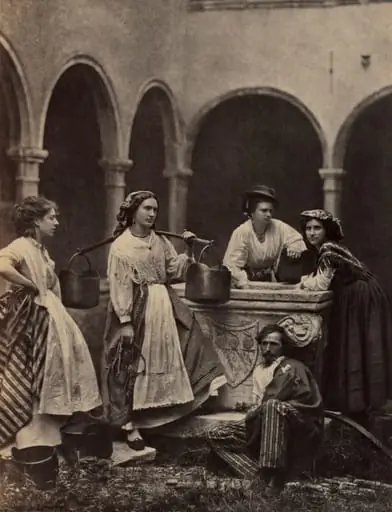 Untitled (Genre scene with four women and a man)
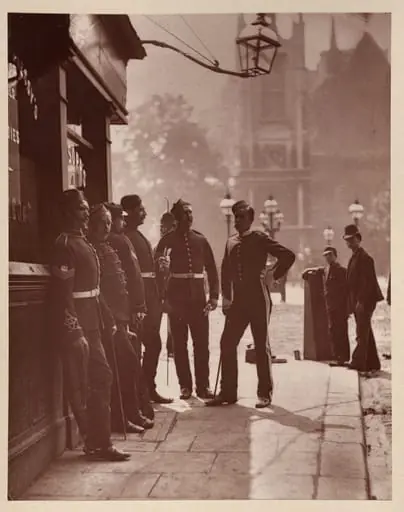 Recruiting Sergeants at Westminster
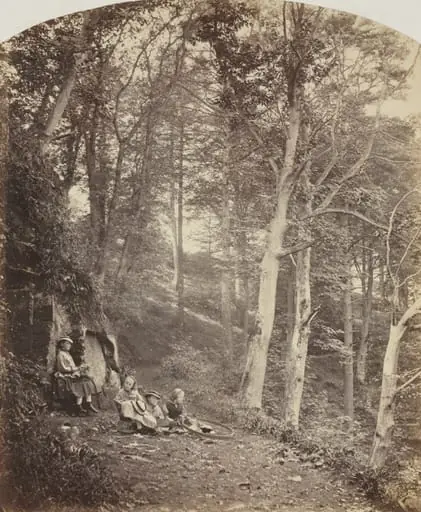 A Path Through a Wood
 General Roberts and Staff
 The Hold-Up
 London Nomades
 Scots Guards at Edinburgh Castle
 Covent Garden Flower Women
 Guy Little Theatrical Photograph
 Tintern Abbey
 Officers of Elephant Battery, Jhansi (recto)
 Arab Musicians