Artwork
Officers of Elephant Battery, Jhansi (recto)
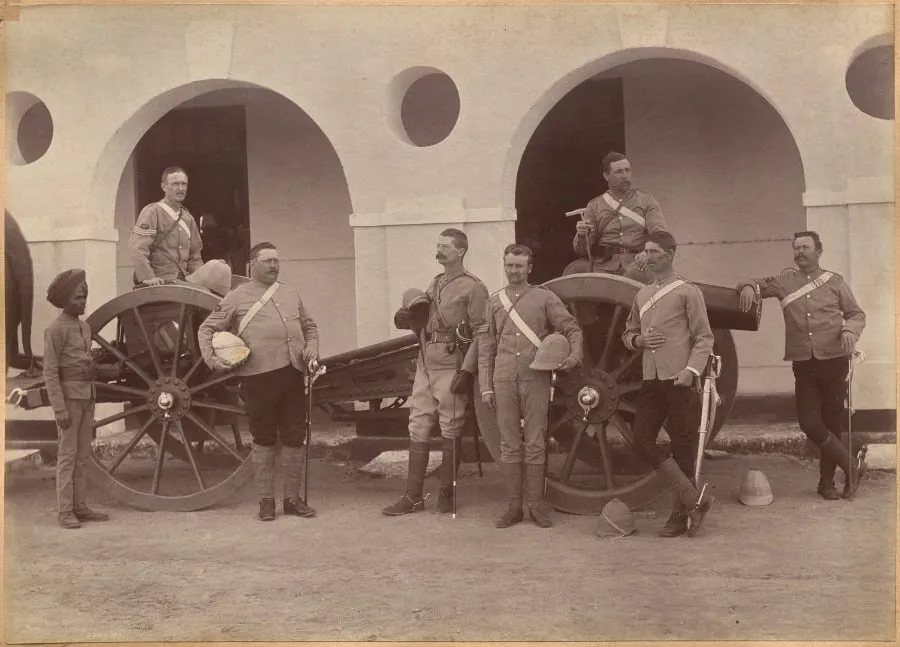
Officers of Elephant Battery, Jhansi (recto) is a photography by the Impressionist artist Raja Deen Dayal. It dates from 1884 and is held in the collection of the Cleveland Museum of Art.
About this work
Raja Deen Dayal was one of the first Indian photographers to document British colonial life, blending art with record-keeping.
You see a group of Indian soldiers in crisp uniforms, posed stiffly in front of a cannon. Their faces are serious, hands resting on swords or rifles.
This isn’t a painting—it’s an early photograph. Raja Deen Dayal was one of the first Indian photographers to document British colonial life, blending art with record-keeping. The men here served in Jhansi, a city tied to rebellion and resistance just decades earlier.
If you want to see more of India through his lens, look up Raja Deen Dayal (Indian, 1844–1905).
Overview
This photograph, part of a disassembled album of approximately 105 images taken in India between 1885 and 1887, captures a group of Indian soldiers from the Elephant Battery stationed in Jhansi. Taken by Raja Deen Dayal, it belongs to a larger collection likely commissioned by a British official as a personal record of his time in India. The image reflects the intersection of military formality and early photographic documentation during the colonial era.
Subject & Meaning
The soldiers, dressed in precise uniforms and standing before a cannon, are depicted with solemn expressions and hands resting on weapons. Their posture conveys discipline and institutional identity rather than individuality. Positioned in Jhansi—a city historically linked to the 1857 uprising—their presence suggests a deliberate assertion of military order following decades of resistance, subtly framing loyalty within colonial structures.
Technique & Style
Rendered in early photographic process, the image exhibits sharp detail and controlled lighting, characteristic of Deen Dayal’s technical precision. The composition is formal and symmetrical, with figures arranged in rows to emphasize hierarchy and unity. The absence of theatricality distinguishes it from painted portraiture, reinforcing its function as documentary evidence rather than artistic embellishment.
History & Provenance
The photograph originated in an album compiled between 1885 and 1887, possibly commissioned by a British civil servant stationed in India. The album was later dispersed; the museum holds one group of 37 images from it (2016.266), while this image remains a separate fragment. Deen Dayal, a pioneering Indian photographer, produced much of this work under royal patronage and colonial commission, bridging indigenous and imperial visual cultures.
Context
Jhansi, once a center of anti-colonial resistance during the 1857 Rebellion, had by the 1880s become a garrison town under British control. The presence of an Indian artillery unit there, photographed with dignity and formality, reflects the colonial administration’s efforts to co-opt local military traditions into its own structure. Deen Dayal’s lens captured this transition without overt commentary, offering a quiet record of power reconfigured.
Legacy
Raja Deen Dayal’s work established a precedent for Indian photographers documenting colonial life on their own terms. His images, including this one, are valued not only for their historical accuracy but for their subtle negotiation of identity, authority, and representation. They remain key sources for understanding how photography shaped perceptions of empire and indigenous agency in late 19th-century India.
Artist & collection

Artist
Raja Lala Deen Dayal, famously known as Raja Deen Dayal) was an Indian photographer.

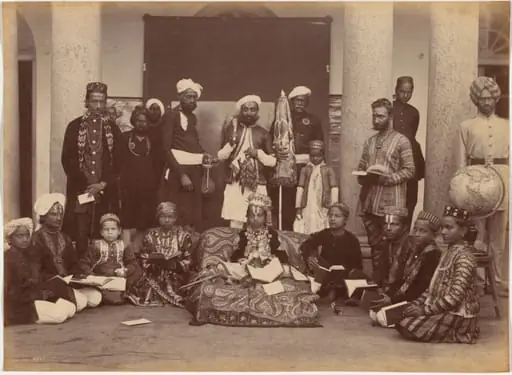 Maharaja of Rewa and Classmates
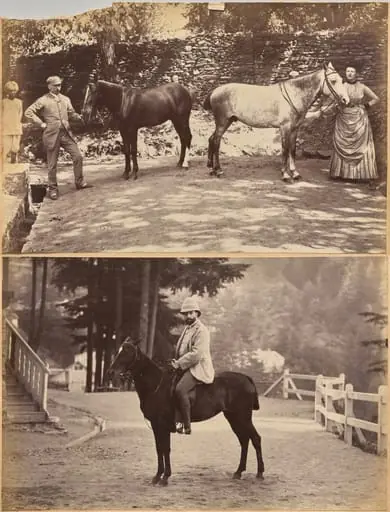 Col. F. G. Oldham (recto, top); Mr. Nowell, Shimla (recto, bottom)
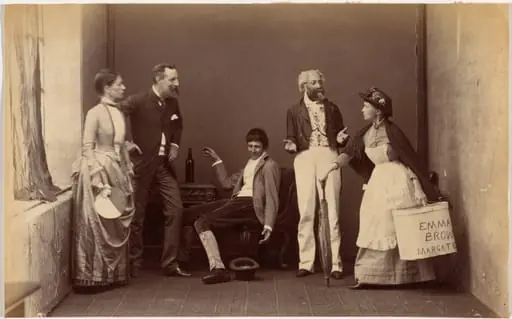 Fancy Group, Indore I
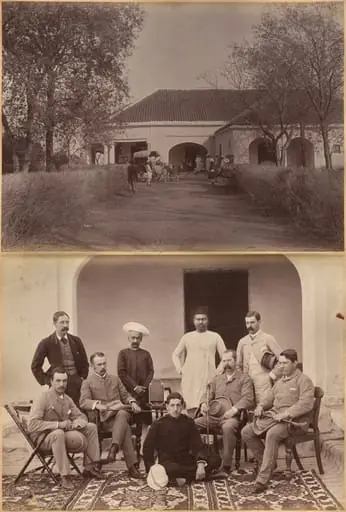 Civil officers at Jhansi (recto); Mr. William's House, Jhansi (verso)
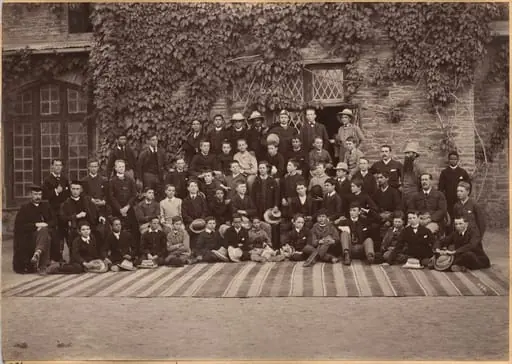 Middle Class Students and Staff, Bishop Cotton School, Shimla (verso)
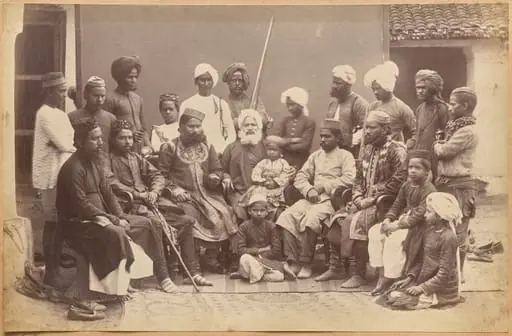 Mowhri Rahman Alli Khan family, Rewa (recto, bottom)
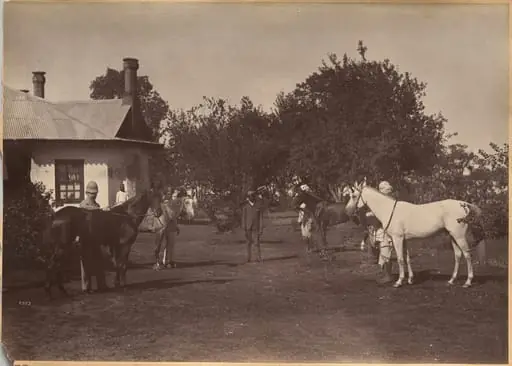 Lord William Beresford's horses
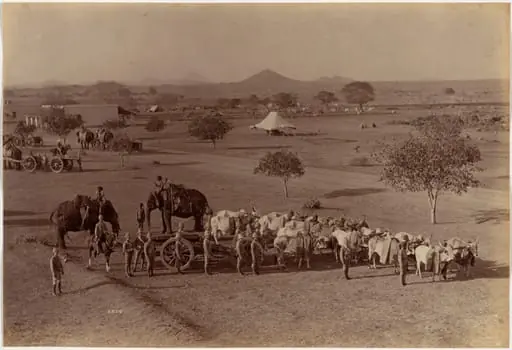 Heavy Field Battery, Jhansi
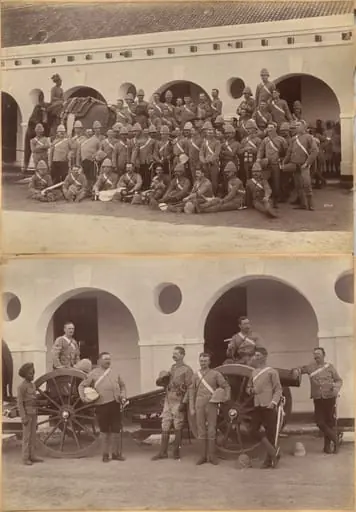 Officers of Elephant Battery, Jhansi (recto); Men of Elephant Battery, Jhansi (verso)
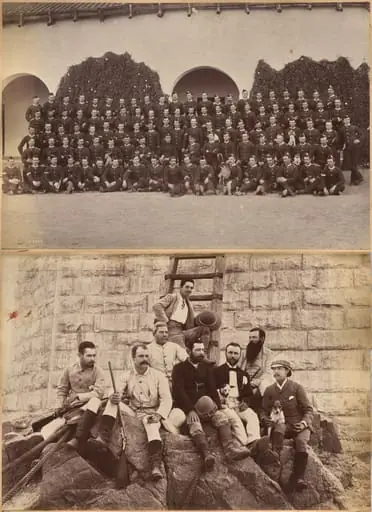 B. c/o Devonshire Regiment, Jhansi (recto); Staff of Messrs. Glover & Co., Sindh Bridge (verso)
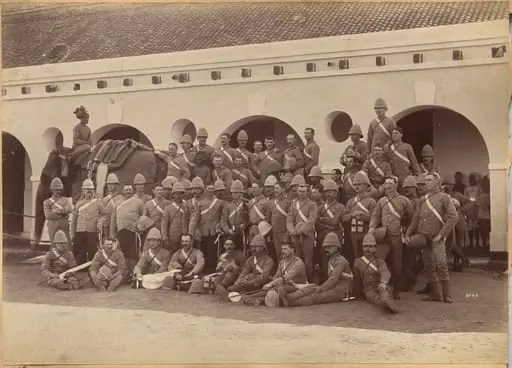 Men of Elephant Battery, Jhansi (verso)
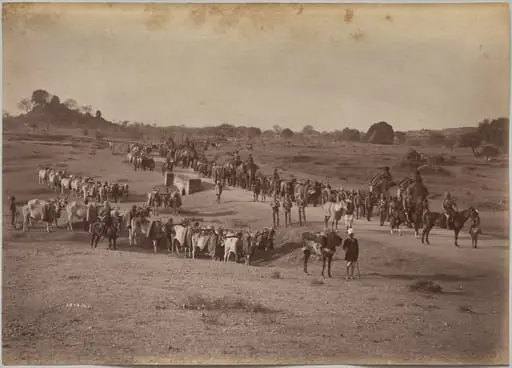 Elephant Battery on March at Jhansi
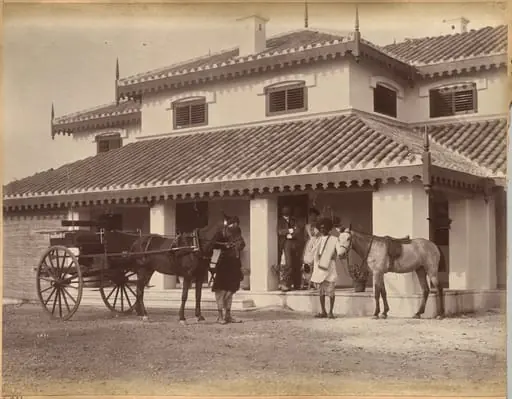 Mr. MacNull, Jhansi (verso)
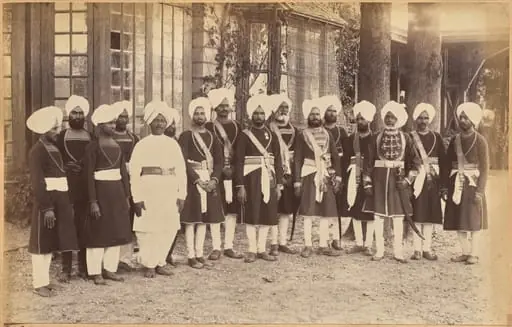 Servants of His Honor the Gov. of Punjab
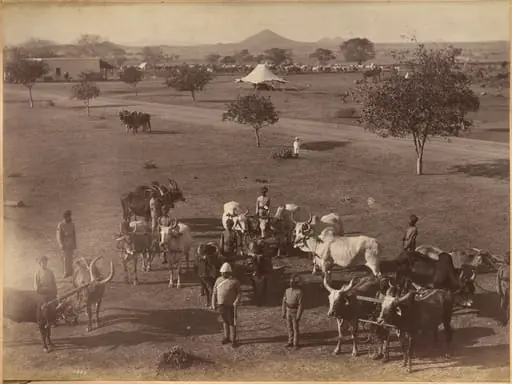 Bullocks of Elephant Battery, Jhansi
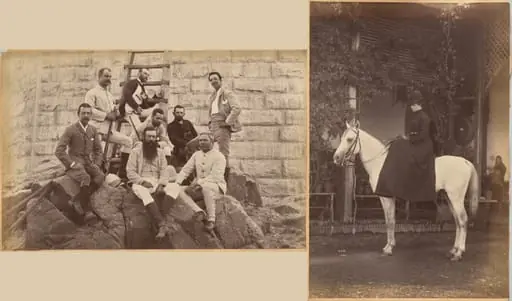 Managing staff of Meprs. Glover & Co. at Sindh Bridge (recto, top); Untitled: Woman on horse (verso, right)
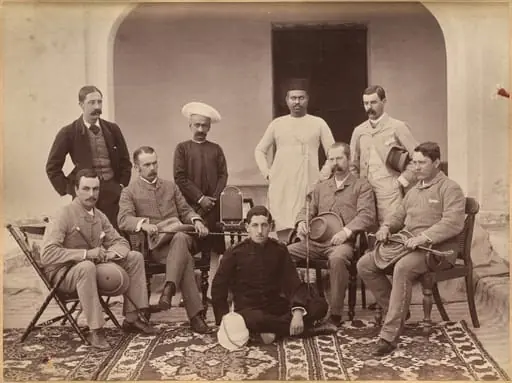 Civil officers at Jhansi (recto)
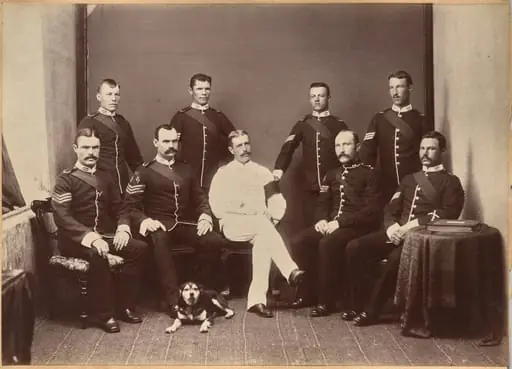 Captain Watkins and Non Com. officers
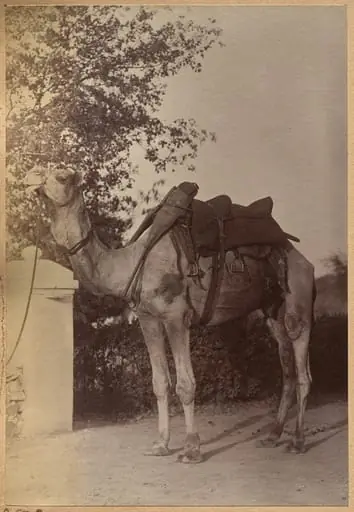 Captain Bailward's camel (verso, left)