Artwork
Rama and Durga
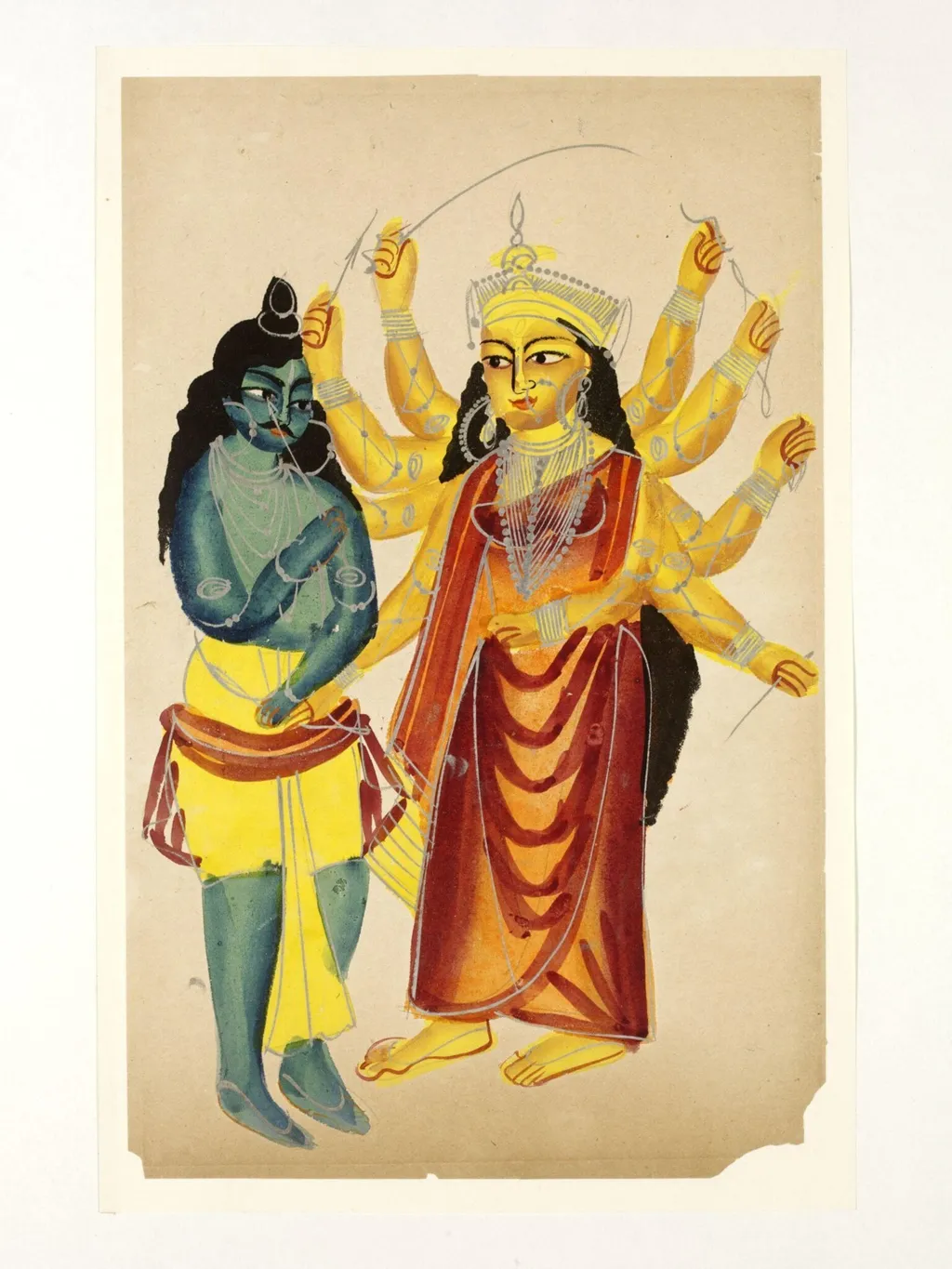
Rama and Durga is a paint painting by the Impressionist artist Unknown. It dates from 1890 and is held in the collection of the Victoria and Albert Museum.
About this work
Overview
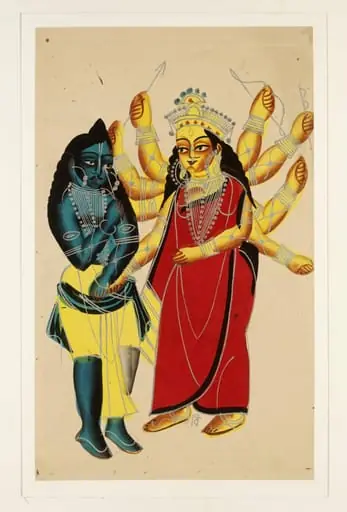
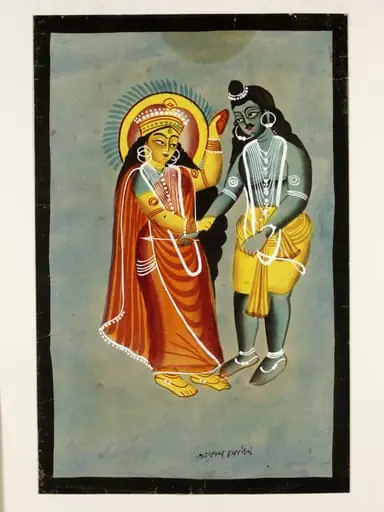
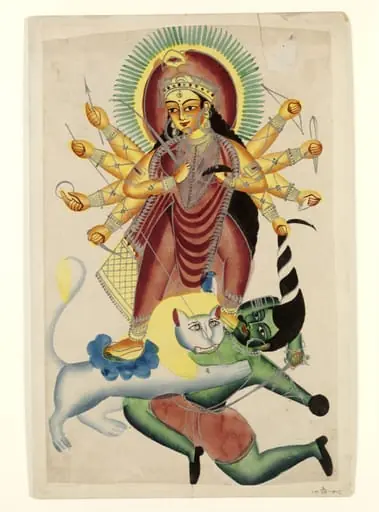
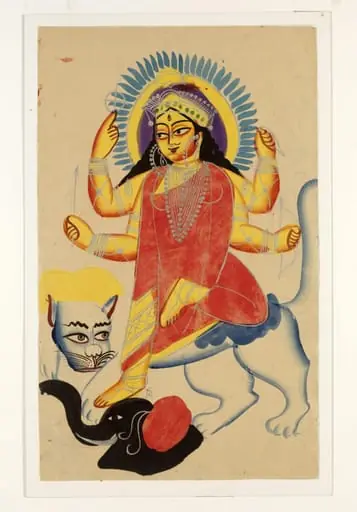
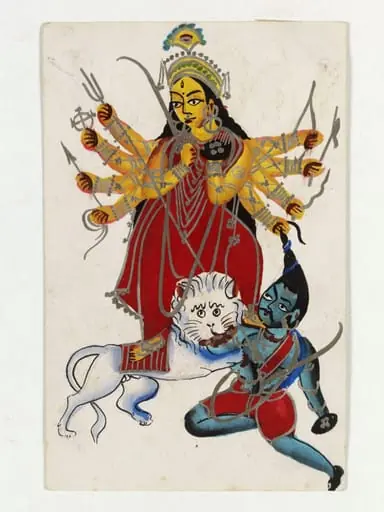
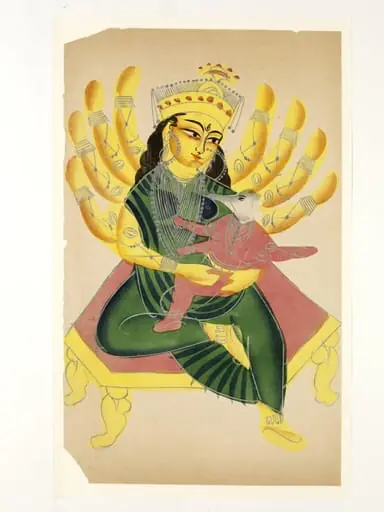
Created circa 1890, this water‑colour and tin‑alloy work on paper portrays the Hindu deity Rama in a devotional pose before the goddess Durga. The composition is modest in scale, set against a muted beige ground that lets the bright reds and yellows of the figures stand out, conveying a calm, reverent atmosphere.
Subject & Meaning
The central male figure, identified as Rama, is shown with hands clasped in front, a gesture of worship. Opposite him stands Durga, rendered with multiple arms each bearing a symbolic implement, crowned and serene, embodying divine protection and power. The pairing reflects a devotional narrative common in Hindu iconography, emphasizing the relationship between devotee and deity.
Technique & Style
Executed in the Kalighat school tradition of late‑19th‑century Calcutta, the painting employs vivid pigments, simplified outlines, and brisk brush strokes. The use of tin alloy for certain details adds a subtle metallic sheen, while the overall flatness and decorative emphasis are characteristic of the genre’s adaptation to a market for popular religious prints.
History & Provenance
The work entered the museum collection through a 1955 donation by M. N. Varvill, Esq. Its provenance prior to that donation is not recorded, but its creation during the colonial period aligns with the broader emergence of Kalighat artists who migrated from rural Bengal to the urban centre of Calcutta.
Context
Kalighat paintings arose as itinerant artisans responded to the social shifts of British rule, producing affordable, narrative images for a growing urban audience. This piece exemplifies that movement, merging traditional religious motifs with the commercial aesthetics that defined the genre’s popularity among both native and colonial patrons.
Artist & collection

 Domestic Scene
 Giacomo and Cardinal Marco, investing Andrea, Abbot of San Zeno, with his Benefice
 The Nymph of Fontainebleau
 Portrait of a Woman
 Madonna and Child with Saints in the Enclosed Garden
 Venus and Minerva
 Family Group of Four on Sofa
 Wall painting from Room H of the Villa of P. Fannius Synistor at Boscoreale