Artwork
Rama and Durga
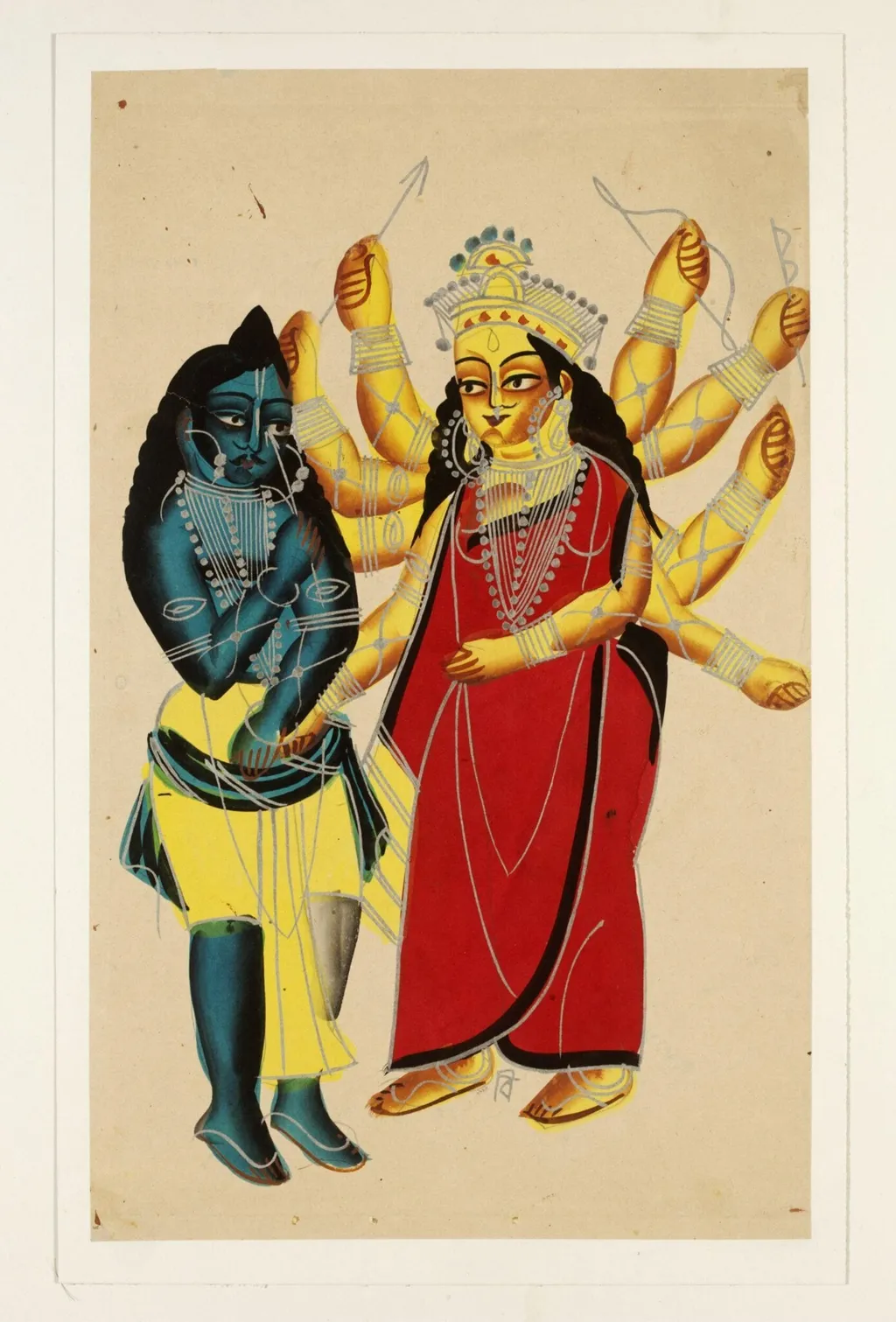
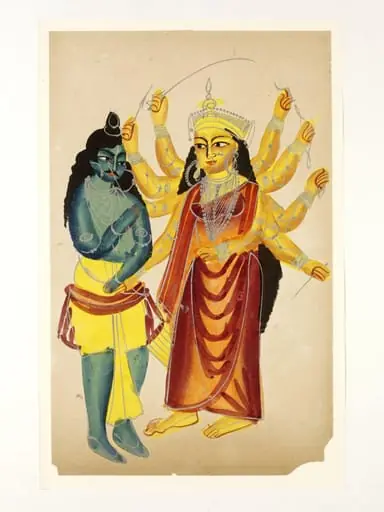
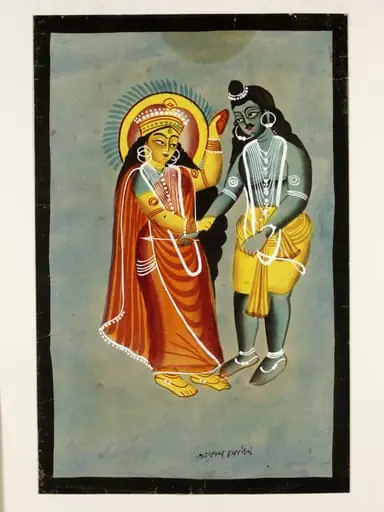
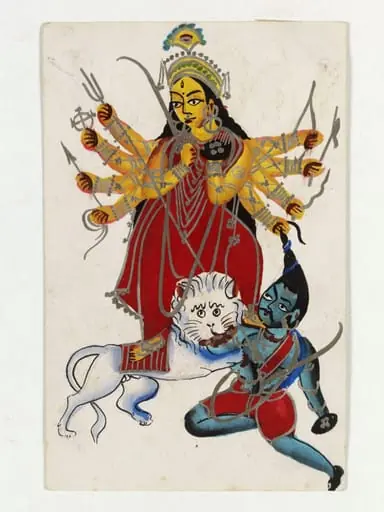
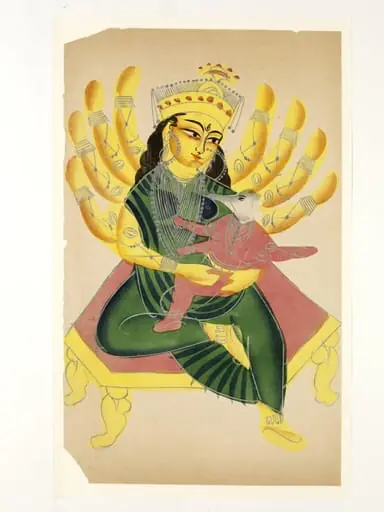
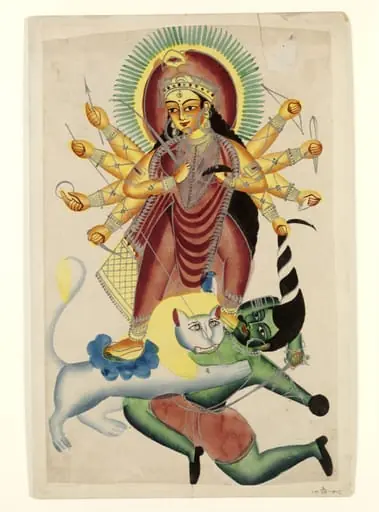
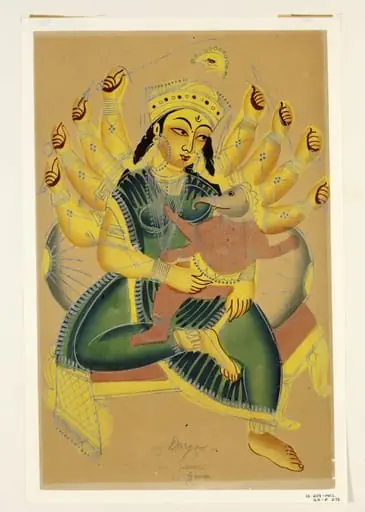
Rama and Durga is a paint painting by the Impressionist artist Unknown. It dates from 1885 and is held in the collection of the Victoria and Albert Museum. Created in 1885, this opaque watercolor on paper portrays a devotional scene in which a male figure venerates a multi‑armed female deity.
About this work
Overview
Created in 1885, this opaque watercolor on paper portrays a devotional scene in which a male figure venerates a multi‑armed female deity. The composition is straightforward, presenting the two figures side by side against a plain background, their gestures and attire emphasizing the act of worship.
Subject & Meaning
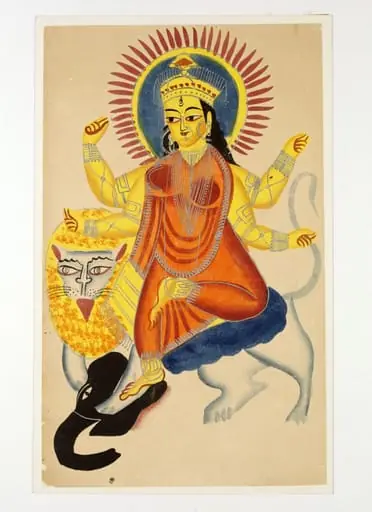
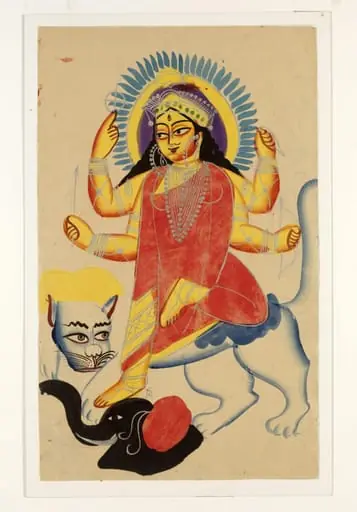
The male figure, dressed in a yellow dhoti and blue upper garment, bows his head in reverence toward the woman, who wears a red sari, a crown, and jewelry. Her multiple arms hold distinct objects, identifying her as the goddess Durga, while the man represents the hero Rama, illustrating a moment of divine homage.
Technique & Style
Executed in opaque watercolor, the work employs vivid, saturated hues—yellow, blue, red, and black—applied in flat washes that give the scene a crisp, graphic quality. The simplicity of the composition and the emphasis on colour echo certain aspects of late‑19th‑century Impressionist approaches, though the subject remains firmly rooted in Indian iconography.
History & Provenance
The painting entered the museum’s collection in 1950, donated by Miss M. Steele. It had been part of the estate she inherited from her mother, a Sanskrit scholar at Cambridge who received the work in 1894. Miss Steele suggested that her grandmother, who had lived in India, may have originally acquired the series of images to which this piece belongs.
Artist & collection

 Domestic Scene
 Giacomo and Cardinal Marco, investing Andrea, Abbot of San Zeno, with his Benefice
 The Nymph of Fontainebleau
 Portrait of a Woman
 Madonna and Child with Saints in the Enclosed Garden
 Venus and Minerva
 Family Group of Four on Sofa
 Wall painting from Room H of the Villa of P. Fannius Synistor at Boscoreale