Artwork
Varaha
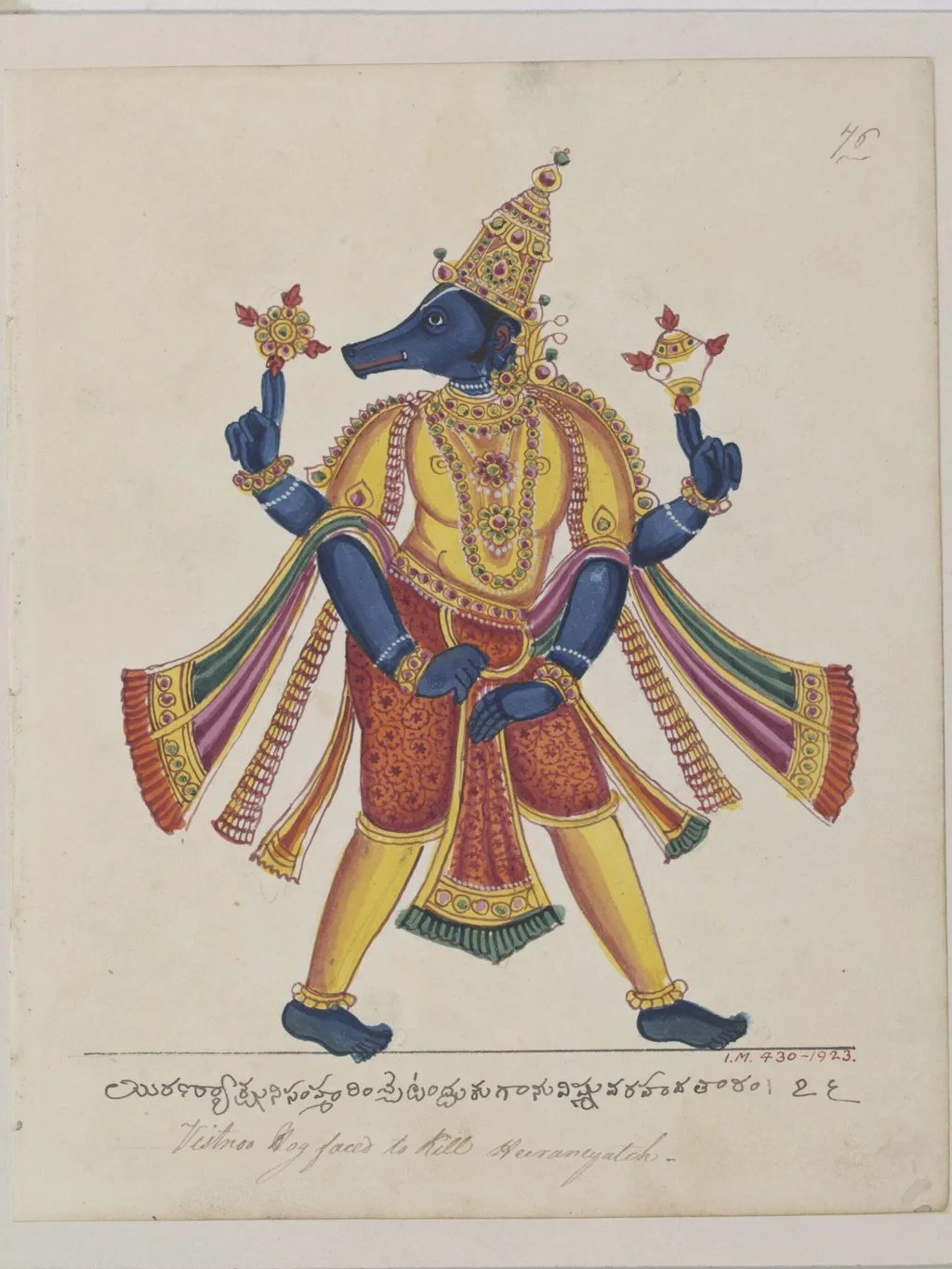
Varaha is a paint painting by the Romanticist artist Unknown. It dates from 1825 and is held in the collection of the Victoria and Albert Museum.
About this work
Overview
The work portrays Varaha, the boar-headed avatar of Vishnu, engaged in the mythic battle against the demon Hiranyaksha to free the earth goddess Bhumi. Executed as a painted image, the figure dominates a plain backdrop with vivid hues and pronounced outlines, emphasizing the dramatic moment of rescue.
Subject & Meaning
In Hindu tradition, Varaha represents divine intervention to restore cosmic order. The composition captures the deity’s heroic stance, clutching a wheel and a drum, symbols linked to Vishnu’s power and ritual. The accompanying inscription alludes to confronting adversity, reinforcing the narrative of salvation.
Technique & Style
Rendered with bold, saturated pigments—blue skin, bright yellow and red garments, and gold trim—the painting employs sharp linear definition typical of early 19th‑century South Indian devotional art. The figure’s elaborate crown, patterned sleeves, and dynamic posture convey a sense of movement and theatricality.
History & Provenance
Created in 1825 as part of a series of one hundred depictions of Hindu deities, the piece originates from South India. The series was likely commissioned for religious or instructional purposes, reflecting the period’s interest in documenting mythological iconography.
Context
The early nineteenth century saw Indian artists integrating narrative vigor reminiscent of Romanticism, a movement that favored dramatic, fantastical subjects. Though rooted in traditional iconography, the work’s expressive color palette and energetic pose echo that broader aesthetic trend.
Artist & collection

 Domestic Scene
 Giacomo and Cardinal Marco, investing Andrea, Abbot of San Zeno, with his Benefice
 The Nymph of Fontainebleau
 Portrait of a Woman
 Madonna and Child with Saints in the Enclosed Garden
 Venus and Minerva
 Family Group of Four on Sofa
 Wall painting from Room H of the Villa of P. Fannius Synistor at Boscoreale
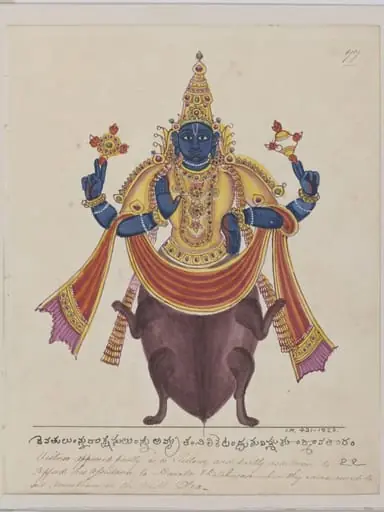 Kurma
Kurma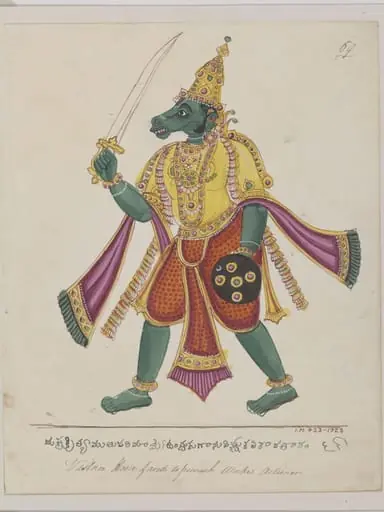 Kalki, the tenth and last avatara of Vishnu
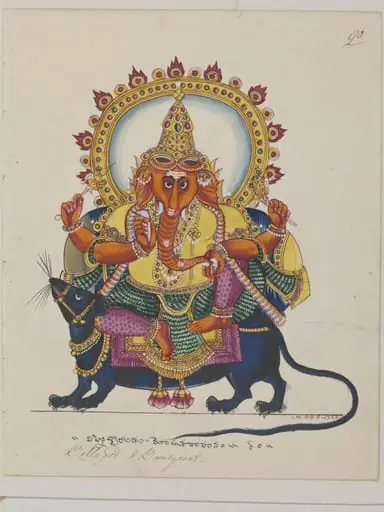 Ganesha, the god of wisdom and the remover of obstacles
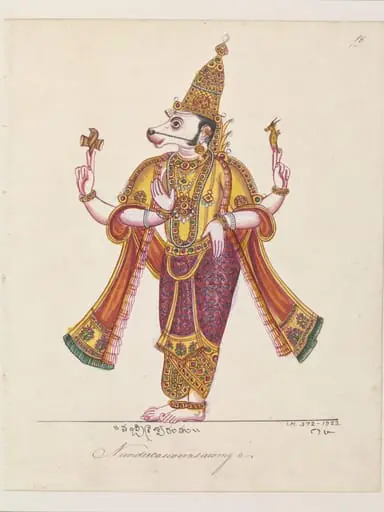 Nandikeshvara, the anthropomorphic form of Nandi and attendant of Shiva.
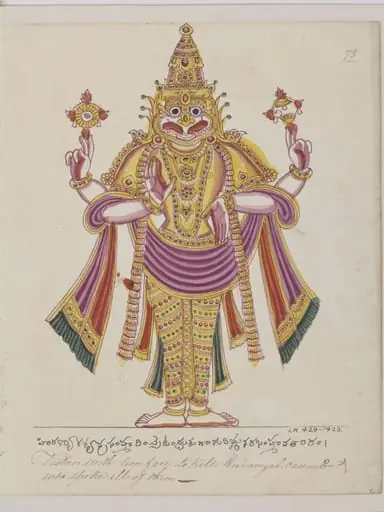 Narasimha, the man-lion, the fourth avatar (incarnation) of Vishnu
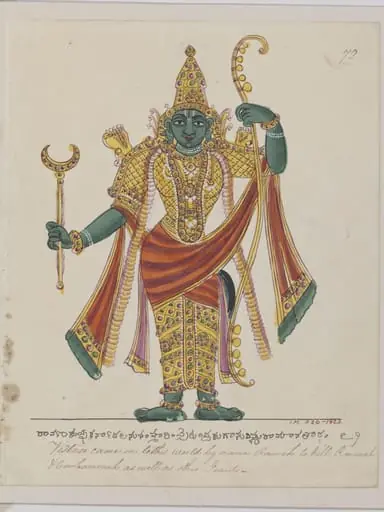 Rama holding a bow and a crescent tipped arrow
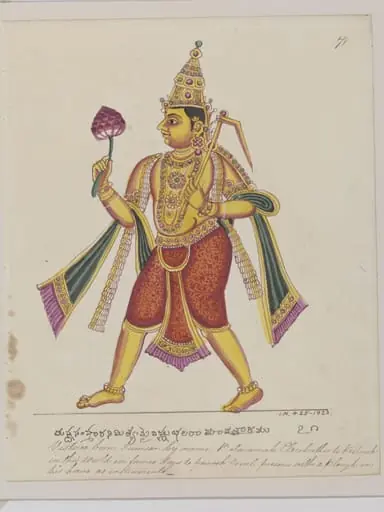 Balarama
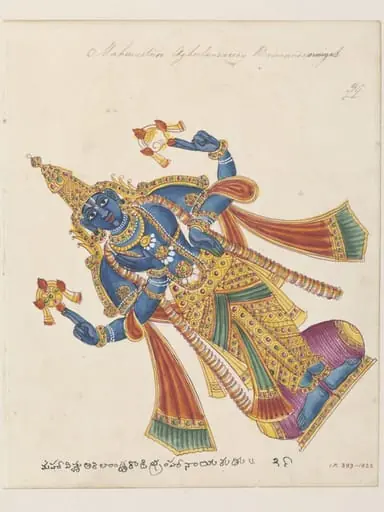 Vishnu
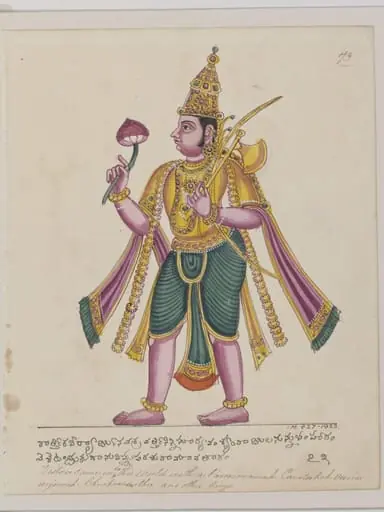 Parasurama Holding an axe and a Lotus Bud
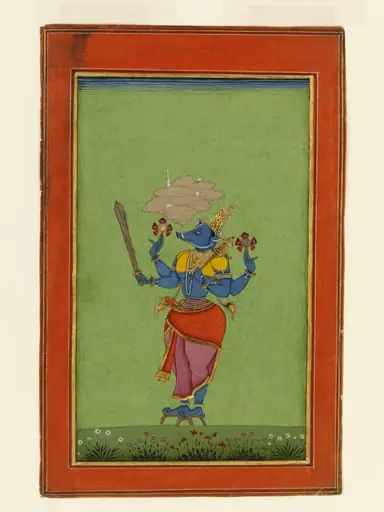 Varaha, the third avatar of Vishnu