Artwork
Vas de formă ovoidală, cu gât scurt, cu buza ușor înălțată și evazată, cu o toartă care pleacă din buză și se unește cu corpul în zona diametrului maxim. Este smălțuit în interior și exterior (partial) . Este decorat pe umăr cu motive geometrice: trei linii (pe alocuri patru), suprapuse parțial de motive florale stilizate: două flori realizate din puncte și pete albe și verzui. Toartă este decorată cu trei linii orizontale late. Cromatica: fond: maro și cărămiziu; motive: alb, verde.
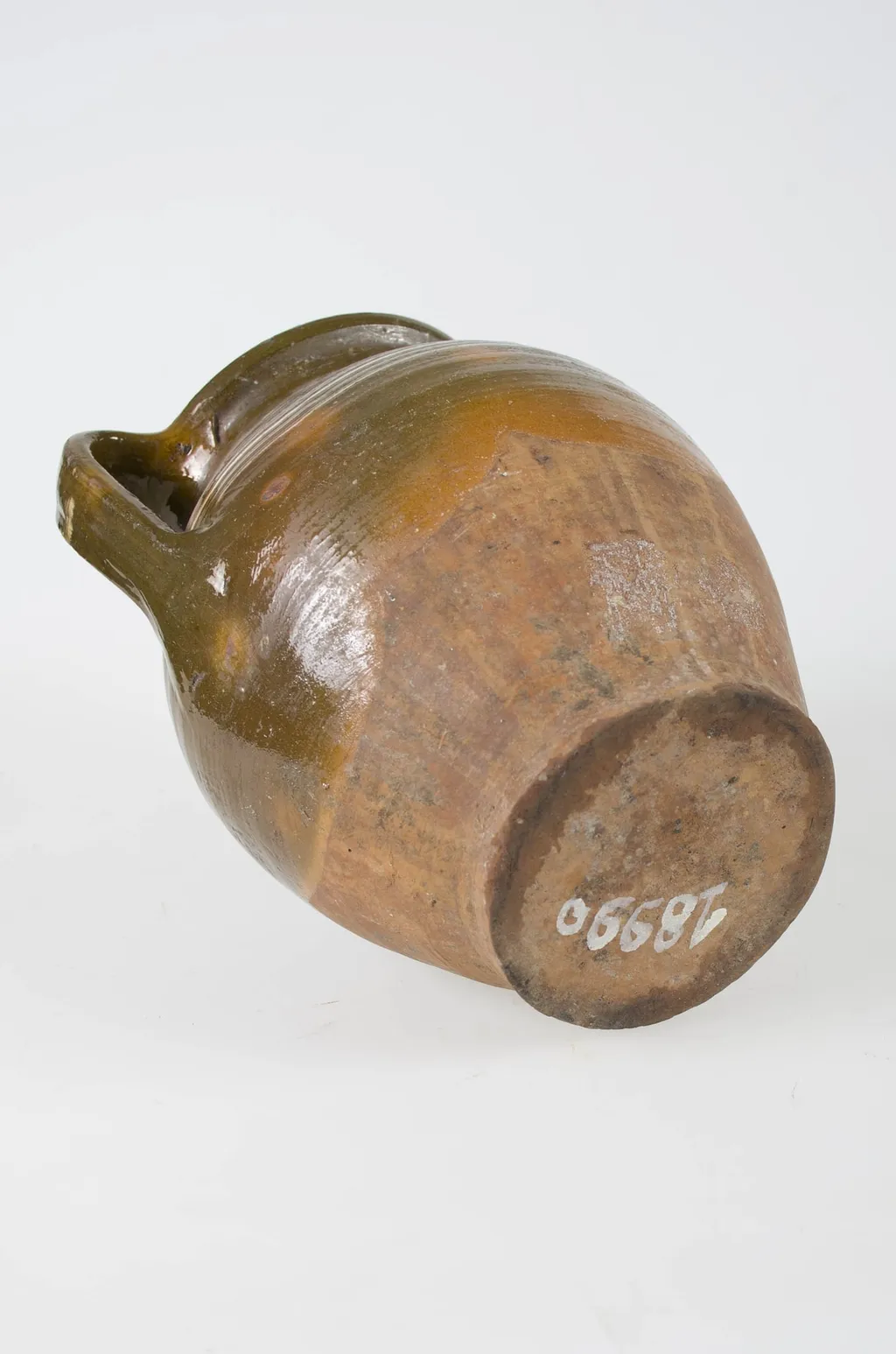
Vas de formă ovoidală, cu gât scurt, cu buza ușor înălțată și evazată, cu o toartă care pleacă din buză și se unește cu corpul în zona diametrului maxim. Este smălțuit în interior și exterior (partial) . Este decorat pe umăr cu motive geometrice: trei linii (pe alocuri patru), suprapuse parțial de motive florale stilizate: două flori realizate din puncte și pete albe și verzui. Toartă este decorată cu trei linii orizontale late. Cromatica: fond: maro și cărămiziu; motive: alb, verde. is a photography by Unknown. It dates from 1850 and is held in the collection of the ASTRA National Museum Complex. The object is a modestly sized clay vessel with an ovoid body, short neck, and a gently flared lip.
About this work
Overview
The object is a modestly sized clay vessel with an ovoid body, short neck, and a gently flared lip. Its interior and part of the exterior are glazed, while the remaining surface retains the natural earthen tone. The pot’s overall form is simple, designed for practical use, and its dimensions allow for a stable base and a comfortable grip.
Subject & Meaning
Decorative motifs are confined to the shoulder area, where three parallel lines intersect with stylized floral patterns composed of white and greenish dots. These modest embellishments likely served both aesthetic and symbolic purposes, reflecting local decorative conventions without indicating a specific narrative.
Technique & Style
The vessel was formed from clay and fired with a partial glaze that creates a brown‑brick background punctuated by areas where the glaze failed, revealing greenish spots. The handle, extending from the neck to the vessel’s widest point, bears three broad horizontal bands, applied in the same painted palette of white and green.
History & Provenance
The pot originates from a tradition of everyday ceramic production, typical of regional workshops that supplied household containers. Its provenance is linked to collections of ethnographic material, suggesting it was gathered as part of a broader assemblage of utilitarian objects.
Context
Such vessels were common in domestic settings, used for storing or serving food and liquids. The decorative scheme aligns with a broader pattern of modest ornamentation found on functional ware across similar cultural contexts, where utility and modest aesthetic expression co‑existed.
Artist & collection

 Domestic Scene
 Giacomo and Cardinal Marco, investing Andrea, Abbot of San Zeno, with his Benefice
 The Nymph of Fontainebleau
 Portrait of a Woman
 Madonna and Child with Saints in the Enclosed Garden
 Venus and Minerva
 Family Group of Four on Sofa
 Wall painting from Room H of the Villa of P. Fannius Synistor at Boscoreale
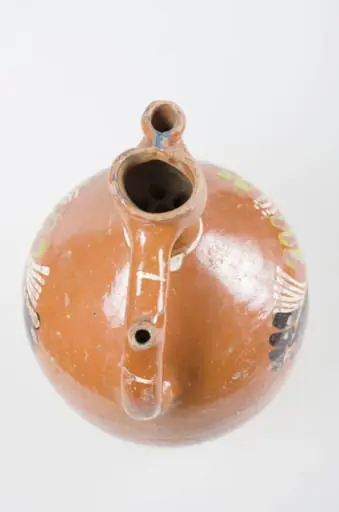 Ulcior mic cu corpul de formă sferică, smălțuit (80-85% din suprafața exterioară). Prezintă un orificiu lângă gură (pentru turnat) și unul pe mâner (pentru băut - ”țâță”). Este ornamentat cu motive geometrice: linii drepte și curbe și motive fitomorfe (flori și frunze). Cromatică: fond: maro deschis; motive: alb; negru; verde; albastru.
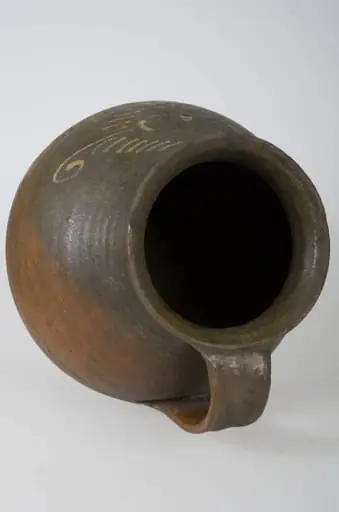 Vas de formă ovoidală bombat în partea mediană, cu buză dreaptă și ieșită ușor în afară, smălțuit. Prezintă o toartă lată ce unește gura vasului cu partea de diametru maxim. Decorații în plan frontal, ilustând o floare cu petale sugerate de linii verzi, ce radiază dintr-un punct alb. Motivul central este încadrat de linii albe paralele orizontale, ce crează forma unui romb. Cromatică: fond: brun; motive; alb; verde.
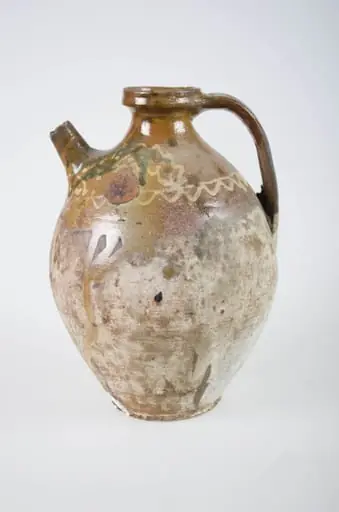 Vas de formă ovoidală cu gât lung, cu gura largă și buza înălțată. Prezintă o toartă care pleacă din gura vasului și se unește cu corpul în zona diametrului maxim. Din umăr, în partea opusă torții pleacă o țâță scurtă (burciuc). Vasul este smălțuit pe exterior în partea superioară unde prezintă și un decor format din motive geometrice: linie și linie în val deasupra cărora se regăsesc motive florale. Cromatica: fond: cărămiziu; motiver: alb-gălbui, verde. Prezintă uzură funcțională.
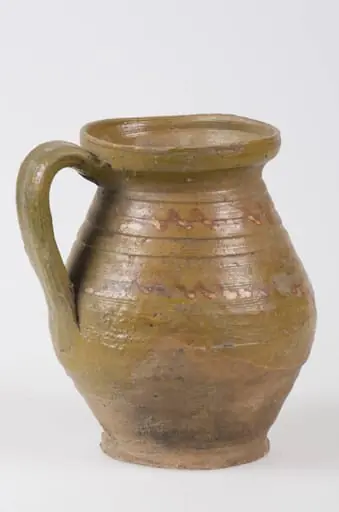 Vas bitronconic cu gât scurt și foarte profilat, cu gura înaltă și dreaptă. Prezintă o toartă care pleacă de sub buză și se unește cu corpul sub zona diametrului maxim. Este smălțuit în interior și la exterior (parțial nesmălțuit în partea de jos). În partea superioară prezintă un decor geometric realizat din cinci linii incizate și două linii în val pictate. Toarta este decorată cu puncte. Cromatică: fond: cărămiziu și pe alocuri verziu; motive: alb; maroniu. Prezintă uzură funcțională.
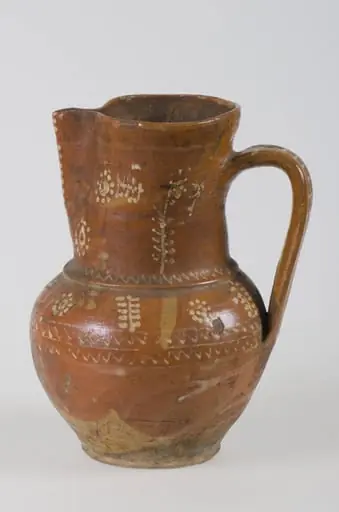 Cană înaltă cu o toartă și gura ovoidală terminată cu un cioc pe partea opusă torții. Toarta pornește de sub gură și se termină sub diametrul maxim al vasului. Smălțuită exterior. Decorată pe toată suprafața cu motive florale stilizate, motive fitomorfe (frunze stilizate) și motive geometrice: linie, linie ondulată, punct. Cromatică: fond: maroniu; motive: alb.
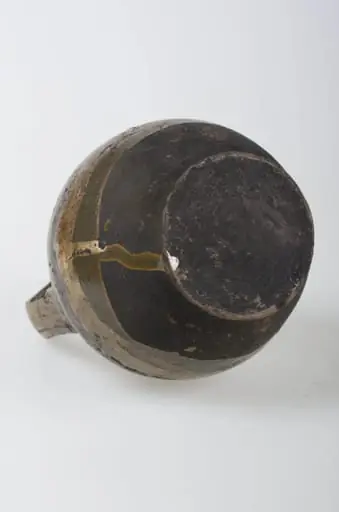 Recipient ceramic de formă sferică cu o toartă ce pornește de la baza buzei, printr-un inel, și se prinde de corp deasupra diametrului maxim. Buza este înaltă și relativ îngustă. Decorul este compus din motive geometrice (liniare, curbilinii) pictate, plasate pe toată suprafața obiectului. Pe alocuri sunt prezente pete de smalț. Vasul este smălțuit la exterior. Cromatică: fond: maron; bej; motive: maron închis, verde, galben.
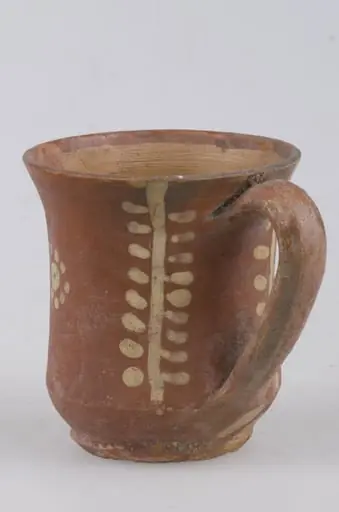 Recipient cilindric cu gura largă, prevăzută cu o toartă laterală care pleacă de sub buză și se termină la nivelul inferior al vasului. Este decorat cu motive florale și vegetale stilizate realizate din linii și puncte. Între trei crenguțe realizate dintr-o linie verticală și două rânduri de linii scurte orizontale paralele, de o parte și de alta a acesteia sunt pictate două flori realizate dintr-un punct central înconjurat de un cerc de puncte de dimensiuni mai mici. Smălțuit pe exterior. Cromatică: fond cărămiziu; motive: alb.
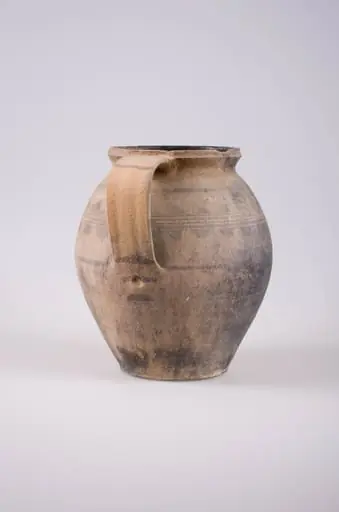 Oală borcan cu corp pântecos bombat cu gât profilat, cu buza evazată tăiată drept și toartă lată. Decorat în partea superioară cu cinci linii ușor adâncite realizate cu piaptănul care secționează un val pictat realizat cu degetul încadrate de două linii maro-roșcat. Toarta prezintă două caneluri este decorată cu o linie în partea superioară și trei linii în partea inferioară. Cromatică: fond: cărămiziu; motive: maro-roșcat. Prezintă urme de ardere secundară.
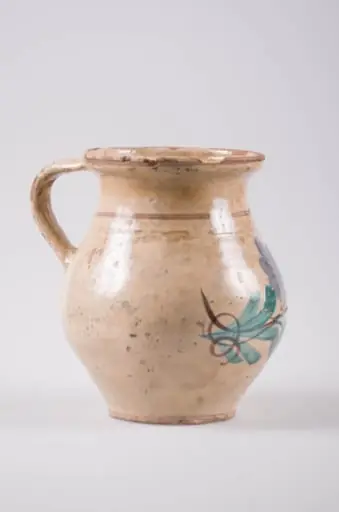 Oală de formă bitronconică de culoare bej. Decorul este reprezentat de motive florale: floarea este încadrată de linii albe realizate cu degetul; motive vegetale, motive geometrice: în partea superioară decorație circulară, linii. Prezintă toartă curbată. Smălțuită. Cromatică: fond: bej; motive: verde; albastru; maroniu.
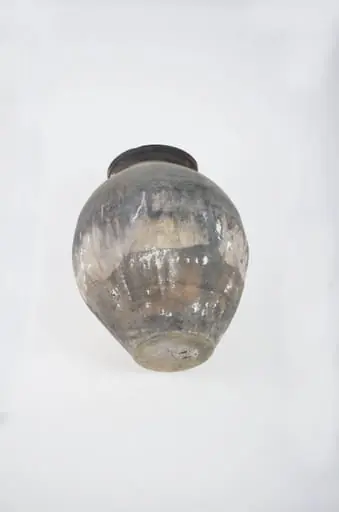 Vas din lut de mari dimensiuni, de formă bitronconică și cu buza răsfrântă. Prevăzut cu două mânere late, asimetrice, cu punctele de inserție la gură și în partea centrală a corpului. Smălțuit în zona gurii. Pe umăr și pe mânere, oala prezintă decor realizat din motive geometrice, astfel: trei linii circulare intercalate de linii vălurite pe umăr; puncte, linii oblice și vălurite, pe mânere. Cromatică: fundal negru; motive: maro.