Artwork
Vasul are formă tronconică fiind realizat din caolin. Fondul, interior-exterior, este alb iar decorul este floral-vegetal și acoperă interiorul vasului cu extensii pe buza acestuia. De asemenea pe buza vasului este pictată o linie circulară. Cromatică: fond: alb; motive: albastru; maro; verde; vișiniu.
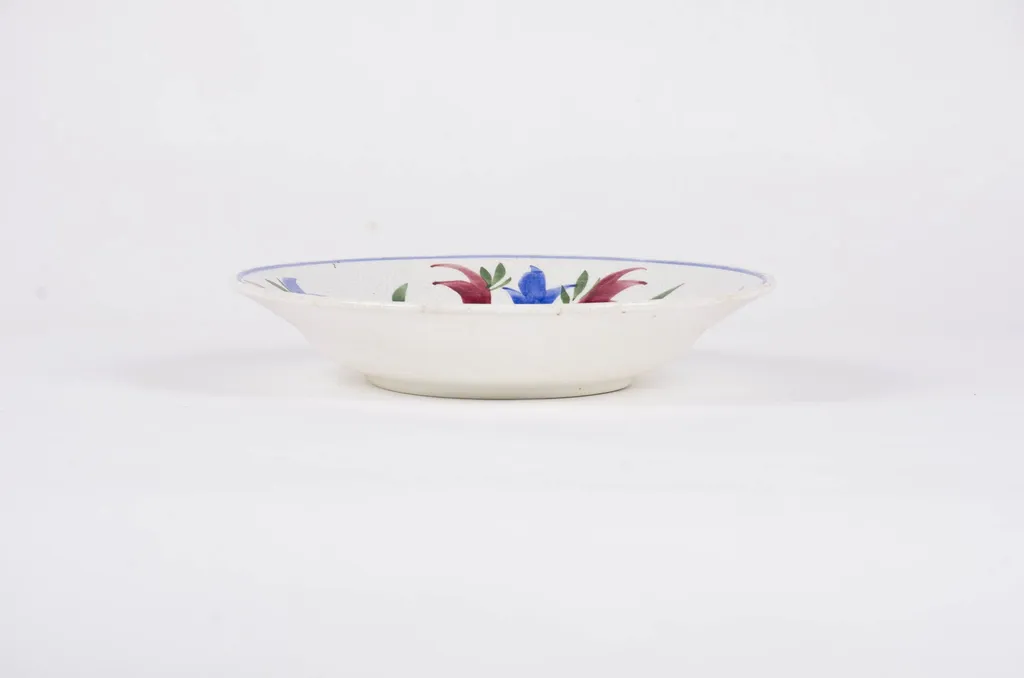
Vasul are formă tronconică fiind realizat din caolin. Fondul, interior-exterior, este alb iar decorul este floral-vegetal și acoperă interiorul vasului cu extensii pe buza acestuia. De asemenea pe buza vasului este pictată o linie circulară. Cromatică: fond: alb; motive: albastru; maro; verde; vișiniu. is a print by Unknown. It dates from 1850 and is held in the collection of the ASTRA National Museum Complex. This vessel is shaped as a truncated cone and crafted from kaolin, a fine white clay known for its purity and plasticity.
About this work
Overview
This vessel is shaped as a truncated cone and crafted from kaolin, a fine white clay known for its purity and plasticity. Its surface is uniformly glazed in white, both inside and out, creating a smooth, luminous base for its painted decoration. The form suggests functional use, likely for storage or ritual purposes, with proportions emphasizing balance and containment.
Subject & Meaning
The decoration consists of stylized floral and vegetal motifs that extend from the interior walls onto the rim, suggesting a continuous, enclosing pattern. The circular band along the lip may symbolize unity or boundary, while the organic forms evoke natural cycles. The absence of figurative elements points to an emphasis on growth, fertility, or spiritual harmony rather than narrative.
Technique & Style
The design is painted in pigments of blue, maroon, green, and violet, applied with precision over the white kaolin surface. The lines are deliberate and fluid, indicating skilled hand-painting rather than stamping or molding. The motifs are abstracted yet recognizable as plant forms, reflecting a decorative tradition that prioritizes rhythm and repetition over realism.
History & Provenance
Though specific origins are unrecorded, the use of kaolin and the floral palette align with ceramic traditions in regions where high-fired white ceramics were developed, possibly in Eastern Europe or the Near East. The vessel’s intact condition and decorative coherence suggest it was carefully made and preserved, possibly within a domestic or ceremonial context.
Context
This vase reflects a broader cultural preference for monochromatic ceramics adorned with restrained, nature-inspired ornamentation. Its form and palette distinguish it from contemporaneous polychrome or incised wares, indicating a localized aesthetic that valued subtlety and material purity. The integration of interior decoration implies attention to the object’s use and sensory experience.
Legacy
The vessel exemplifies an understated ceramic tradition where form and decoration are harmonized without ostentation. Its preservation offers insight into pre-modern approaches to utility and beauty, where craftsmanship and symbolic restraint coexisted. Such objects contribute to understanding regional ceramic evolution beyond dominant artistic narratives.
Artist & collection

 Domestic Scene
 Giacomo and Cardinal Marco, investing Andrea, Abbot of San Zeno, with his Benefice
 The Nymph of Fontainebleau
 Portrait of a Woman
 Madonna and Child with Saints in the Enclosed Garden
 Venus and Minerva
 Family Group of Four on Sofa
 Wall painting from Room H of the Villa of P. Fannius Synistor at Boscoreale
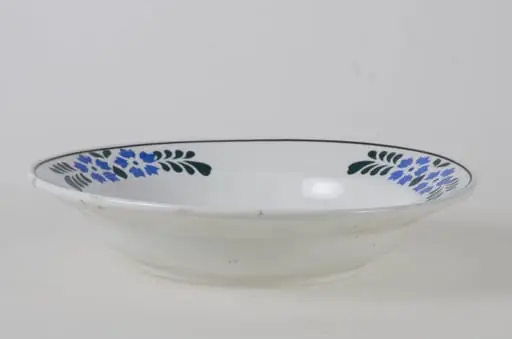 Vasul are formă tronconică smălțuit la interior și pe exterior (smalț de culoare albă). Prezintă motive decorative floral/vegetal și geometrice dispuse pe fundul vasului dar și într-un registru decorativ dispus pe buza vasului. De asemenea se identifică și motive decorative geometrice: pătratul, cercul, linia. Cromatică: fundal alb; verde; grena; albastru.
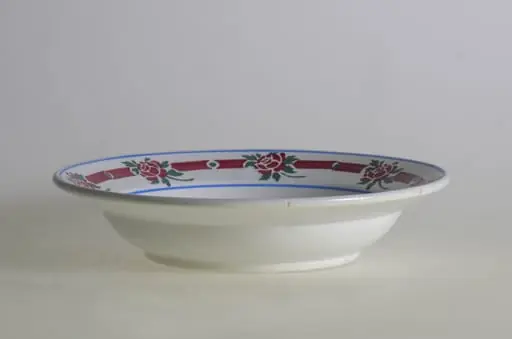 Vasul are formă tronconică; pe margine este decorat cu motive florale, despărțite de motive geometrice: linie, punct, care sunt încadrate de două cercuri concentrice; motive florale în centru (trandafiri); pe fund are trei cercuri concentrice. Cromatică: fond: alb; motive: roșu; verde; albastru. Vasul este smălțuit interior-exterior.
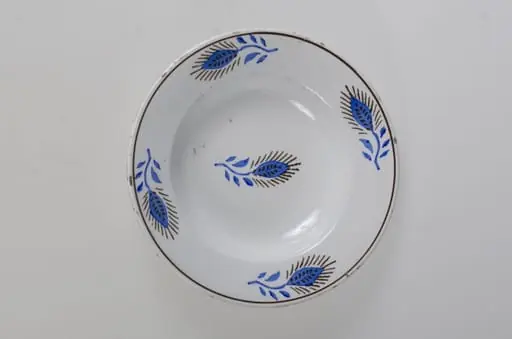 Vasul prezintă formă tronconică adâncită cu o bordură decorată cu motive florale și vegetale dispuse câte două în opoziție pe suprafața buzei (patru flori cu frunze). În centru este decorat cu o floare. Prezintă o marcă indescifrabilă pe exteriorul vasului. Cromatică: fond: alb; motive: albastru; maro.
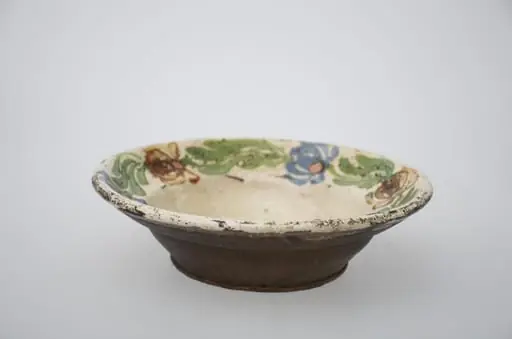 Farfurie de formă tronconică adâncă cu buza largă și decor pe fund, spre margini. Ornamentat cu motive florale. Cromatică: fond: alb; motive: maro; verde; albastru.
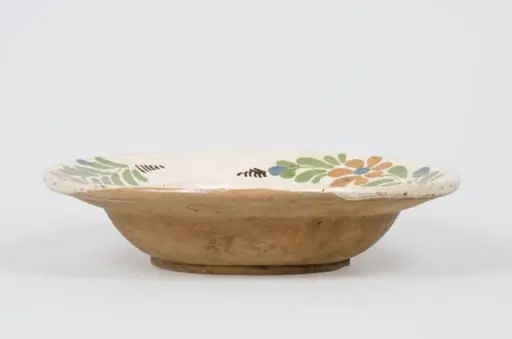 Vas de formă tronconică, adâncit smălțuit în interior. Acesta este decorat pe margine cu motive vegetale și florale pe un registru dispus în zona diametrului maxim. Cromatică: fond cărămiziu (exterior); fond alb (interior); verde; maro; albastru.
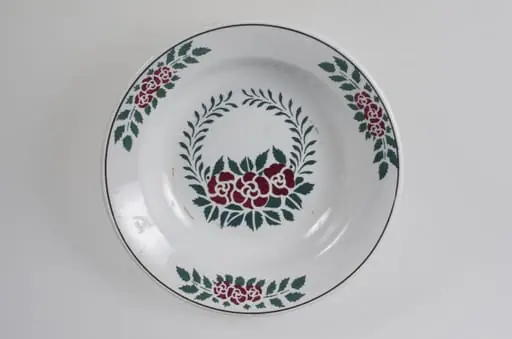 Vasul are formă tronconică, adâncită. Este decorat cu motive florale, vegetale și geometrice; are trei flori pe margine ce sunt delimitate de o linie; în centru este decorat cu un buchet format din trei trandafiri; pe fund are trei cercuri concentrice. Vasul este smălțuit interior-exterior. Cromatică: fond alb; motive: verde; roșu.
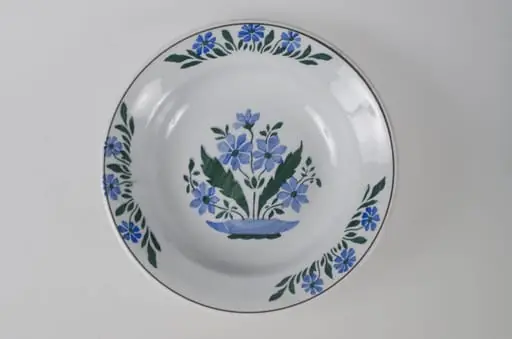 Vasul are formă tronconică, adâncită și este decorat cu motive florale dispuse în trei registre a câte trei flori pe margine, încadrate de o linie; în centru este decorat cu flori și frunze. Pe fund are trei cercuri concentrice care profilează trei registre. Vas evazat în partea superioară. Smălțuit interior-exterior. Cromatică: fond: alb; motive: verde; albastru; negru.
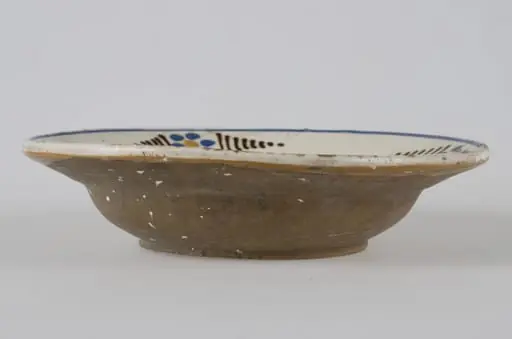 Vas adânc din lut, de formă tronconică, cu marginea evazată. Pe fundalul de culoare albă este decorat cu motive geometrice: linie circulară, linii curbe, puncte pe buza vasului; motive vegetale și florale, pe centrul vasului. Cromatică: fond: alb; motive: albastru; verde; maro; cărămiziu.
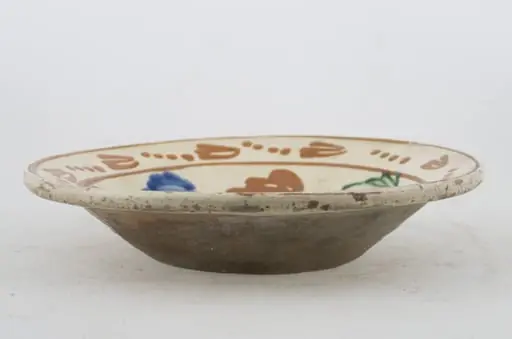 Vas ceramic de formă tronconică cu baza plată, pereții larg evazați și buza profilată. După modelarea la roată, uscarea și arderea recipientului, a fost aplicat un strat de angobă în interiorul vasului, peste care a fost pictat decorul floral și vegetal stilizat, format din două registre. Primul registru, situat pe fundul și pereții vasului, și încadrat de o linie circulară, a fost decorat cu motive florale stilizate: pe fundul vasului se află o floare, cu petalele de diferite culori. Pereții recipientului ceramic au fost decorați la rândul lor cu opt flori, dispuse concentric. Al doilea registru, cel care decorează buza recipientului ceramic, și este mărginit la rândul lui de o linie circulară, prezintă un brâu compus din nouă flori cu tulpinile formate din patru puncte. Cromatică: alb la interior; cărămiziu la exterior; motive: albastru; verde; maro-roșcat.
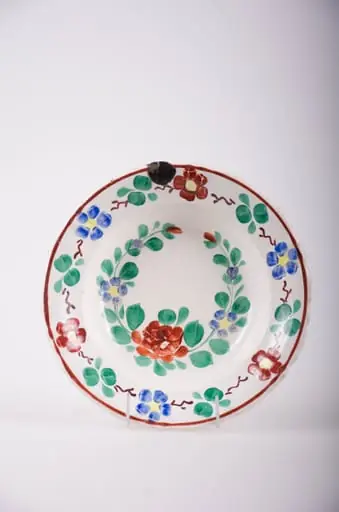 Farfurie de porțelan smălțuită pe fond alb. Decorată cu flori și frunze dispuse sub formă de ghirlande atât în centrul vasului cât și pe buza acestuia. De asemenea sunt prezente și motive geometrice: linia și linii întrerupte. Comatică: fond: alb; motive: verde; albastru; galben; roșu.