Artwork
Virgin and Child, Abbot Ludwig Kneeling
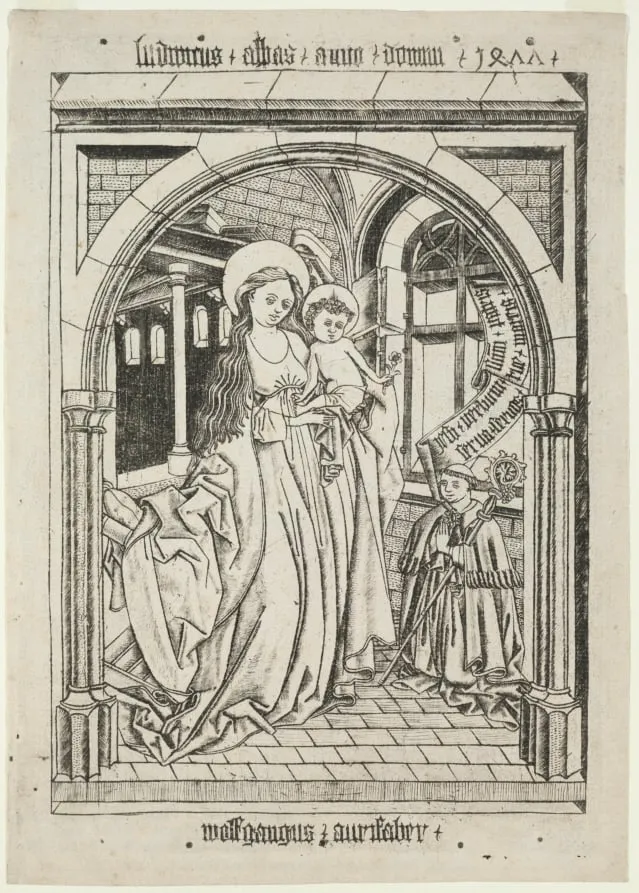
Virgin and Child, Abbot Ludwig Kneeling is a print by the Renaissance artist Unknown. It dates from 1404 and is held in the collection of the Cleveland Museum of Art.
About this work
Overview
This woodcut depicts the Virgin Mary holding the infant Jesus within a stone archway, set against an architectural interior with columns and tiled flooring. A man in ecclesiastical robes kneels before them, his posture indicating devotion. The composition is restrained yet precise, emphasizing clear contours and intricate surface patterns, typical of early Northern Renaissance printmaking.
Subject & Meaning
The Virgin and Child represent central figures of Christian veneration, their crowned forms signaling divine status. The kneeling figure, likely a donor or abbot, embodies personal piety and the practice of commissioning devotional imagery. His presence bridges the sacred and the earthly, reinforcing the role of art in mediating spiritual connection during the late medieval period.
Technique & Style
Executed as a woodcut, the image relies on bold outlines and finely carved textures to define fabric folds, stone surfaces, and architectural details. The lack of shading creates a flat, graphic quality, characteristic of Northern European prints of the time. Details like the man’s tall hat and the tiled floor reflect a meticulous attention to material realism within a stylized framework.
History & Provenance
The print is attributed to the circle of Abbot Ludwig, a known patron of religious imagery in late 15th-century Germany. Such works were often produced for monastic use or private devotion, circulated among clergy and devout laypeople. Its survival suggests it was valued within a liturgical or educational context, possibly linked to a specific convent or abbey.
Context
Created during the height of the Northern Renaissance, this print reflects the era’s growing emphasis on personal devotion and the proliferation of affordable religious imagery. Unlike Italian altarpieces, Northern prints favored intimate scale and detailed symbolism, catering to a literate, spiritually engaged audience seeking direct engagement with sacred figures.
Legacy
This work exemplifies how printmaking democratized access to religious iconography, allowing monastic communities to disseminate standardized devotional images. Its stylistic clarity influenced later woodcuts used in prayer books and catechisms, contributing to the visual language of Protestant and Catholic piety in the decades before the Reformation.
Artist & collection

 Domestic Scene
 Giacomo and Cardinal Marco, investing Andrea, Abbot of San Zeno, with his Benefice
 The Nymph of Fontainebleau
 Portrait of a Woman
 Madonna and Child with Saints in the Enclosed Garden
 Venus and Minerva
 Family Group of Four on Sofa
 Wall painting from Room H of the Villa of P. Fannius Synistor at Boscoreale
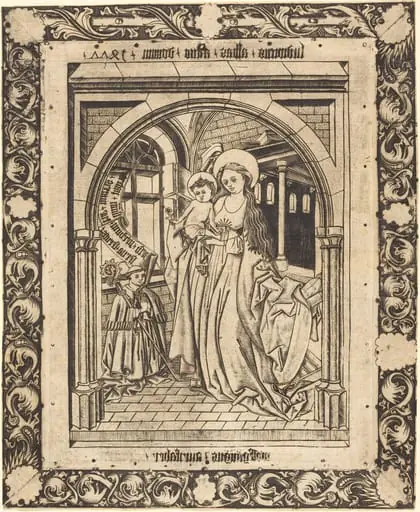 The Madonna and Child with the Abbot Ludwig von Churchwalden
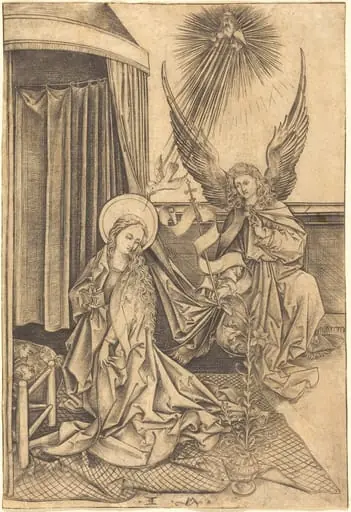 The Annunciation
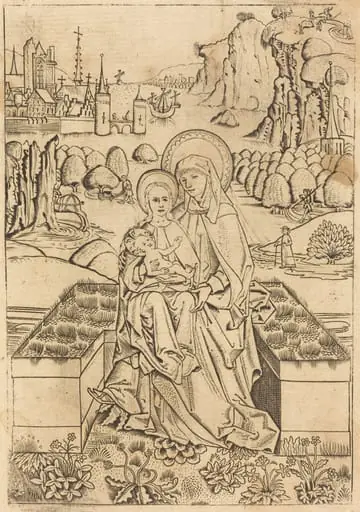 The Madonna and Child with Saint Anne
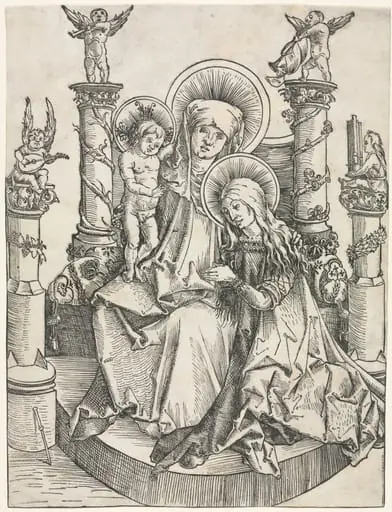 St. Anne, the Virgin and Christ Child
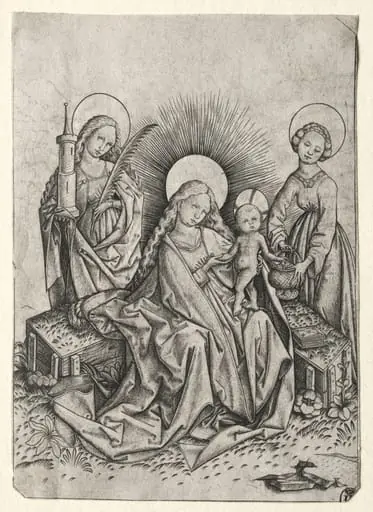 Madonna and Child in a Garden between St. Barbara and st. Dorothy
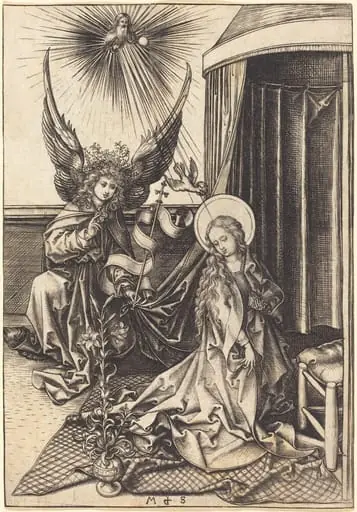 The Annunciation
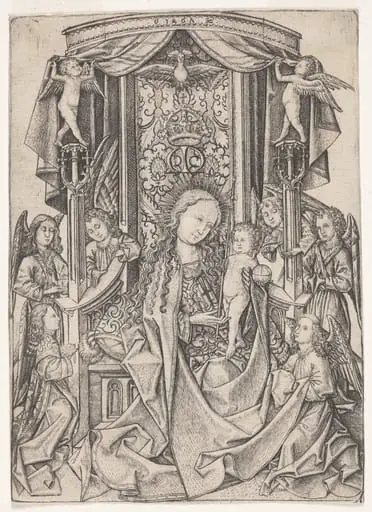 Madonna Enthroned with Eight Angels
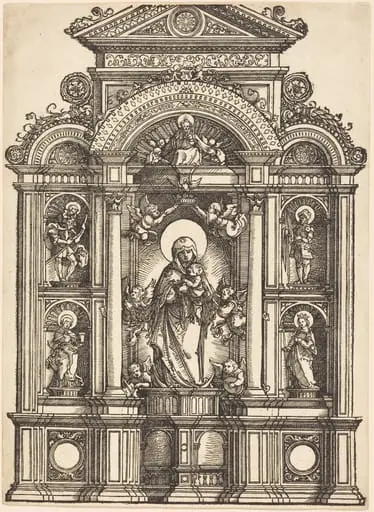 Altarpiece with the Beautiful Virgin of Regensburg and Saints Christopher, Mary Magdalene, Florian, and Catherine Standing in Niches, with God the Father Above
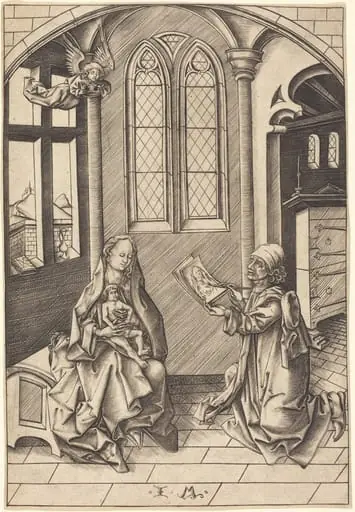 Saint Luke Drawing a Portrait of the Virgin
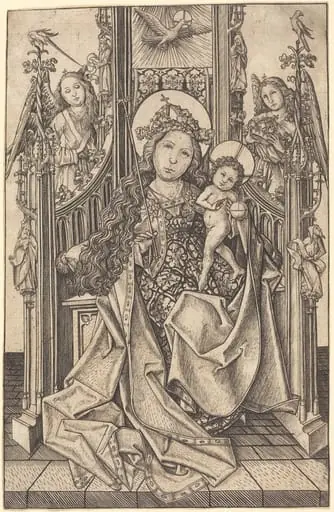 Madonna and Child Enthroned
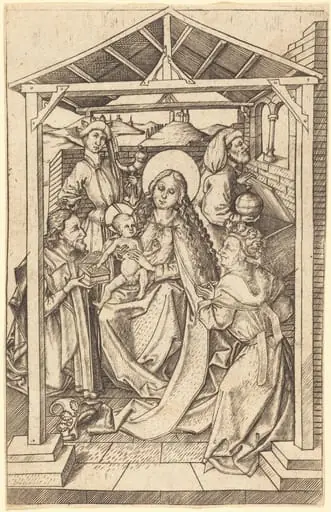 The Adoration of the Magi
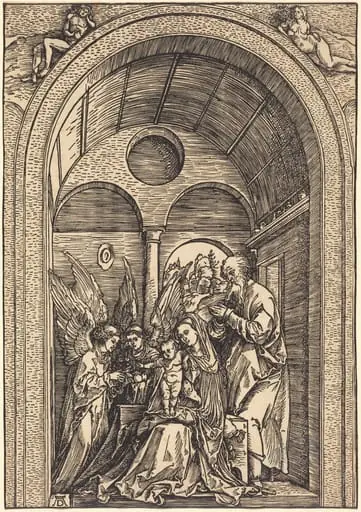 The Holy Family with Two Angels in a Vaulted Hall