Artwork
The Annunciation
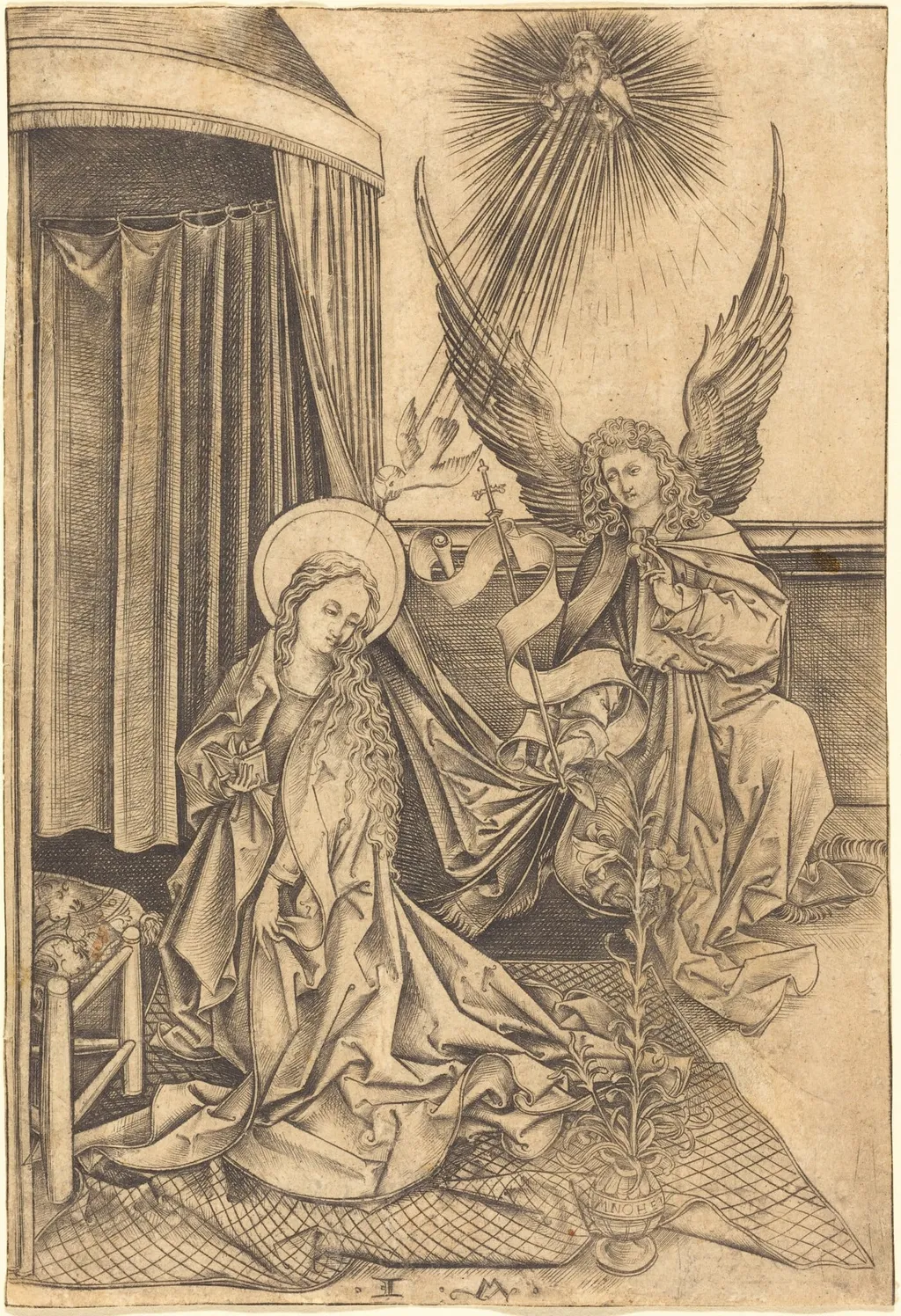
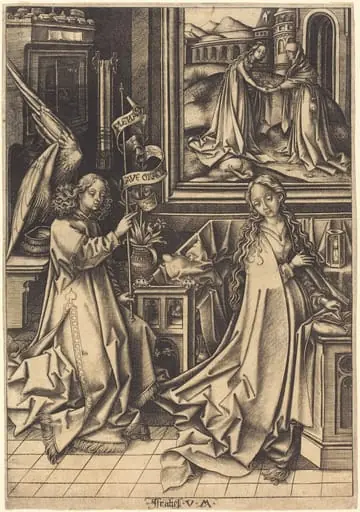
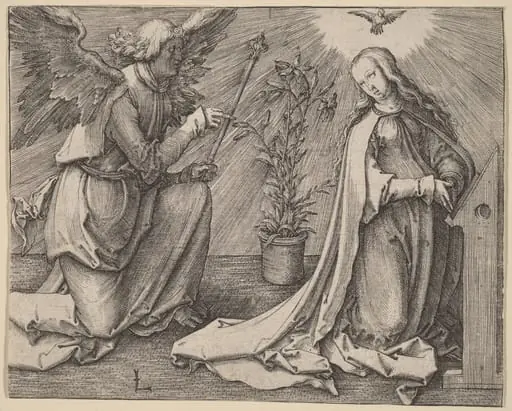
The Annunciation is an ink print by the Renaissance artist Israhel van Meckenem. It dates from 1485 and is held in the collection of the National Gallery of Art. Created circa 1485, this copper‑plate engraving portrays the biblical Annunciation.
About this work
Overview
Created circa 1485, this copper‑plate engraving portrays the biblical Annunciation. The composition is set within a modest interior, illuminated by a shaft of light that radiates behind the angelic messenger. The work balances a kneeling Virgin Mary on the left with the winged Gabriel on the right, each rendered in fine line work characteristic of late‑15th‑century German prints.
Subject & Meaning
The scene captures the moment when the archangel Gabriel informs Mary that she will conceive the Son of God. Mary is shown in a posture of prayerful humility, while Gabriel, crowned with a halo and bearing a cross‑topped staff, embodies divine authority. The luminous rays emphasize the heavenly nature of the announcement and guide the viewer’s focus toward the spiritual revelation.
Technique & Style
Executed with a burin on a polished metal plate, the engraving employs intricate hatching to model the figures, architecture, and patterned floor.
Executed with a burin on a polished metal plate, the engraving employs intricate hatching to model the figures, architecture, and patterned floor. The artist’s handling of line creates a subtle gradation of tone, particularly in the stone‑like walls and the delicate folds of clothing. The use of a radiant halo and light beams demonstrates a keen interest in conveying spiritual illumination through graphic means.
History & Provenance
The print is attributed to Israhel van Meckenem, a German goldsmith and printmaker active between 1465 and 1503. Van Meckenem was the most productive engraver of his century, producing over six hundred impressions, many of which copied earlier compositions. This particular work reflects his engagement with popular devotional subjects and his skill in adapting established iconography for a broad audience.
Context
In the late Gothic period, the Annunciation was a favored motif for both private devotion and public worship. Van Meckenem’s version aligns with contemporary Northern European visual conventions, such as the inclusion of architectural elements and a focus on intimate, domestic settings. The engraving would have been circulated among collectors and pilgrims, serving both as a religious aid and as a testament to the artist’s technical proficiency.
Artist & collection
Artist
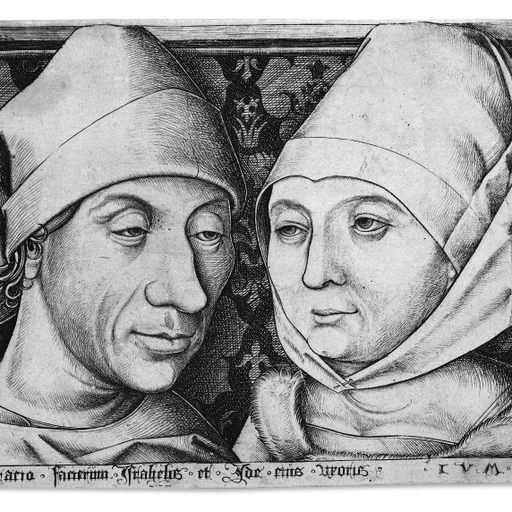
Israhel van Meckenem (c. 1445 – 10 November 1503), also known as Israhel van Meckenem the Younger, was a German printmaker and goldsmith, perhaps of a Dutch family origin. He was the most prolific engraver of the…

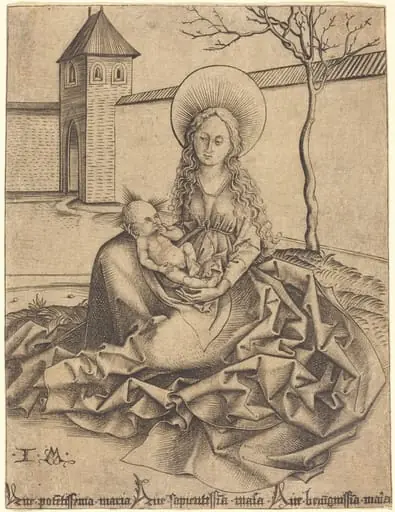
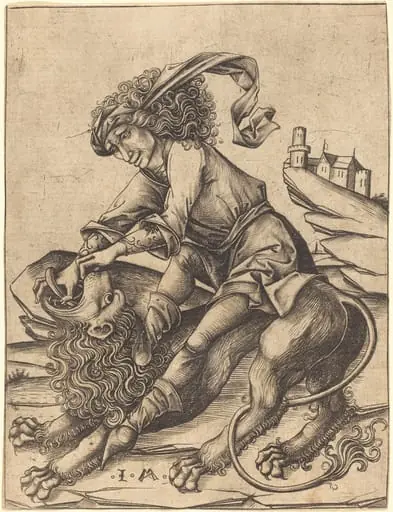
 The Annunciation
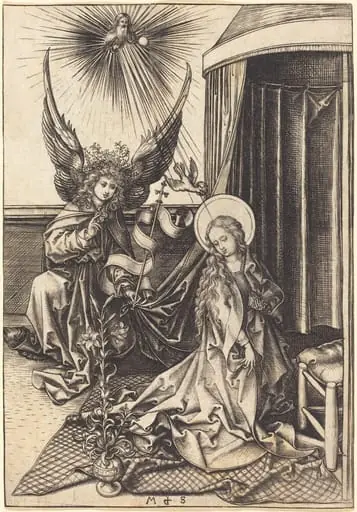 The Annunciation
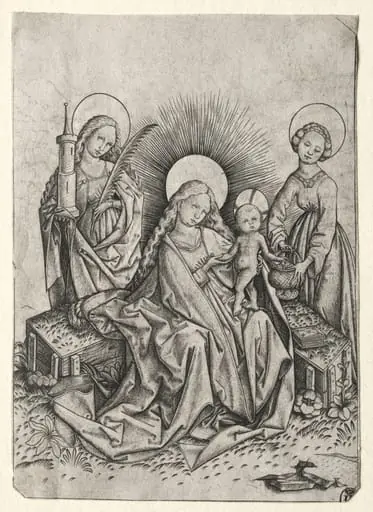 Madonna and Child in a Garden between St. Barbara and st. Dorothy
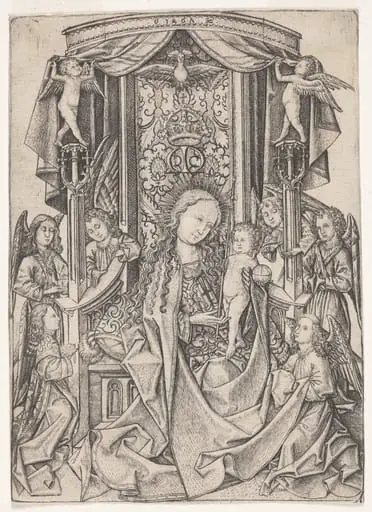 Madonna Enthroned with Eight Angels
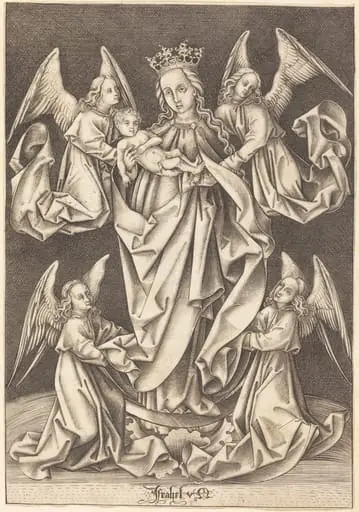 The Madonna and Child on the Crescent Supported by Four Angels
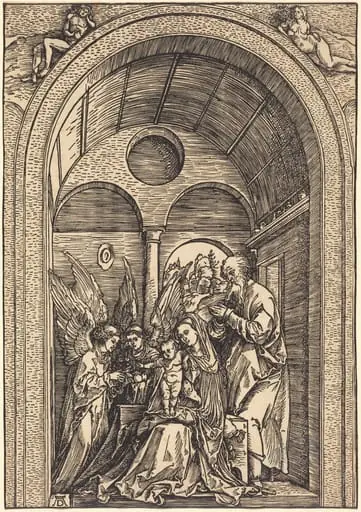 The Holy Family with Two Angels in a Vaulted Hall
 The Virgin and Child Crowned by One Angel
 The Annunciation
 The Holy Family
 The Virgin and Child
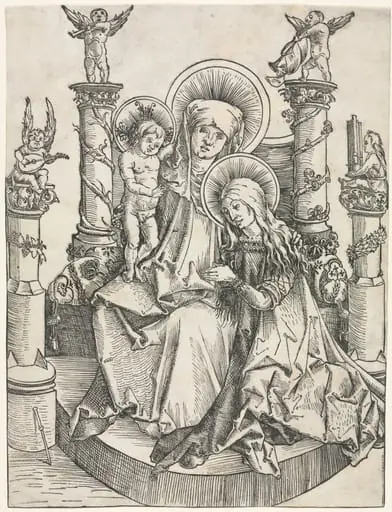 St. Anne, the Virgin and Christ Child
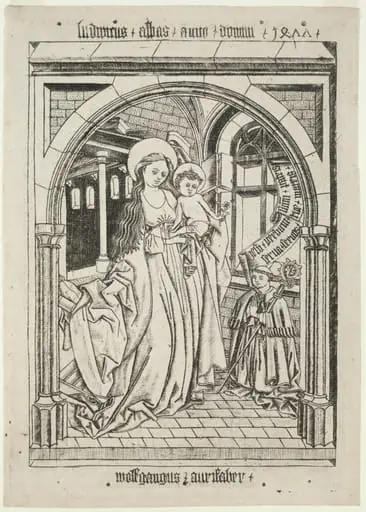 Virgin and Child, Abbot Ludwig Kneeling