Artwork
The Madonna and Child with Saint Anne
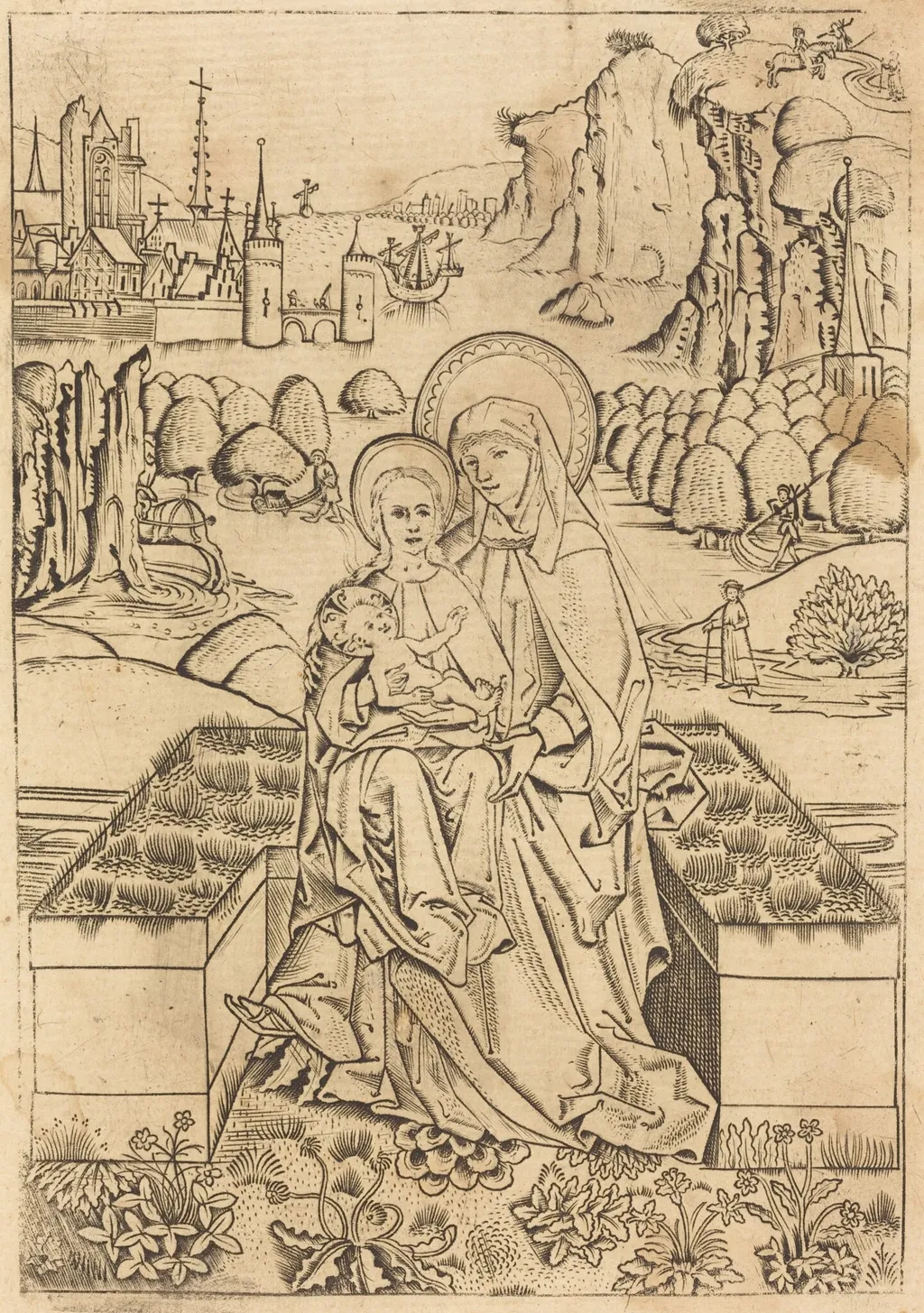
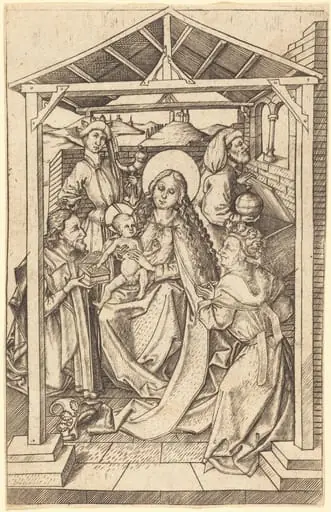
The Madonna and Child with Saint Anne is an ink print by the Renaissance artist Master of St. Sebastian. It dates from 1460 and is held in the collection of the National Gallery of Art. This black-and-white engraving, dated around 1460, depicts a sacred trio: the Virgin Mary, the Christ Child, and Saint Anne.
About this work
Overview
Sebastian, employed meticulous cross-hatching to model form and space, characteristic of early Northern European engraving traditions.
This black-and-white engraving, dated around 1460, depicts a sacred trio: the Virgin Mary, the Christ Child, and Saint Anne. Executed on laid paper using fine linear techniques, the work reflects the devotional imagery common in late medieval printmaking. The artist, known as the Master of St. Sebastian, employed meticulous cross-hatching to model form and space, characteristic of early Northern European engraving traditions.
Subject & Meaning
The composition centers on Mary seated with the infant Jesus on her lap, while Saint Anne, her mother, stands behind them. Mary’s gesture of support and the child’s upward reach suggest tenderness and divine connection. The inclusion of Anne underscores the lineage of Christ’s human ancestry, a theological theme emphasizing Mary’s purity and the Incarnation’s sacred continuity.
Technique & Style
The artist used engraved lines to build volume and atmosphere, with dense cross-hatching defining fabric folds, hair, and landscape elements. The background, rendered with delicate, receding lines, introduces a distant horizon featuring a castle and church, grounding the sacred figures in a tangible world. The absence of color focuses attention on line and texture, typical of early prints designed for private devotion.
History & Provenance
Attributed to the Master of St. Sebastian, an anonymous engraver active in southern Germany or Austria during the mid-15th century, this work survives in a limited number of impressions. Its survival suggests circulation among religious communities or collectors interested in portable devotional images. No definitive ownership record predates the 19th century, though its style aligns with regional print workshops of the period.
Context
Produced during a time when printed images began to replace painted altarpieces in domestic devotion, this engraving reflects the growing accessibility of religious imagery. The detailed landscape and architectural elements echo contemporary panel paintings, while the intimate scale suits personal prayer. Such works helped disseminate theological narratives beyond ecclesiastical settings.
Legacy
Though the artist’s identity remains obscure, this engraving exemplifies the technical refinement achieved by early printmakers before the rise of Dürer and his contemporaries. Its quiet dignity and compositional clarity influenced later Northern European devotional prints, contributing to the evolution of religious imagery in print form during the late Gothic and early Renaissance periods.
Artist & collection


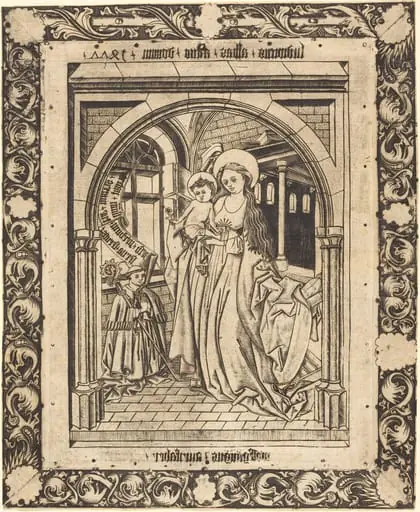 The Madonna and Child with the Abbot Ludwig von Churchwalden
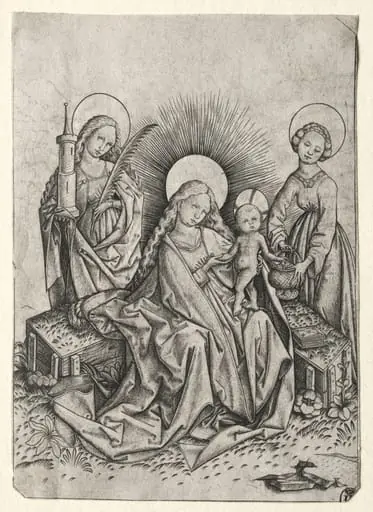 Madonna and Child in a Garden between St. Barbara and st. Dorothy
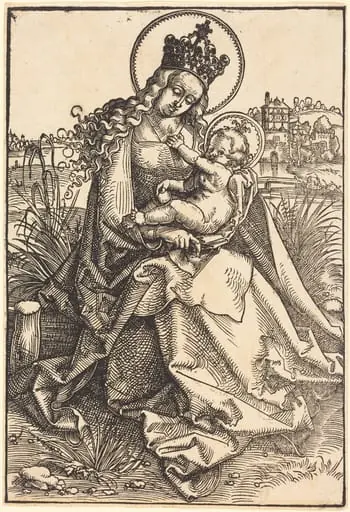 Madonna and Child on the Grassy Bank
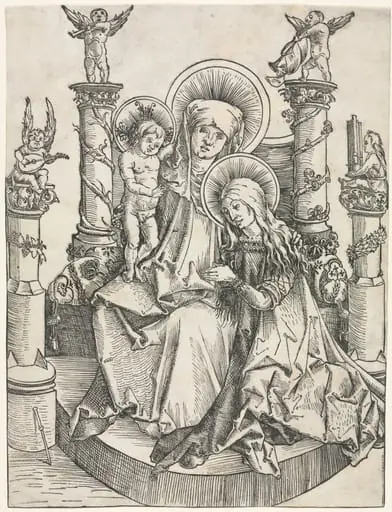 St. Anne, the Virgin and Christ Child
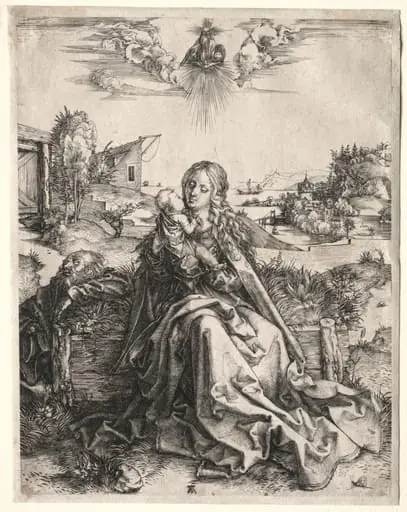 Holy Family with the Butterfly
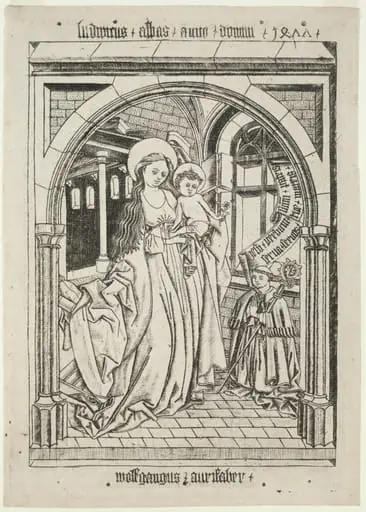 Virgin and Child, Abbot Ludwig Kneeling
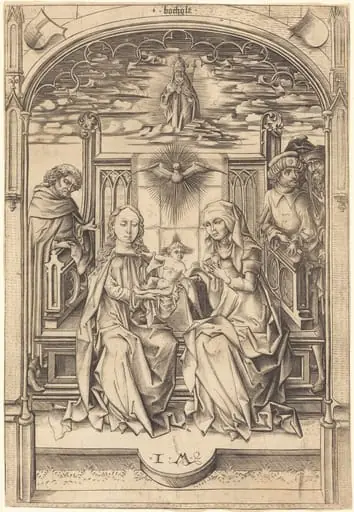 The Holy Family
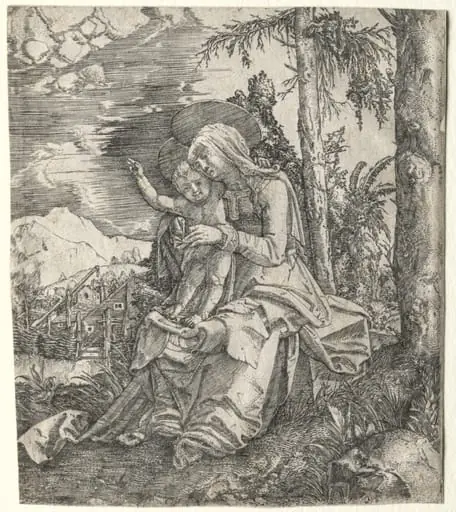 The Virgin in a Landscape
 The Adoration of the Magi