Artwork
Garuda returning with the vase of Amrita
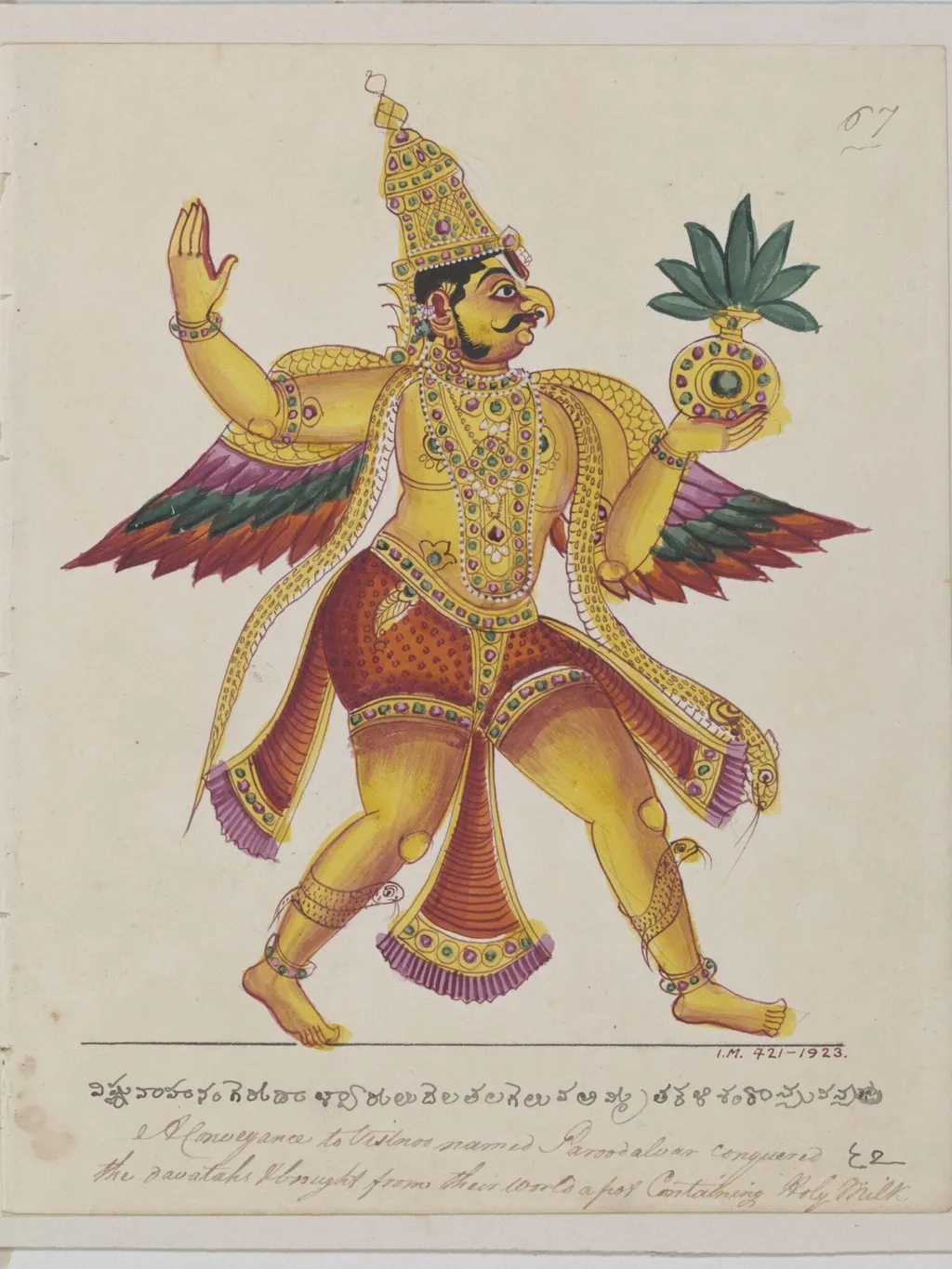
Garuda returning with the vase of Amrita is a paint painting by the Romanticist artist Unknown. It dates from 1825 and is held in the collection of the Victoria and Albert Museum.
About this work
Overview
The composition emphasizes mythological narrative through vivid detail and symbolic form, rooted in regional visual traditions rather than European styles.
This painting, created in South India in 1825, illustrates Garuda, the divine bird and vehicle of Vishnu, as he returns with the vase of Amrita—the nectar of immortality. It belongs to a series of one hundred devotional images produced during a period of active Hindu artistic patronage. The composition emphasizes mythological narrative through vivid detail and symbolic form, rooted in regional visual traditions rather than European styles.
Subject & Meaning
Garuda’s act of retrieving the Amrita from the gods was undertaken to free his mother, Vinata, from servitude to her sister Kadru and the serpent race. The vase, sprouting a green plant, signifies the life-giving power of the elixir. His flight represents triumph over adversity and devotion to familial duty, core themes in Hindu epics. The imagery reinforces Garuda’s role as a protector and agent of divine justice.
Technique & Style
The figure is rendered with precise linear detail, characteristic of South Indian manuscript painting. Garuda’s avian features—beak, wings, and talons—are stylized yet recognizable, blending human and avian anatomy. Rich pigments in red, yellow, and green contrast against a muted beige background. Ornate jewelry and flowing textiles are rendered with fine brushwork, reflecting local conventions of divine representation.
History & Provenance
The work is one of a hundred illustrations commissioned in early 19th-century South India, likely for a temple or royal collection. Such series were produced by artisan workshops trained in classical iconographic rules. The painting’s survival suggests continued reverence for Hindu narratives during colonial rule, when traditional patronage systems were under strain but not fully displaced.
Context
While contemporaneous European Romanticism emphasized emotion and nature, this painting draws from a distinct South Indian devotional tradition. Its focus on myth, ritual, and divine hierarchy aligns with centuries-old illustrated manuscripts of the Puranas. The stylistic choices reflect regional aesthetics, not Western influences, despite superficial similarities in dramatic composition.
Legacy
This painting contributes to a broader corpus of Hindu visual theology that preserved religious narratives through art during a time of cultural transition. Though not widely known outside specialized collections, such works remain vital to understanding the continuity of Indian artistic practices and their role in sustaining spiritual identity beyond textual transmission.
Artist & collection

 Domestic Scene
 Giacomo and Cardinal Marco, investing Andrea, Abbot of San Zeno, with his Benefice
 The Nymph of Fontainebleau
 Portrait of a Woman
 Madonna and Child with Saints in the Enclosed Garden
 Venus and Minerva
 Family Group of Four on Sofa
 Wall painting from Room H of the Villa of P. Fannius Synistor at Boscoreale
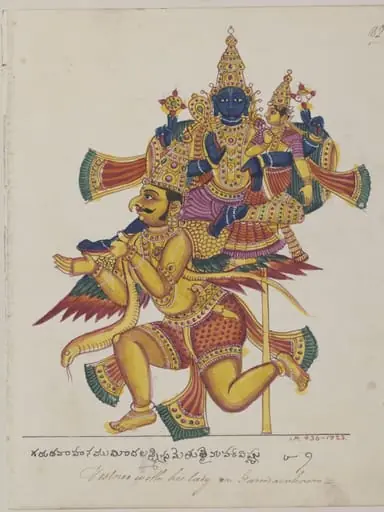 Vishnu and Laksmi
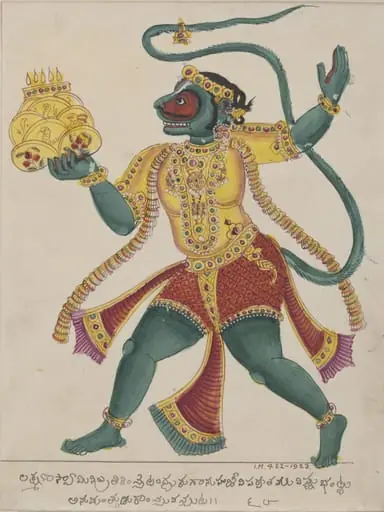 Hanuman
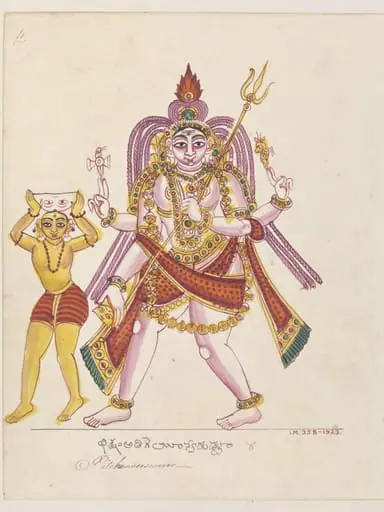 Shiva in his form as Bichandi or Bhikshatana
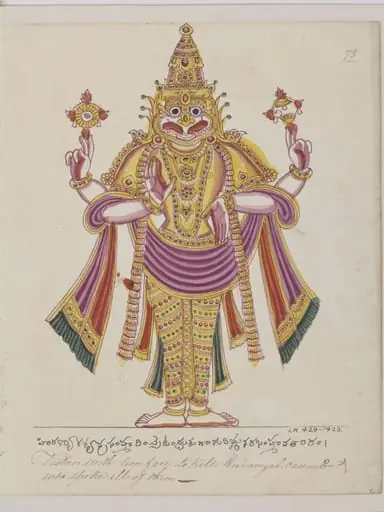 Narasimha, the man-lion, the fourth avatar (incarnation) of Vishnu
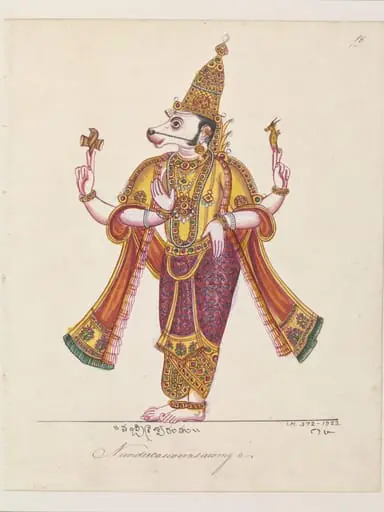 Nandikeshvara, the anthropomorphic form of Nandi and attendant of Shiva.
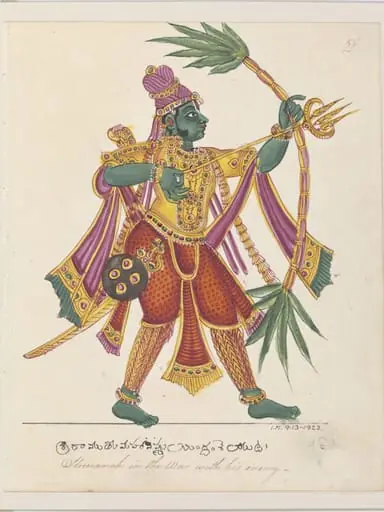 A green-skinned warrior
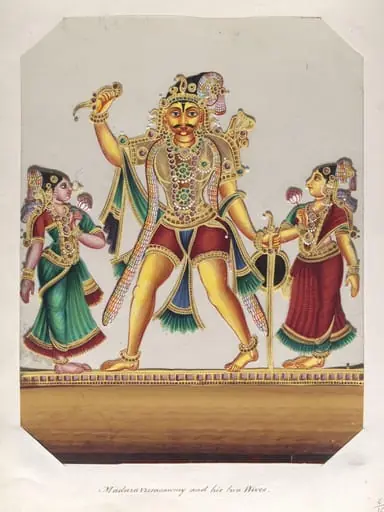 One of sixteen mica paintings depicting Hindu deities and festival processions with decorated cars.
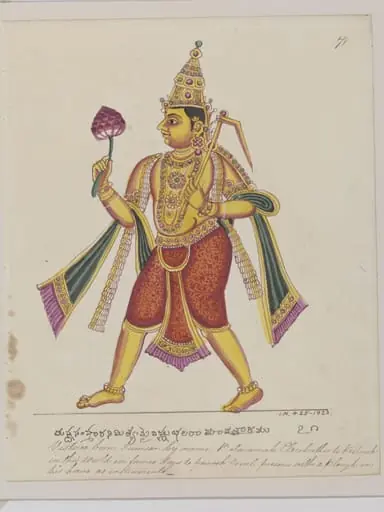 Balarama
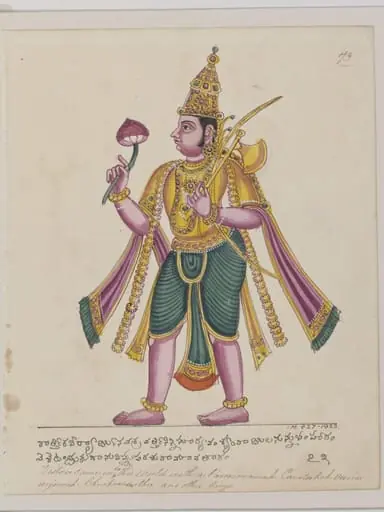 Parasurama Holding an axe and a Lotus Bud
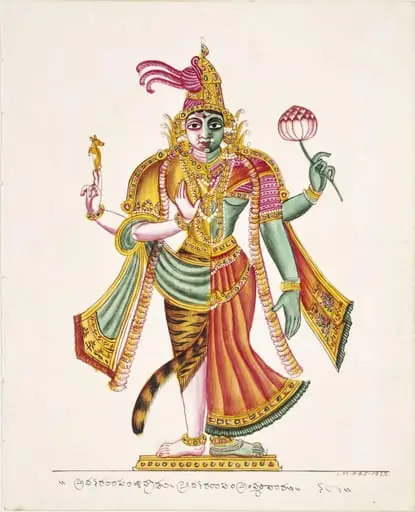 Ardhanari
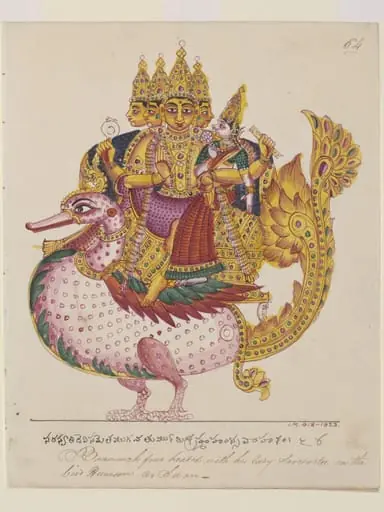 Brahma
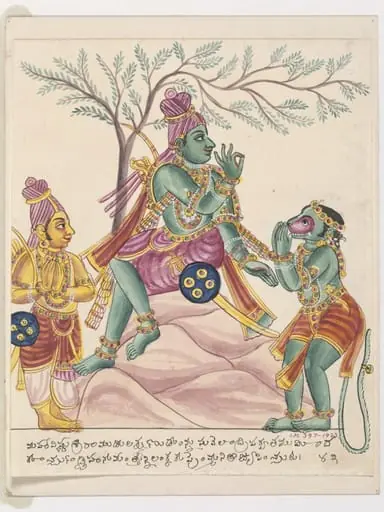 A scene from the Ramayana.