Artwork
Krishna avatar
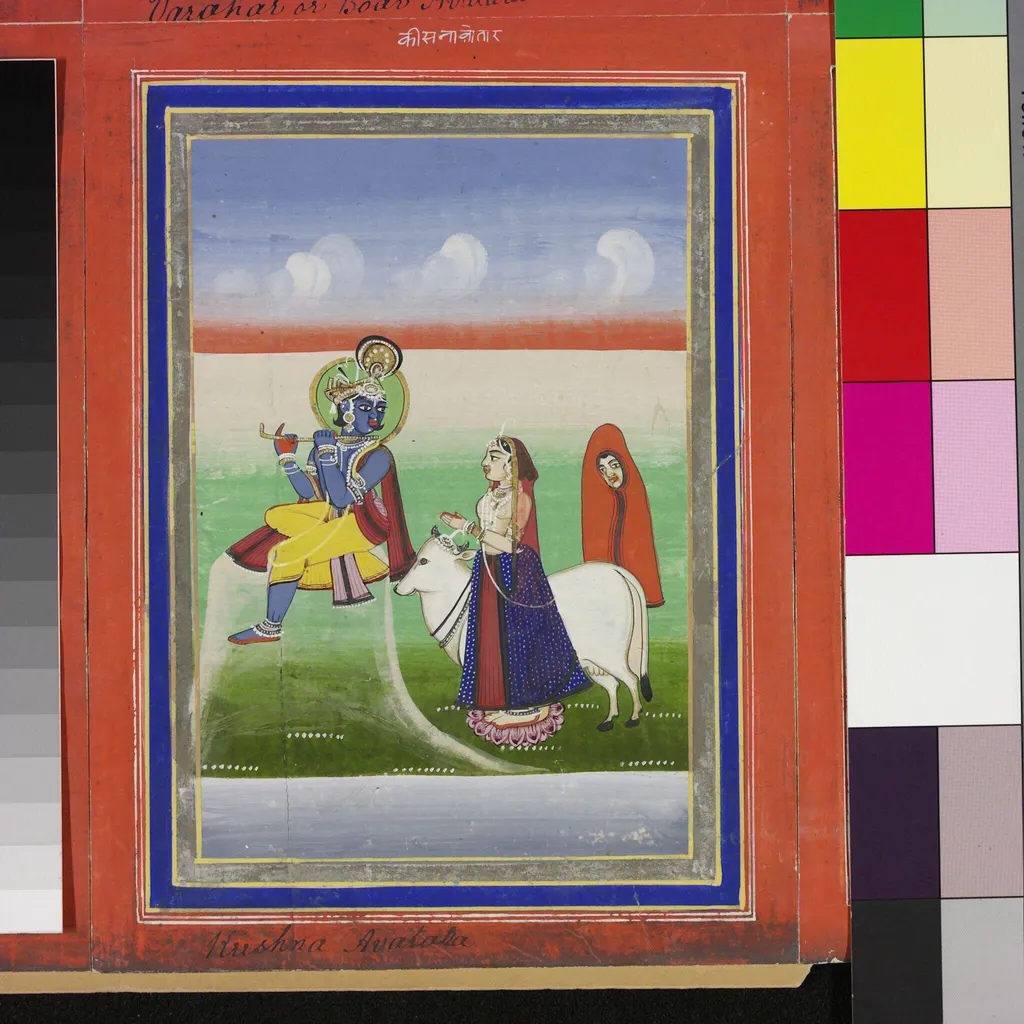
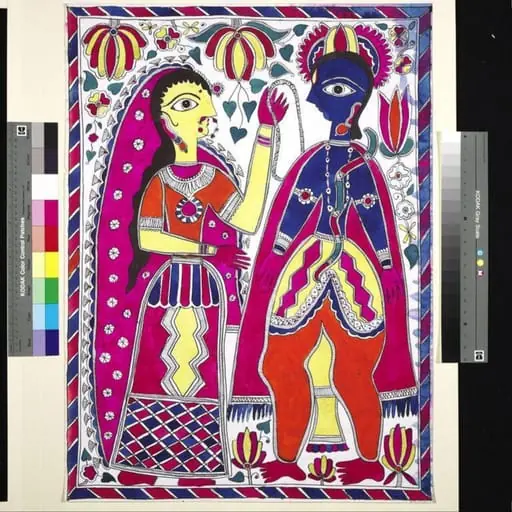
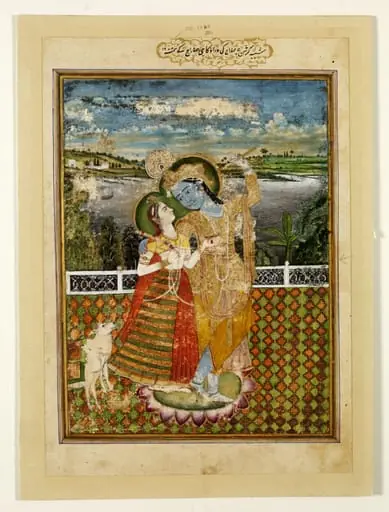
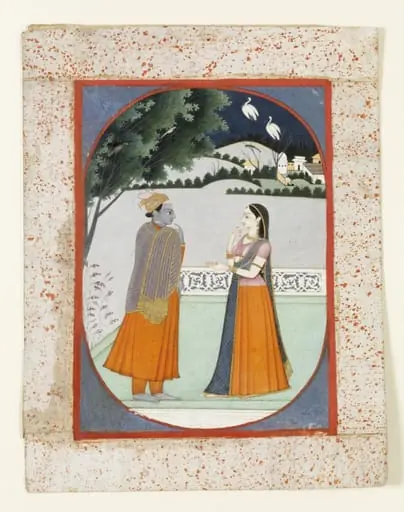
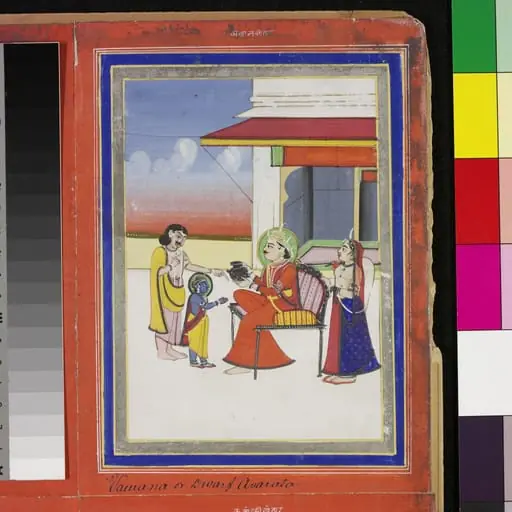
Krishna avatar is a paint painting by Unknown. It dates from 1850 and is held in the collection of the Victoria and Albert Museum. This opaque watercolour on paper, dated around 1850, portrays a scene from Krishna’s pastoral legends.
About this work
Overview
This opaque watercolour on paper, dated around 1850, portrays a scene from Krishna’s pastoral legends.
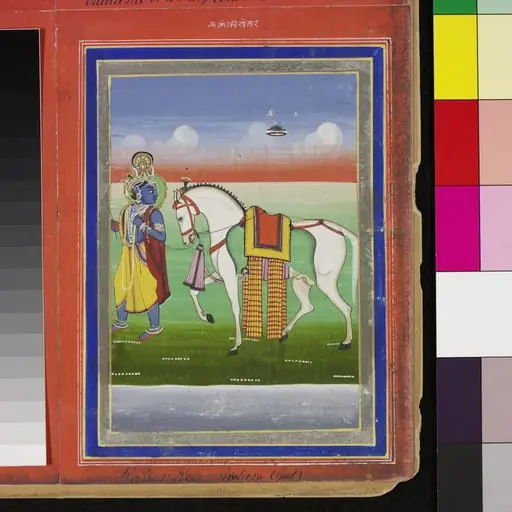
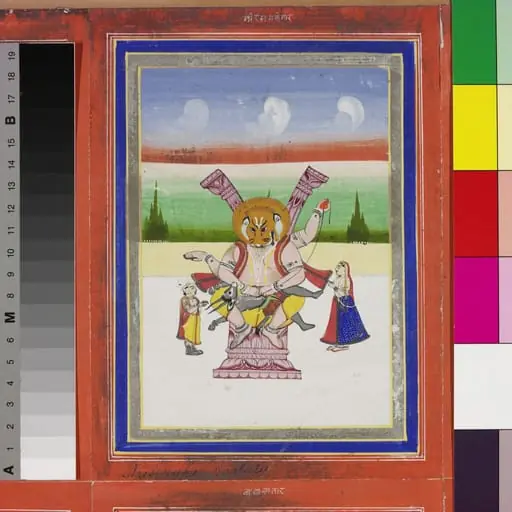
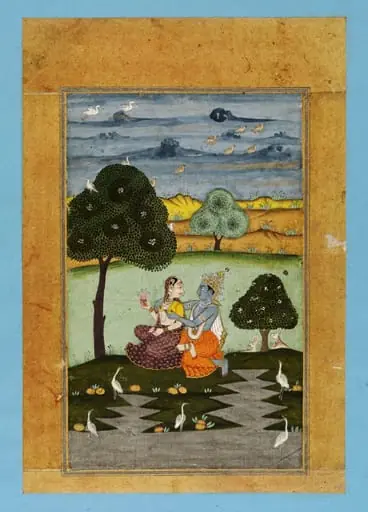
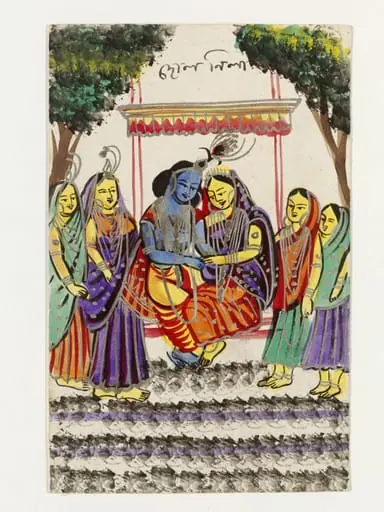
This opaque watercolour on paper, dated around 1850, portrays a scene from Krishna’s pastoral legends. The deity, depicted with blue skin, stands beside a floating white cow, upon which a woman sits. Another woman in red remains on the ground, while a male figure in a draped cape observes nearby. The composition is framed by a bright green landscape and a sky marked by three white crescent moons, with inscriptions in a North Indian script above and below.
Subject & Meaning
The scene references Krishna’s childhood as a cowherd in Vrindavan, where he is said to have played his flute to enchant both humans and animals. The presence of the cow and its rider may symbolize divine care for nature and the pastoral community. The multiple moons suggest a celestial or timeless setting, reinforcing the mythic nature of the moment rather than a literal depiction of daily life.
Technique & Style
The painting employs flat, unmodulated areas of bold colour without shading or perspective, typical of Pahari or Rajasthani miniature traditions. Details are rendered with fine brushwork, particularly in the figures’ garments and the cow’s form. The use of opaque watercolour on paper allows for vibrant hues and crisp outlines, emphasizing symbolic clarity over naturalistic depth.
History & Provenance
Created circa 1850, the work likely originated in a royal atelier in northern India, possibly in the Punjab Hills or Rajasthan, where devotional painting flourished under patronage. Though its specific origin is unrecorded, its style aligns with late 19th-century regional traditions that preserved earlier iconographic conventions. It entered institutional collections in the 20th century, likely through colonial-era acquisitions.
Context
This painting belongs to a broader tradition of Hindu devotional art that visualized stories from the Bhagavata Purana and other sacred texts. Such images were used in private worship, temple rituals, or as illustrated manuscripts. The inclusion of multiple moons and stylized flora reflects a symbolic rather than observational approach, common in regional Indian painting where spiritual meaning outweighed naturalistic representation.
Legacy
Works like this helped preserve and disseminate Krishna’s iconography across generations, influencing later religious art and regional aesthetics. Though not widely exhibited, they remain important references for understanding how devotional narratives were visually codified in pre-modern India. Their continued presence in museum collections underscores their role as cultural artifacts of faith and artistic practice.
Artist & collection

 Domestic Scene
 Giacomo and Cardinal Marco, investing Andrea, Abbot of San Zeno, with his Benefice
 The Nymph of Fontainebleau
 Portrait of a Woman
 Madonna and Child with Saints in the Enclosed Garden
 Venus and Minerva
 Family Group of Four on Sofa
 Wall painting from Room H of the Villa of P. Fannius Synistor at Boscoreale