Artwork
Wallpaper
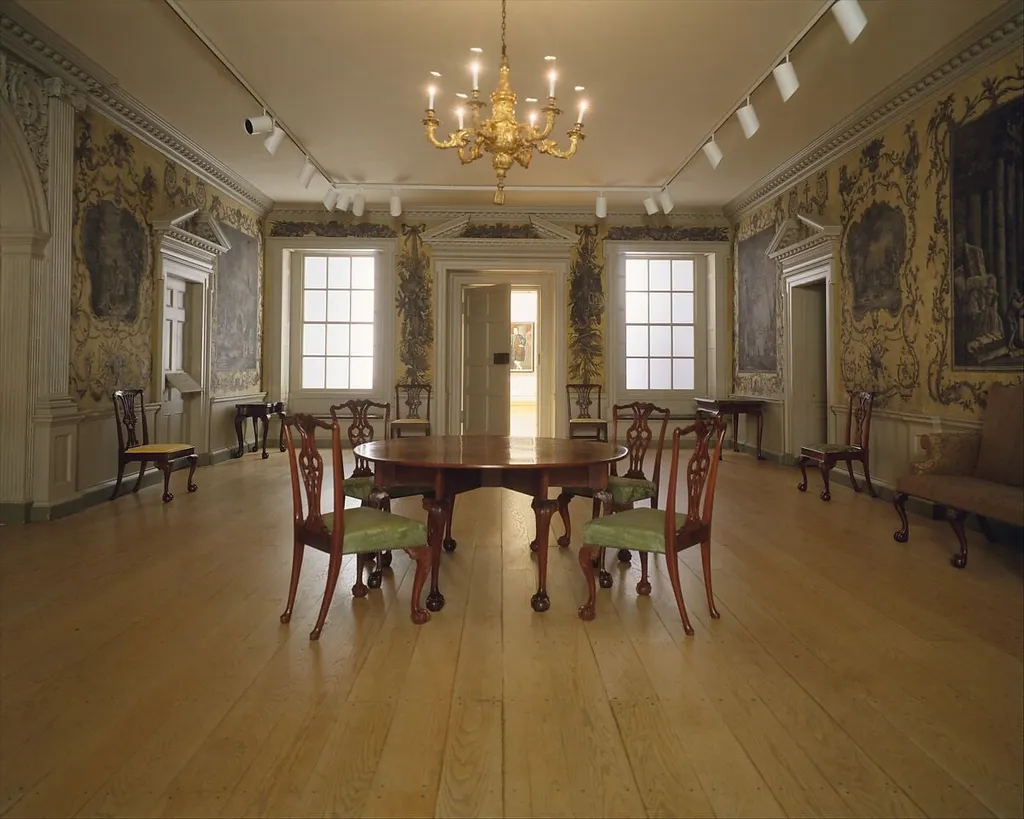
Wallpaper is a tempera work on paper by the Rococo painting artist Unknown. It dates from 1768 and is held in the collection of the Metropolitan Museum of Art.
About this work
Overview
Though devoid of occupants, the room retains a sense of readiness for use, its scale and ornamentation suggesting affluence and attention to detail.
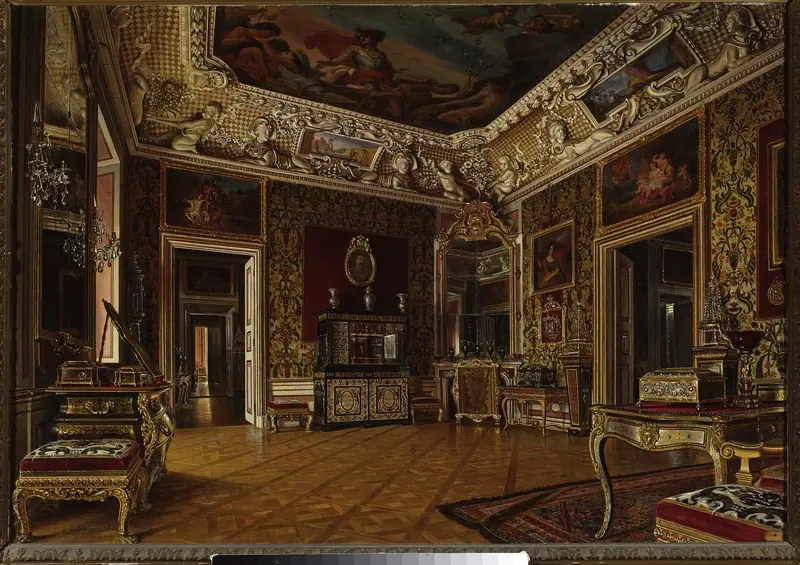
This interior setting, furnished as a formal dining room, features walls covered in hand-painted wallpaper made with tempera on watercolor paper. The space is arranged with a large wooden table, six carved chairs, a golden chandelier, and polished flooring, evoking a late 19th-century American domestic interior. Though devoid of occupants, the room retains a sense of readiness for use, its scale and ornamentation suggesting affluence and attention to detail.
Subject & Meaning
The wallpaper’s intricate, dark swirls and the room’s empty grandeur convey a quiet formality. The absence of paintings on the walls implies a deliberate focus on surface decoration rather than pictorial art, reflecting a period when patterned interiors were valued as expressions of taste and refinement. The stillness suggests a moment suspended between use and absence, emphasizing the ritual of dining as a social performance.
Technique & Style
Tempera paint, applied in fine layers on watercolor paper, enabled precise, durable detailing in the wallpaper’s swirling motifs. The medium’s matte finish and opacity suited the reproduction of complex, repetitive patterns without the gloss of oil. Hand-painted techniques allowed for subtle variations in tone and line, mimicking the look of machine-printed designs while retaining artisanal character.
History & Provenance
The wallpaper was likely produced in the late 1800s for a private residence, later acquired and installed in The American Wing to reconstruct a period interior. Its survival in near-original condition is uncommon, as such wall coverings were frequently replaced or damaged. Its inclusion in the museum reflects a 20th-century interest in preserving domestic environments as cultural artifacts.
Context
During the Gilded Age, affluent American households embraced elaborate interior decoration as a sign of status. Wallpaper, often imported or custom-made, replaced simpler wall treatments. This room’s design aligns with trends favoring rich textures and symmetrical arrangements, mirroring European influences while asserting a distinct domestic identity in the United States.
Legacy
The preserved wallpaper and furnishings offer insight into how middle- and upper-class Americans curated private spaces for social rituals. Its display in a museum context shifts its function from decoration to historical evidence, allowing viewers to consider the labor, materials, and aesthetics behind everyday environments that once defined domestic life.
Artist & collection

 Domestic Scene
 Giacomo and Cardinal Marco, investing Andrea, Abbot of San Zeno, with his Benefice
 The Nymph of Fontainebleau
 Portrait of a Woman
 Madonna and Child with Saints in the Enclosed Garden
 Venus and Minerva
 Family Group of Four on Sofa
 Wall painting from Room H of the Villa of P. Fannius Synistor at Boscoreale
 Laukon kartanon eteishalli
 Perspective design for a panelled dining-room to be executed by William Henry Haynes & Co. Design
 Interior View
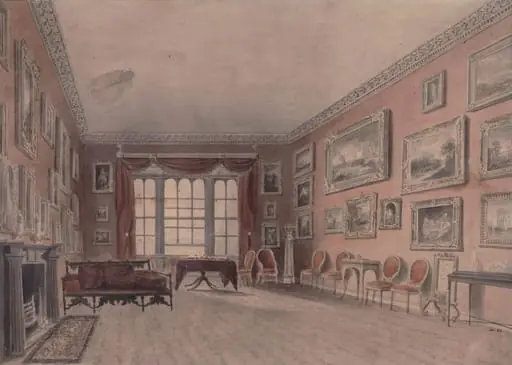 The Gallery at the Browsholme, near Clitheroe
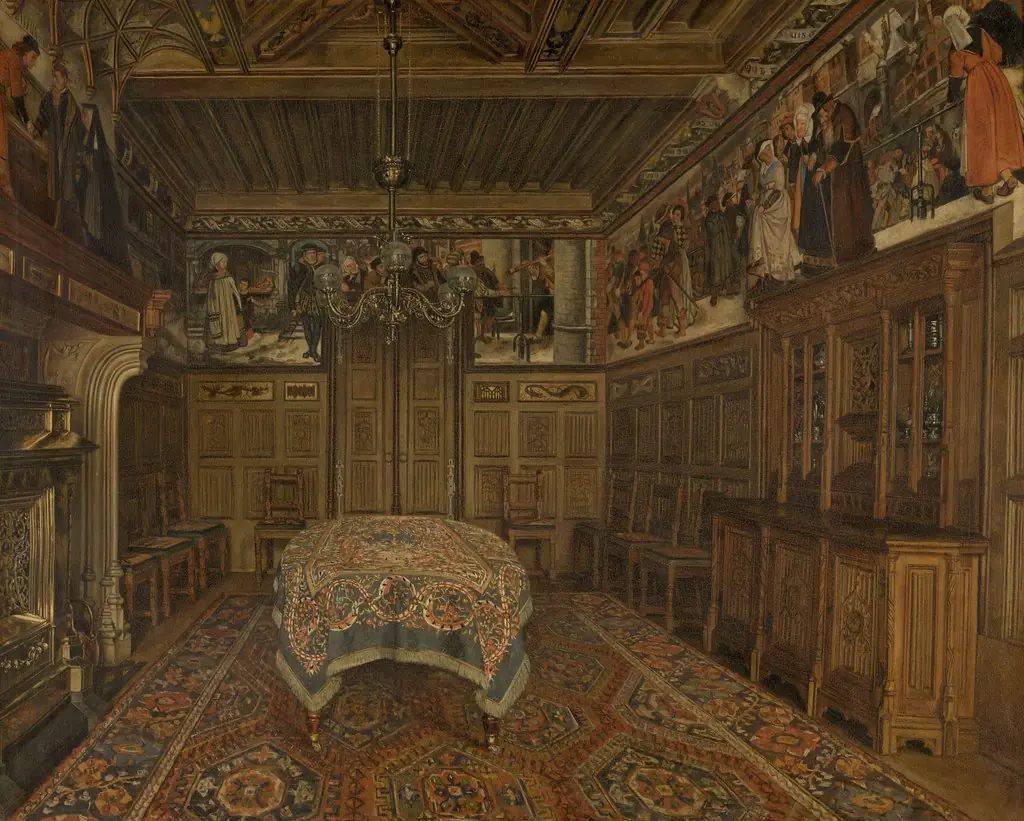 The Dining Room at the Home of the Artist Henri Leys
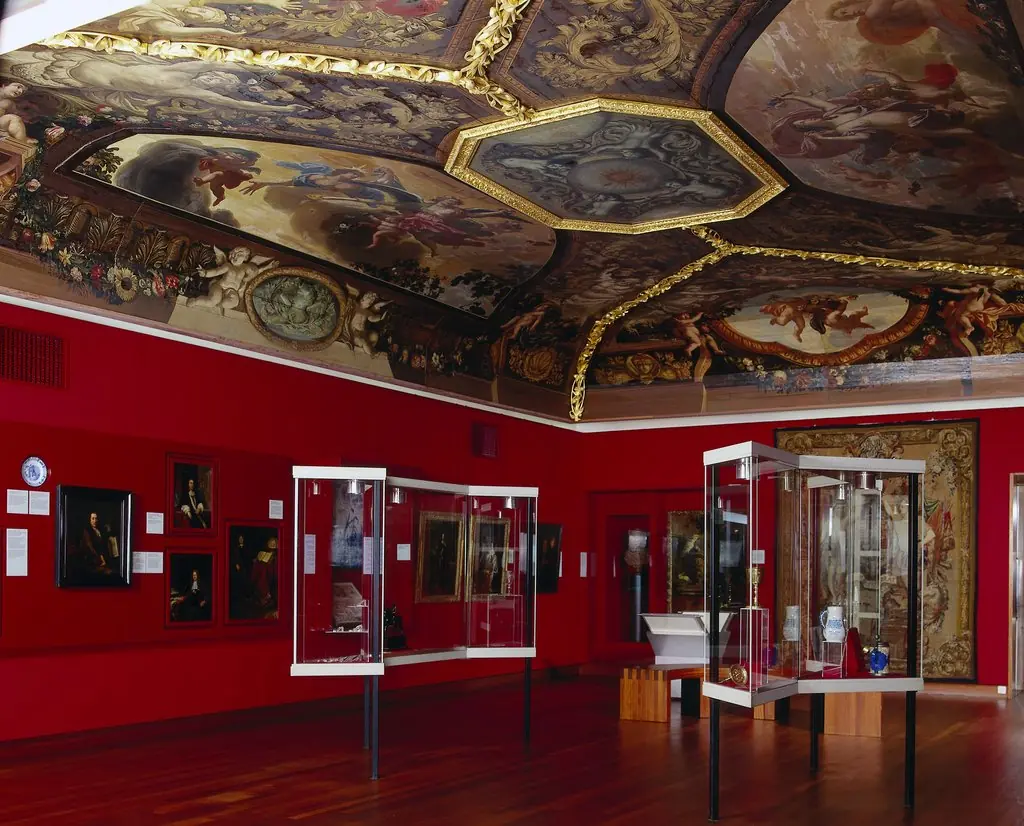 Ceiling with representations of Morning and Evening
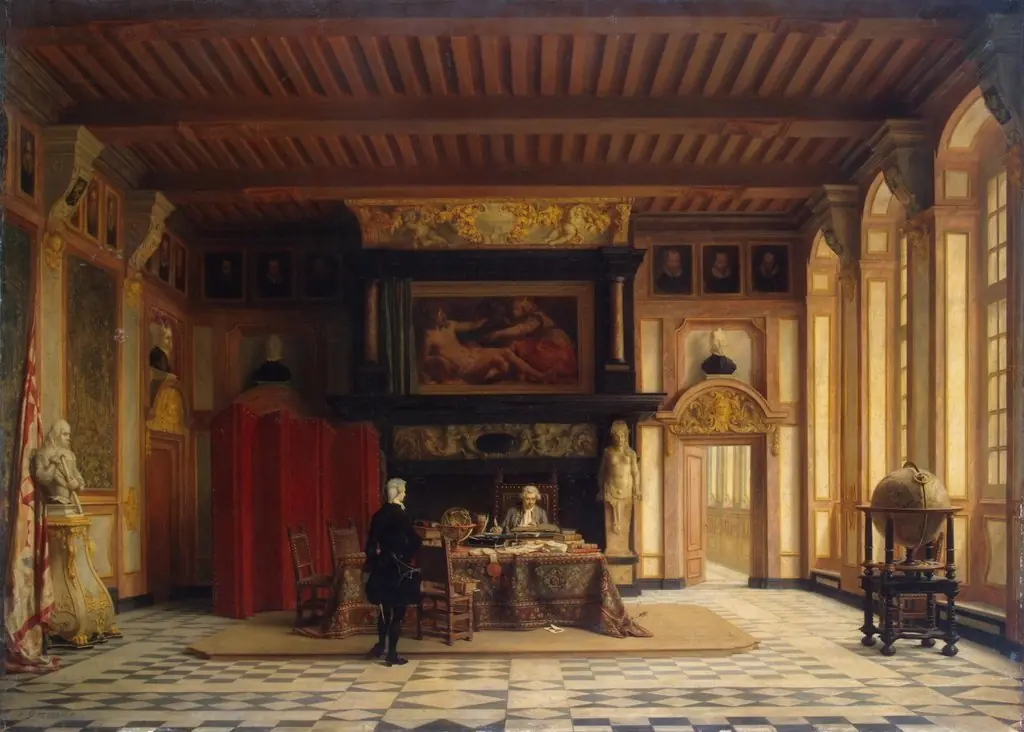 Hall of Estates at the City Council in Antwerp
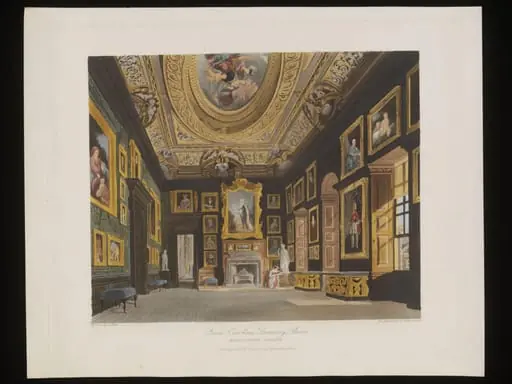 View of Queen Caroline's Drawing Room
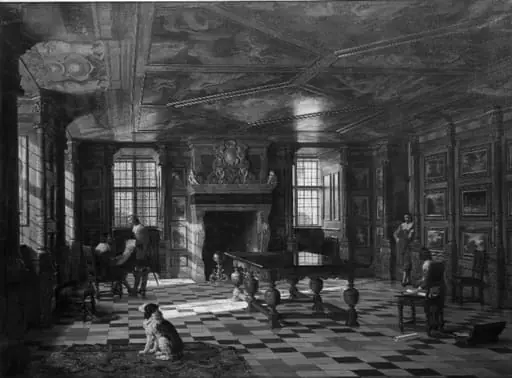 Christian IV's Audience Chamber at Rosenborg Palace, Copenhagen
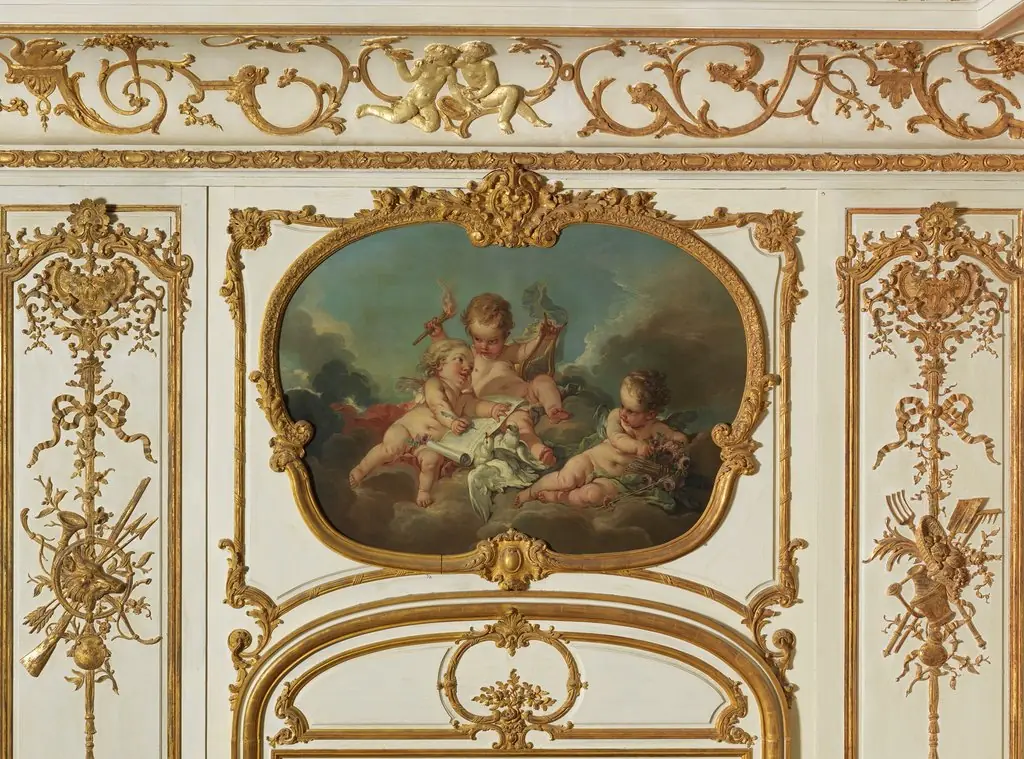 Allegory of Lyric Poetry
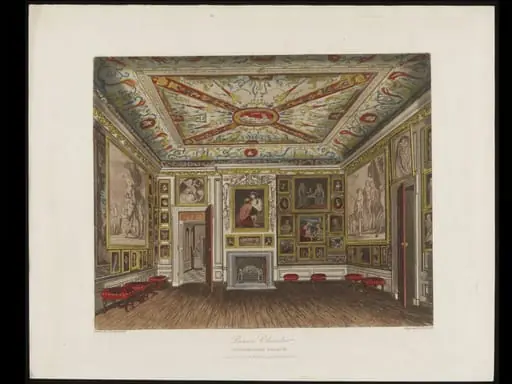 View of the Presence Chamber
 Interior of the royal bedroom at the Wilanów Palace