Artwork
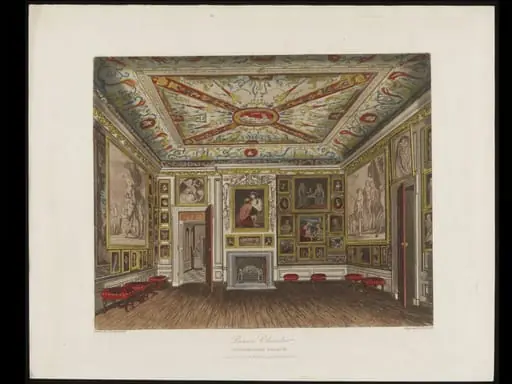
View of Queen Caroline's Drawing Room
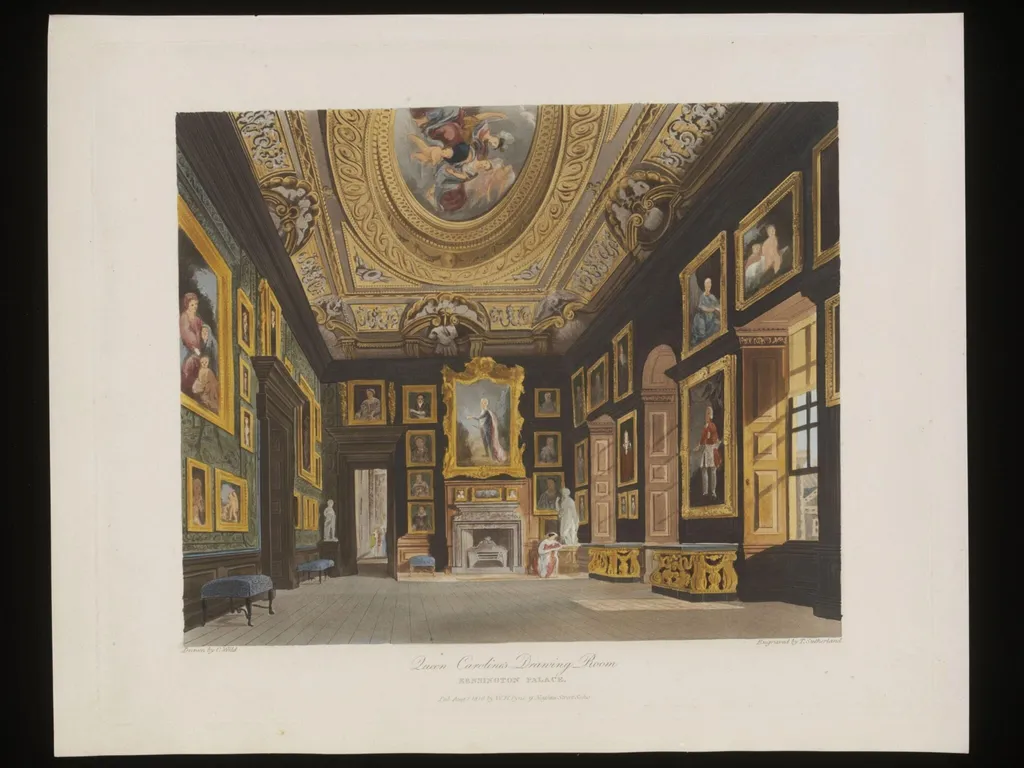
View of Queen Caroline's Drawing Room is a print by the Romanticist artist William Kent. It is held in the collection of the Victoria and Albert Museum.
About this work
This print is titled View of Queen Caroline's Drawing Room. It's a work by William Kent, created in 1816.
The print was part of a larger project to document the royal residences. It was reproduced as a hand-finished aquatint plate, a type of colored print popular at the time.
To learn more about the style and techniques used in this period, look up the movement: Romanticism.
Overview
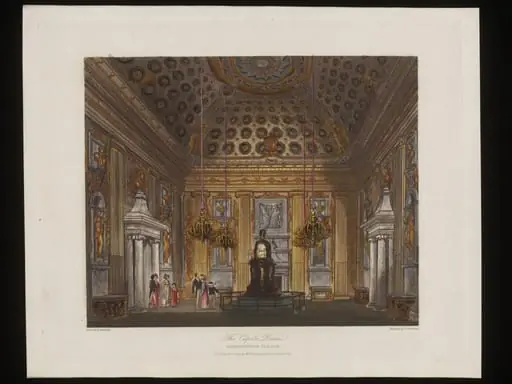
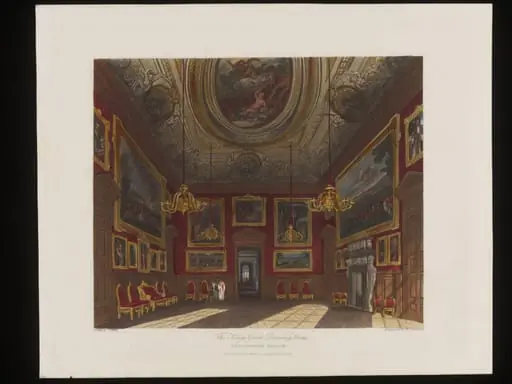
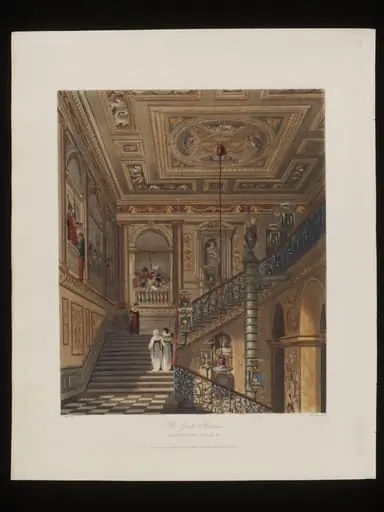
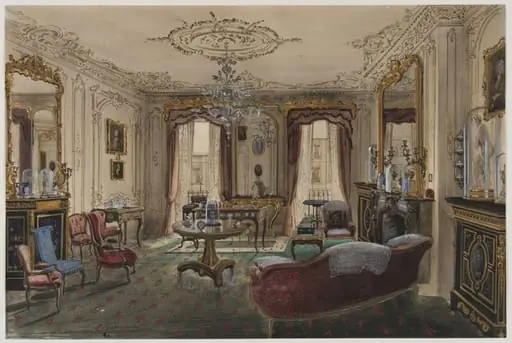
The image titled View of Queen Caroline’s Drawing Room is a hand‑finished aquatint produced in 1816 as part of William Henry Pyne’s multi‑volume survey of the British royal palaces. The print records the interior of the drawing room at Kensington Palace, illustrating the decorative scheme commissioned by King George I and later associated with Queen Caroline.
Subject & Meaning
The scene depicts the richly appointed drawing room used by Queen Caroline, showcasing the neoclassical furnishings, gilded moldings, and wall treatments that exemplify early‑18th‑century court taste. By presenting the room’s layout and decorative details, the print offers insight into the domestic environment of a royal consort and the aesthetic preferences that shaped aristocratic interiors of the period.
Technique & Style
The image was reproduced from an original watercolor through a hand‑finished aquatint process, a colour print method popular in the early nineteenth century. Aquatint allowed subtle tonal variations, while the hand‑coloring added depth to the architectural elements and textiles, reflecting the Romantic era’s interest in detailed, atmospheric representation of historic spaces.
History & Provenance
Commissioned by Pyne for his three‑volume History of the Royal Residences (1816‑19), the aquatint was one of one hundred illustrations intended to accompany his text. The plates were produced in London and distributed with the costly publication, which today serves as a primary documentary source for the appearance of royal interiors at the turn of the nineteenth century.
Context
The drawing room’s decoration originated in the 1720s renovation of Kensington Palace under King George I, when the young architect William Kent was appointed to replace the court painter Sir James Thornhill. Kent’s Palladian‑inspired designs, noted for their restrained elegance and economical execution, set a precedent for later royal interior schemes and influenced the aesthetic direction of British aristocratic homes.
Artist & collection
Artist
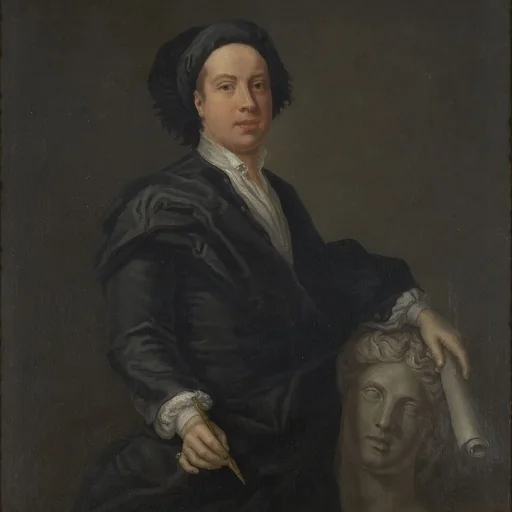
William Kent (c. 1685 – 12 April 1748) was an English architect, landscape architect, painter and furniture designer of the early 18th century. He began his career as a painter, and became Principal Painter in Ordinary…