Artwork
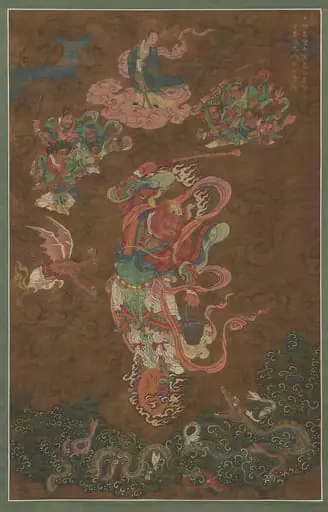
Zhang Xian Shoots the Heavenly Dog
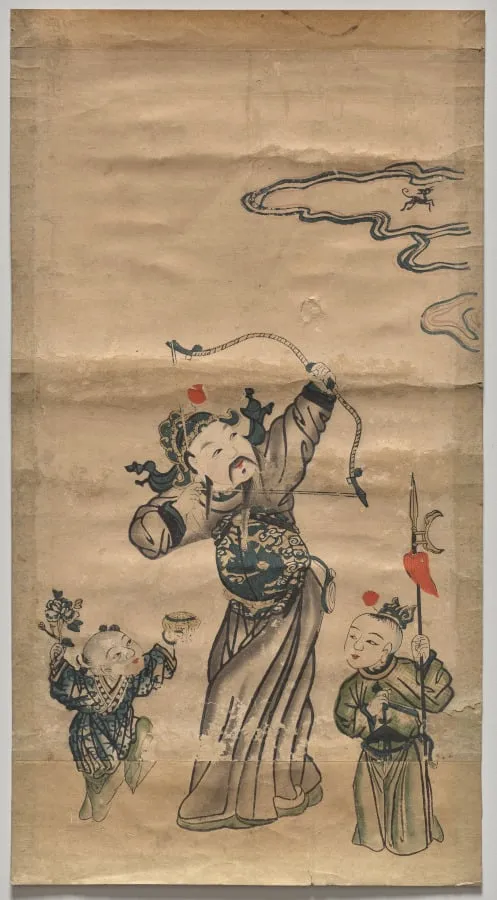
Zhang Xian Shoots the Heavenly Dog is a print by the Romanticist artist Unknown. It dates from 1836 and is held in the collection of the Cleveland Museum of Art. The work is a color woodblock print depicting a figure in a red robe drawing a bow toward a dark, dog‑shaped cloud.
About this work
This painting shows a folk tale: Zhang Xian, a Daoist immortal, shoots the "Heavenly Dog" to stop eclipses.
You see a man in a red robe drawing a bow, aiming at a dark cloud shaped like a dog.
This painting shows a folk tale: Zhang Xian, a Daoist immortal, shoots the "Heavenly Dog" to stop eclipses. The artist used bright colors and bold outlines—common in Chinese New Year prints. These prints were cheap, mass-produced, and hung in homes for luck.
If you like this, look up *china, qing dynasty (1644–1911)*.
Overview
The work is a color woodblock print depicting a figure in a red robe drawing a bow toward a dark, dog‑shaped cloud. It illustrates the legend of Zhang Xian, a Daoist immortal who is said to have shot the celestial dog to prevent eclipses. The composition employs vivid pigments and strong line work typical of popular prints intended for domestic display.
Subject & Meaning
The scene visualizes a folk narrative in which Zhang Xian intervenes in the heavens, aiming his arrow at the ominous canine form that threatens to obscure the sun. The act symbolizes the protection of the community from celestial misfortune, a theme often invoked for auspicious purposes during festivals.
Technique & Style
Executed with bright, saturated inks and pronounced outlines, the print reflects the aesthetic of Chinese New Year illustrations. The woodblock method allowed for rapid, inexpensive reproduction, resulting in a flat, graphic quality that emphasizes bold color contrasts over subtle shading.
History & Provenance
Produced in the 17th century, the piece originates from the flourishing print culture of Jiangnan’s urban centers—Nanjing, Suzhou, Hangzhou, and Huizhou—where private illustrated books gave way to single‑sheet prints for wall decoration. Such prints were widely circulated among households seeking decorative and talismanic imagery.
Context
During the early Qing period, the demand for affordable, colorful prints grew alongside a vibrant visual culture in Chinese cities. These works served both decorative and protective functions, often displayed during celebrations to attract good fortune and ward off ill omens.
Artist & collection

 Domestic Scene
 Giacomo and Cardinal Marco, investing Andrea, Abbot of San Zeno, with his Benefice
 The Nymph of Fontainebleau
 Portrait of a Woman
 Madonna and Child with Saints in the Enclosed Garden
 Venus and Minerva
 Family Group of Four on Sofa
 Wall painting from Room H of the Villa of P. Fannius Synistor at Boscoreale
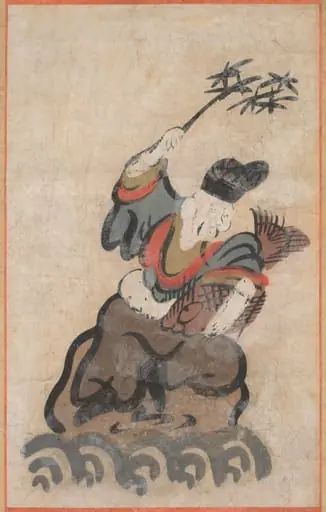 Ebisu
Ebisu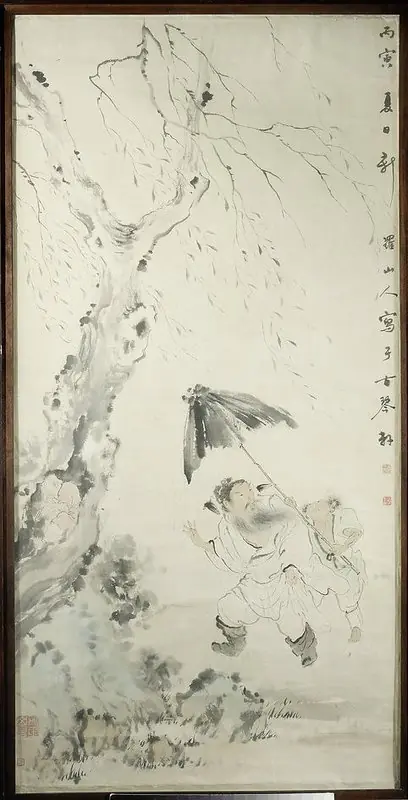 Pijany Zhong Kui - Władca demonów
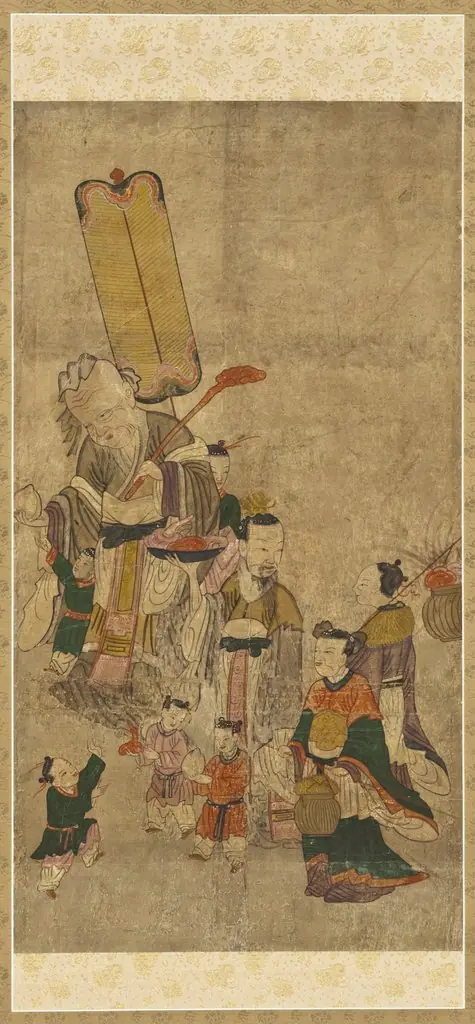 Dongfang Shuo (Tongbang Sak), one of the Eight Chinese Immortals
 Untitled
 明 陳洪綬 準提佛母法像圖 軸|Bodhisattva Guanyin in the Form of the Buddha Mother
 明/清 佚名 舊傳李公麟 法海靈山圖 冊|Procession of Arhats
 明 /清 佚名 李公麟 偽款 龍王請齋圖 卷|Buddhist luohans crossing the sea to the palace of the dragon king
 明嘉靖 佚名 王元帥圖 軸|Marshal Wang