Artwork
Shunshoku, Onkyoku no Shirabe|Spring Scenery; Melody of a Musical Performance
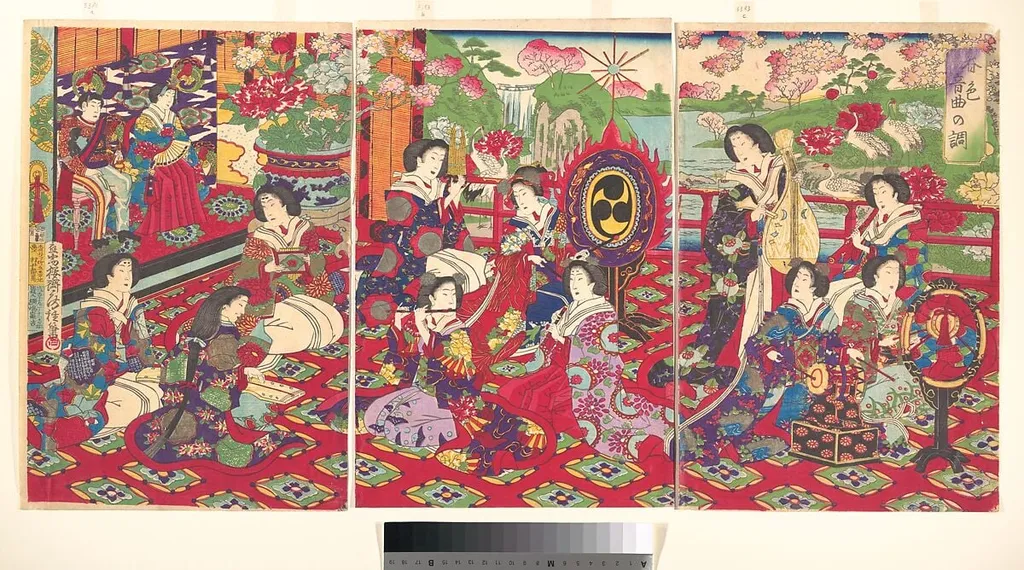
Shunshoku, Onkyoku no Shirabe|Spring Scenery; Melody of a Musical Performance is an ink print by the Impressionist artist Utagawa Fusatane. It is held in the collection of the Metropolitan Museum of Art.
About this work
Overview
Created in 1877 by Utagawa Fusatane, this triptych depicts a springtime musical gathering through three connected woodblock prints.
Created in 1877 by Utagawa Fusatane, this triptych depicts a springtime musical gathering through three connected woodblock prints. Ink and color on paper capture an intimate yet vibrant scene, typical of late Edo-period ukiyo-e. The work is part of the collection at The Metropolitan Museum of Art, where it reflects the enduring appeal of domestic leisure and seasonal ritual in Japanese printmaking.
Subject & Meaning
The scene portrays women engaged in a musical performance within a garden setting, their instruments including drums and flutes. The presence of cherry blossoms and a full moon suggests a celebration of spring’s transience, a common theme in Japanese aesthetics. The figures, arranged with quiet focus, convey a sense of refined leisure, linking music, nature, and seasonal awareness as interconnected cultural values.
Technique & Style
Fusatane employed bold outlines and flat areas of color to define figures and architecture, characteristic of ukiyo-e conventions. The composition balances dense activity with open spaces, guiding the viewer’s eye across the triptych’s three panels. Delicate details in the blossoms and moon contrast with the solid forms of robes and mats, creating rhythm without clutter. The print’s clarity and precision reflect skilled carving and printing techniques.
History & Provenance
Produced in 1877, during the early Meiji period, the work emerged as traditional ukiyo-e practices persisted amid rapid modernization. It was likely commissioned for private collectors interested in cultural continuity. The print entered The Metropolitan Museum of Art’s collection through documented acquisition, preserving its place in the history of Japanese prints outside Japan.
Context
This print belongs to a tradition of domestic scenes that flourished in the 19th century, where music, poetry, and nature were intertwined in elite leisure. While urban life modernized, prints like this sustained ideals of refined, seasonal enjoyment. Fusatane’s work reflects the transition from Edo to Meiji aesthetics, maintaining classical motifs even as new technologies and tastes emerged.
Legacy
Though not widely known outside specialist circles, Fusatane’s triptych exemplifies the quiet endurance of ukiyo-e themes into the Meiji era. It contributes to the understanding of how traditional subjects were preserved in print form during Japan’s modernization. The work remains a reference for scholars studying the evolution of domestic imagery in late 19th-century Japanese art.
Artist & collection

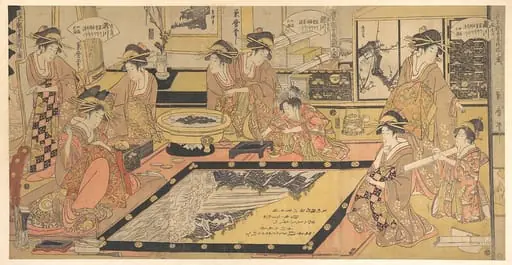 『浅草観音奉掛額之 図』 「扇屋内滝川 富川、粂川、玉川、津川、歌川、清川 め浪、お浪」|A Votive Picture to Be Donated to the Kannon of Asakusa (Asakusa Kannon hō kakegaku no zu), by Takigawa of the Ōgiya, Kamuro Menami and Onami, with Tomikawa, Kumegawa, Tamagawa, Tsugawa, Utagawa, and Kiyokawa
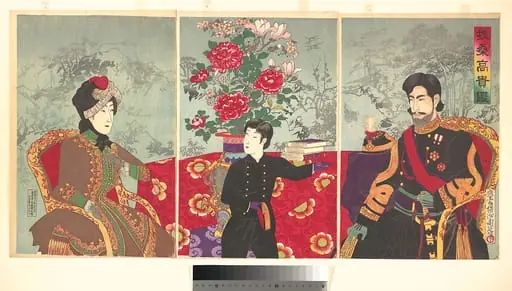 『扶桑高貴鑑』|A Mirror of Japan’s Nobility: The Emperor Meiji, His Wife, and Prince Haru (Fūsō kōki kagami)
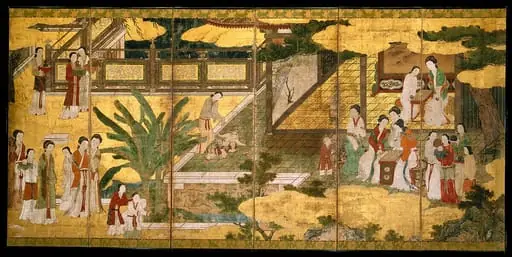 伝狩野永徳筆 唐美人唐子図屏風|Chinese Women and Children in a Palace Garden
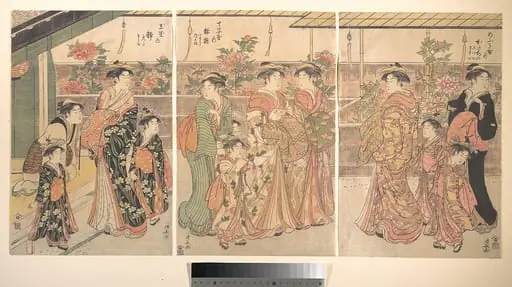 仲の町の牡丹|The Peony Show
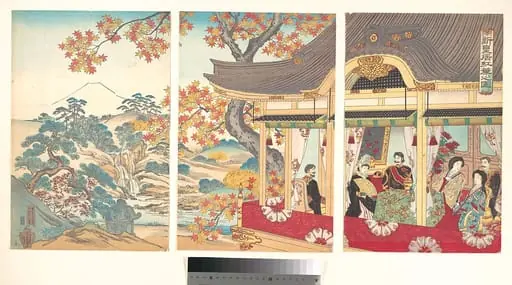 Untitled
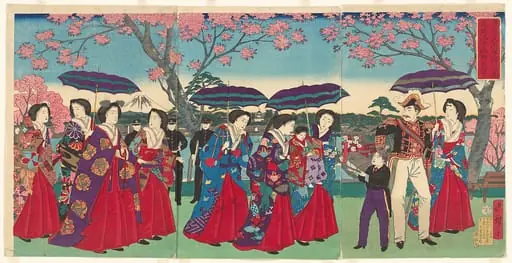 三代歌川広重画 『東京名所 従上野公園 不忍池中嶋弁天之景』|View of Benten Shrine on Nakanoshima Island in Shinobazu Pond, Ueno Park, from the series Famous Views of Tokyo (Tōkyō Tokyo meisho yori Ueno kōen Shinobazu no ike Nakanoshima Benten no kei)
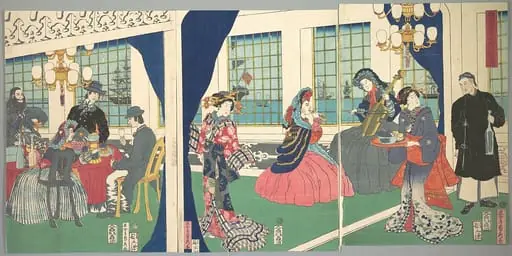 Untitled
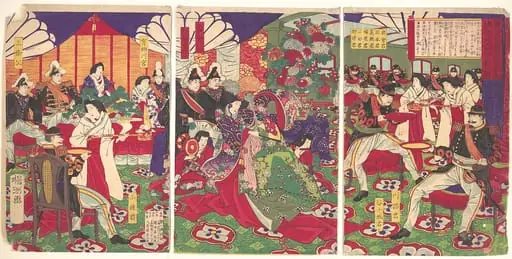 『鹿児島賊徒鎮静依諸将 天杯頂戴之図』|Leaders of the Pacification of the Kagoshima Rebels Celebrating with Cups of Wine from the Emperor (Kagoshima zokuto chinsei ni yotte shoshō tenhai chōdai no zu)
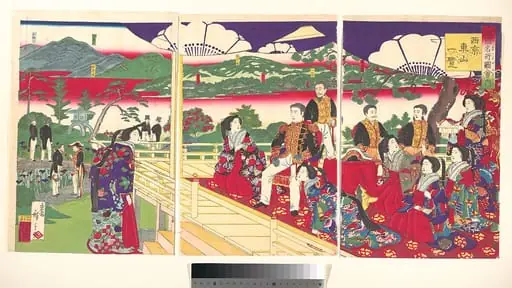 諸国名所図会内 西京東山一覧|A Glimpse of Higayashiyama the Western Capital, from the series Famous Places in the Nation (Shokoku meisho zukai no uchi-Saikyō Higashiyama ichiran)
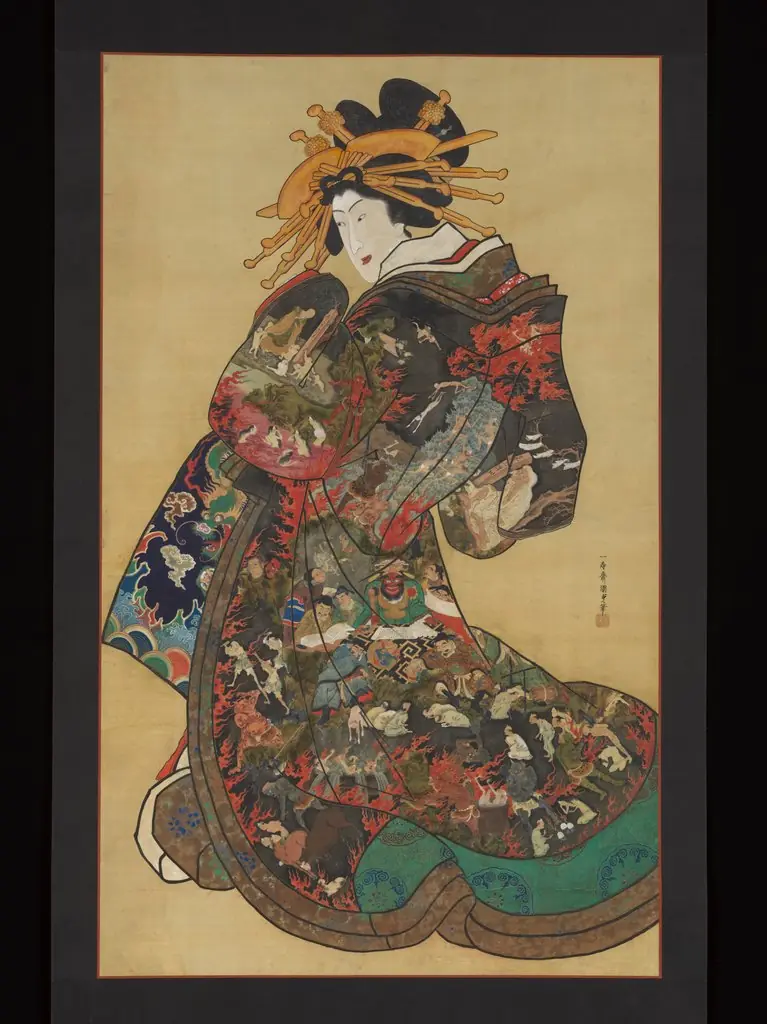 The Hell Courtesan
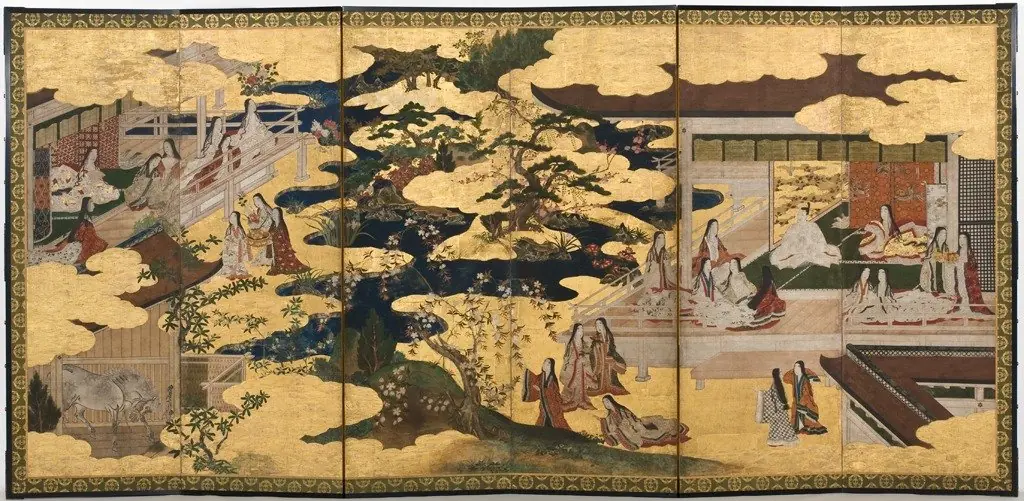 Scene from "The Tale of Genji": from the chapter "The Maiden"
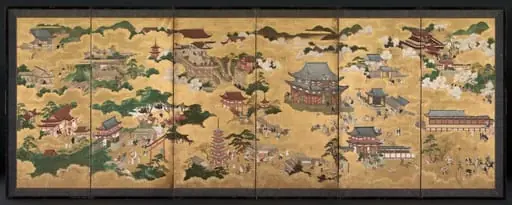 Views of Kyoto