Artwork
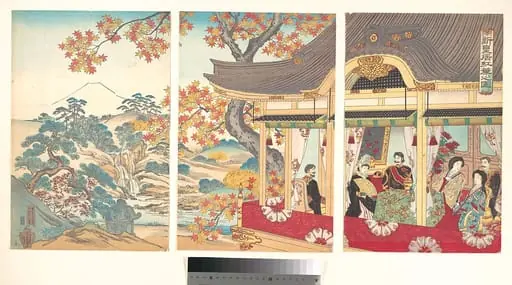
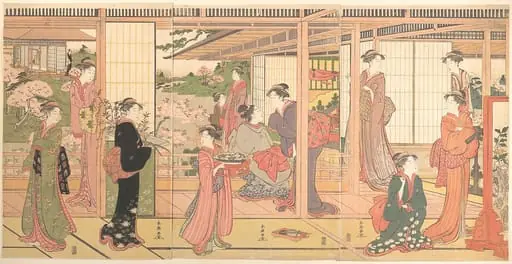
諸国名所図会内 西京東山一覧|A Glimpse of Higayashiyama the Western Capital, from the series Famous Places in the Nation (Shokoku meisho zukai no uchi-Saikyō Higashiyama ichiran)
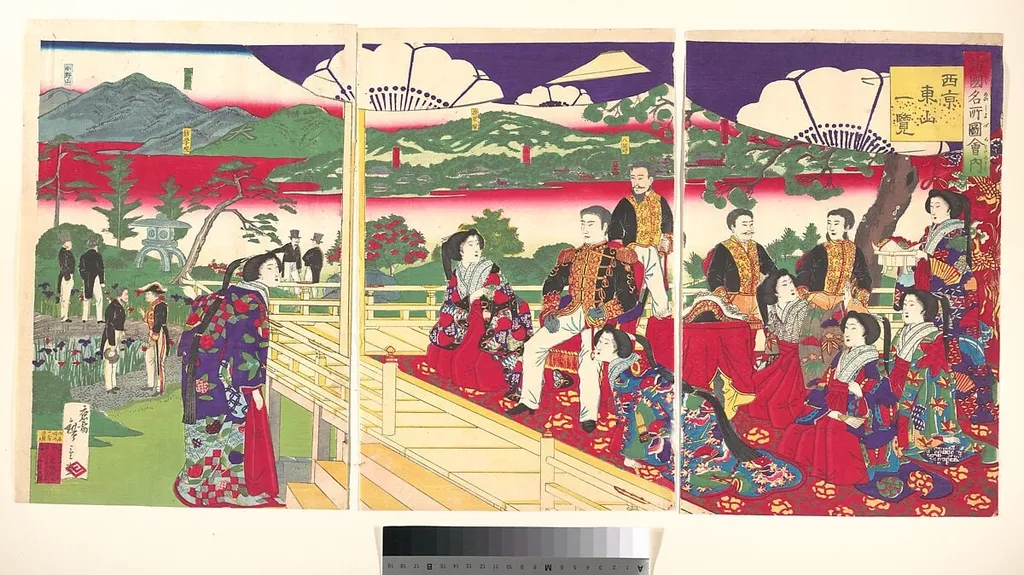
諸国名所図会内 西京東山一覧|A Glimpse of Higayashiyama the Western Capital, from the series Famous Places in the Nation (Shokoku meisho zukai no uchi-Saikyō Higashiyama ichiran) is an ink print by the Impressionist artist Utagawa Hiroshige III. It dates from 1880 and is held in the collection of the Metropolitan Museum of Art.
About this work
Overview
Created in 1880 by Utagawa Hiroshige III, this triptych of woodblock prints forms part of the series *Shokoku meisho zukai* (Famous Places in the Nation). The work depicts a lively park scene in western Kyoto, known as Higayashiyama, and is currently in the collection of the Metropolitan Museum of Art.
Subject & Meaning
The three panels present a festive gathering: a woman in a long, patterned robe walks near a small bridge; a group of elegantly dressed figures recline on a wooden platform; and a further crowd, some with fans, enjoys the view of a distant mountain shrouded in clouds. The composition celebrates leisure and seasonal enjoyment in an urban park setting.
Technique & Style
Executed with ink and vivid pigments on paper, the prints employ the characteristic ukiyo‑e approach of bold line work and flat areas of color. Strong outlines define figures and architecture, while saturated reds, greens, and purples contrast sharply with the white background, creating a lively visual rhythm without the use of chiaroscuro.
History & Provenance
The triptych was produced during the late Meiji period, a time when Hiroshige III continued the tradition of landscape prints for popular booklets. After its original publication, the work entered private collections before being acquired by the Metropolitan Museum of Art, where it remains on view as part of the museum’s Japanese prints holdings.
Artist & collection

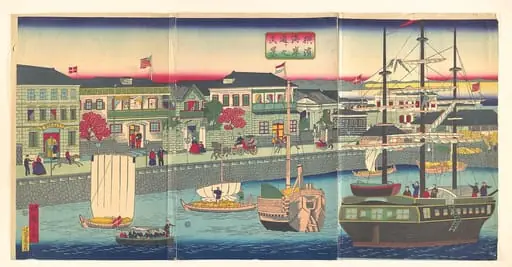 横浜海岸通り之風景|View of the Seafront in Yokohama (Yokohama Kagandori no fūkei)
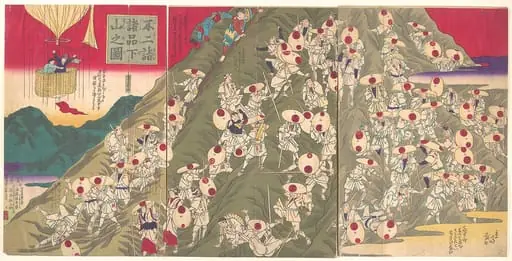 不二詣諸品下山之図|View of the Descent from a Mountain by Many from Pilgrimage to Mt. Fuji (Fuji mōde shoshina gesan no zu)
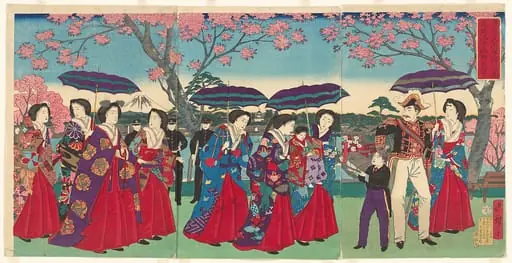 三代歌川広重画 『東京名所 従上野公園 不忍池中嶋弁天之景』|View of Benten Shrine on Nakanoshima Island in Shinobazu Pond, Ueno Park, from the series Famous Views of Tokyo (Tōkyō Tokyo meisho yori Ueno kōen Shinobazu no ike Nakanoshima Benten no kei)
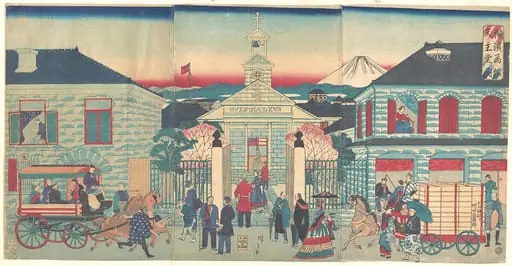 横浜商館天主堂ノ図|Illustration of Foreign Residences and the Catholic Church in Yokohama (Yokohama shōkan tenshudō no zu)
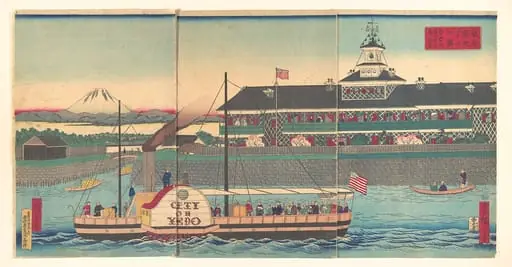 東京築地ホテル館|The Tsukiji Hotel in Tokyo (Tokyo Tsukiji hoteru kan)
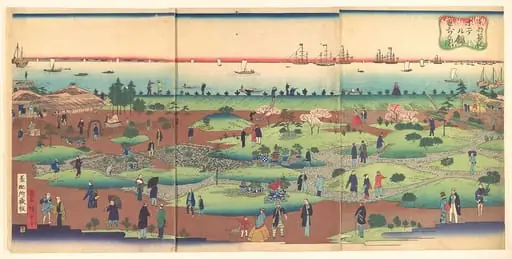 東都築地ホテル館庭前の図|Illustration of the Front Garden of the Tsukiji Hotel in the Eastern Capital (Tōto Tsukiji hoteru kan niwa mae no zu)
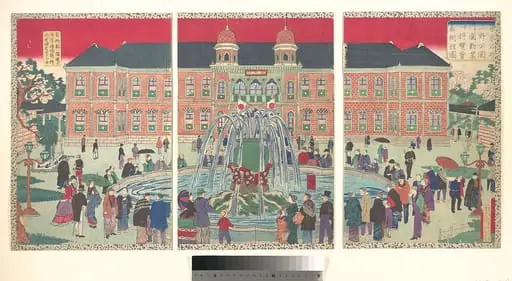 東京名所 上野公園内国勧業第二博覧会美術館図|Illustration of the Museum at the Second National Industrial Exhibition in Ueno, from the series Famous Places in Tokyo (Tokyo meisho-Ueno kōen naikoku kangyō daini hakurankai bijutsukan zu)
 Untitled
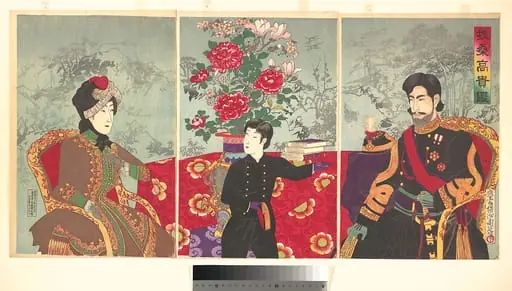 『扶桑高貴鑑』|A Mirror of Japan’s Nobility: The Emperor Meiji, His Wife, and Prince Haru (Fūsō kōki kagami)
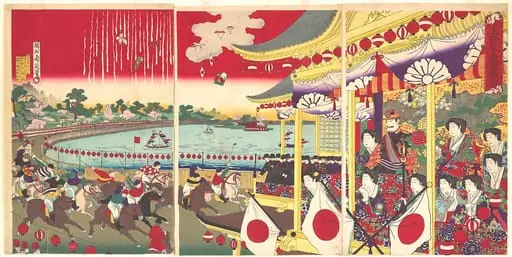 『上野不忍競馬図』|View of the Horse Track at Shinobazu in Ueno Park (Ueno shinobazu keiba zu)
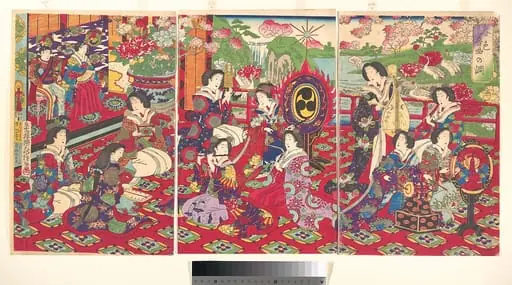 Shunshoku, Onkyoku no Shirabe|Spring Scenery; Melody of a Musical Performance
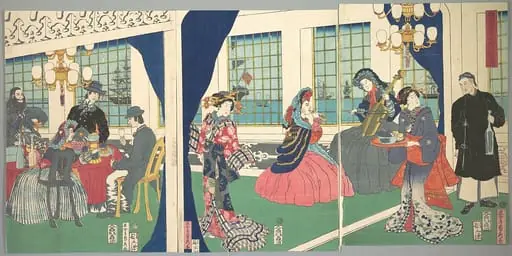 Untitled
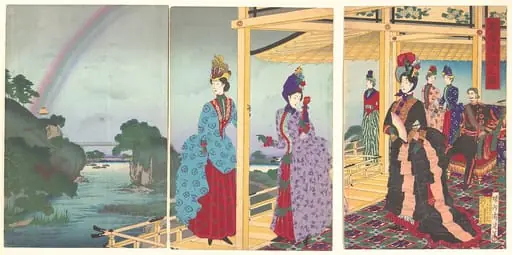 『雨過洗庭之図』|A Garden Refreshed by the Passing Rain (Ukasentei no zu)
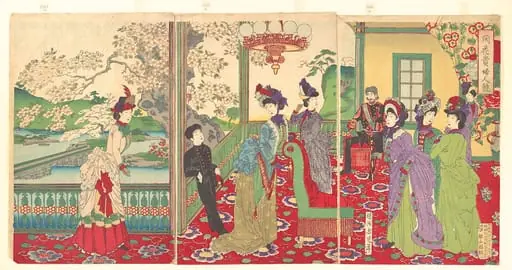 楊洲周延画 『開花貴婦人競』|A Contest of Elegant Ladies among the Cherry Blossoms (Kaika kifujin kisoi)
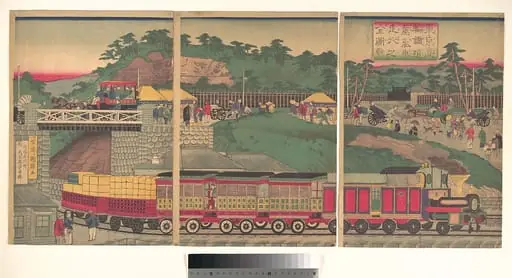 東京高輪鉄道蒸気車走行之全図|Tokyo /Takanawa Steam Railway
 Untitled