Artwork
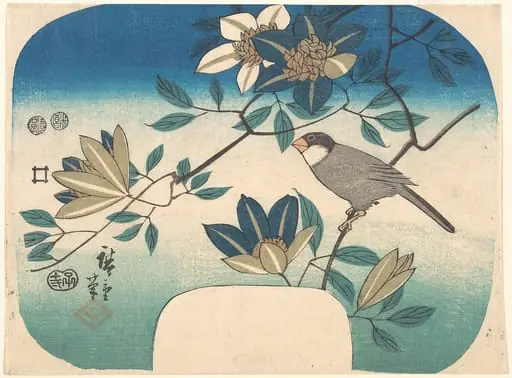
歌川広重画 扶養に高麗鶯|A Black-Naped Oriole on a Stem of Rose Mallow
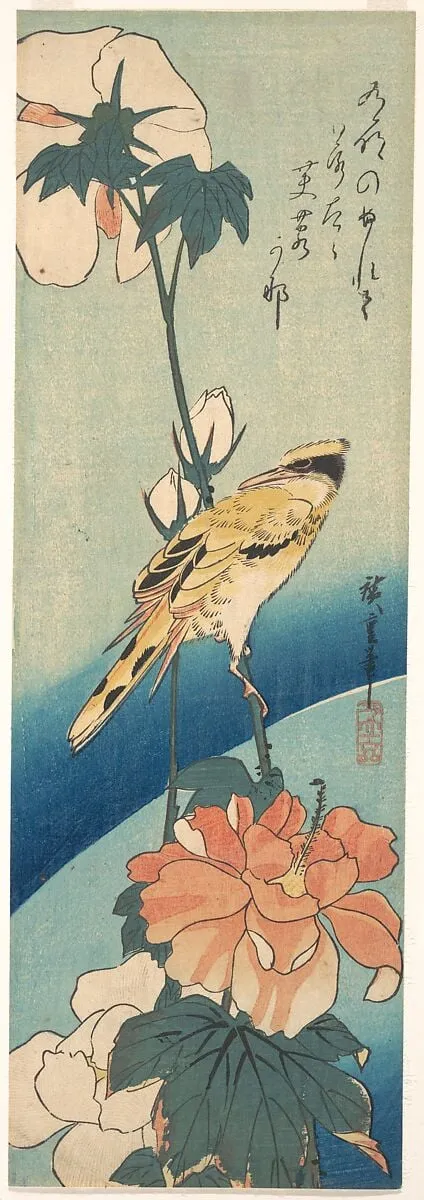
歌川広重画 扶養に高麗鶯|A Black-Naped Oriole on a Stem of Rose Mallow is an ink print by the Romanticist artist Utagawa Hiroshige. It dates from 1834 and is held in the collection of the Metropolitan Museum of Art.
About this work
Overview
Created around 1834 by Utagawa Hiroshige, this woodblock print depicts a black-naped oriole resting on a rose mallow stem.
Created around 1834 by Utagawa Hiroshige, this woodblock print depicts a black-naped oriole resting on a rose mallow stem. Though best known for landscape series like The Fifty-three Stations of the Tōkaidō, Hiroshige frequently turned to natural subjects, capturing quiet moments in the wild with precision and calm. The print belongs to the ukiyo-e tradition but moves beyond urban scenes toward botanical and avian observation.
Subject & Meaning
The black-naped oriole, its yellow plumage vivid against the soft blue sky, is shown mid-song, beak open as if calling. Below, a large pink hibiscus blooms with white petals and dark green leaves, grounding the composition in seasonal detail. The inclusion of Japanese script near the top suggests a poetic inscription, common in nature-themed prints, linking the bird and flower to transient beauty and the rhythms of the natural world.
Technique & Style
Hiroshige employed fine linework and subtle gradations of color typical of high-quality ukiyo-e printing. The bird’s feathers are rendered with delicate strokes, while the flower’s petals show soft transitions from pink to white. The sky is lightly washed with blue, and wisps of cloud add depth without distraction. The composition is sparse yet balanced, emphasizing stillness and observation over narrative.
History & Provenance
The print entered the collection of The Metropolitan Museum of Art, where it remains part of its holdings of Japanese woodblock prints. While specific early ownership records are not widely documented, its preservation reflects broader 20th-century interest in Edo-period nature prints. It is one of many such works by Hiroshige that gained recognition outside Japan during the late 1800s and early 1900s.
Context
In the 1830s, ukiyo-e artists increasingly turned to nature as audiences sought respite from urban life. Hiroshige’s focus on birds and plants aligned with a growing appreciation for seasonal change and quiet beauty, influenced by classical poetry and garden aesthetics. This print reflects a shift within the genre toward contemplative imagery, distinct from the bustling scenes of kabuki actors or courtesans.
Legacy
Hiroshige’s nature prints, including this one, helped redefine ukiyo-e’s scope beyond entertainment. His sensitive depictions of flora and fauna influenced later Japanese artists and Western impressionists, who admired his use of space and natural harmony. Though not as widely reproduced as his landscapes, such works remain valued for their quiet precision and enduring connection to the natural world.
Artist & collection
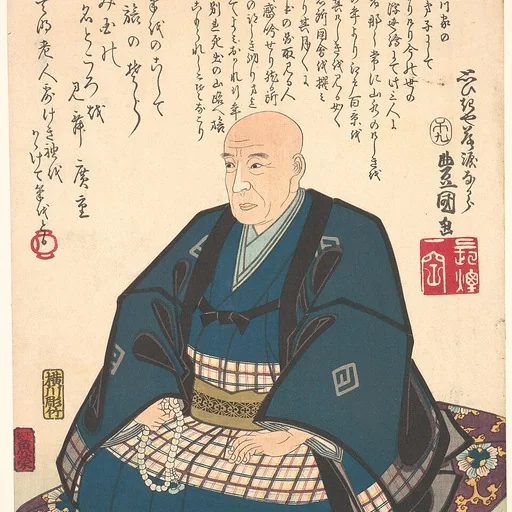
Artist
Utagawa Hiroshige (歌川 広重) or Andō Hiroshige (安藤 広重), born Andō Tokutarō (安藤 徳太郎; 1797 – 12 October 1858), was a Japanese ukiyo-e artist, considered the last great master of that tradition.

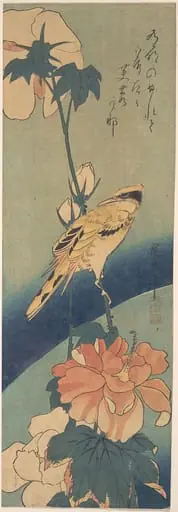 歌川広重画 芙蓉に高麗鶯|Black-naped Oriole Perched on a Stem of Rose Mallow
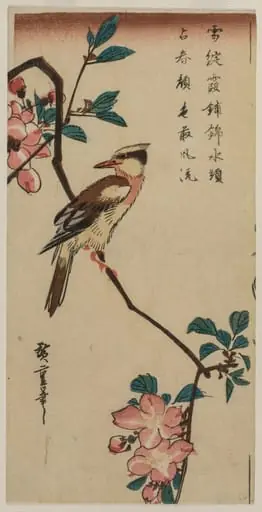 Black-Naped Oriole (Korean Warbler) on a Hall Crabapple
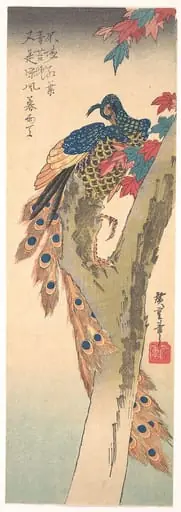 歌川広重画 楓に孔雀|A Peacock Perched on a Maple Tree
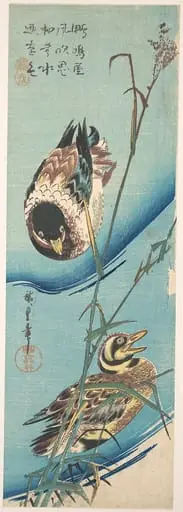 歌川広重画 雪中芦に鴨|Mallard Ducks and Snow-covered Reeds
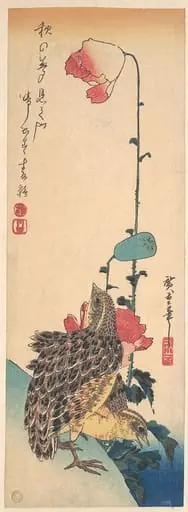 歌川広重画 罌栗に鶉|A Pair of Quails and Poppies
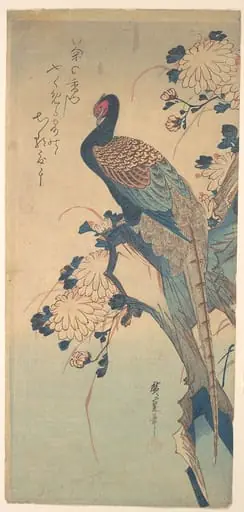 歌川広重画 菊に雉|Pheasant with Chrysanthemums
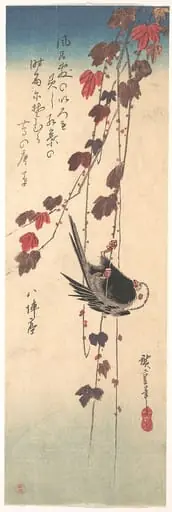 歌川広重画 蔦に柄長鳥|Long-tailed Tit on Autumn Ivy
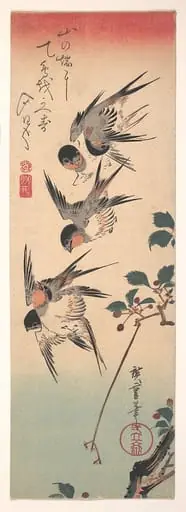 歌川広重画 山桜に燕|Swallows and Budding Wild Cherry
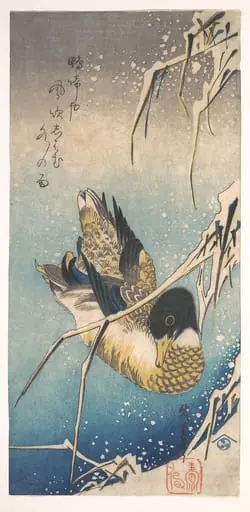 歌川広重画 雪中芦に鴨|Mallard and Snow-covered Reeds
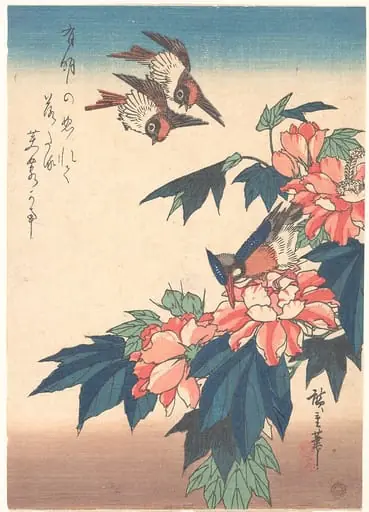 紅蜀葵に燕と川蝉図|Swallows and Kingfisher with Rose Mallows
 歌川広重画 鉄線花に鳥|Clematis and Bird