Artwork
Awa no Naruto|雪月花 阿波鳴門之風景|The Whirlpools of Awa
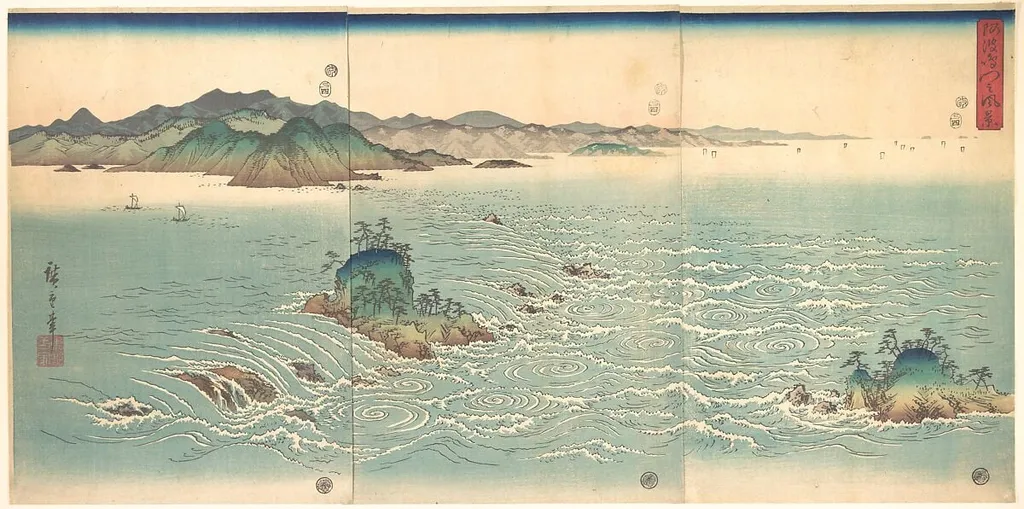
Awa no Naruto|雪月花 阿波鳴門之風景|The Whirlpools of Awa is an ink print by the Impressionist artist Utagawa Hiroshige. It dates from 1857 and is held in the collection of the Metropolitan Museum of Art.
About this work
Overview
Created in 1857, this triptych by Utagawa Hiroshige presents a view of the Naruto whirlpools in Awa Province. Executed as woodblock prints on paper, the work combines ink and color to render a dynamic seascape that is now part of the Metropolitan Museum of Art’s collection.
Subject & Meaning
The panels focus on the turbulent waters of the Naruto Strait, where powerful currents generate swirling vortexes. Small, tree‑covered islands punctuate the scene, while distant mist‑shrouded mountains recede into a pale sky, suggesting the vastness and unpredictability of nature.
Technique & Style
Hiroshige employed the ukiyo‑e woodblock method, using carved blocks for ink outlines and separate blocks for color application. Fine, angular lines convey the motion of the waves, and a restrained palette of deep blues, greens, and muted sky tones creates atmospheric depth without sacrificing visual impact.
History & Provenance
The print belongs to Hiroshige’s later period, when he increasingly turned to natural landscapes rather than the urban subjects typical of earlier ukiyo‑e. After its production in the late Edo era, the work entered private collections before being acquired by the Metropolitan Museum of Art, where it remains on display.
Context
During the mid‑19th century, Japanese artists began emphasizing scenic vistas, reflecting a growing interest in travel and regional landmarks. Hiroshige’s depiction of the Naruto whirlpools aligns with this trend, offering viewers a glimpse of a celebrated maritime phenomenon that was also a popular subject for travelers and poets of the time.
Artist & collection
Artist
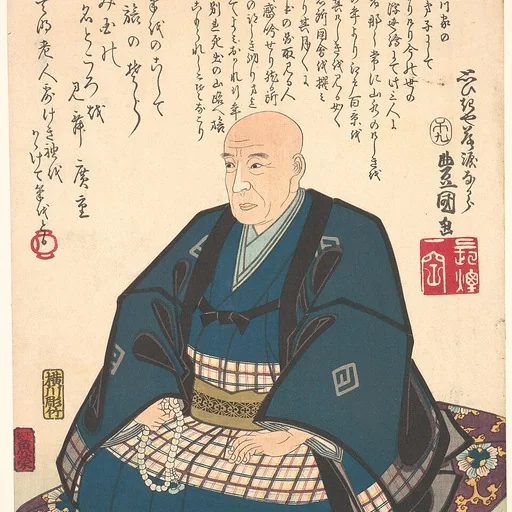
Utagawa Hiroshige (歌川 広重) or Andō Hiroshige (安藤 広重), born Andō Tokutarō (安藤 徳太郎; 1797 – 12 October 1858), was a Japanese ukiyo-e artist, considered the last great master of that tradition.

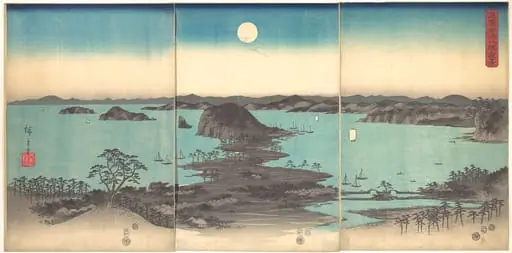 Buyō Kanazawa Hasshō Yakei|雪月花 武陽金沢八勝夜景|Full Moon at Kanazawa, Province of Musashi
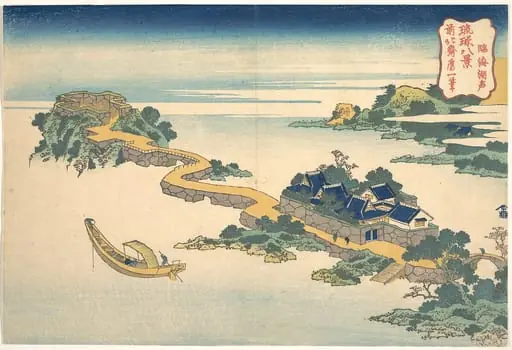 琉球八景 臨海潮(湖)聲|Sound of the Lake at Rinkai (Rinkai kosei), from the series Eight Views of the Ryūkyū Islands (Ryūkyū hakkei)
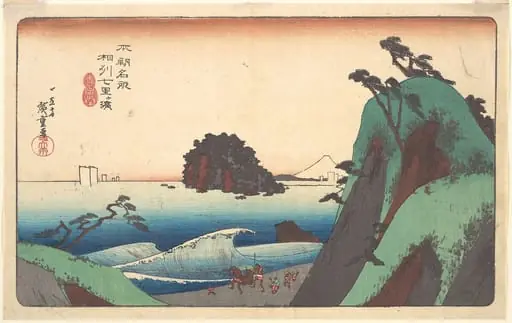 本朝名所 相州七里ヶ浜|Soshu, Shichi-ri ga Hama
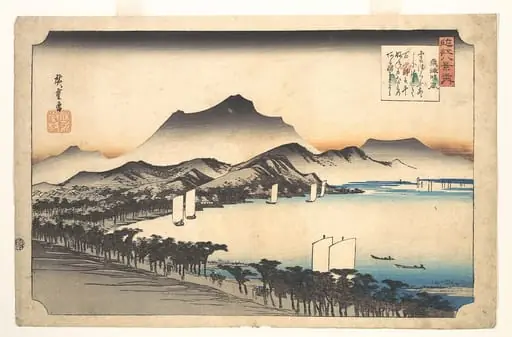 Awazu no Seiran|近江八景之内 粟津晴嵐|Clearing Weather at Awazu
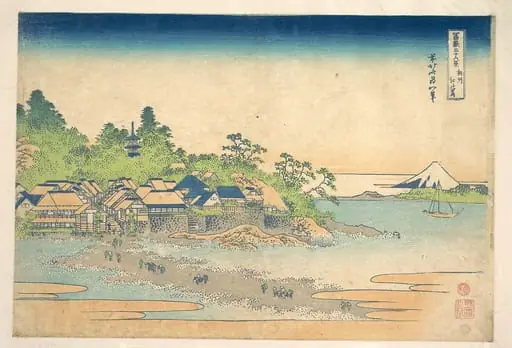 冨嶽三十六景 相州江の島|Enoshima in Sagami Province (Sōshū Enoshima), from the series Thirty-six Views of Mount Fuji (Fugaku sanjūrokkei)
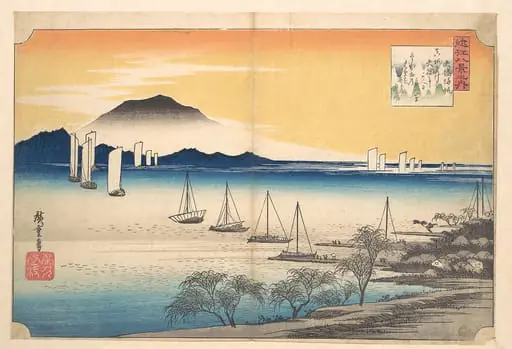 近江八景之内 矢橋帰帆|Sailing Boats Returning to Yabase, Lake Biwa
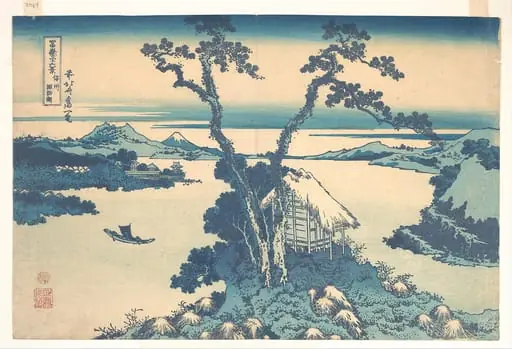 冨嶽三十六景 信州諏訪湖|Lake Suwa in Shinano Province (Shinshū Suwako), from the series Thirty-six Views of Mount Fuji (Fugaku sanjūrokkei)
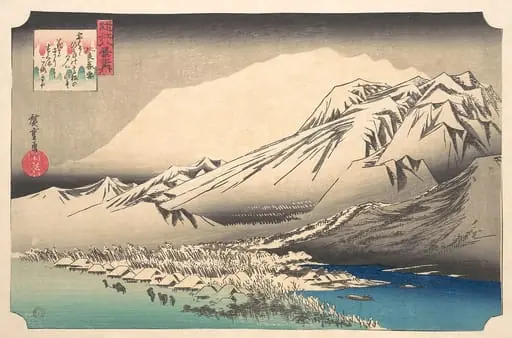 近江八景之内 比良暮雪|Evening Snow on Hira, Lake Biwa
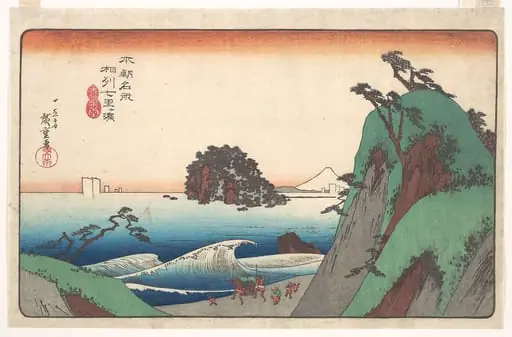 本朝名所 相州七里ヶ浜|Seven-ri Beach, Province of Soshu