Artwork
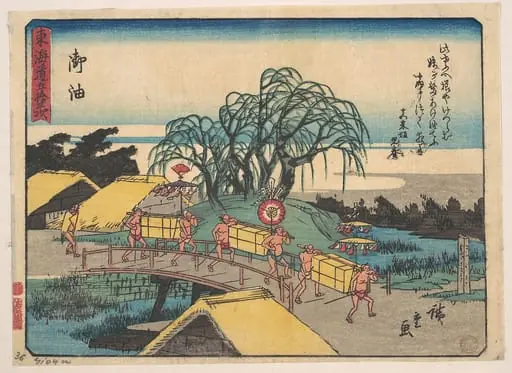
東海道五十三次 池鯉鮒|Chiryu
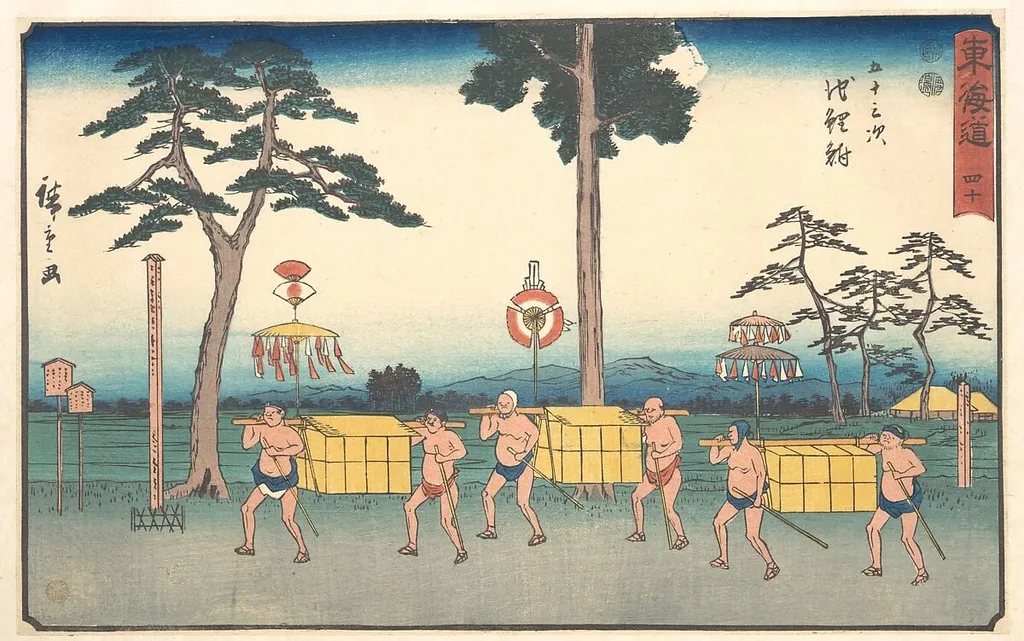
東海道五十三次 池鯉鮒|Chiryu is an ink print by the Romanticist artist Utagawa Hiroshige. It dates from 1840 and is held in the collection of the Metropolitan Museum of Art.
About this work
If you're interested in learning more about this style, you might want to check out the Romanticism movement.
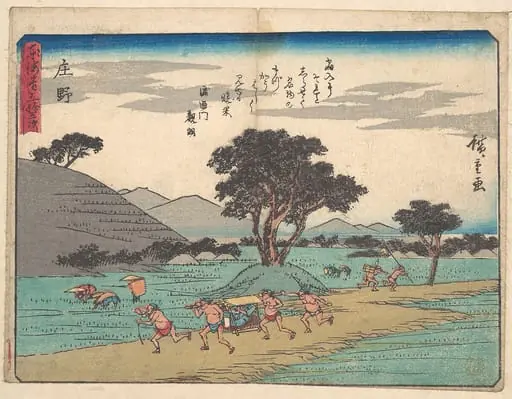
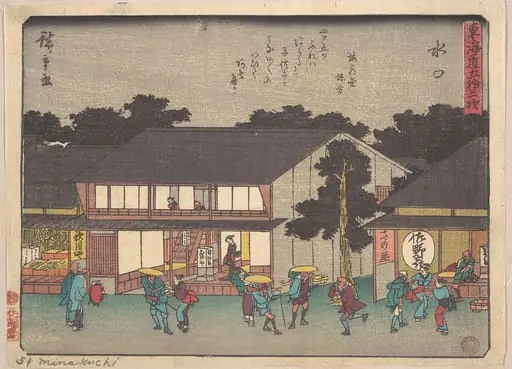
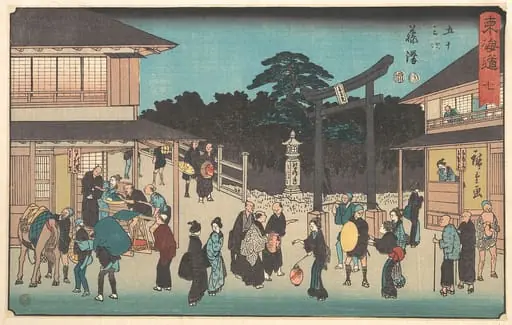
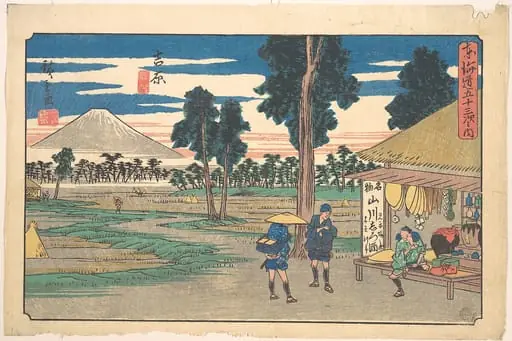
This painting shows six men carrying large yellow boxes on their shoulders. They are walking in a line, with trees and a mountain range in the background. The sky is blue and white, with some Japanese writing on the right side.
The men are all wearing blue shorts and have different colored headbands. They are all carrying long sticks to help them balance the heavy boxes. The boxes are tied together with rope and have a grid pattern on them.
The painting is a woodblock print, ink, and color on paper, created by Utagawa Hiroshige around 1840. It's part of the Romanticism movement and is held at The Metropolitan Museum of Art. If you're interested in learning more about this style, you might want to check out the Romanticism movement.
Overview
Created around 1840 by Utagawa Hiroshige, this woodblock print is one of fifty-three scenes in the series *The Fifty-three Stations of the Tōkaidō*. It depicts a moment along the major travel route connecting Edo and Kyoto during the Edo period. Rendered in ink and color on paper, the print exemplifies the ukiyo-e tradition, focusing on everyday life and landscape rather than theatrical or erotic themes common in the genre.
Subject & Meaning
The scene shows six porters carrying large, rope-bound yellow crates along a path, their balance maintained by long poles. Dressed in simple blue shorts and varied headbands, they move in single file beneath a sky of pale blue and white. The boxes likely held goods for trade or tribute, and their labor reflects the unseen workforce sustaining regional commerce. The distant mountains and trees frame their journey, emphasizing the quiet endurance of travel in pre-modern Japan.
Technique & Style
Hiroshige employed the woodblock printing method, layering ink and color to achieve subtle gradations in sky and foliage. The composition uses diagonal lines to guide the eye along the path, while the porters’ aligned forms create rhythm. Fine details—such as the grid pattern on the crates and the texture of the road—are rendered with precision. The use of limited color palettes and atmospheric perspective reflects Hiroshige’s signature approach to landscape, prioritizing mood over dramatic effect.
History & Provenance
The print was produced during the late Edo period, when commercial printmaking flourished in urban centers like Edo. Though originally distributed as affordable art for travelers and townspeople, this impression later entered the collection of The Metropolitan Museum of Art. Its survival in good condition reflects its enduring cultural value and the care taken in its preservation over generations.
Context
The Tōkaidō road was a vital artery for commerce, pilgrimage, and official travel in Edo-period Japan. Hiroshige’s series documented its stations not as grand monuments but as moments of human activity—porters, inns, rivers, and weather. This print stands apart from typical ukiyo-e subjects like courtesans or actors, instead honoring the laborers who kept the nation’s infrastructure moving, aligning with a broader shift toward naturalistic and civic themes in mid-19th-century Japanese art.
Legacy
Hiroshige’s *Tōkaidō* series influenced later artists in Japan and abroad, particularly European Impressionists drawn to its compositional clarity and everyday subject matter. While not widely celebrated in his lifetime as a revolutionary, his quiet depictions of travel and labor have since become essential records of Edo-period life. This print, like others in the series, continues to offer insight into the rhythms of pre-industrial Japan.
Artist & collection
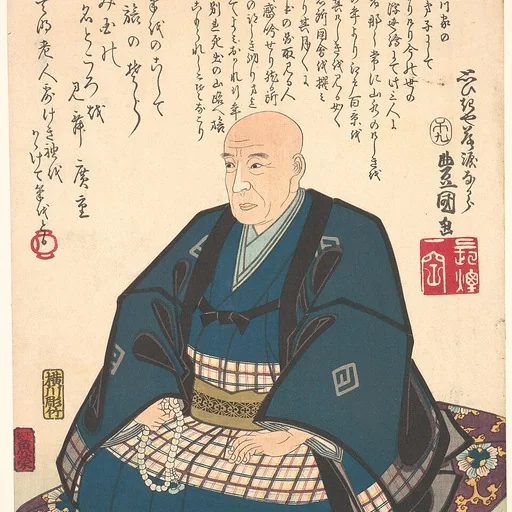
Artist
Utagawa Hiroshige (歌川 広重) or Andō Hiroshige (安藤 広重), born Andō Tokutarō (安藤 徳太郎; 1797 – 12 October 1858), was a Japanese ukiyo-e artist, considered the last great master of that tradition.