Artwork
東海道五十三次 吉田 六月十五日天王祭|Yoshida
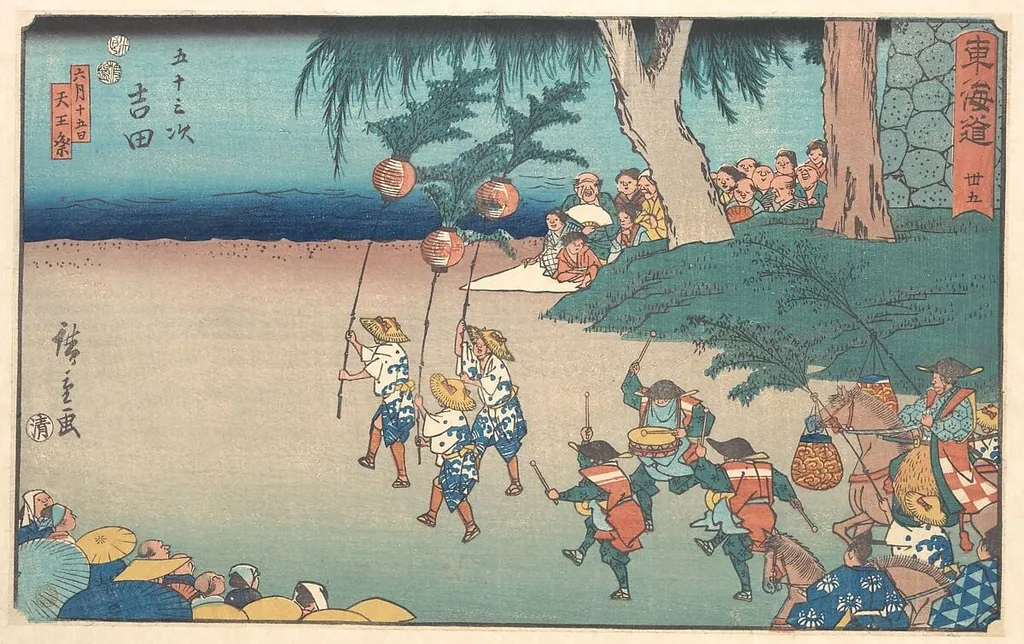
東海道五十三次 吉田 六月十五日天王祭|Yoshida is an ink print by the Romanticist artist Utagawa Hiroshige. It dates from 1840 and is held in the collection of the Metropolitan Museum of Art.
About this work
Overview
This woodblock print, 'Yoshida', is part of Utagawa Hiroshige's 'The Fifty-three Stations of the Tōkaidō' series, created around 1840. It showcases a vibrant scene from the Edo period.
Subject & Meaning
The print captures a festive atmosphere at Yoshida, a post station along the Tōkaidō road, depicting a lively outdoor celebration with performers, spectators, and onlookers.
Technique & Style
Using ink and color on paper, Hiroshige achieves a balance between movement and stillness, with details like lanterns tied to a tree adding to the scene's authenticity.
Context
The Tōkaidō road connected major cities in Japan, and Hiroshige's series highlighted its various stations, shifting the focus of ukiyo-e from urban life to landscapes and travel scenes.
Artist & collection
Artist
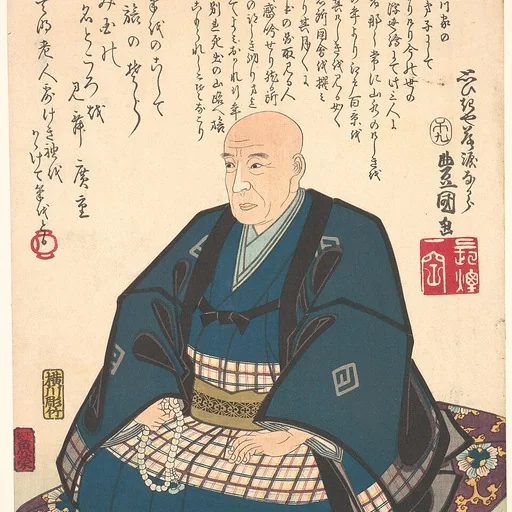
Utagawa Hiroshige (歌川 広重) or Andō Hiroshige (安藤 広重), born Andō Tokutarō (安藤 徳太郎; 1797 – 12 October 1858), was a Japanese ukiyo-e artist, considered the last great master of that tradition.