Artwork
東海道五十三次 水口|Mizukuchi
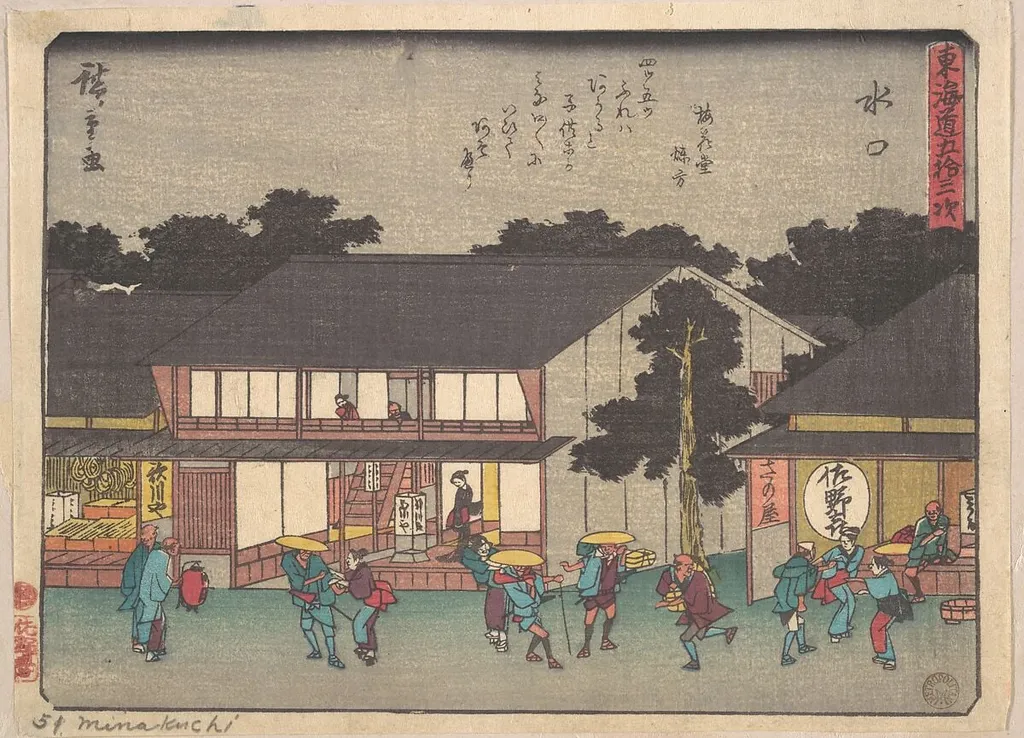
東海道五十三次 水口|Mizukuchi is an ink print by the Romanticist artist Utagawa Hiroshige. It dates from 1838 and is held in the collection of the Metropolitan Museum of Art.
About this work
Overview
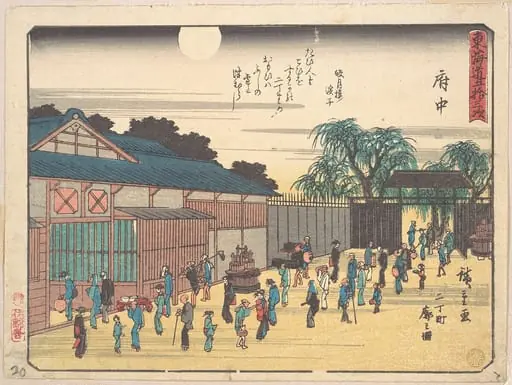
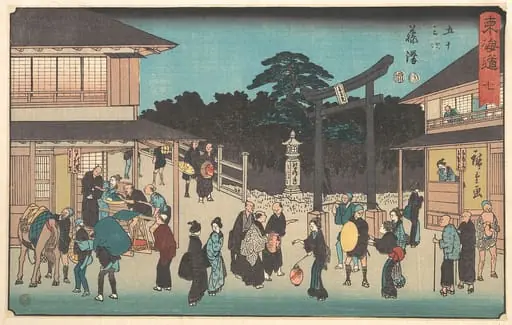
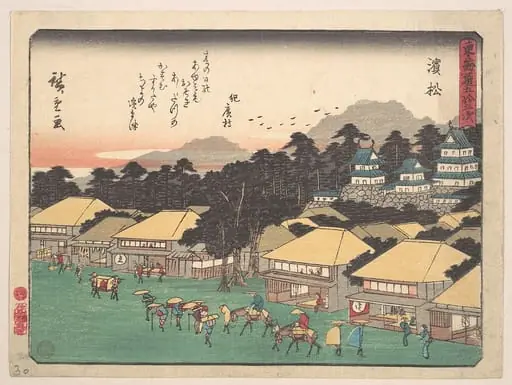
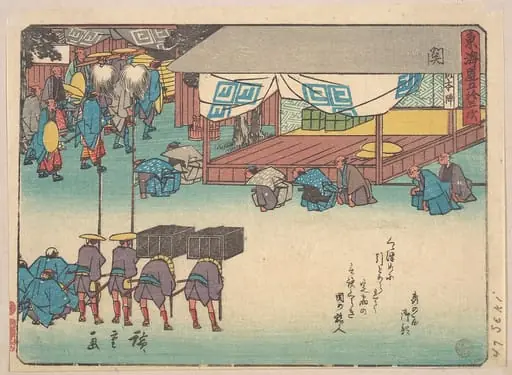
Created around 1838 by Utagawa Hiroshige, *Mizukuchi* is one of fifty-three prints in the series *The Fifty-three Stations of the Tōkaidō*.
Created around 1838 by Utagawa Hiroshige, *Mizukuchi* is one of fifty-three prints in the series *The Fifty-three Stations of the Tōkaidō*. Produced in woodblock print on paper, it captures a resting point along the major road linking Edo and Kyoto. Unlike earlier ukiyo-e focused on urban life, this work centers on the quiet rhythms of travel and the natural environment, reflecting Hiroshige’s broader shift in the genre toward landscape and atmosphere.
Subject & Meaning
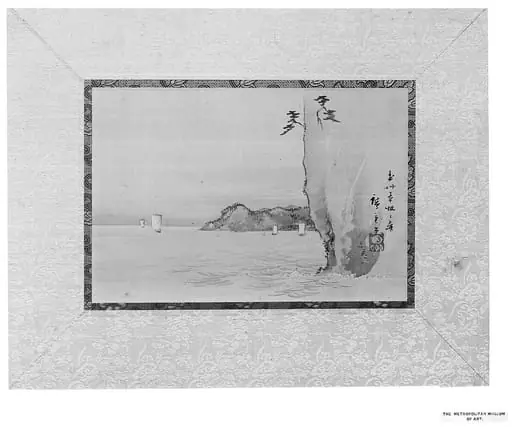
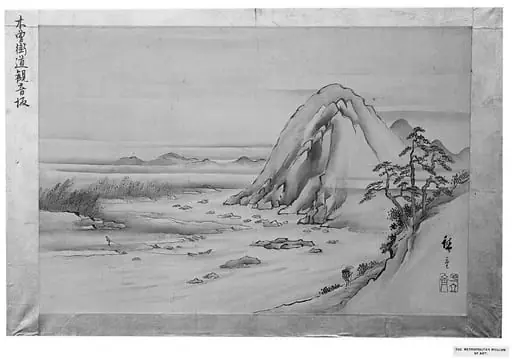
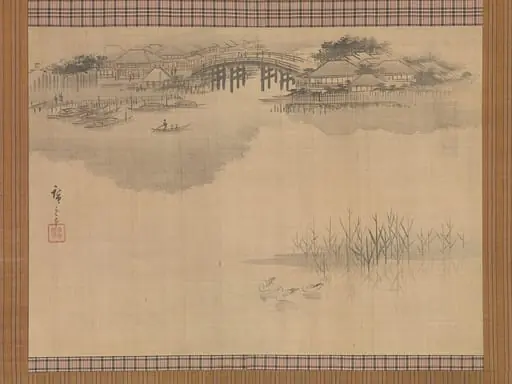
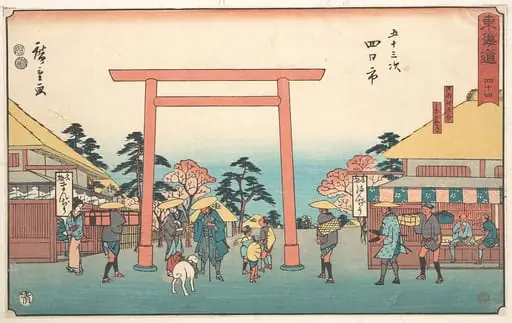
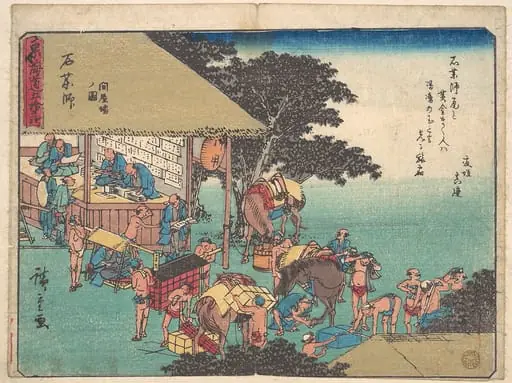
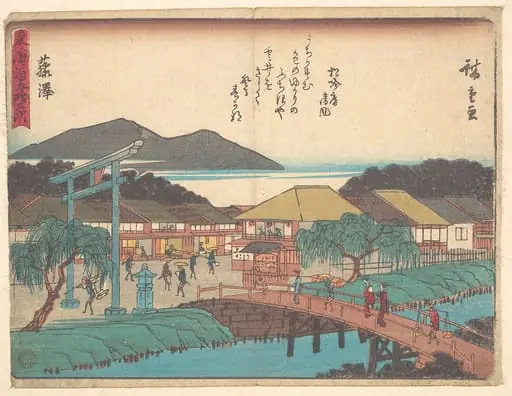
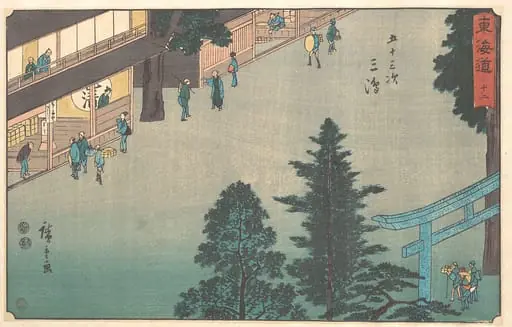
The scene depicts the Mizukuchi station, a modest stop where travelers pause. Figures move through a courtyard—some carrying goods, others conversing—while a large tree anchors the composition. A two-story building with sliding doors and wooden railings suggests a lodging or inn. The absence of dramatic action emphasizes the everyday nature of the journey, reinforcing the series’ theme of quiet transit through Japan’s countryside.
Technique & Style
Hiroshige employed traditional woodblock printing with ink and color on paper, using flat planes and bold outlines to suggest spatial depth. Colors are restrained—blues, greens, and earth tones—creating a subdued harmony. The composition avoids perspective in the Western sense, instead relying on overlapping forms and scale to imply distance. The delicate balance between detail and simplicity reflects the aesthetic principles of ukiyo-e at its most contemplative.
History & Provenance
Hiroshige, born Andō Tokutarō in 1797, rose to prominence in the 1830s as a landscape-focused printmaker. The *Tōkaidō* series, commissioned by the publisher Hoeidō, became one of the most widely distributed ukiyo-e sets of its time. *Mizukuchi* was part of this commercial success, printed in multiple editions for travelers and collectors. Its survival in numerous museum and private collections attests to its enduring presence in Japanese print history.
Context
During the Edo period, the Tōkaidō road was a vital artery for commerce, pilgrimage, and official travel. As peace stabilized Japan, leisure travel among commoners increased, fueling demand for guidebooks and visual records of the route. Hiroshige’s prints responded to this cultural shift, offering not just topographical references but emotional impressions of place, weather, and movement along the road.
Legacy
Hiroshige’s *Tōkaidō* series redefined ukiyo-e by prioritizing landscape over portraiture, influencing both Japanese and later Western artists. *Mizukuchi*, like its companions, contributed to a new visual language of travel that valued atmosphere over spectacle. Its quiet realism and compositional restraint continue to inform how landscape is rendered in print traditions beyond Japan.
Artist & collection
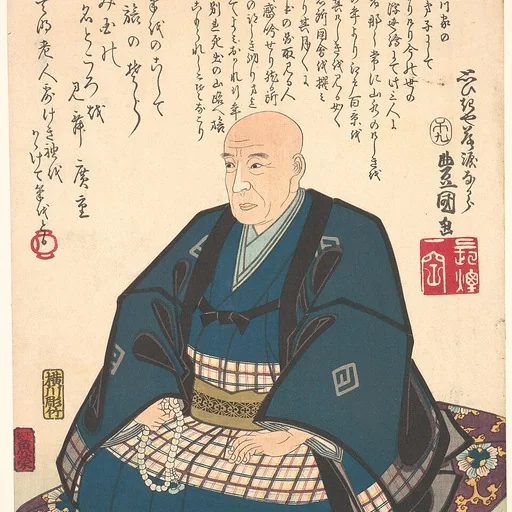
Artist
Utagawa Hiroshige (歌川 広重) or Andō Hiroshige (安藤 広重), born Andō Tokutarō (安藤 徳太郎; 1797 – 12 October 1858), was a Japanese ukiyo-e artist, considered the last great master of that tradition.