Artwork
東海道五十三次 藤枝|Fujieda
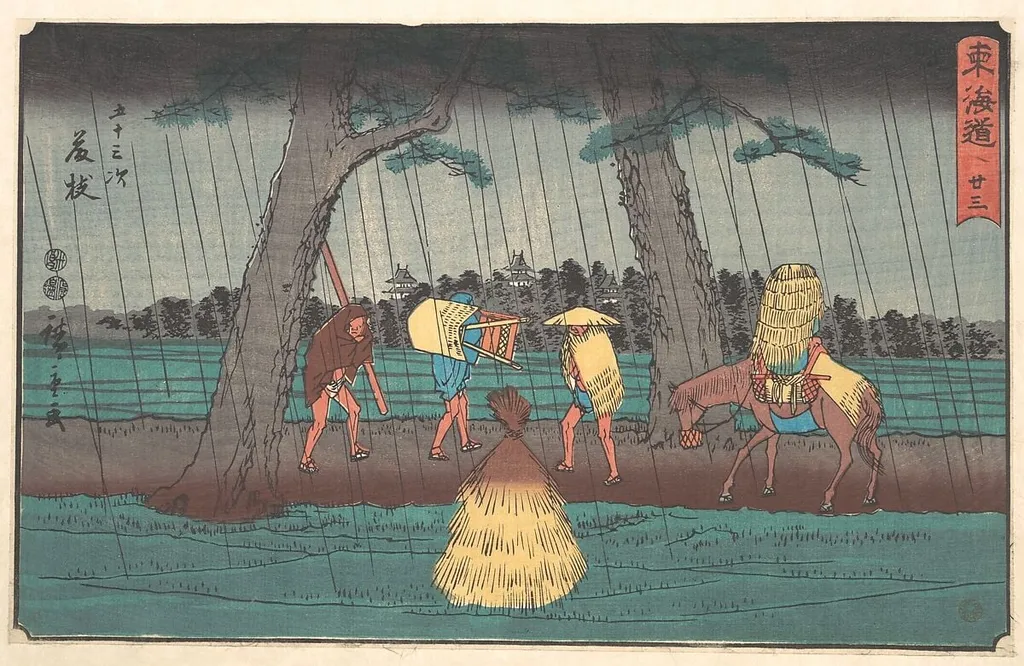
東海道五十三次 藤枝|Fujieda is an ink print by the Romanticist artist Utagawa Hiroshige. It dates from 1840 and is held in the collection of the Metropolitan Museum of Art.
About this work
Overview
This woodblock print, Fujieda, is part of Utagawa Hiroshige's series The Fifty-three Stations of the Tōkaidō, created around 1840. It depicts a scene along the historic Tōkaidō road during Japan's Edo period.
Subject & Meaning
The print shows a muddy road in the town of Fujieda, with travelers and a horse, capturing daily life along the route between Edo and Kyoto. A temple is visible in the distance, suggesting the town's cultural significance.
Technique & Style
Rendered in ink and color on paper, the print employs bold colors and sharp lines to convey a sense of movement and atmosphere. The artist's use of line and color creates depth and texture, as seen in the bending trees and the detailed depiction of the travelers and their loads.
Artist & collection
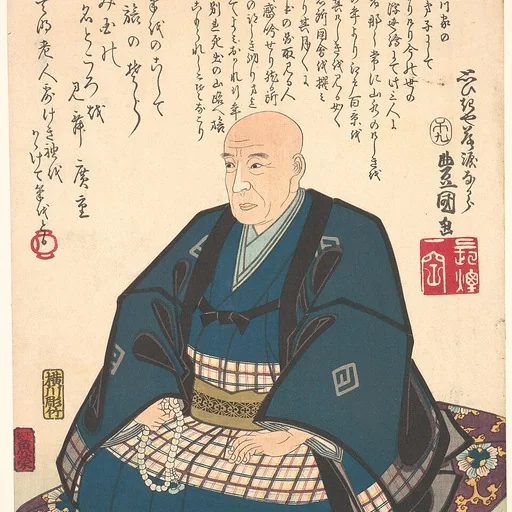
Artist
Utagawa Hiroshige (歌川 広重) or Andō Hiroshige (安藤 広重), born Andō Tokutarō (安藤 徳太郎; 1797 – 12 October 1858), was a Japanese ukiyo-e artist, considered the last great master of that tradition.

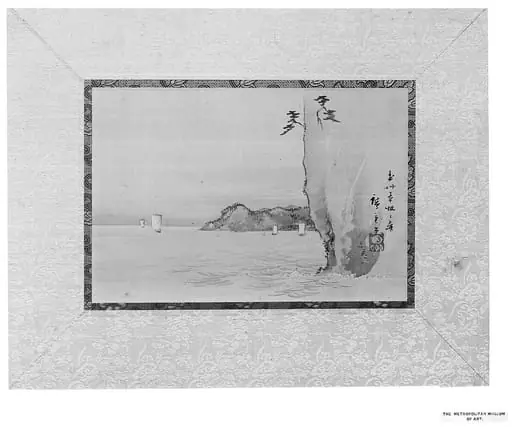
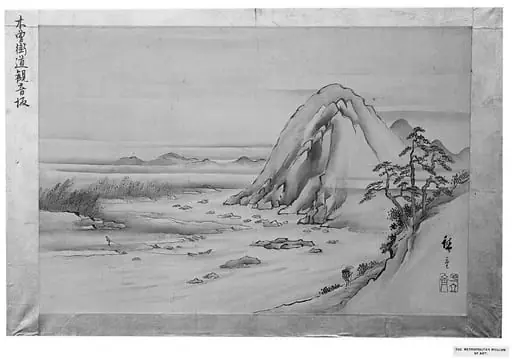

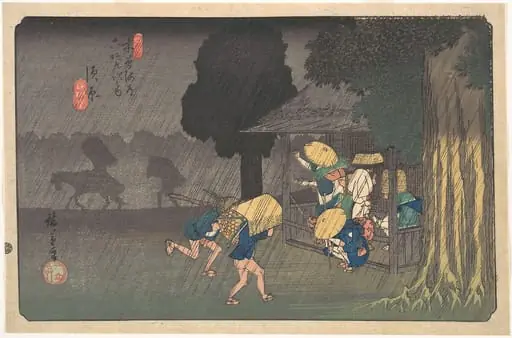 木曽海道六拾九次之内 須原|Suhara, from The Sixty-nine Stations of the Kisokaidō
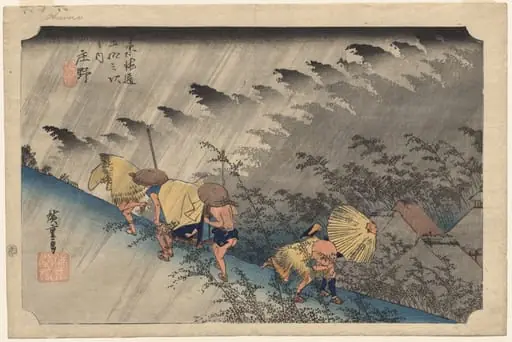 Driving Rain at Shōno, from Fifty-Three Stations of the Tokaidō
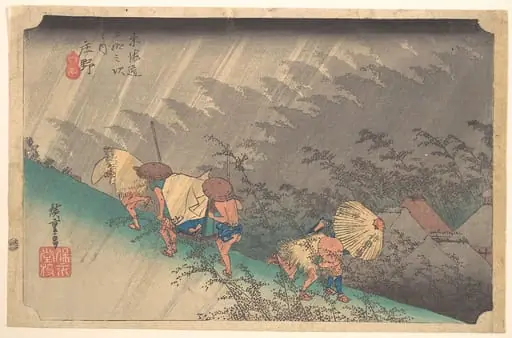 Shōno Hakuu|東海道五十三次之内 庄野 白雨|White Rain at Shōno
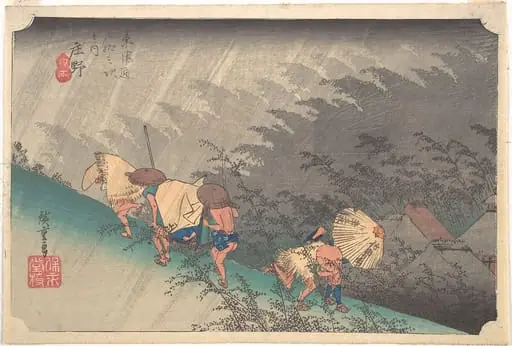 東海道五十三次之内 庄野 白雨|Sudden Shower in Shōno
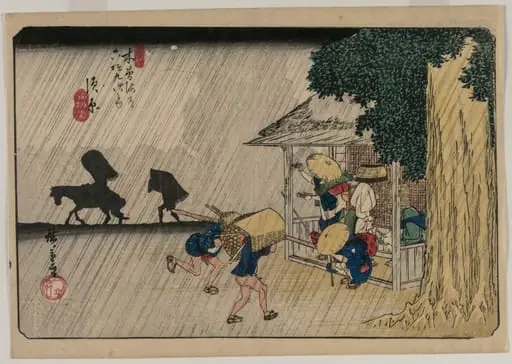 Suhara, from the series Sixty-Nine Stations of the Kisokaido
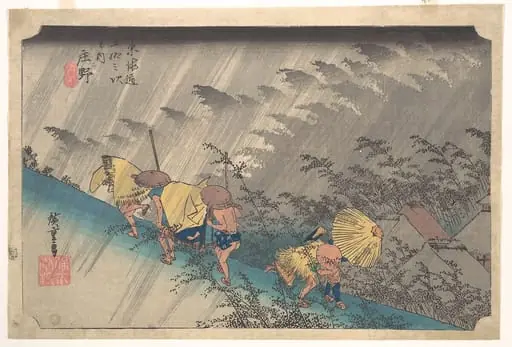 東海道五十三次・庄野 白雨|Sudden Shower at Shōno, from the series Fifty-three Stations of the Tōkaidō
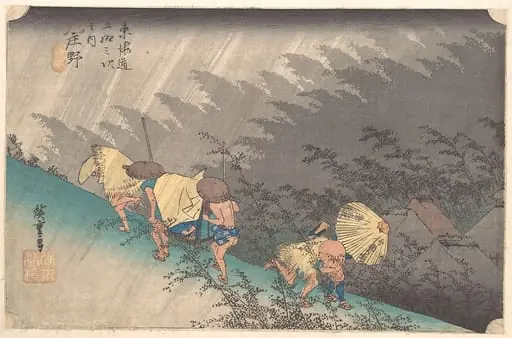 東海道五十三次之内 庄野 白雨|Shower at Shōno
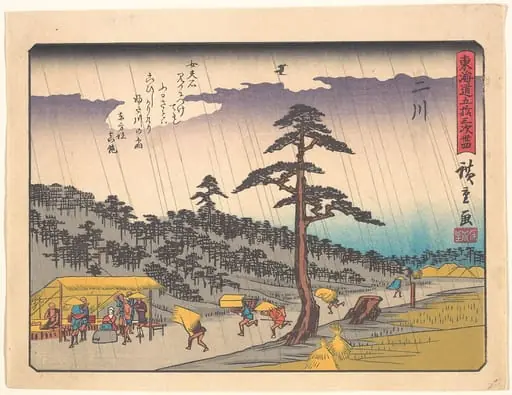 東海道五十三次 二川|Futakawa, from the series The Fifty-three Stations of the Tōkaidō Road
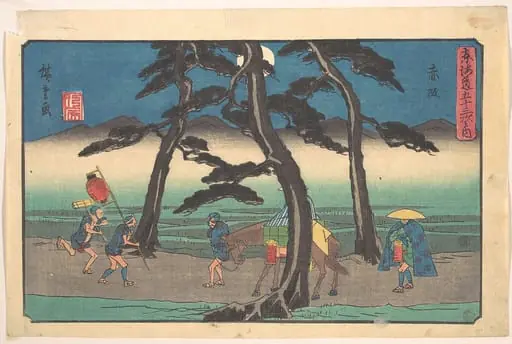 東海道五十三次之内 赤阪|Akasaka Station