Artwork
Shōno Hakuu|東海道五十三次之内 庄野 白雨|White Rain at Shōno
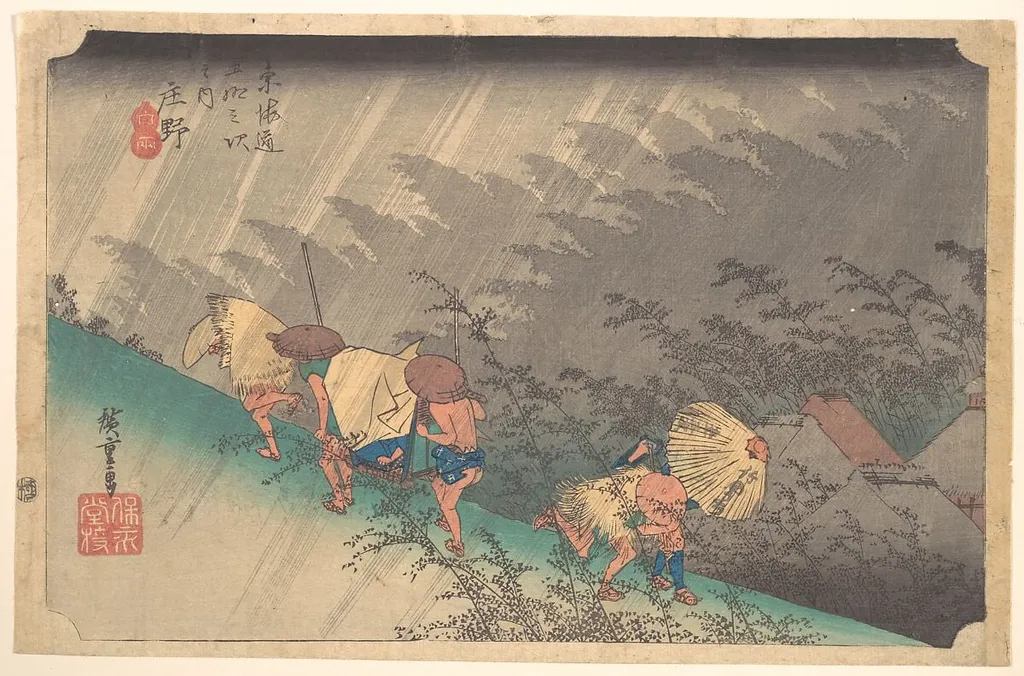
Shōno Hakuu|東海道五十三次之内 庄野 白雨|White Rain at Shōno is an ink print by the Romanticist artist Utagawa Hiroshige. It dates from 1829 and is held in the collection of the Metropolitan Museum of Art.
About this work
Overview
Created in 1829 by Utagawa Hiroshige, this woodblock print is one of fifty-three scenes in the series *The Fifty-three Stations of the Tōkaidō*.
Created in 1829 by Utagawa Hiroshige, this woodblock print is one of fifty-three scenes in the series *The Fifty-three Stations of the Tōkaidō*. It captures a moment of inclement weather at Shōno, a rest stop along the major road connecting Edo and Kyoto. Unlike typical ukiyo-e depictions of pleasure or portraiture, Hiroshige focused on the quiet endurance of travelers in everyday landscapes, emphasizing atmosphere over spectacle.
Subject & Meaning
Four travelers struggle up a rain-slicked slope under a heavy downpour. Two pull a cart laden with goods, one shields themselves with an umbrella, and another leans forward as if exhausted. Their simple straw hats and unadorned clothing reflect their status as common people. The scene conveys the physical toll of travel during the Edo period, transforming a routine journey into a meditation on perseverance amid nature’s indifference.
Technique & Style
Hiroshige employed precise woodblock carving to render fine lines and layered washes of color. The sky is muted with gray tones, contrasting sharply with the vivid red and blue of the umbrellas. Cross-hatching and stippling suggest the texture of wet earth and rain, while diagonal brushwork implies the force of falling water. The composition’s steep diagonal axis enhances the sense of ascent and effort.
History & Provenance
The print was produced during the early phase of Hiroshige’s career, shortly after the *Tōkaidō* series began publication. It was widely distributed as a commercial print, popular among merchants and travelers who recognized the stations depicted. Surviving impressions are held in major collections, including the Metropolitan Museum of Art and the British Museum, attesting to its early and enduring circulation.
Context
The Tōkaidō road was a vital artery for commerce and pilgrimage in Edo-period Japan. Travelers faced seasonal hardships, and Hiroshige’s series documented these realities with empathy. While other artists emphasized grandeur or romance, Hiroshige captured fleeting weather, quiet solitude, and the rhythms of ordinary life, aligning his work with a growing public interest in regional landscapes and seasonal change.
Legacy
Hiroshige’s atmospheric approach influenced later Japanese printmakers and, through exports to Europe, impacted Impressionist and Post-Impressionist artists. His ability to convey mood through weather and composition redefined landscape representation in printmaking. *Shōno Hakuu* remains a reference point for how everyday scenes, rendered with sensitivity, can carry enduring emotional weight.
Artist & collection
Artist
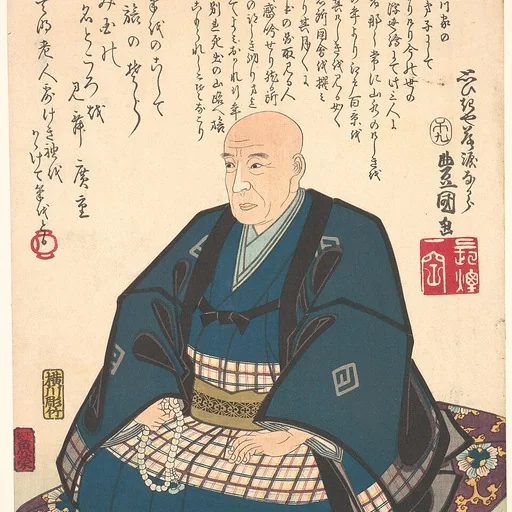
Utagawa Hiroshige (歌川 広重) or Andō Hiroshige (安藤 広重), born Andō Tokutarō (安藤 徳太郎; 1797 – 12 October 1858), was a Japanese ukiyo-e artist, considered the last great master of that tradition.

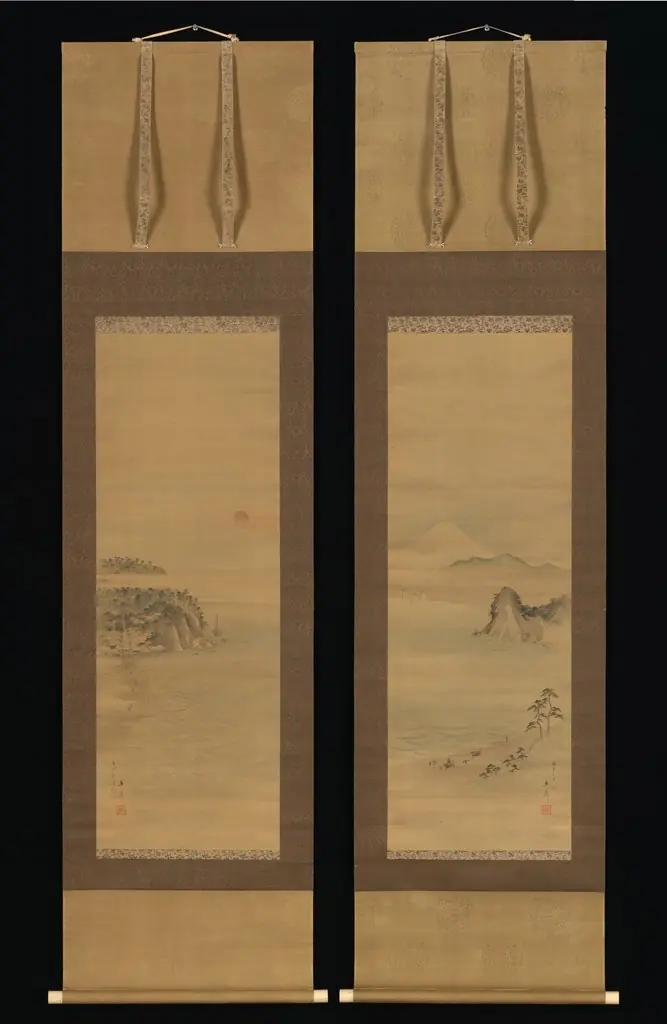
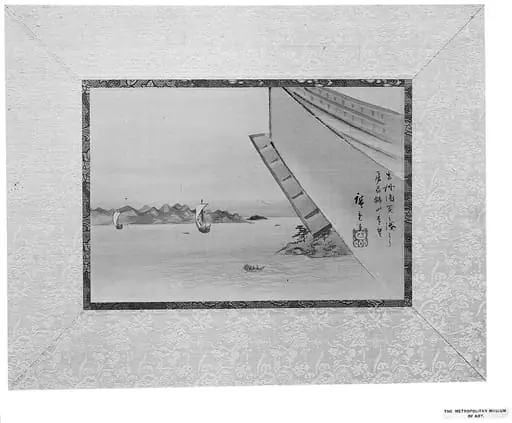
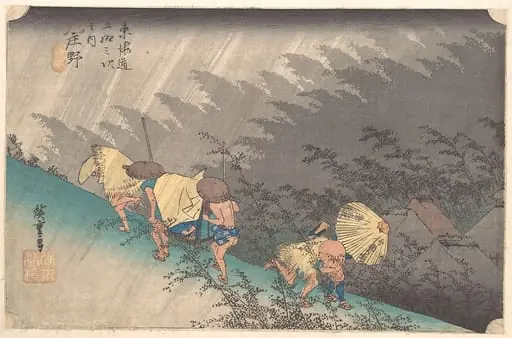 東海道五十三次之内 庄野 白雨|Shower at Shōno
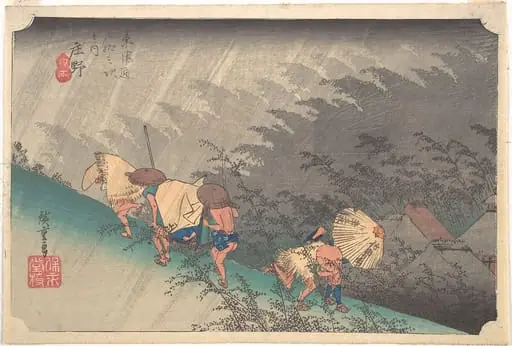 東海道五十三次之内 庄野 白雨|Sudden Shower in Shōno
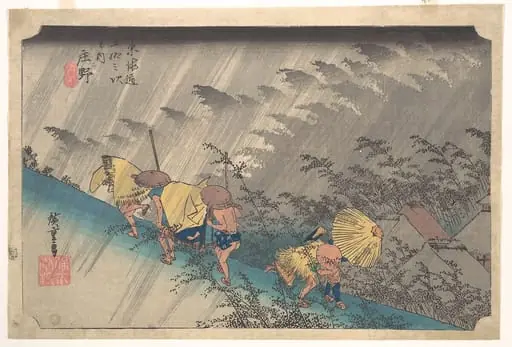 東海道五十三次・庄野 白雨|Sudden Shower at Shōno, from the series Fifty-three Stations of the Tōkaidō
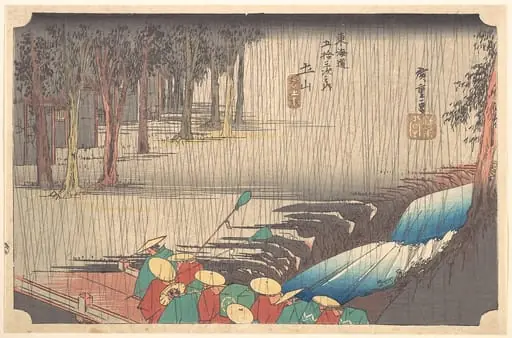 Tsuchiyama Haru no Ame|東海道五十三次之内 土山 春の雨|Spring Rain at Tsuchiyama (50th Station of the Tōkaidō)
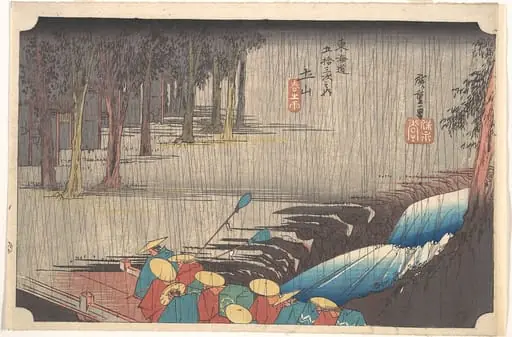 東海道五十三次 土山 春の雨|Spring Rain at Tsuchiyama, from the series Fifty-three Stations of the Tōkaidō
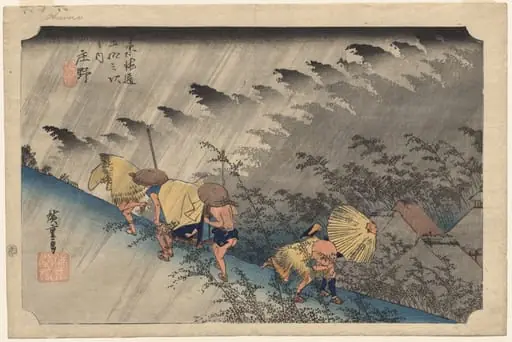 Driving Rain at Shōno, from Fifty-Three Stations of the Tokaidō
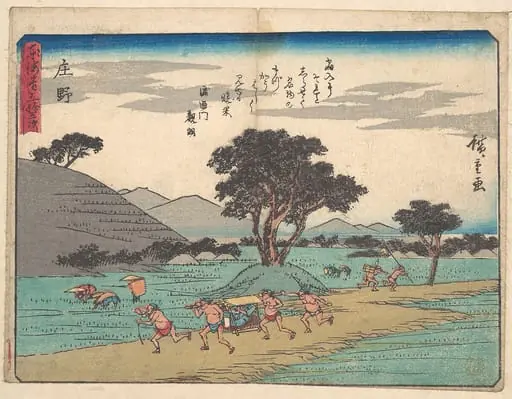 東海道五十三次 庄野|Shono
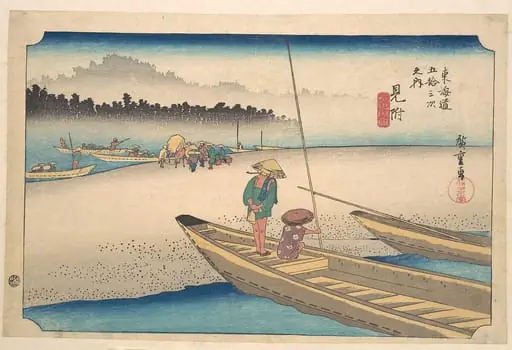 東海道五十三次 見附 天竜川|Mitsukei Tenryugawa
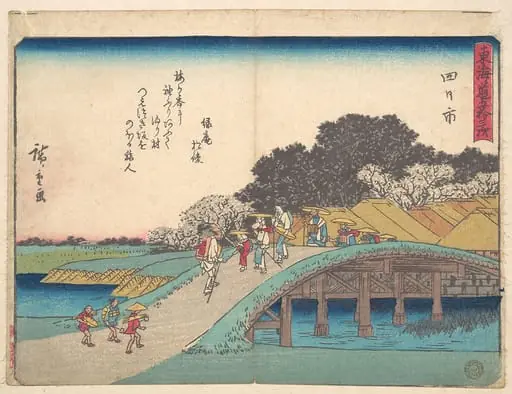 東海道五十三次 四日市|Yokkaichi
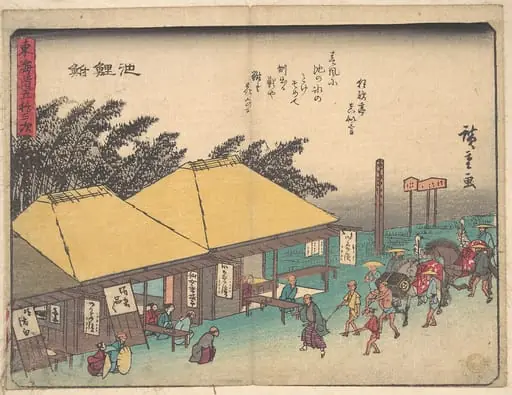 東海道五十三次 池鯉鮒|Chiryu
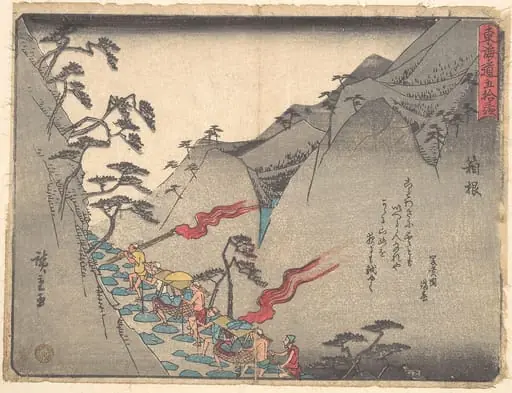 東海道五十三次 箱根|Hakone