Artwork
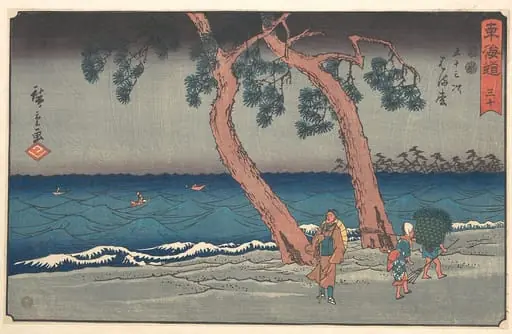
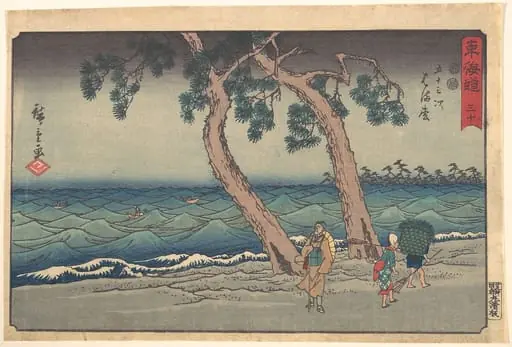
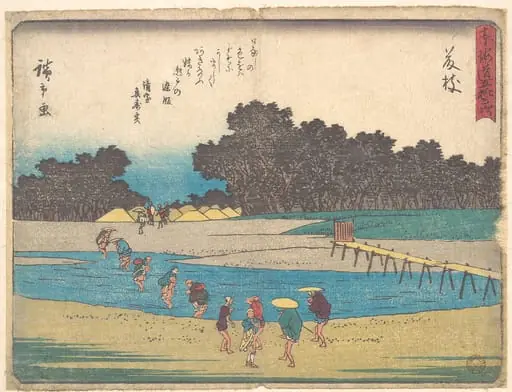
東海道五十三次 はま松|Hamamatsu Station
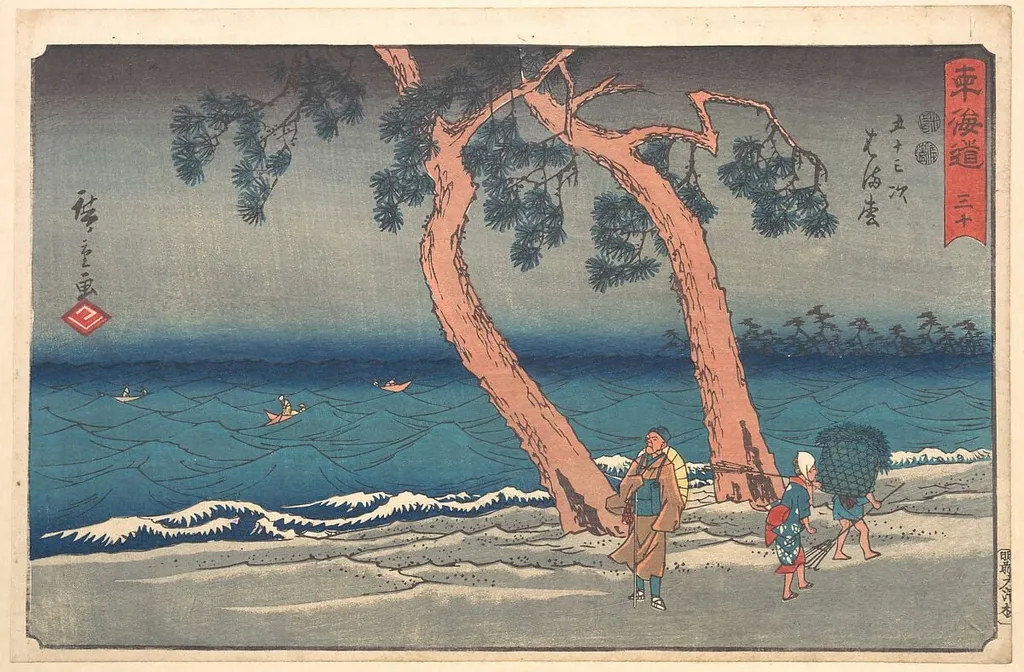
東海道五十三次 はま松|Hamamatsu Station is an ink print by the Romanticist artist Utagawa Hiroshige. It dates from 1842 and is held in the collection of the Metropolitan Museum of Art.
About this work
Overview
Created circa 1842 by Utagawa Hiroshige, this woodblock print is one of the images in his series *The Fifty‑three Stations of the Tōkaidō*. Executed with ink and color on paper, it portrays the stop known as Hamamatsu Station, a waypoint on the historic coastal road linking Edo and Kyoto.
Subject & Meaning
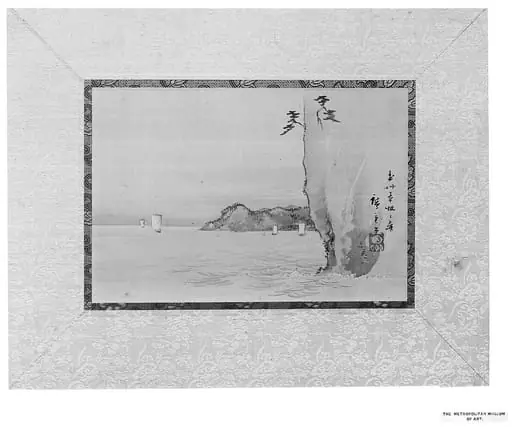
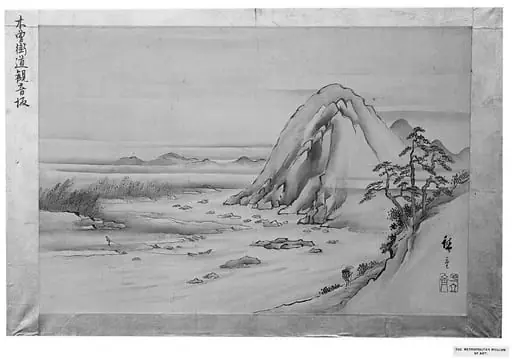
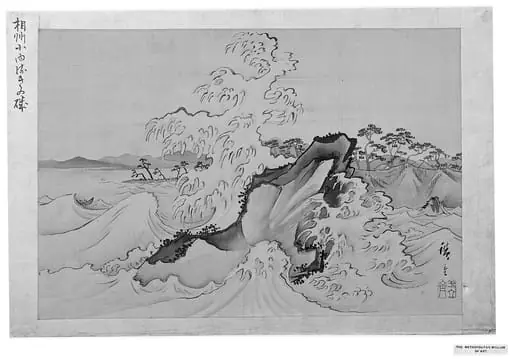
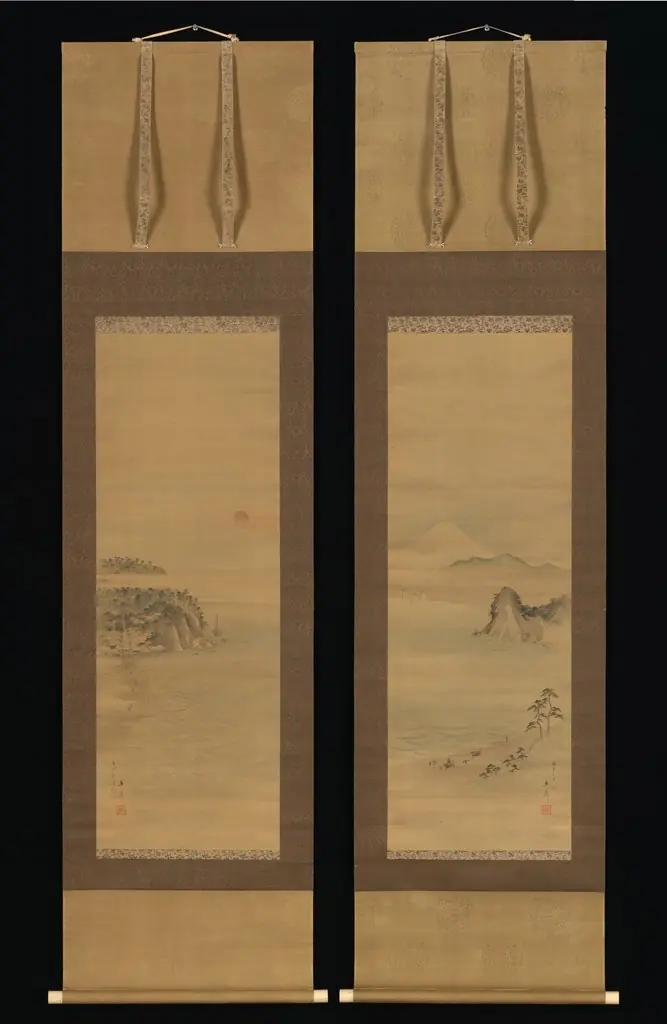
The composition centers on a solitary tree whose stout trunk and spreading branches dominate a sandy shoreline. Beyond the tree, a tranquil sea stretches across the picture, dotted with small fishing vessels. Figures move along the beach, some bearing loads, suggesting ordinary travel and daily activity along the route.
Technique & Style
Hiroshige employs the ukiyo‑e woodblock method, layering multiple carved blocks to achieve delicate washes of blue sky, muted greens, and earthy tones. The print balances fine line work for the tree and figures with broader color fields for water and sky, reflecting the artist’s characteristic emphasis on atmospheric perspective.
History & Provenance
The print was produced for the popular series that circulated widely during the Edo period, catering to travelers and collectors alike. It now belongs to the collection of The Metropolitan Museum of Art, where it is displayed as part of the museum’s holdings of Japanese prints.
Artist & collection
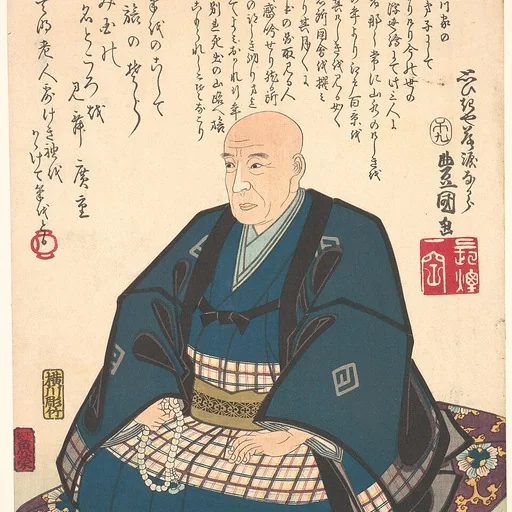
Artist
Utagawa Hiroshige (歌川 広重) or Andō Hiroshige (安藤 広重), born Andō Tokutarō (安藤 徳太郎; 1797 – 12 October 1858), was a Japanese ukiyo-e artist, considered the last great master of that tradition.