Artwork
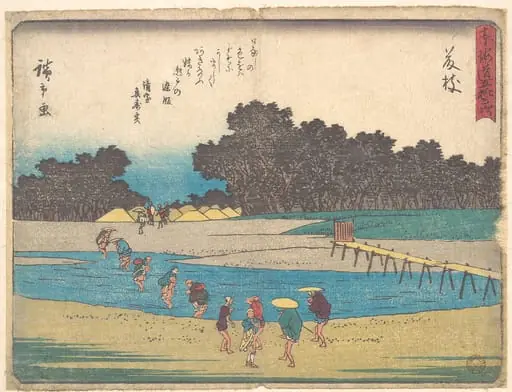
東海道五十三次 はま松|Hamamatsu
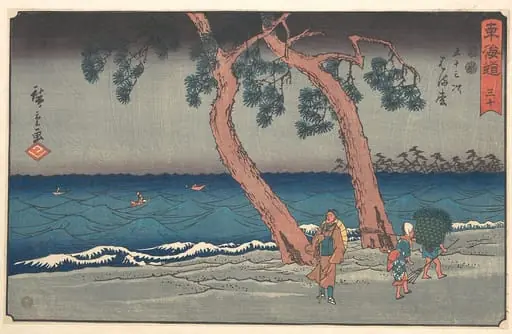
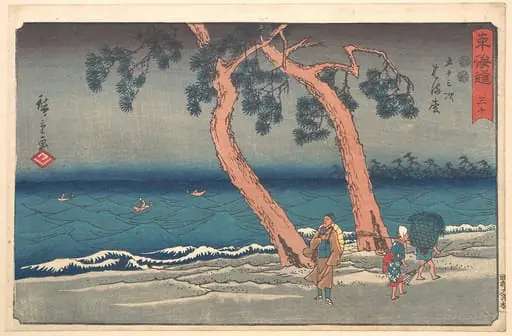
東海道五十三次 はま松|Hamamatsu is an ink print by the Romanticist artist Utagawa Hiroshige. It dates from 1828 and is held in the collection of the Metropolitan Museum of Art.
About this work
Overview
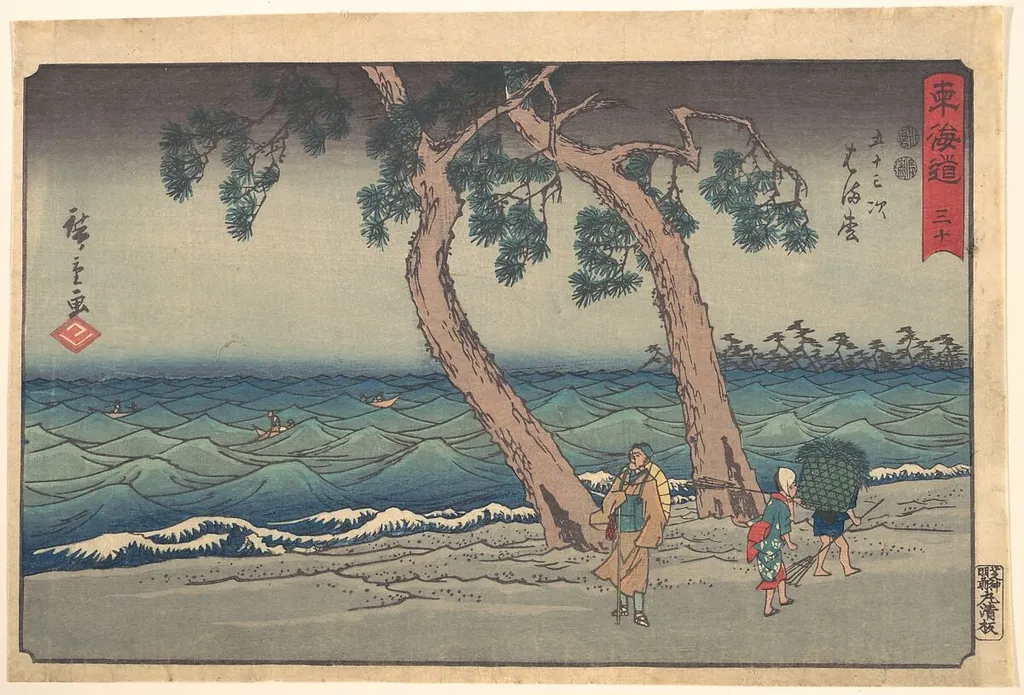
This woodblock print, 'Hamamatsu', is part of Utagawa Hiroshige's 'The Fifty-three Stations of the Tōkaidō' series, created in 1833-1834. It depicts a serene winter scene at Hamamatsu, showcasing Hiroshige's skill in capturing landscapes.
Subject & Meaning
The print features a snow-covered beach with a prominent pine tree and three travelers. The natural scenery and the figures are the main focus, with a red banner at the top indicating the location.
Technique & Style
Executed in ink and color on paper, the work demonstrates Hiroshige's mastery of atmospheric composition and subtle color gradation, characteristic of ukiyo-e landscape prints.
Context
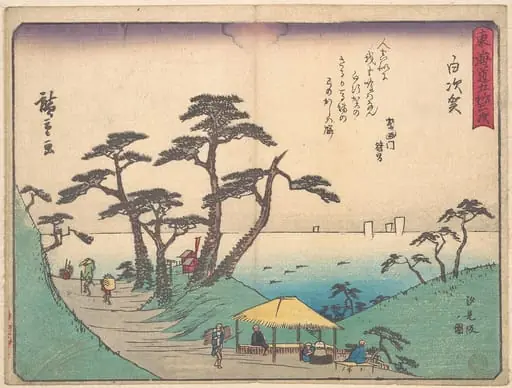
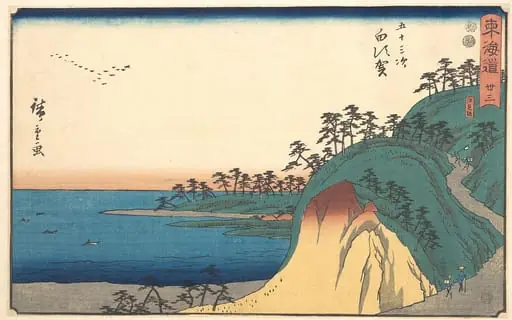
As part of 'The Fifty-three Stations of the Tōkaidō', 'Hamamatsu' represents one of the stops along the historic Tōkaidō road, highlighting the natural and cultural landmarks of the route.
Artist & collection
Artist
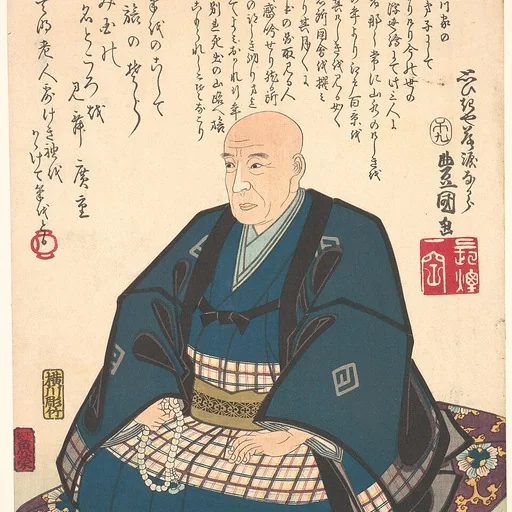
Utagawa Hiroshige (歌川 広重) or Andō Hiroshige (安藤 広重), born Andō Tokutarō (安藤 徳太郎; 1797 – 12 October 1858), was a Japanese ukiyo-e artist, considered the last great master of that tradition.