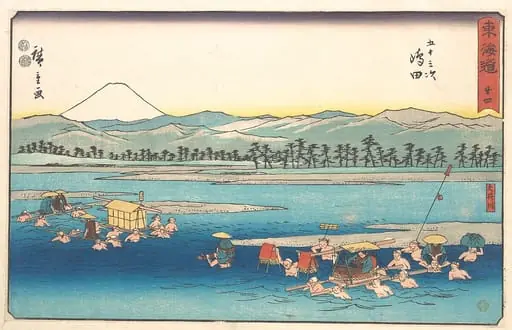
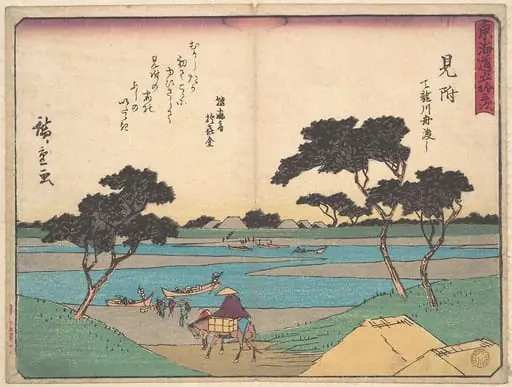
Artwork
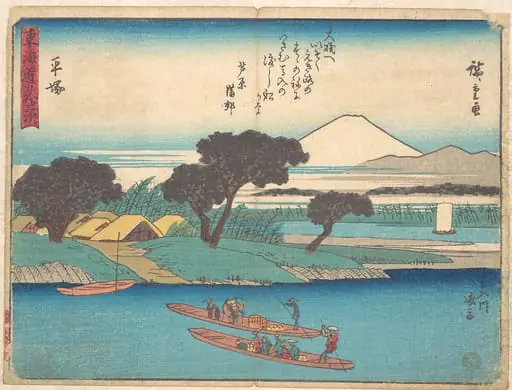
東海道五十三次之内 平塚 馬入川舟渡しの図|Hiratsuka; Banyugawa Funa Watashi no Zu
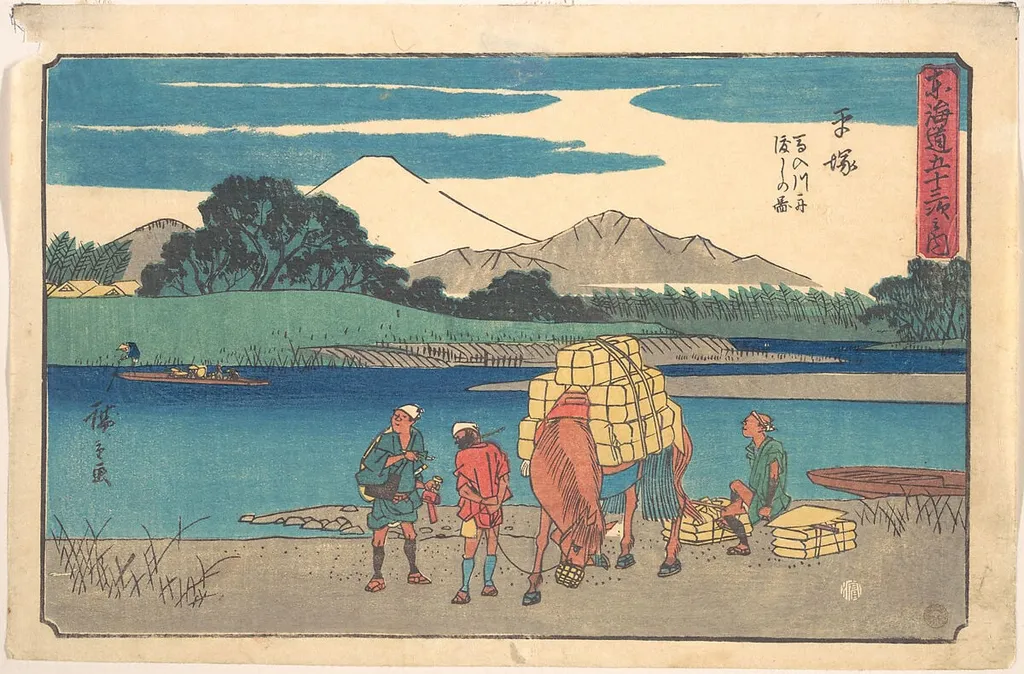
東海道五十三次之内 平塚 馬入川舟渡しの図|Hiratsuka; Banyugawa Funa Watashi no Zu is an ink print by the Romanticist artist Utagawa Hiroshige. It dates from 1842 and is held in the collection of the Metropolitan Museum of Art.
About this work
Overview
Created around 1842 by Utagawa Hiroshige, this woodblock print is one of fifty-three scenes in the series *The Fifty-three Stations of the Tōkaidō*.
Created around 1842 by Utagawa Hiroshige, this woodblock print is one of fifty-three scenes in the series *The Fifty-three Stations of the Tōkaidō*. It depicts a riverside crossing at Hiratsuka, a stop along the major road connecting Edo and Kyoto. Rendered in ink and color on paper, the print captures a quiet moment of travel, emphasizing natural landscape over human drama, a hallmark of Hiroshige’s approach to ukiyo-e.
Subject & Meaning
The scene shows travelers and a horse preparing to cross the Banyugawa River by boat. Figures gather on the bank with bundled belongings, while a lone individual holds a pole, likely guiding the ferry. The red banner bears station identification, grounding the image in its specific location. The composition suggests the rhythm of pilgrimage and commerce along the Tōkaidō, portraying travel not as grand spectacle but as routine, grounded experience.
Technique & Style
Hiroshige employed bold, flat areas of color and simplified forms to convey depth and atmosphere. The sky is rendered in soft blue with minimal cloud detail, while the mountain looms behind in muted tones. Trees along the riverbank are stylized, their shapes echoing the curve of the water. The use of line and color is restrained, prioritizing harmony and spatial clarity over ornamental detail, characteristic of his mature landscape style.
History & Provenance
The print was produced during the early 1840s as part of Hiroshige’s most celebrated series, commissioned for mass distribution among travelers and urban dwellers. Woodblock prints like this were widely circulated, often sold as souvenirs or decorative items. While individual impressions vary, the original blocks were likely used for multiple print runs, ensuring broad visibility across Japan during the late Edo period.
Context
The Tōkaidō was the most traveled road in Japan, used by merchants, pilgrims, and samurai. Hiroshige’s series documented its stations with attention to seasonal changes and local geography, shifting ukiyo-e’s focus from courtesans and actors to the everyday experience of movement through the landscape. This print reflects a growing public interest in travel and regional identity during a time of relative peace and economic growth.
Legacy
Hiroshige’s *Tōkaidō* series influenced later generations of artists, both in Japan and abroad, particularly in the development of Western landscape printmaking. His emphasis on atmosphere, perspective, and quiet narrative helped redefine ukiyo-e’s potential beyond entertainment. Today, these prints remain key documents of Edo-period visual culture, valued for their observational precision and poetic restraint.
Artist & collection
Artist
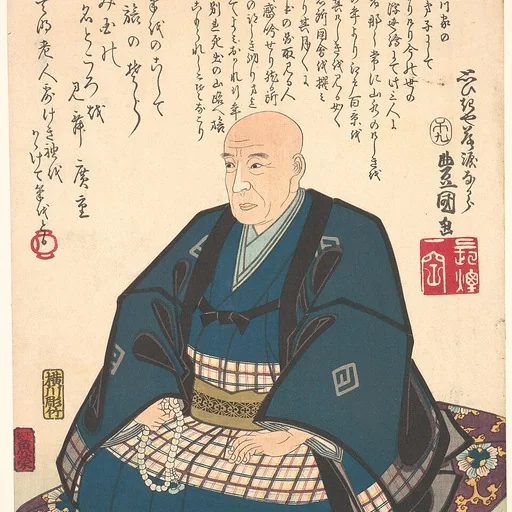
Utagawa Hiroshige (歌川 広重) or Andō Hiroshige (安藤 広重), born Andō Tokutarō (安藤 徳太郎; 1797 – 12 October 1858), was a Japanese ukiyo-e artist, considered the last great master of that tradition.