Artwork
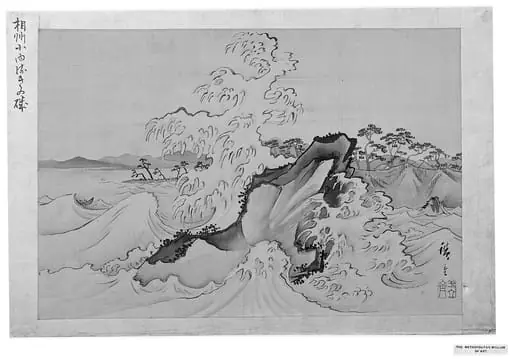
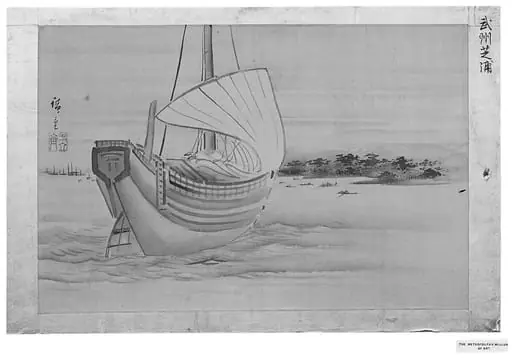
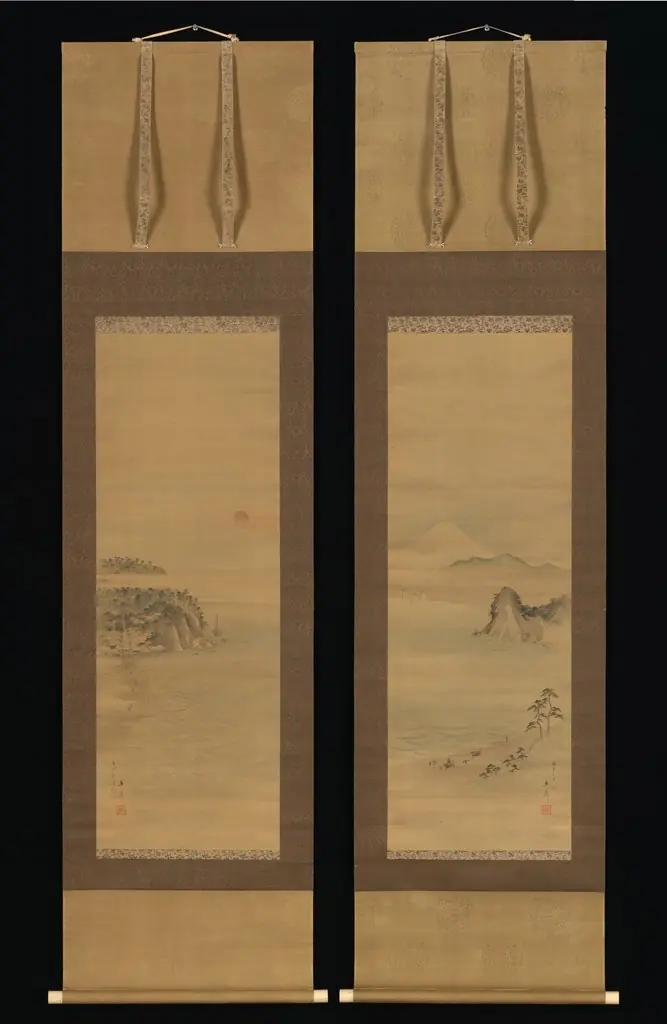
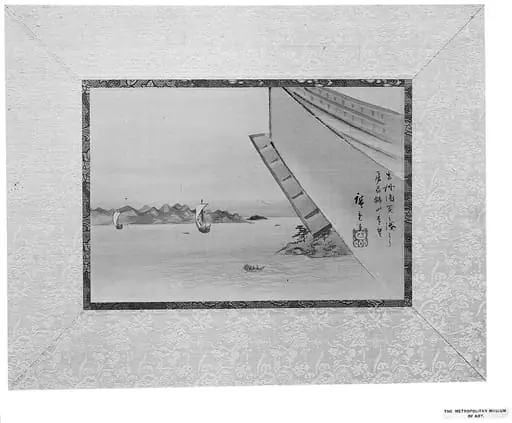
東海道五十三次 江尻|Ejiri
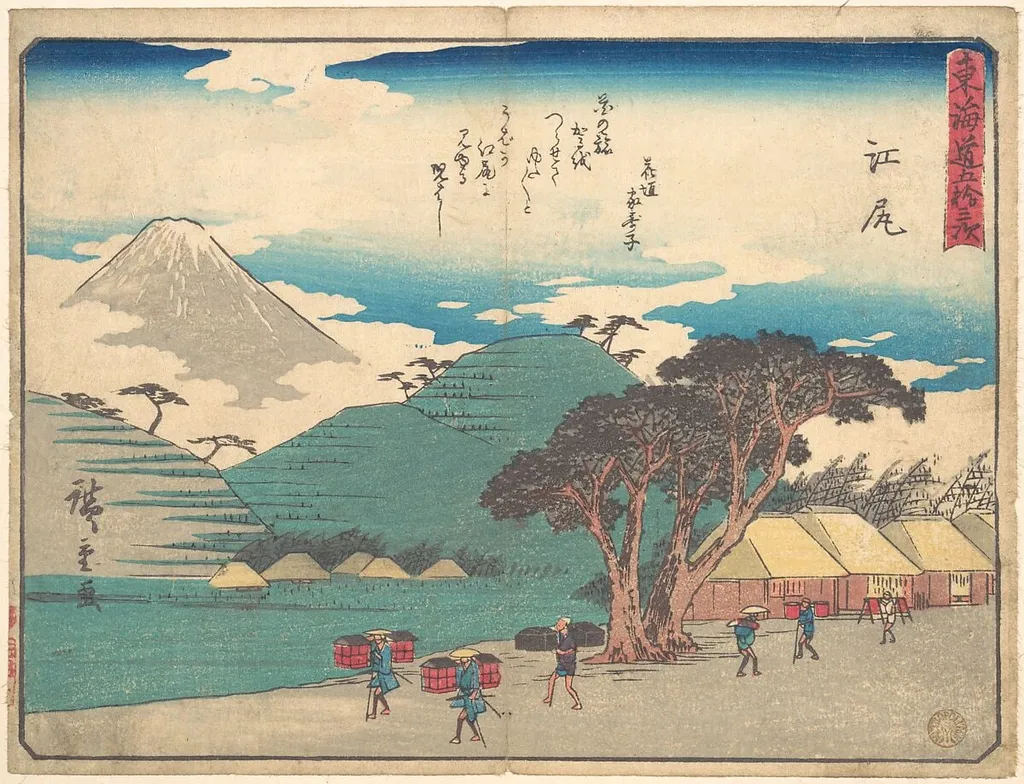
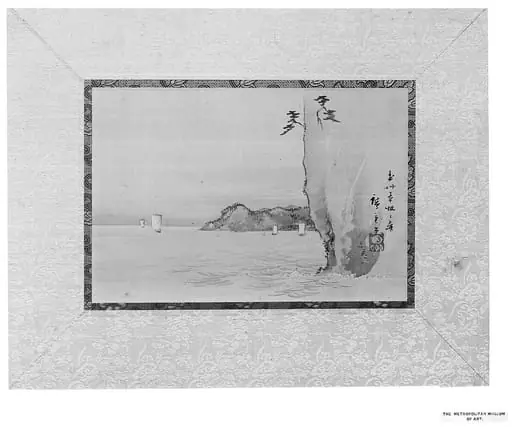
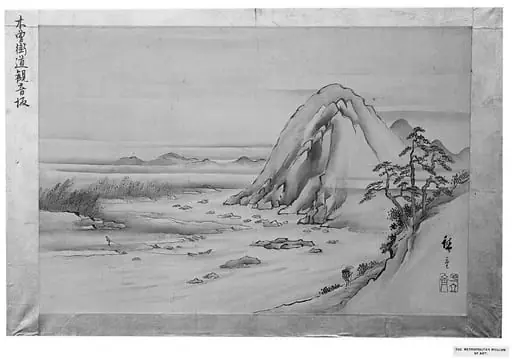
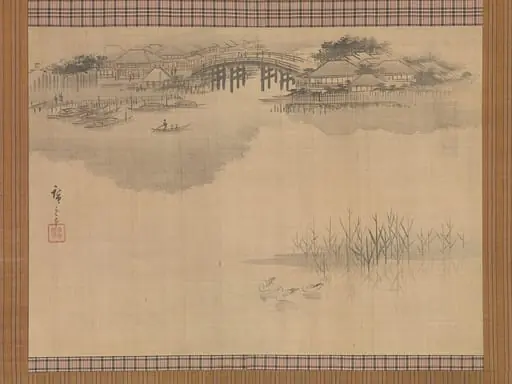
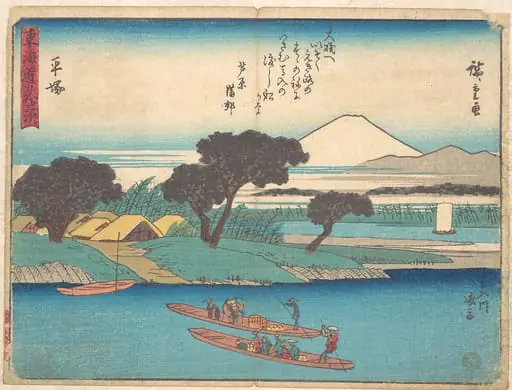
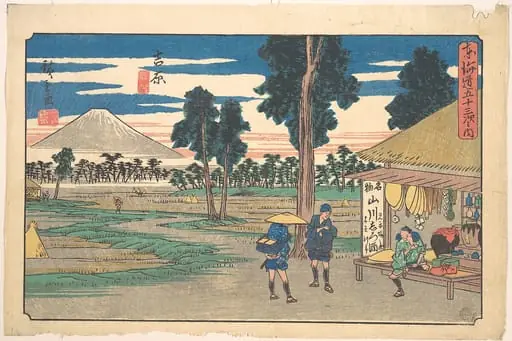
東海道五十三次 江尻|Ejiri is an ink print by the Romanticist artist Utagawa Hiroshige. It dates from 1838 and is held in the collection of the Metropolitan Museum of Art.
About this work
Overview
This woodblock print, made with ink and color on paper, captures a quiet moment along the Tōkaidō, the primary road linking Edo and Kyoto during the Edo period.
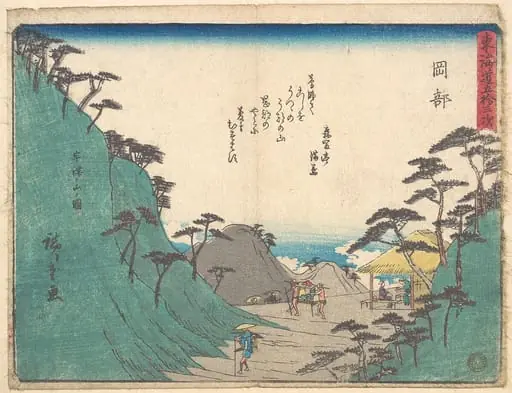
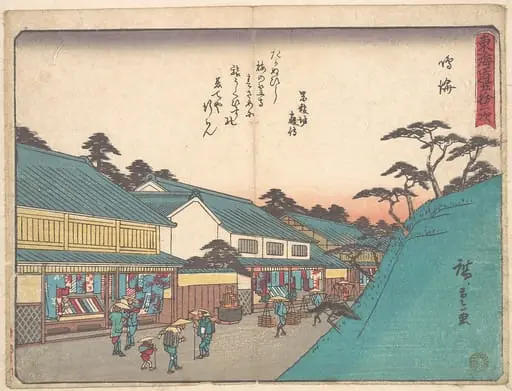
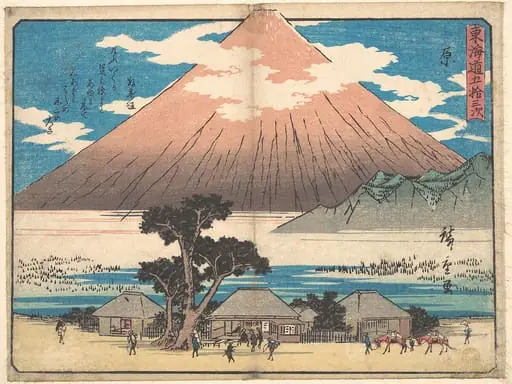
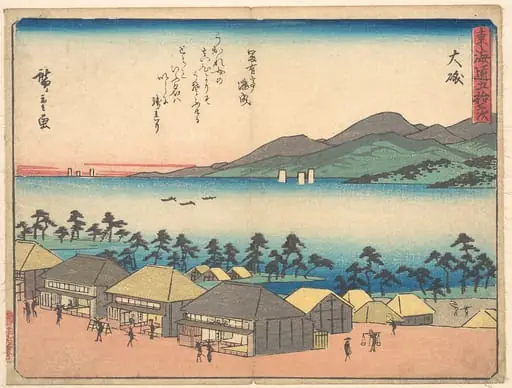
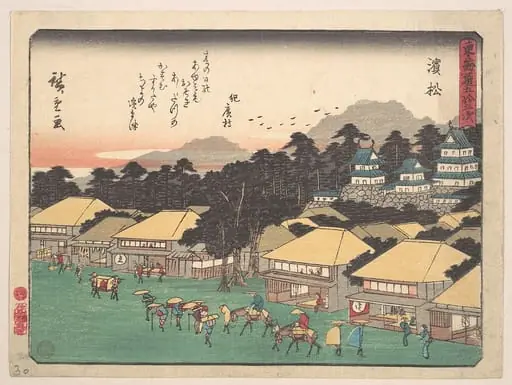
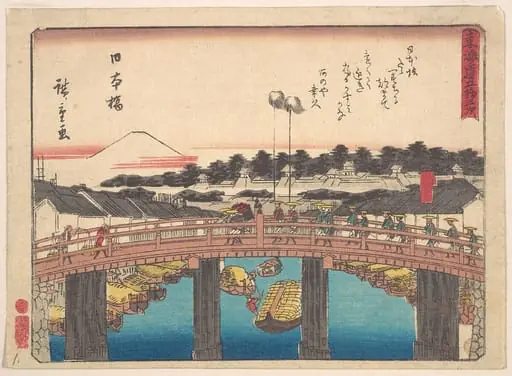
Created around 1838 by Utagawa Hiroshige, *Ejiri* is one of fifty-three prints in the series *The Fifty-three Stations of the Tōkaidō*. This woodblock print, made with ink and color on paper, captures a quiet moment along the Tōkaidō, the primary road linking Edo and Kyoto during the Edo period. Unlike many ukiyo-e works centered on city life, Hiroshige turned his focus to the natural and rural landscapes travelers encountered on the journey.
Subject & Meaning
The scene depicts the station of Ejiri, marked by a prominent central tree, rolling hills, distant mountains, and a calm body of water. Travelers move along the road, some carrying burdens, suggesting the routine of pilgrimage or commerce. The composition conveys stillness and transience, reflecting the Japanese aesthetic of *mono no aware*—an awareness of the impermanence of things. Nature dominates, framing human presence as small and fleeting within the landscape.
Technique & Style
Hiroshige employed fine woodblock carving to render subtle gradations of color and texture, particularly in the sky and water. Soft blues and whites suggest a clear, breezy day, while layered greens and browns define the hills and foliage. The use of perspective, though not Western linear, creates depth through overlapping forms and diminishing scale. His delicate handling of atmospheric effects—clouds, mist, light—distinguishes this work within the ukiyo-e tradition.
History & Provenance
The *Tōkaidō* series was published by Hoeidō, a prominent Edo publisher, and quickly gained popularity among merchants and travelers. *Ejiri* was among the earliest prints in the set, produced during Hiroshige’s rise as a landscape artist. Copies circulated widely, and the series became one of the most reproduced ukiyo-e collections of its time. Original impressions are now held in major museum collections worldwide, valued for their historical and artistic significance.
Context
During the Edo period, the Tōkaidō was a vital artery for trade, diplomacy, and pilgrimage. As travel became more accessible to commoners, depictions of its stations catered to public interest in distant places. Hiroshige’s series responded to this cultural moment, offering not just topographical records but emotional impressions of the journey. His focus on weather, season, and mood aligned with broader shifts in Japanese art toward introspective, nature-centered themes.
Legacy
Hiroshige’s *Tōkaidō* series influenced later generations of artists, both in Japan and abroad. European Impressionists and Post-Impressionists, including Van Gogh, studied his compositions and color use. The quiet rhythm of *Ejiri*—its balance of nature and human movement—helped redefine landscape art beyond mere documentation. Today, the print remains a touchstone for understanding how everyday travel was transformed into poetic visual narrative in 19th-century Japan.
Artist & collection
Artist
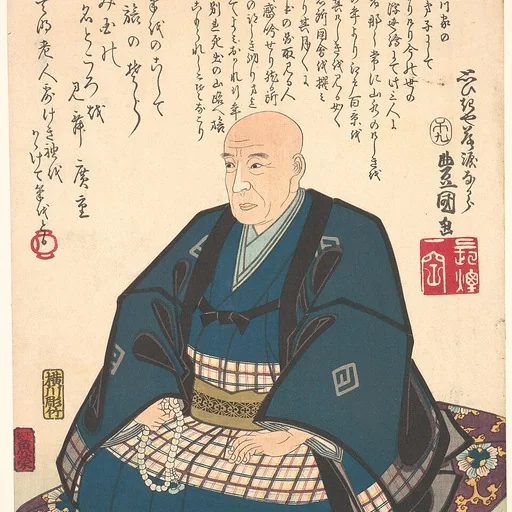
Utagawa Hiroshige (歌川 広重) or Andō Hiroshige (安藤 広重), born Andō Tokutarō (安藤 徳太郎; 1797 – 12 October 1858), was a Japanese ukiyo-e artist, considered the last great master of that tradition.