Artwork
東海道五十三次之内 保土ヶ谷 新町橋|Hodogaya Station and Shinkame Bridge
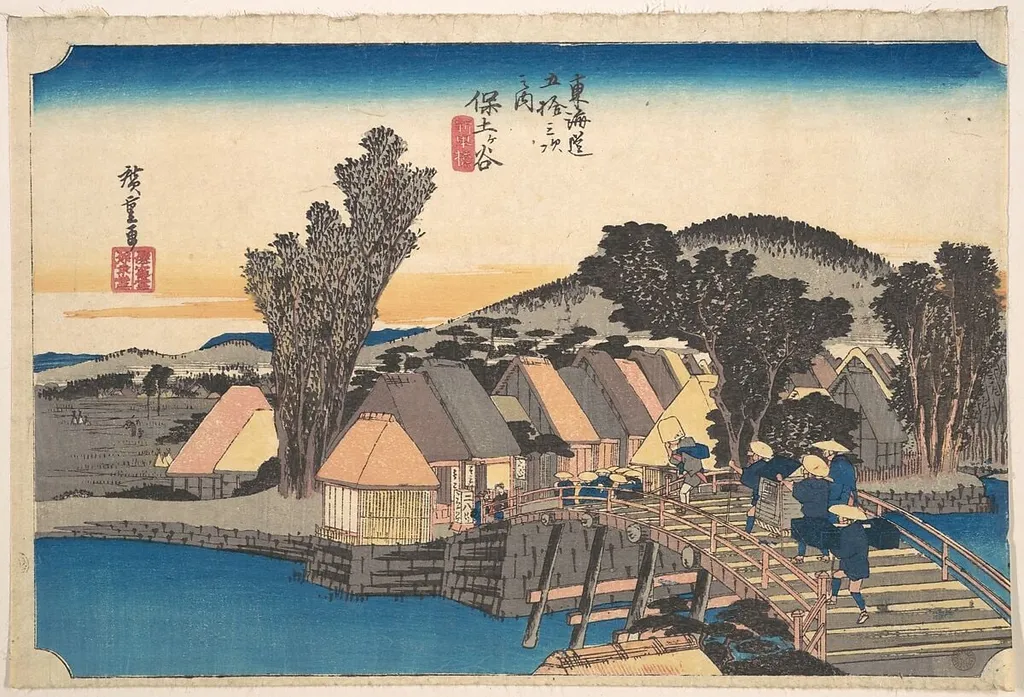
東海道五十三次之内 保土ヶ谷 新町橋|Hodogaya Station and Shinkame Bridge is an ink print by the Romanticist artist Utagawa Hiroshige. It dates from 1834 and is held in the collection of the Metropolitan Museum of Art.
About this work
Overview
Created around 1834, this woodblock print by Utagawa Hiroshige is one of fifty-five scenes in the series *The Fifty-three Stations of the Tōkaidō*.
Created around 1834, this woodblock print by Utagawa Hiroshige is one of fifty-five scenes in the series *The Fifty-three Stations of the Tōkaidō*. It depicts the Hodogaya post station, a resting point along the major highway linking Edo and Kyoto. Rendered in ink and color on paper, the work exemplifies Hiroshige’s shift from urban genre scenes to contemplative landscapes, capturing the quiet rhythm of travel in late Edo-period Japan.
Subject & Meaning
The scene centers on Shinkame Bridge, where travelers in traditional attire cross a quiet river. Flanking the bridge are trees and modest buildings, suggesting a modest roadside settlement. The composition emphasizes stillness and transit—not grandeur, but the ordinary passage of people along a well-trodden route. The muted sky, blending blue and yellow, evokes a transitional hour, reinforcing the theme of journey and pause.
Technique & Style
Hiroshige employed fine linework and layered color washes to suggest depth and atmosphere. The bridge recedes diagonally, guiding the viewer’s eye into the distance, while the gradient sky adds a subtle sense of time and space. Unlike earlier ukiyo-e’s bold contrasts, this print uses soft tonal transitions to evoke calm, a hallmark of Hiroshige’s mature style in landscape printing.
History & Provenance
The print was produced during the early 1830s as part of a commercially successful series commissioned by publisher Hoeido. It circulated widely among urban audiences seeking idealized views of the Tōkaidō. The Metropolitan Museum of Art acquired it as part of its broader collection of Japanese prints, preserving it as a representative example of Edo-period commercial printmaking.
Context
The Tōkaidō was the most important travel corridor in Japan, used by samurai, merchants, and pilgrims. Hiroshige’s series responded to growing public interest in travel and regional identity. By focusing on quiet moments rather than dramatic events, he reflected a cultural shift toward introspection and appreciation of nature, aligning with broader Edo-period aesthetic values.
Legacy
Hiroshige’s *Tōkaidō* series influenced later generations of artists, including Western Impressionists who admired its compositional clarity and atmospheric effects. Though produced for mass consumption, these prints became enduring records of Japan’s landscape and travel culture. Today, they remain key references for understanding Edo-period visual culture and the evolution of Japanese printmaking.
Artist & collection
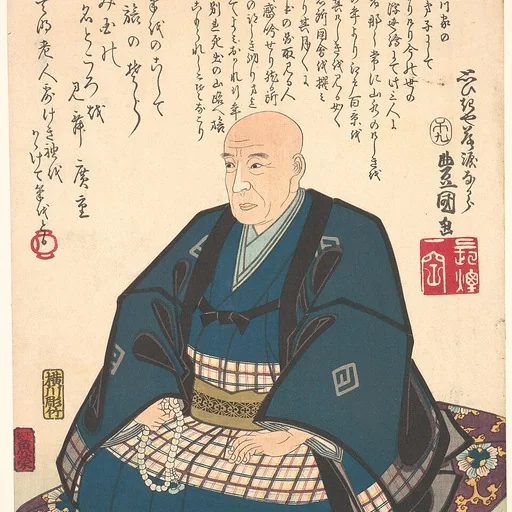
Artist
Utagawa Hiroshige (歌川 広重) or Andō Hiroshige (安藤 広重), born Andō Tokutarō (安藤 徳太郎; 1797 – 12 October 1858), was a Japanese ukiyo-e artist, considered the last great master of that tradition.

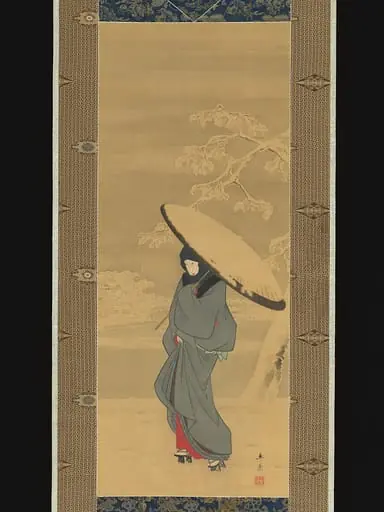
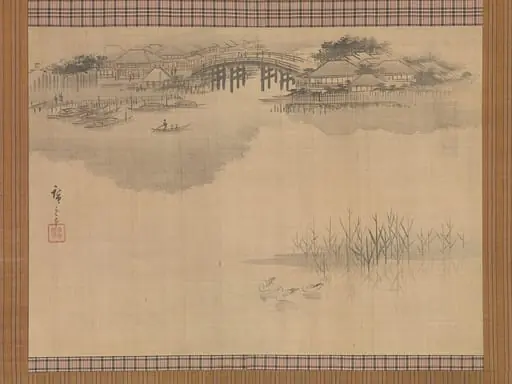
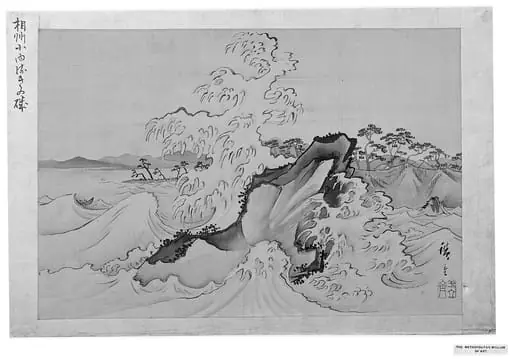
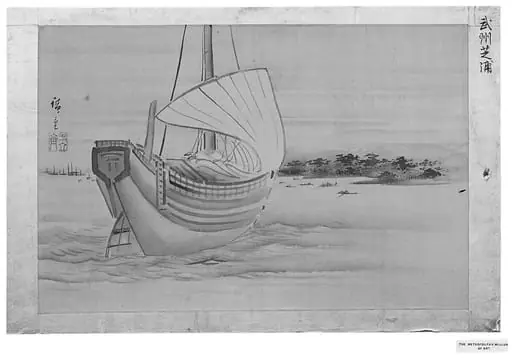
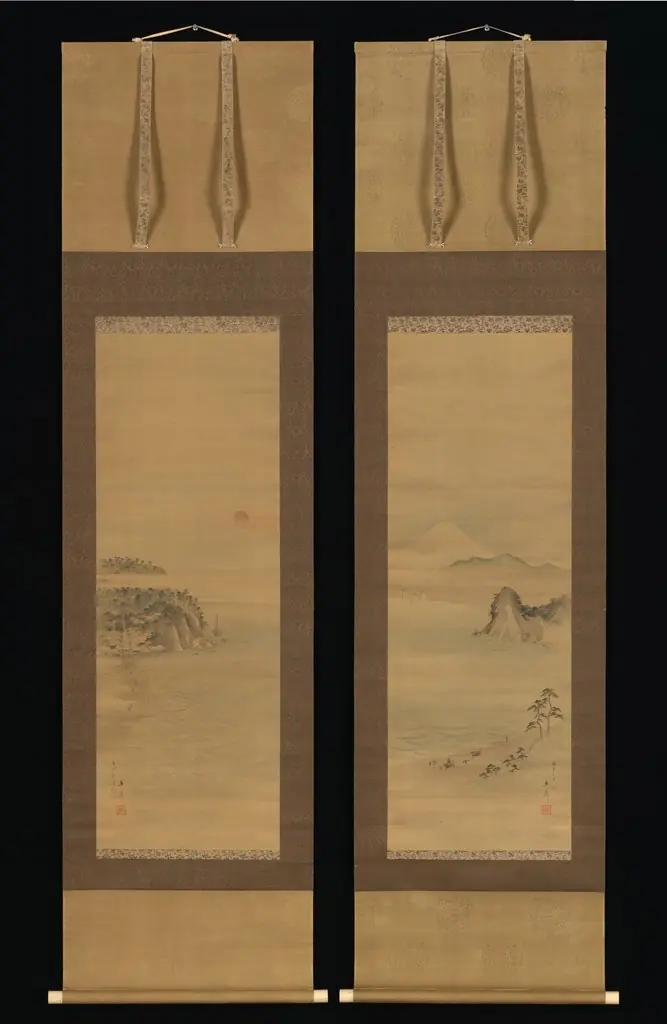
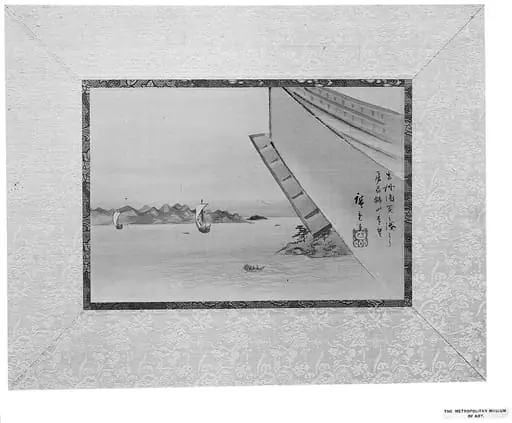
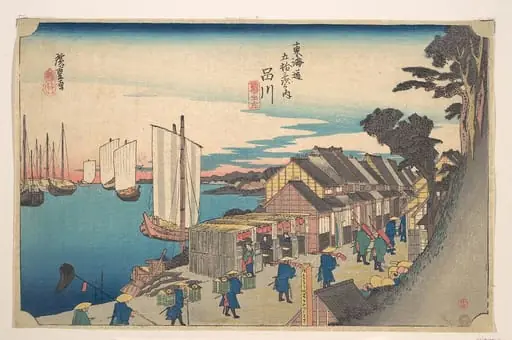 東海道五十三次之内 品川 諸侯出立|Shinagawa; Shoko Detachi
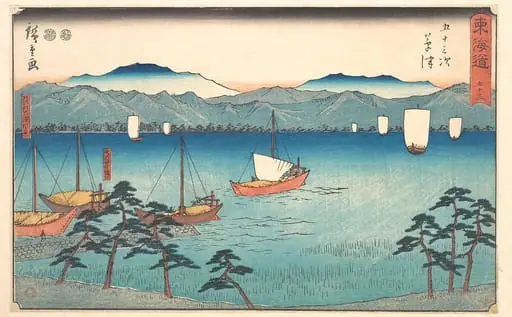 東海道五十三次 草津 矢ばせの渡口 琵琶湖風景|Kusatsu
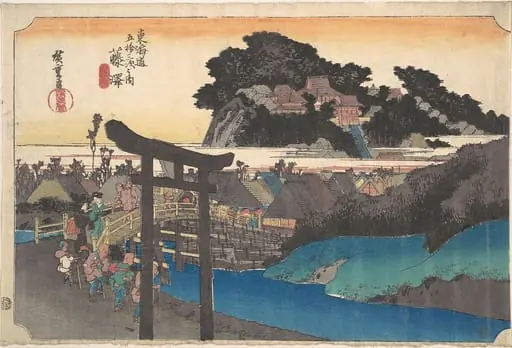 東海道五十三次之内 藤澤 遊行寺|Fujiwara; Yugyoji
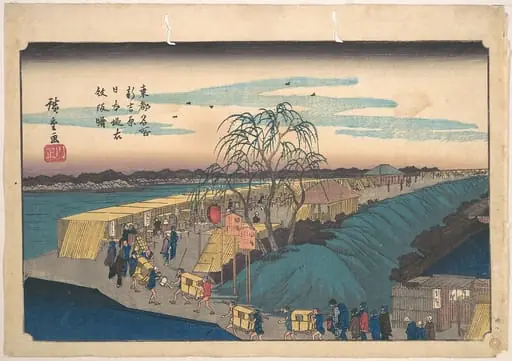 東都名所 新吉原日本堤衣紋坂曙|Shin Yoshiwara Nihon Tsutsumi Emonzaka Akatsuki
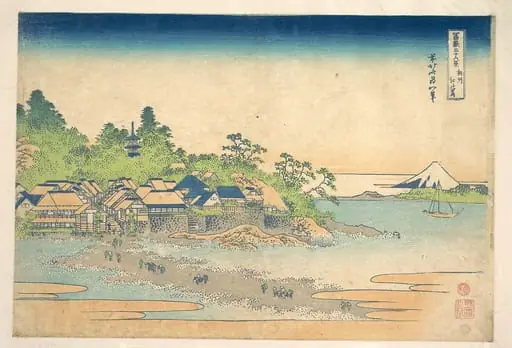 冨嶽三十六景 相州江の島|Enoshima in Sagami Province (Sōshū Enoshima), from the series Thirty-six Views of Mount Fuji (Fugaku sanjūrokkei)
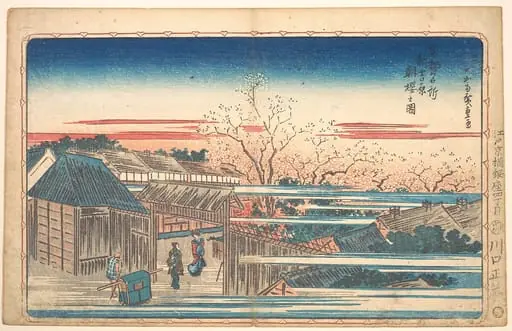 東都名所 新吉原朝桜之図|Morning Cherries at Yoshiwara
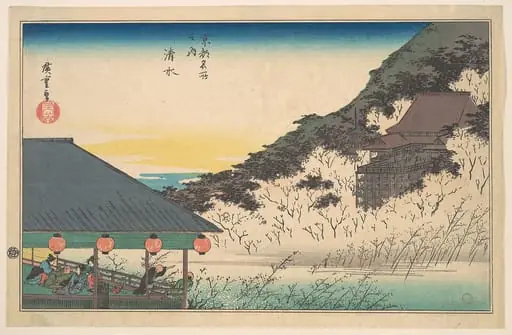 歌川広重画 「京都名所之内 清水」|Kiyomizu Temple (Kiyomizu), from the series Famous Views of Kyoto (Kyōto meisho no uchi)