Artwork
歌川広重画 「京都名所之内 清水」|Kiyomizu Temple (Kiyomizu), from the series Famous Views of Kyoto (Kyōto meisho no uchi)
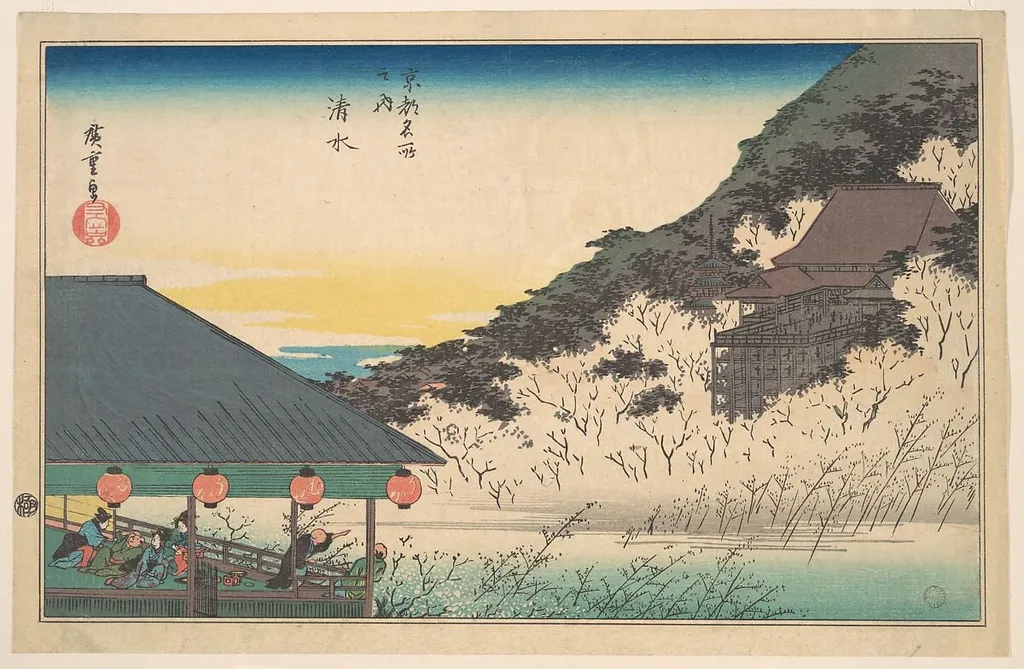
歌川広重画 「京都名所之内 清水」|Kiyomizu Temple (Kiyomizu), from the series Famous Views of Kyoto (Kyōto meisho no uchi) is an ink print by the Romanticist artist Utagawa Hiroshige. It dates from 1834 and is held in the collection of the Metropolitan Museum of Art.
About this work
Overview
Around 1834, Utagawa Hiroshige produced a woodblock print titled Kiyomizu Temple as part of his series Famous Views of Kyoto. Executed in ink and color on paper, the image captures a panoramic view of the renowned temple complex, set within a broader cityscape of Kyoto.
Subject & Meaning
The composition centers on the Kiyomizu Temple, positioned amid a cluster of trees, while a large building with a sloping roof occupies the left foreground. Figures on a covered porch engage in everyday activities, suggesting a moment of quiet communal life beneath the temple’s historic presence.
Technique & Style
Hiroshige employed traditional ukiyo-e woodblock methods, layering multiple color inks to render subtle gradients in sky and water. Fine carving allows intricate architectural details and delicate foliage, while the overall atmospheric perspective reflects his focus on landscape over the genre’s typical urban pleasure scenes.
History & Provenance
Created during the Edo period, the print belongs to a series that documented Kyoto’s celebrated sites for a growing market of travelers and collectors. As a work by one of the era’s leading ukiyo-e artists, it circulated widely in Japan and later entered museum collections abroad.
Context
In contrast to many contemporary prints that emphasized bustling entertainment districts, Hiroshige’s series highlighted serene, culturally significant locations. This shift mirrors a broader interest among Edo‑period audiences in pilgrimage sites and the aesthetic appreciation of natural and architectural harmony.
Artist & collection
Artist
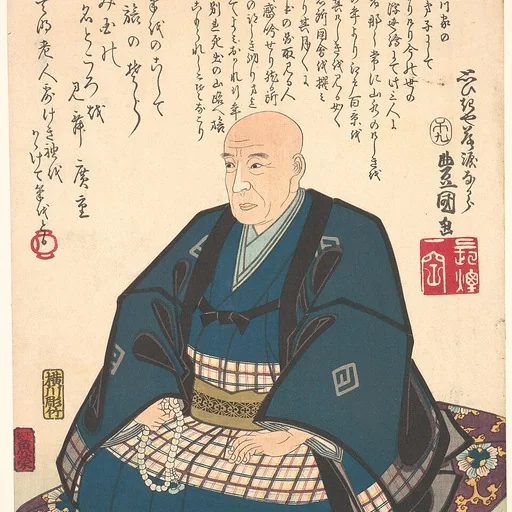
Utagawa Hiroshige (歌川 広重) or Andō Hiroshige (安藤 広重), born Andō Tokutarō (安藤 徳太郎; 1797 – 12 October 1858), was a Japanese ukiyo-e artist, considered the last great master of that tradition.

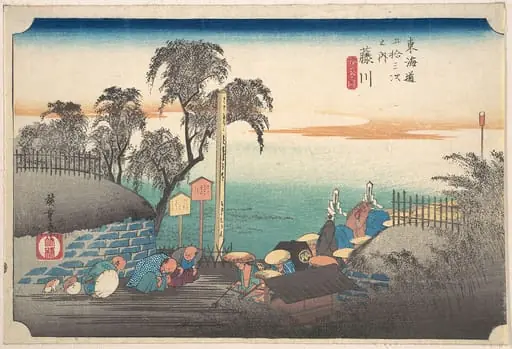 東海道五十三次之内 藤川 棒鼻の図|Fujikawa, Bo Bana
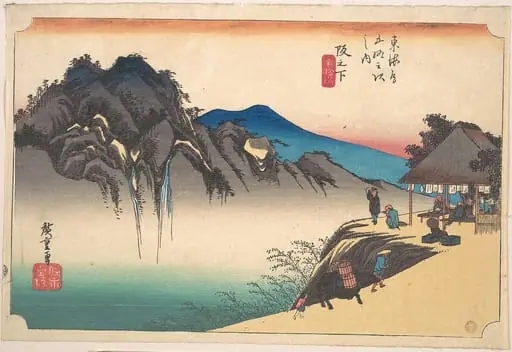 東海道五十三次之内 阪之下 筆捨嶺|Saka-no-shita, Fude-sute Mine
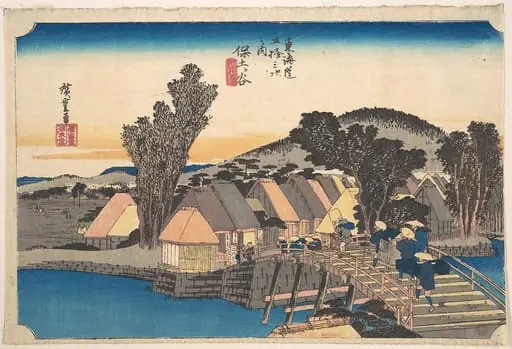 東海道五十三次之内 保土ヶ谷 新町橋|Hodogaya Station and Shinkame Bridge
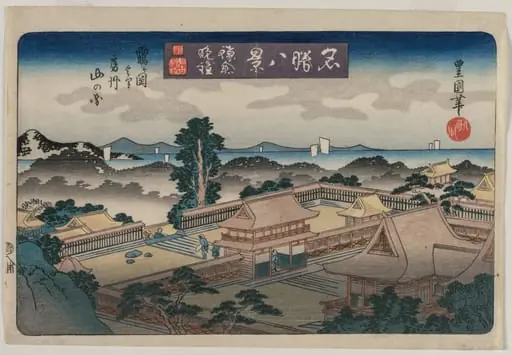 Eight Views of Famous Places: Evening Bell in Kamakura: The Mountains in Awa Province from the Hachiman Shrine in Tsurugaoka
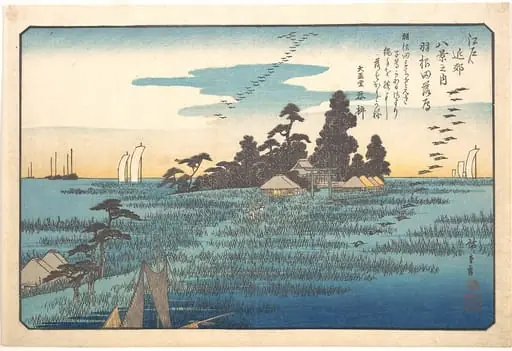 Haneda Rakugan|江戸近郊八景之内 羽根田落雁|Wild Geese at Haneda
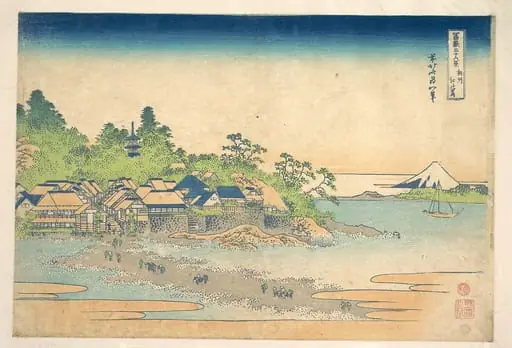 冨嶽三十六景 相州江の島|Enoshima in Sagami Province (Sōshū Enoshima), from the series Thirty-six Views of Mount Fuji (Fugaku sanjūrokkei)
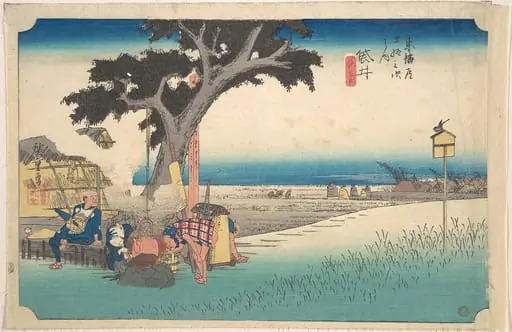 東海道五十三次之内 袋井 出茶屋の図|Fukuroi; De Chaya
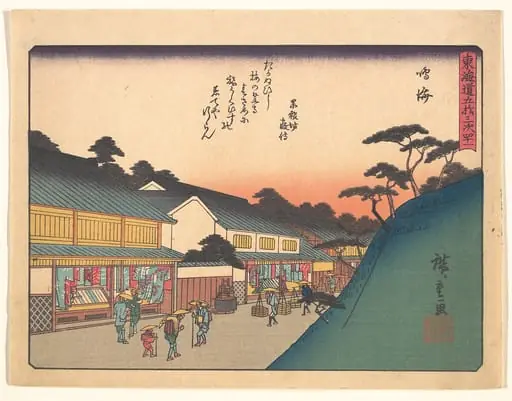 東海道五十三次 鳴海|Narumi, from the series The Fifty-three Stations of the Tōkaidō Road