Artwork
東海道五十三次 草津 矢ばせの渡口 琵琶湖風景|Kusatsu
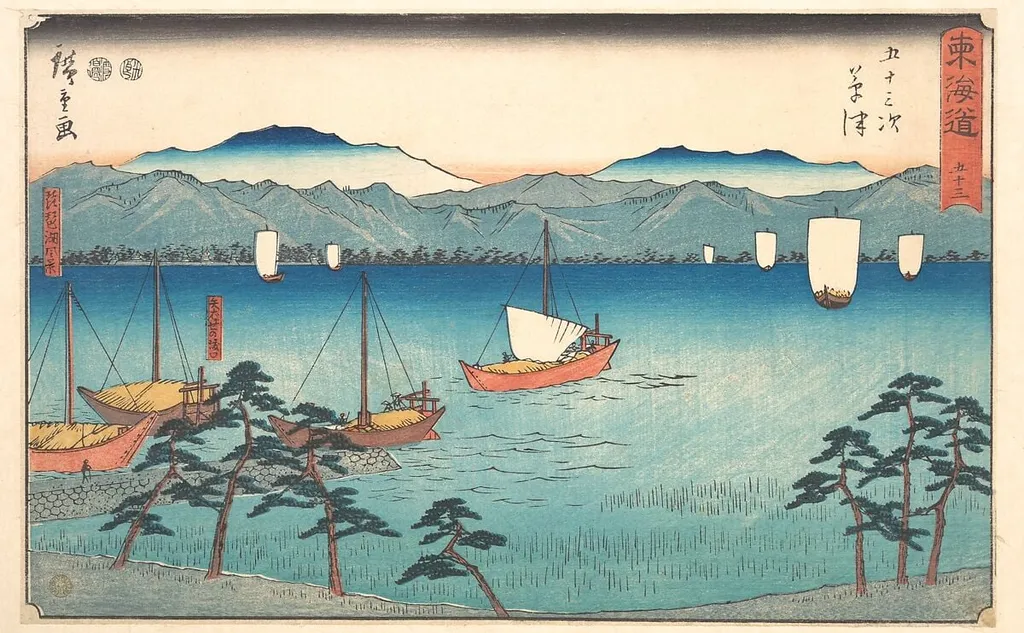
東海道五十三次 草津 矢ばせの渡口 琵琶湖風景|Kusatsu is an ink print by the Romanticist artist Utagawa Hiroshige. It dates from 1840 and is held in the collection of the Metropolitan Museum of Art.
About this work
Overview
The print captures a quiet moment near Kusatsu, where travelers cross a river, framed by distant mountains and the expanse of Lake Biwa.
Created around 1840 by Utagawa Hiroshige, this woodblock print is part of the series “The Fifty-three Stations of the Tōkaidō,” which documents the journey along Japan’s main coastal road. Unlike typical ukiyo-e subjects centered on urban life, Hiroshige focused on natural scenery and travel experiences. The print captures a quiet moment near Kusatsu, where travelers cross a river, framed by distant mountains and the expanse of Lake Biwa.
Subject & Meaning
The scene portrays travelers crossing a river at Kusatsu, a key post station on the Tōkaidō. Mount Hiei rises faintly in the background, its mist-shrouded peak suggesting spiritual distance. The stillness of the lake, dotted with sailboats, and the sparse human presence evoke a contemplative mood. The image reflects the Edo-period ideal of travel as a meditative passage through nature, not merely a physical journey.
Technique & Style
Hiroshige employed fine woodblock carving and layered color printing to achieve subtle gradations in sky and water. The deep blue of Lake Biwa contrasts with soft gray mist and muted greens of foreground vegetation. Compositionally, the diagonal flow of the river leads the eye toward the distant mountains, while the placement of boats and trees creates rhythmic balance. The technique emphasizes atmospheric depth over detail.
History & Provenance
The print was produced during Hiroshige’s most prolific period, when the Tōkaidō series gained widespread popularity across Japan. It entered The Metropolitan Museum of Art’s collection through early 20th-century acquisitions of Japanese prints, part of a broader Western interest in ukiyo-e. Its preservation reflects its status as a representative example of mid-19th-century Japanese printmaking.
Context
The Tōkaidō was the most traveled route in Edo-period Japan, connecting Edo with Kyoto. While commercial and political traffic flowed along it, Hiroshige’s prints transformed it into a poetic corridor of seasonal change and quiet observation. His focus on landscapes, rather than courtesans or actors, aligned with growing urban appreciation for nature and travel as cultural experiences.
Legacy
Hiroshige’s approach influenced later Western artists, including the Impressionists, who admired his flattened perspectives and emphasis on light and atmosphere. This print, like others in the series, helped redefine landscape as a subject worthy of artistic attention in Japanese printmaking. It remains a touchstone for understanding how everyday travel was elevated into visual poetry.
Artist & collection
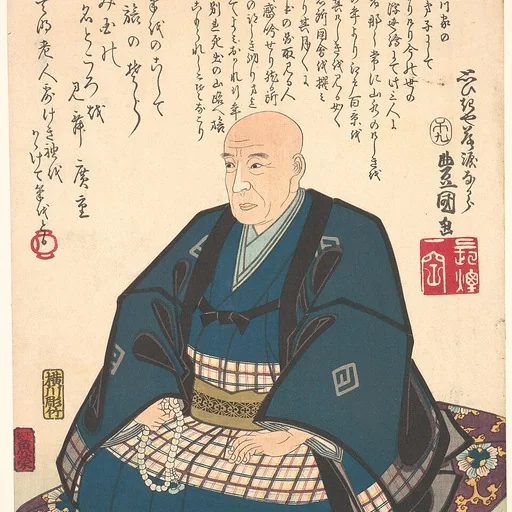
Artist
Utagawa Hiroshige (歌川 広重) or Andō Hiroshige (安藤 広重), born Andō Tokutarō (安藤 徳太郎; 1797 – 12 October 1858), was a Japanese ukiyo-e artist, considered the last great master of that tradition.

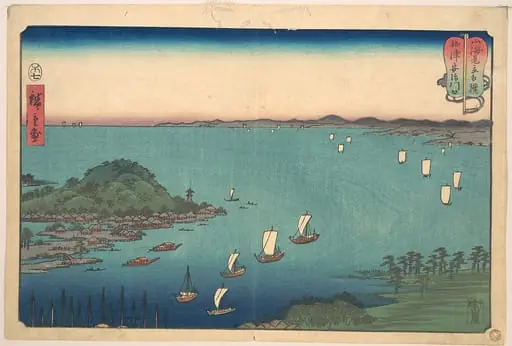 山海見立相撲 摂津安治川口|The Harbor of Ajikawa, Settsu Province
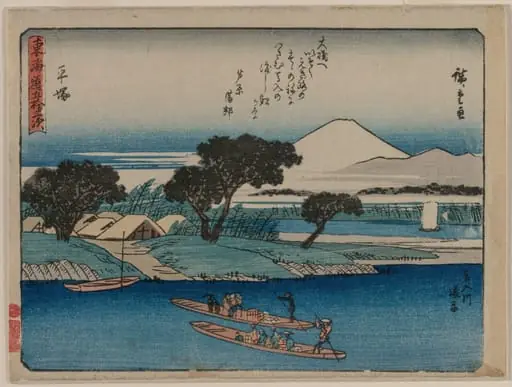 The Fifty-Three Stations of the Tokaido: Hiratsuka
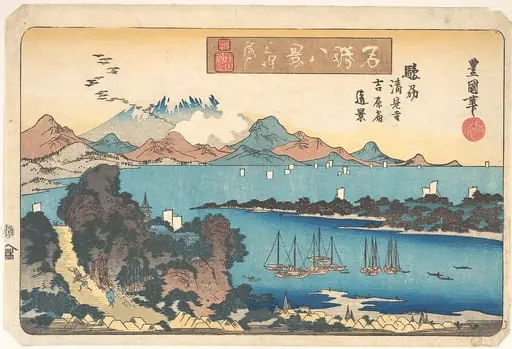 Untitled
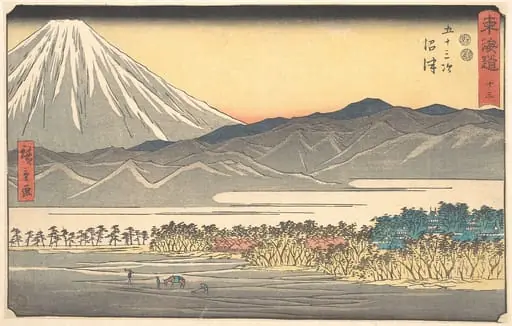 東海道五十三次 沼津|Numazu
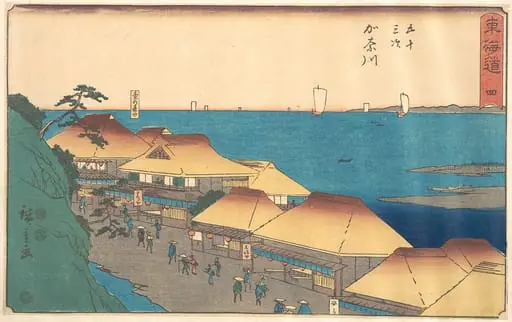 東海道五十三次 神奈川 台の茶や|Kanagawa
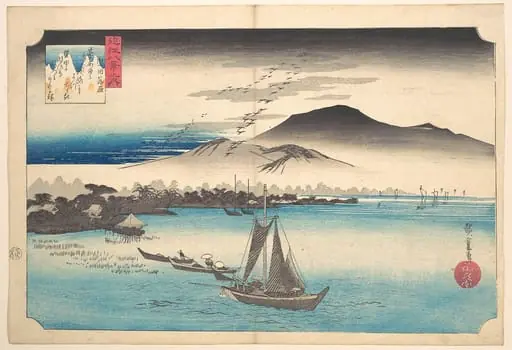 近江八景之内 堅田落雁|Returning Geese at Katada
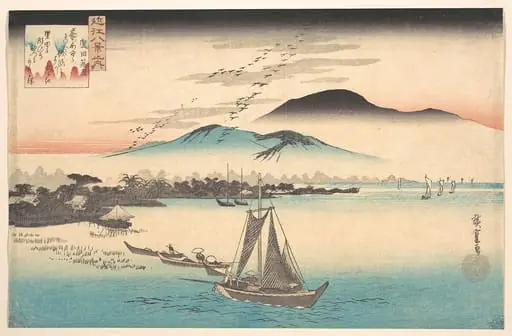 近江八景之内 堅田落雁|Geese Flying Down to Katada
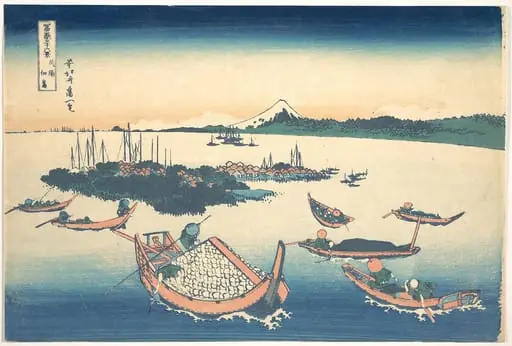 冨嶽三十六景 武陽佃島|Tsukudajima in Musashi Province (Buyō Tsukudajima), from the series Thirty-six Views of Mount Fuji (Fugaku sanjūrokkei)