Artwork
魚づくし 伊勢海老 芝蝦|Ise-ebi and Shiba-ebi, from the series Uozukushi (Every Variety of Fish)
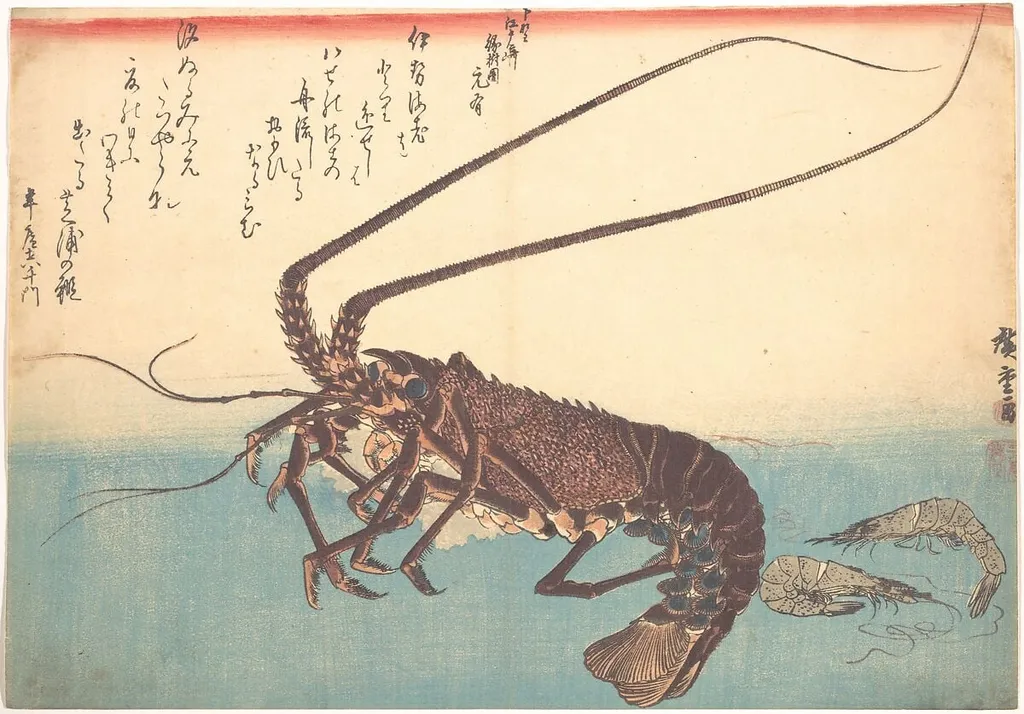
魚づくし 伊勢海老 芝蝦|Ise-ebi and Shiba-ebi, from the series Uozukushi (Every Variety of Fish) is an ink print by the Romanticist artist Utagawa Hiroshige. It dates from 1834 and is held in the collection of the Metropolitan Museum of Art.
About this work
Overview
Utagawa Hiroshige's *Ise-ebi and Shiba-ebi* is a woodblock print from his *Uozukushi* series, created circa 1834. Departing from his typical landscape focus, this piece showcases two lobster varieties against a blue background.
Subject & Meaning
The print highlights a large Ise-ebi lobster and a smaller Shiba-ebi shrimp. The detailed, contrasting depiction of the two species may emphasize the diversity of marine life, characteristic of the *Uozukushi* series' documentary approach to fish varieties.
Technique & Style
The work employs meticulous woodblock print techniques, evident in the textured shell of the Ise-ebi, achieved through fine lines, and the subtle glow of its eyes. Japanese calligraphy frames the image, adding a poetic element.
History & Provenance
Created around 1834 by Utagawa Hiroshige, a prominent ukiyo-e artist of the late Edo period, this print is part of a broader series that diverges from the genre's usual urban themes to focus on marine life.
Context
Within the *Uozukushi* series, this print reflects Hiroshige's less common exploration of flora and fauna, alongside his more renowned landscapes, highlighting the artist's versatility.
Legacy
As part of *Uozukushi*, *Ise-ebi and Shiba-ebi* contributes to the series' significance in ukiyo-e for its detailed, non-traditional subject matter, influencing later artists in their depiction of natural subjects.
Artist & collection
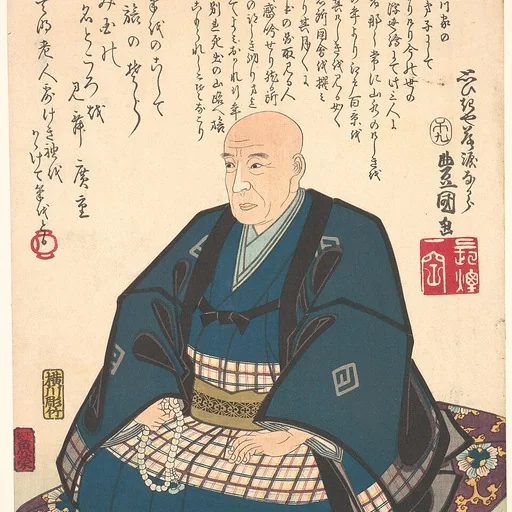
Artist
Utagawa Hiroshige (歌川 広重) or Andō Hiroshige (安藤 広重), born Andō Tokutarō (安藤 徳太郎; 1797 – 12 October 1858), was a Japanese ukiyo-e artist, considered the last great master of that tradition.

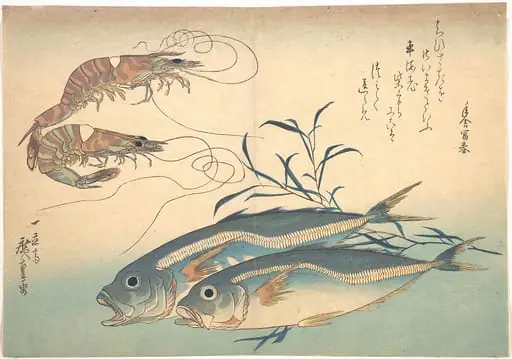 魚づくし 車海老 鯵にたで|Aji Fish and Kuruma-ebi, from the series Uozukushi (Every Variety of Fish)
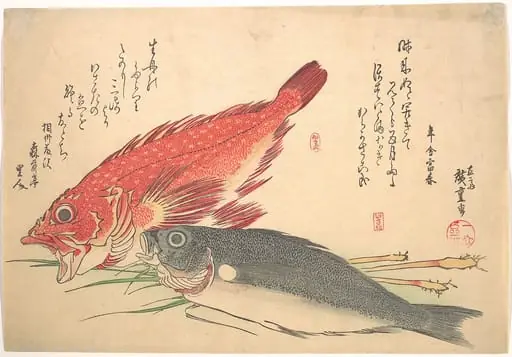 魚づくし かさご いさきに生姜|Isaki and Kasago Fish, from the series Uozukushi (Every Variety of Fish)
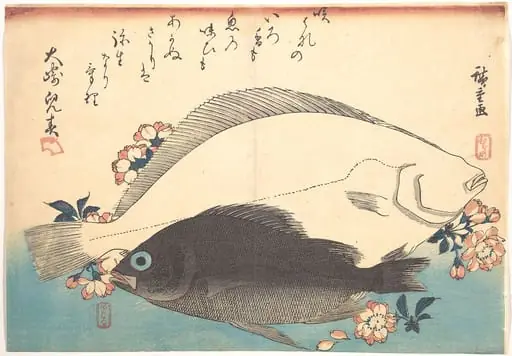 魚づくし ひらめ めばるに桜|Hirame and Mebaru Fish with Cherry Blossoms, from the series Uozukushi (Every Variety of Fish)
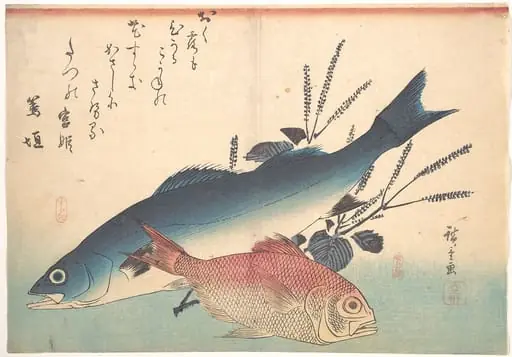 魚づくし いなだ ふぐに梅|Suzuki and Kinmedai Fish from the series Uozukushi (Every Variety of Fish)
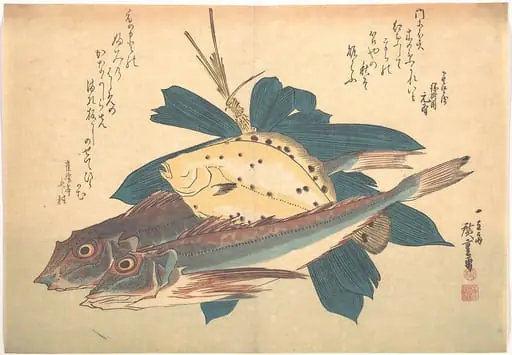 魚づくし かれい かながしらに笹|Kanagashira and Karei Fish, from the series Uozukushi (Every Variety of Fish)
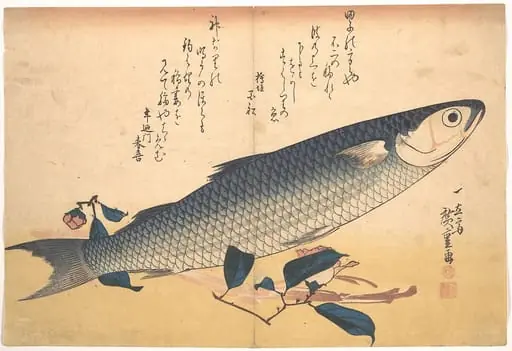 魚づくし ぼらにうど|Bora Fish with Camellia, from the series Uozukushi (Every Variety of Fish)
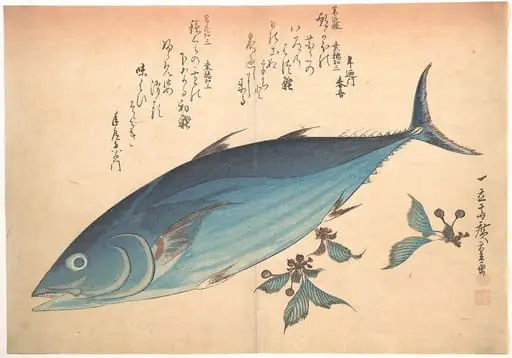 魚づくし 鰹に桜|Katsuo Fish with Cherry Buds, from the series Uozukushi (Every Variety of Fish)
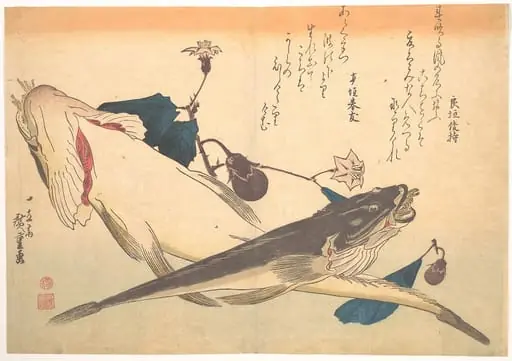 魚づくし こちに茄子|Kochi Fish with Eggplant, from the series Uozukushi (Every Variety of Fish)
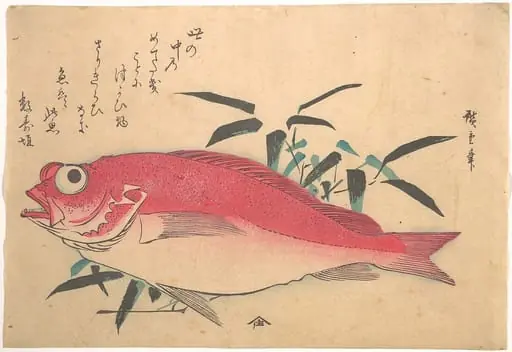 魚づくし|Medetai Fush and Sasaki Bamboo, from the series Uozukushi (Every Variety of Fish)
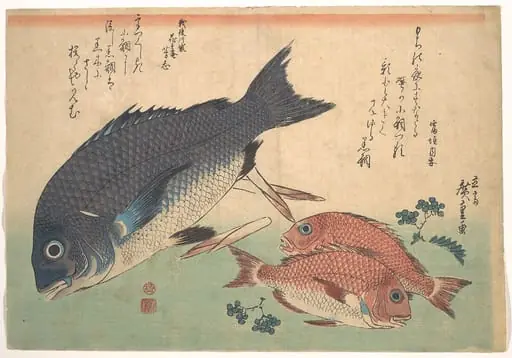 魚づくし 黒鯛 小鯛に山椒|Kurodai and Kodai Fish with Bamboo Shoots and Berries, from the series Uozukushi (Every Variety of Fish)
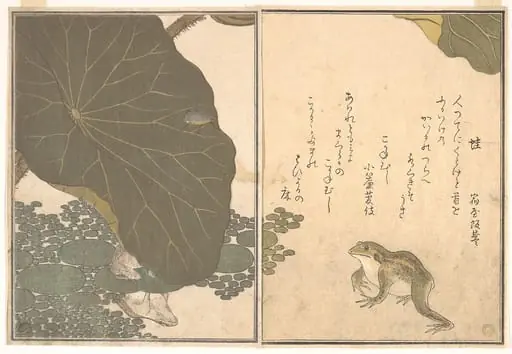 『画本虫撰』「蛙」「こかねむし」|Frog (Kaeru); Gold Beetle (Kogane mushi), from the Picture Book of Crawling Creatures (Ehon mushi erami)