Artwork
魚づくし こちに茄子|Kochi Fish with Eggplant, from the series Uozukushi (Every Variety of Fish)
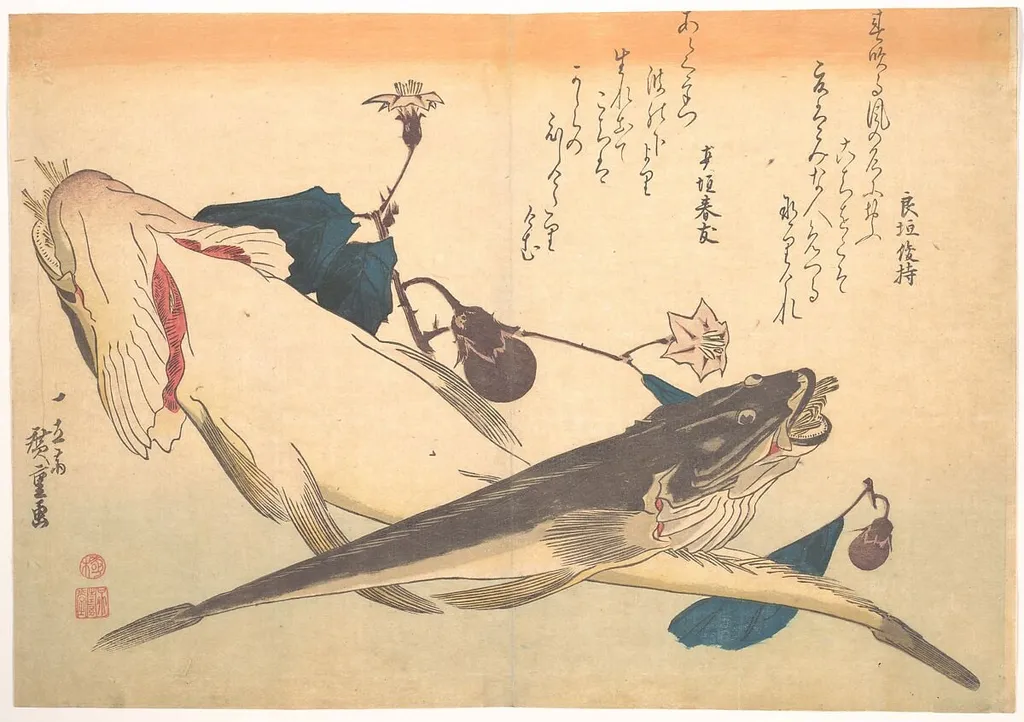
魚づくし こちに茄子|Kochi Fish with Eggplant, from the series Uozukushi (Every Variety of Fish) is an ink print by the Romanticist artist Utagawa Hiroshige. It dates from 1834 and is held in the collection of the Metropolitan Museum of Art.
About this work
Overview
Unlike Hiroshige’s famed landscapes, this work focuses on a quiet still life, blending natural observation with decorative composition.
Created around 1834 by Utagawa Hiroshige, this woodblock print is part of the series Uozukushi, which catalogues various fish species. Unlike Hiroshige’s famed landscapes, this work focuses on a quiet still life, blending natural observation with decorative composition. Ink and color on paper capture the textures of marine life and vegetables, reflecting a niche interest in culinary and biological subjects within Edo-period print culture.
Subject & Meaning
The print features a large, slender fish with open jaws and prominent teeth, arranged diagonally against a pale background. Two eggplants accompany it, one held by a small, tail-like creature—likely a stylized octopus or eel. The pairing suggests a regional dish from Kochi, grounding the image in local cuisine. The inclusion of Japanese script identifies the species and location, turning the image into both an artistic and informative record.
Technique & Style
Hiroshige employed traditional ukiyo-e woodblock methods, layering ink and color with precision to suggest the glossy sheen of fish scales and the matte skin of eggplants. The diagonal composition creates subtle movement, while minimal background shading directs focus to the forms. The delicate linework and restrained palette reflect a shift from dramatic scenes to intimate, observational detail, characteristic of late Edo print experimentation.
History & Provenance
Part of a larger series documenting regional fish, this print was likely produced for urban consumers interested in natural history and culinary culture. Though not widely collected during Hiroshige’s lifetime, such works gained recognition in the 20th century as examples of Edo-period scientific illustration merged with art. Its survival in museum collections attests to its value as a cultural artifact rather than a commercial print.
Context
During the 1830s, Edo saw rising interest in encyclopedic depictions of nature, spurred by scholarly curiosity and urban demand for practical knowledge. While landscape prints dominated Hiroshige’s output, this series reflects a broader trend in ukiyo-e toward documenting flora and fauna. The inclusion of regional identifiers like 'Kochi' points to localized identity within a centralized print market.
Legacy
Though less celebrated than Hiroshige’s landscapes, this print contributes to understanding the diversity of ukiyo-e subjects beyond theater and beauty. It influenced later Japanese artists who explored natural forms with precision and restraint. Today, it stands as a quiet testament to the intersection of art, regional identity, and everyday life in 19th-century Japan.
Artist & collection
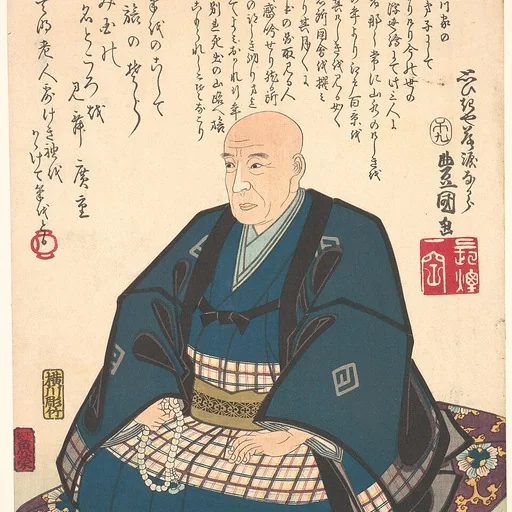
Artist
Utagawa Hiroshige (歌川 広重) or Andō Hiroshige (安藤 広重), born Andō Tokutarō (安藤 徳太郎; 1797 – 12 October 1858), was a Japanese ukiyo-e artist, considered the last great master of that tradition.

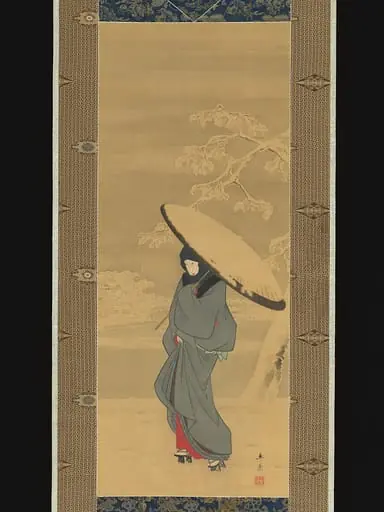
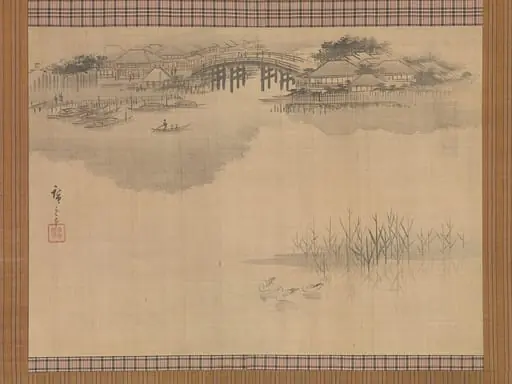
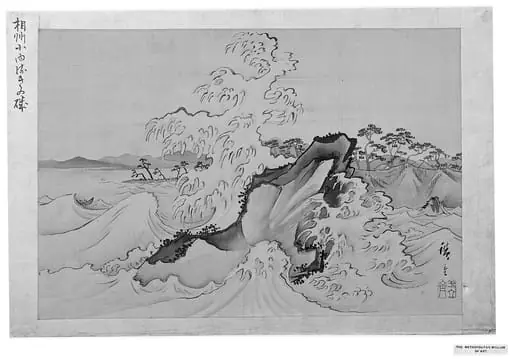
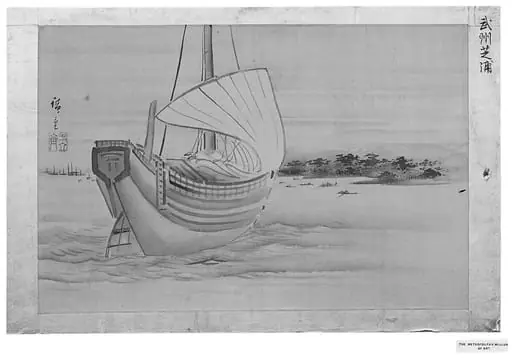
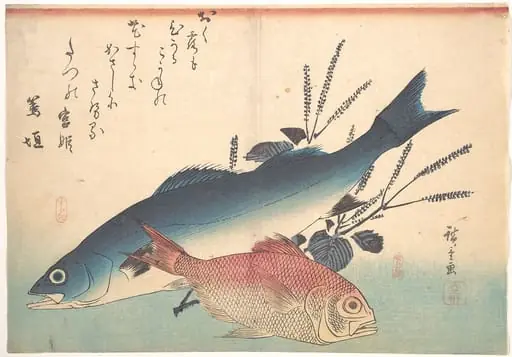 魚づくし いなだ ふぐに梅|Suzuki and Kinmedai Fish from the series Uozukushi (Every Variety of Fish)
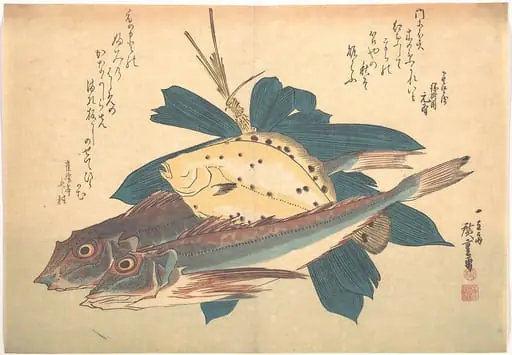 魚づくし かれい かながしらに笹|Kanagashira and Karei Fish, from the series Uozukushi (Every Variety of Fish)
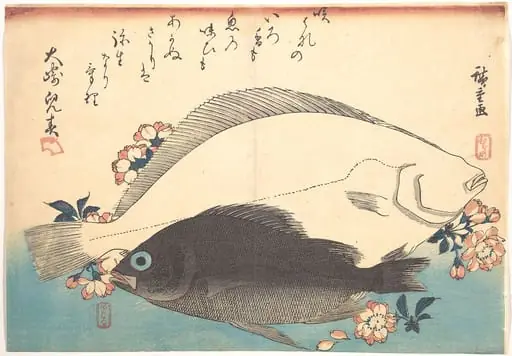 魚づくし ひらめ めばるに桜|Hirame and Mebaru Fish with Cherry Blossoms, from the series Uozukushi (Every Variety of Fish)
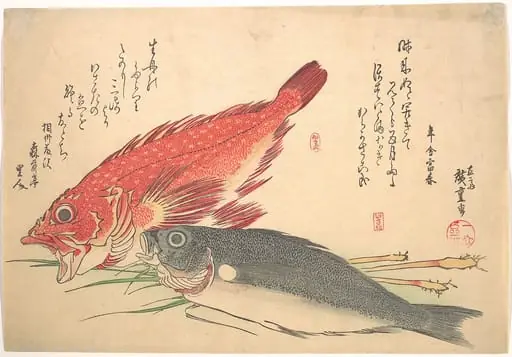 魚づくし かさご いさきに生姜|Isaki and Kasago Fish, from the series Uozukushi (Every Variety of Fish)
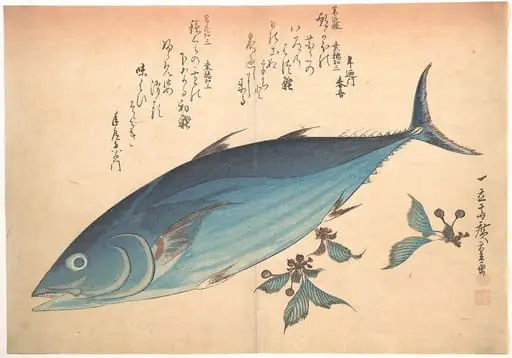 魚づくし 鰹に桜|Katsuo Fish with Cherry Buds, from the series Uozukushi (Every Variety of Fish)
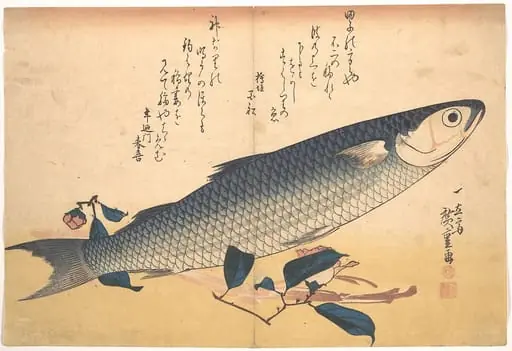 魚づくし ぼらにうど|Bora Fish with Camellia, from the series Uozukushi (Every Variety of Fish)
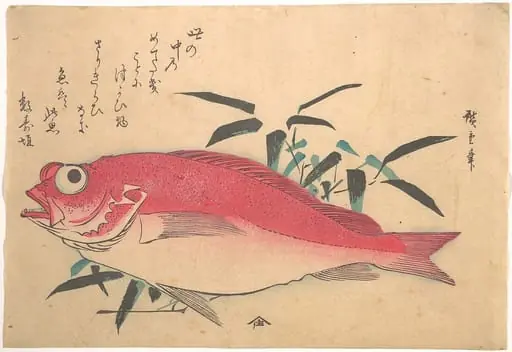 魚づくし|Medetai Fush and Sasaki Bamboo, from the series Uozukushi (Every Variety of Fish)
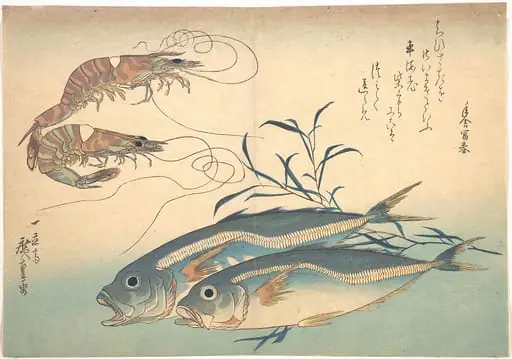 魚づくし 車海老 鯵にたで|Aji Fish and Kuruma-ebi, from the series Uozukushi (Every Variety of Fish)
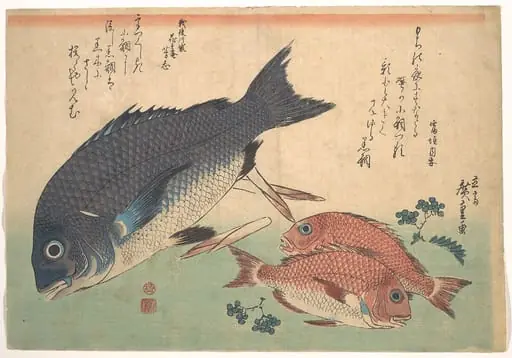 魚づくし 黒鯛 小鯛に山椒|Kurodai and Kodai Fish with Bamboo Shoots and Berries, from the series Uozukushi (Every Variety of Fish)
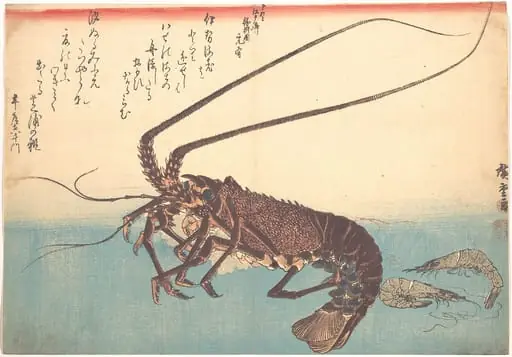 魚づくし 伊勢海老 芝蝦|Ise-ebi and Shiba-ebi, from the series Uozukushi (Every Variety of Fish)
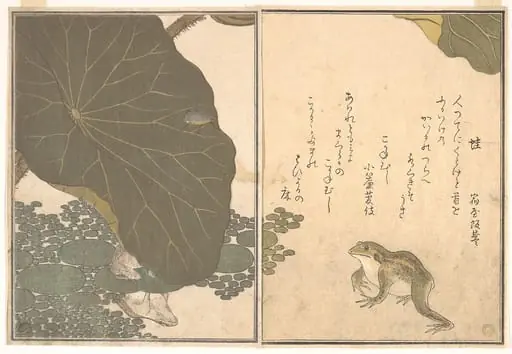 『画本虫撰』「蛙」「こかねむし」|Frog (Kaeru); Gold Beetle (Kogane mushi), from the Picture Book of Crawling Creatures (Ehon mushi erami)