Artwork
魚づくし かれい かながしらに笹|Kanagashira and Karei Fish, from the series Uozukushi (Every Variety of Fish)
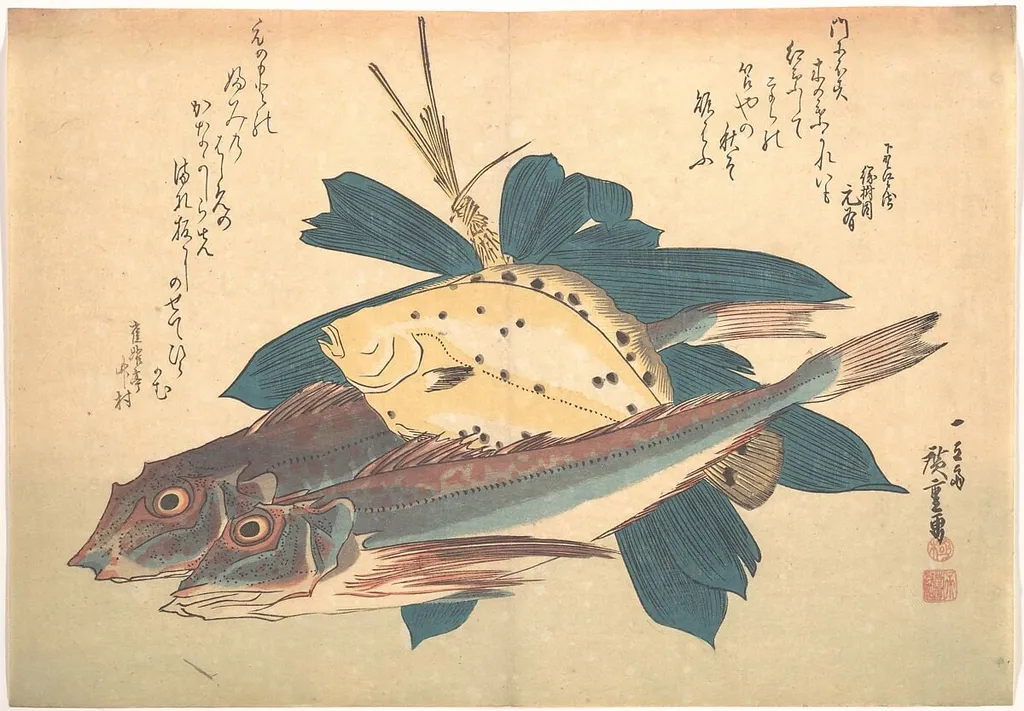
魚づくし かれい かながしらに笹|Kanagashira and Karei Fish, from the series Uozukushi (Every Variety of Fish) is an ink print by the Romanticist artist Utagawa Hiroshige. It dates from 1834 and is held in the collection of the Metropolitan Museum of Art.
About this work
Overview
Unlike his famed landscape prints, this work focuses on aquatic life, revealing Hiroshige’s interest in natural forms beyond urban scenes.
Created around 1834 by Utagawa Hiroshige, this woodblock print is part of the series Uozukushi, which documents various marine species. Unlike his famed landscape prints, this work focuses on aquatic life, revealing Hiroshige’s interest in natural forms beyond urban scenes. Rendered in ink and color on paper, the print exemplifies the precision and aesthetic restraint characteristic of Edo-period printmaking.
Subject & Meaning
The print depicts two fish: a slender, red-bellied kanagashira beneath a broader, spotted karei. Their stacked arrangement suggests a market display or culinary presentation, common in Edo-period fish catalogs. The inclusion of seaweed implies freshness and natural habitat, grounding the image in observed reality. Japanese text along the margins identifies the species, reflecting the series’ documentary intent.
Technique & Style
Hiroshige employed bold outlines and flat areas of color to define the fish’s forms, balancing realism with stylization. The karei’s dotted skin and the kanagashira’s smooth belly are rendered through subtle tonal variations rather than intricate detail. Seaweed is suggested with fluid, inked strokes, adding organic movement. The composition’s simplicity enhances clarity, typical of ukiyo-e’s emphasis on immediate visual impact.
History & Provenance
The print originates from a limited series of fish studies produced during Hiroshige’s early career, before his landscape works gained widespread recognition. It entered the collection of The Metropolitan Museum of Art through documented acquisitions of Edo-period prints, likely in the early 20th century. Its preservation reflects growing Western interest in Japanese print culture during that period.
Context
During the 1830s, Edo society showed heightened interest in natural history, fueled by illustrated encyclopedias and regional market culture. Hiroshige’s Uozukushi series aligned with this trend, offering accessible visual records of seafood. While ukiyo-e typically portrayed actors and courtesans, this series expanded the genre’s scope, reflecting broader cultural curiosity about the natural world.
Legacy
Though less celebrated than his landscapes, Hiroshige’s fish prints contributed to the legitimization of natural subjects in ukiyo-e. They influenced later artists interested in biological accuracy and compositional economy. Today, these works serve as historical records of Edo-period marine knowledge and aesthetic preferences, valued for their quiet observation rather than dramatic flair.
Artist & collection
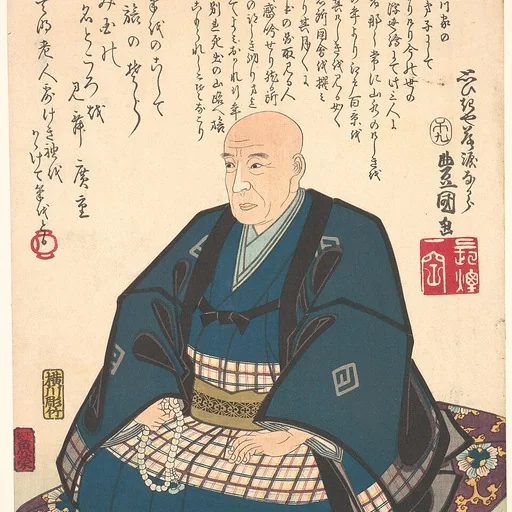
Artist
Utagawa Hiroshige (歌川 広重) or Andō Hiroshige (安藤 広重), born Andō Tokutarō (安藤 徳太郎; 1797 – 12 October 1858), was a Japanese ukiyo-e artist, considered the last great master of that tradition.

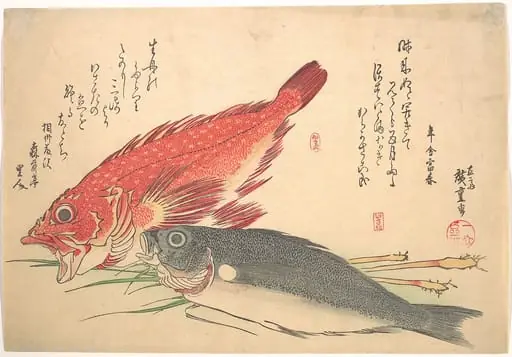 魚づくし かさご いさきに生姜|Isaki and Kasago Fish, from the series Uozukushi (Every Variety of Fish)
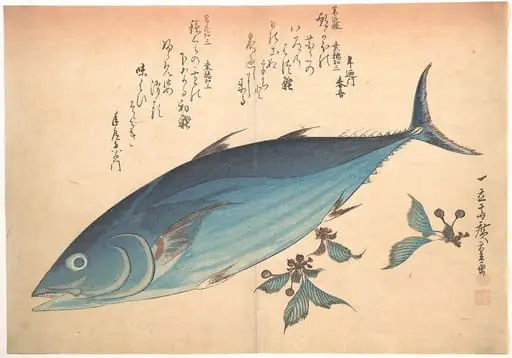 魚づくし 鰹に桜|Katsuo Fish with Cherry Buds, from the series Uozukushi (Every Variety of Fish)
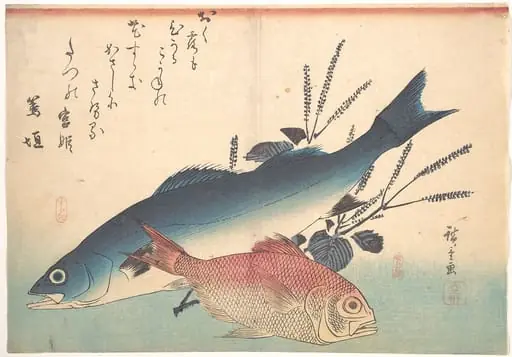 魚づくし いなだ ふぐに梅|Suzuki and Kinmedai Fish from the series Uozukushi (Every Variety of Fish)
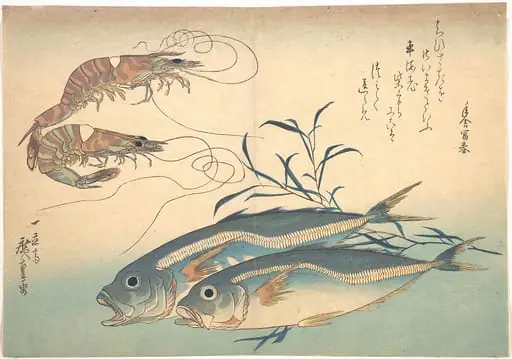 魚づくし 車海老 鯵にたで|Aji Fish and Kuruma-ebi, from the series Uozukushi (Every Variety of Fish)
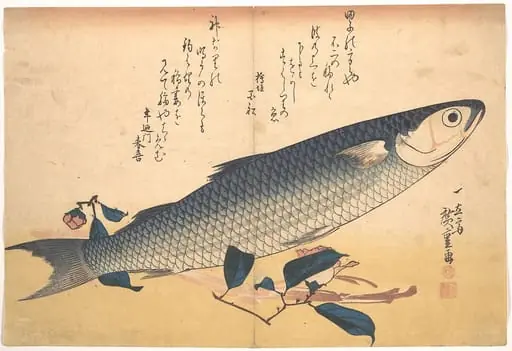 魚づくし ぼらにうど|Bora Fish with Camellia, from the series Uozukushi (Every Variety of Fish)
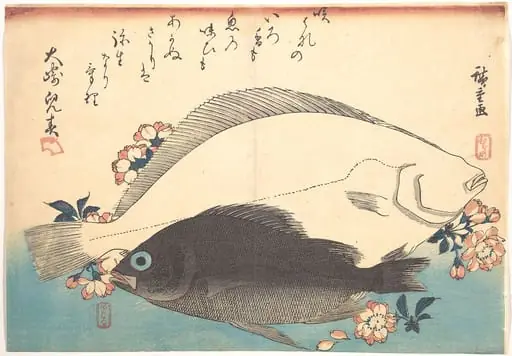 魚づくし ひらめ めばるに桜|Hirame and Mebaru Fish with Cherry Blossoms, from the series Uozukushi (Every Variety of Fish)
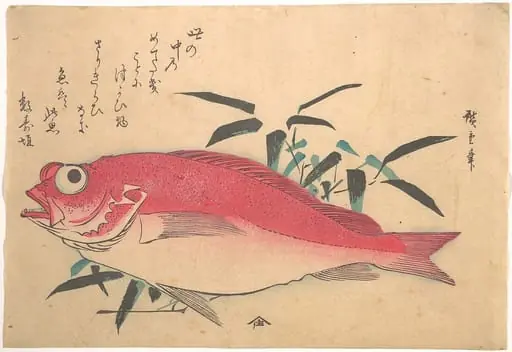 魚づくし|Medetai Fush and Sasaki Bamboo, from the series Uozukushi (Every Variety of Fish)
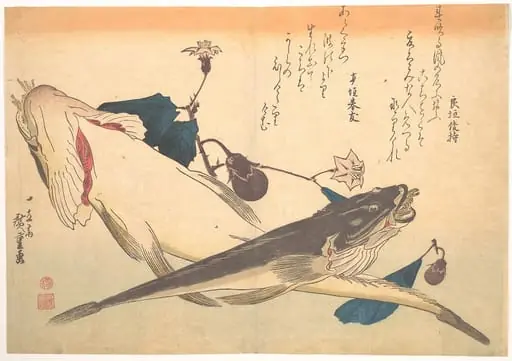 魚づくし こちに茄子|Kochi Fish with Eggplant, from the series Uozukushi (Every Variety of Fish)
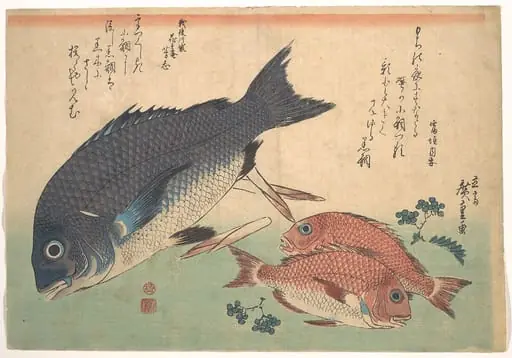 魚づくし 黒鯛 小鯛に山椒|Kurodai and Kodai Fish with Bamboo Shoots and Berries, from the series Uozukushi (Every Variety of Fish)
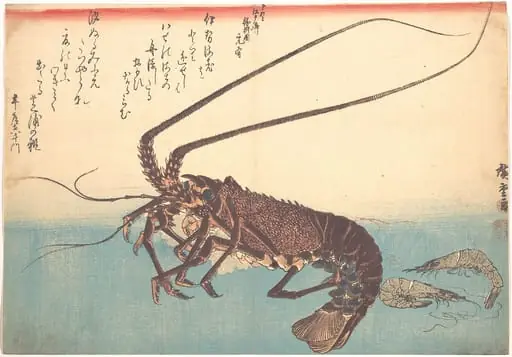 魚づくし 伊勢海老 芝蝦|Ise-ebi and Shiba-ebi, from the series Uozukushi (Every Variety of Fish)
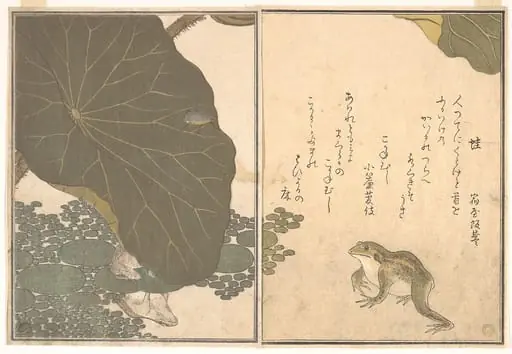 『画本虫撰』「蛙」「こかねむし」|Frog (Kaeru); Gold Beetle (Kogane mushi), from the Picture Book of Crawling Creatures (Ehon mushi erami)