Artwork
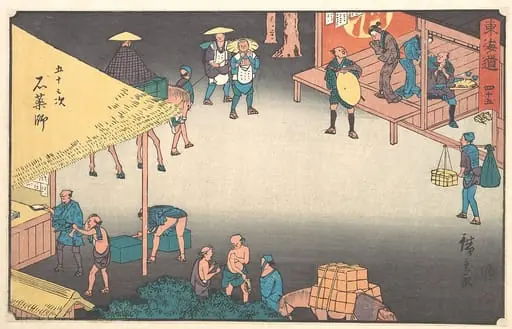
東海道五十三次 石薬師|Ishiyakushi
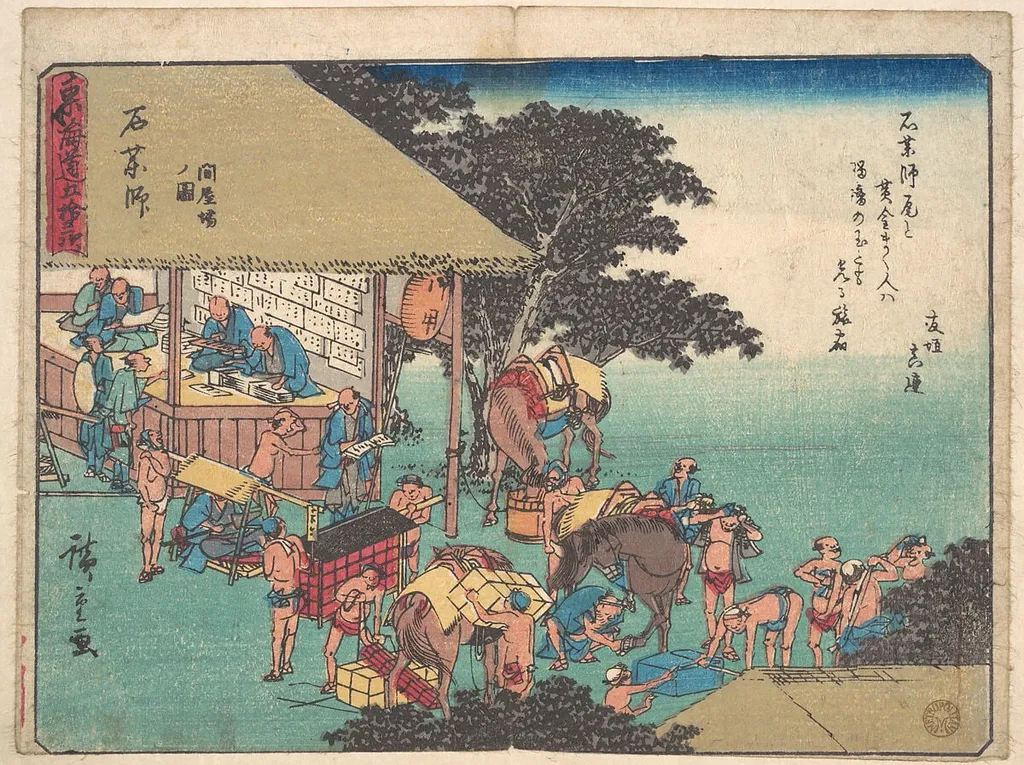
東海道五十三次 石薬師|Ishiyakushi is an ink print by the Romanticist artist Utagawa Hiroshige. It dates from 1838 and is held in the collection of the Metropolitan Museum of Art.
About this work
Overview
Created around 1838 by Utagawa Hiroshige, *Ishiyakushi* is one of fifty-three prints in the series *The Fifty-three Stations of the Tōkaidō*.
Created around 1838 by Utagawa Hiroshige, *Ishiyakushi* is one of fifty-three prints in the series *The Fifty-three Stations of the Tōkaidō*. It depicts a resting point along the major road linking Edo and Kyoto. Executed in woodblock print technique with ink and color on paper, the work exemplifies Hiroshige’s focus on everyday travel scenes rather than traditional ukiyo-e themes like actors or beauties.
Subject & Meaning
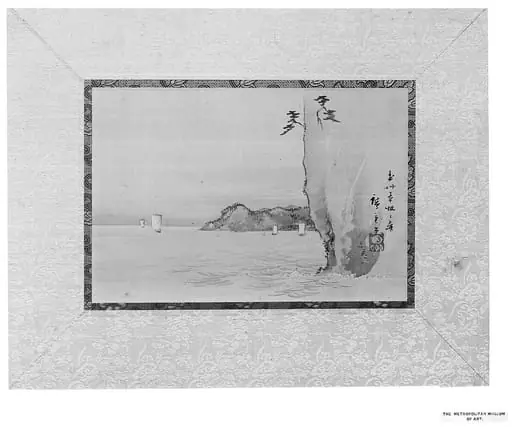
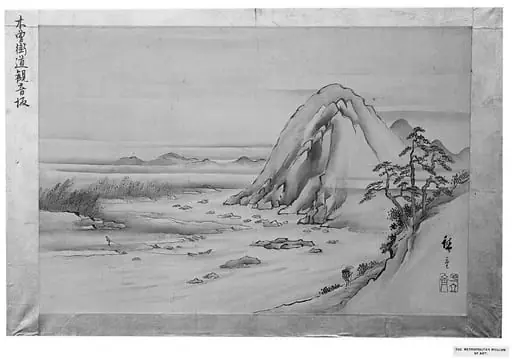
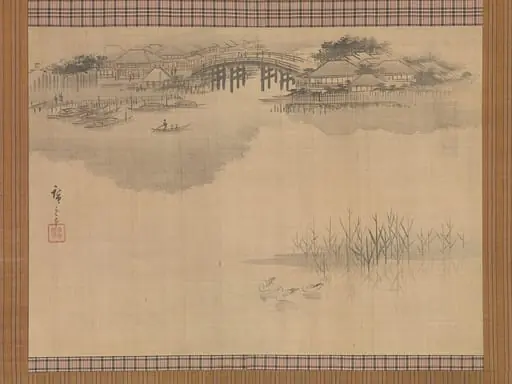
The scene captures a roadside post station where travelers and their horses pause for rest. Figures are shown tending to animals, loading goods, or conversing near a building with a sloping roof. A large tree frames the composition, while calm water in the background suggests a nearby stream or pond. The image conveys the rhythm of journeying in early 19th-century Japan, emphasizing quiet labor and transient moments.
Technique & Style
Hiroshige employed the woodblock printing method with careful layering of ink and color to achieve subtle gradations. The horizontal format guides the viewer’s eye across the landscape, a hallmark of his approach. Details are rendered with precision but without excessive ornamentation, favoring atmospheric balance over dramatic emphasis. The composition integrates architecture, nature, and human activity in harmonious proportion.
History & Provenance
The print was produced during the late Edo period as part of a commercially successful series commissioned by the publisher Hoeido. It was widely distributed among urban populations, serving both as travel guide and decorative art. Original impressions are now held in major museum collections, including the Museum of Fine Arts, Boston, and the British Museum.
Context
The Tōkaidō road was a vital artery for commerce, pilgrimage, and official travel. Stations like Ishiyakushi provided lodging and stables for travelers. Hiroshige’s series documented these stops with geographic accuracy, reflecting a growing public interest in domestic travel during a time of relative peace. His depictions helped shape how Japanese society viewed its own landscape and infrastructure.
Legacy
Hiroshige’s *Tōkaidō* series influenced later generations of artists, both in Japan and abroad. His atmospheric landscapes and attention to seasonal change prefigured aspects of Western impressionism. While not part of Romanticism, his work resonated with European collectors in the 19th century, contributing to the Japonisme movement and altering the trajectory of modern printmaking.
Artist & collection
Artist
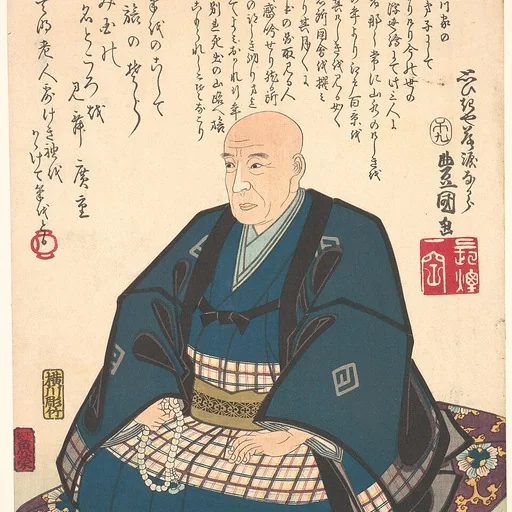
Utagawa Hiroshige (歌川 広重) or Andō Hiroshige (安藤 広重), born Andō Tokutarō (安藤 徳太郎; 1797 – 12 October 1858), was a Japanese ukiyo-e artist, considered the last great master of that tradition.