Artwork
東海道五十三次 浜松|Hamamatsu
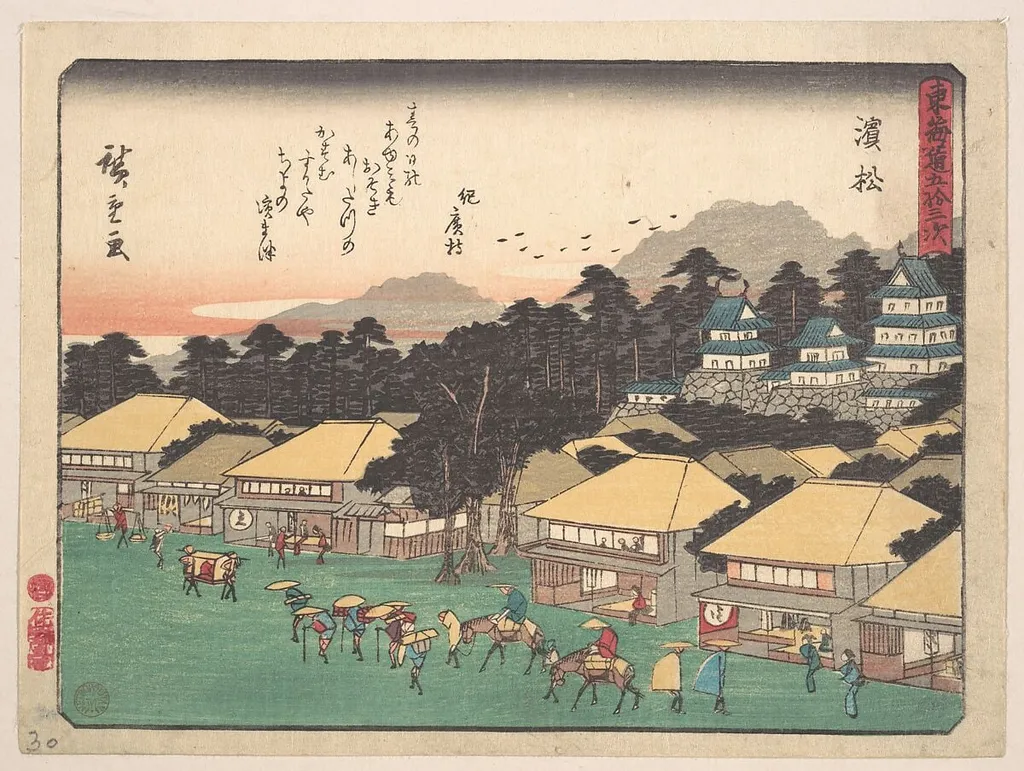
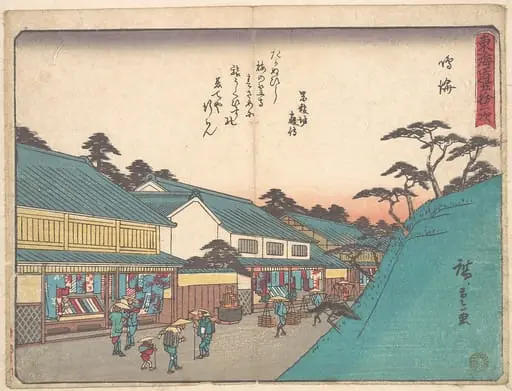
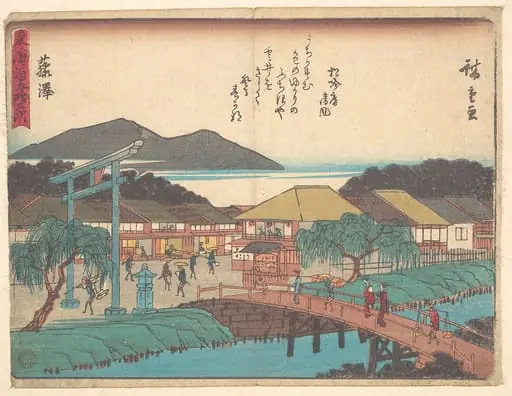
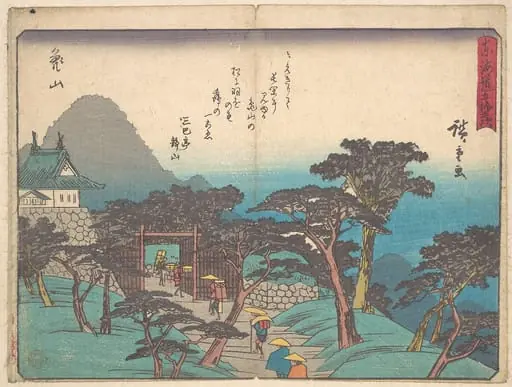
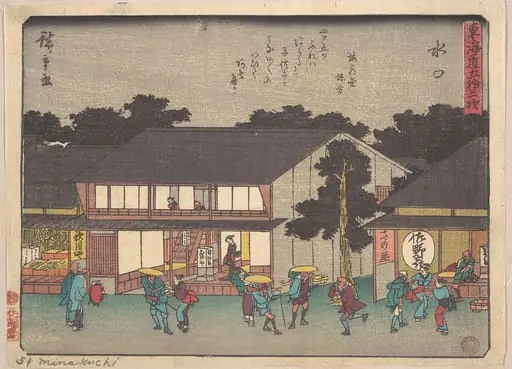
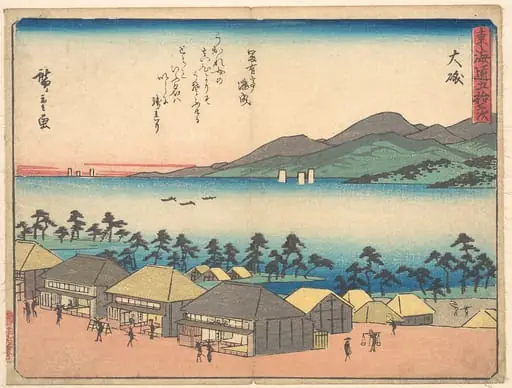
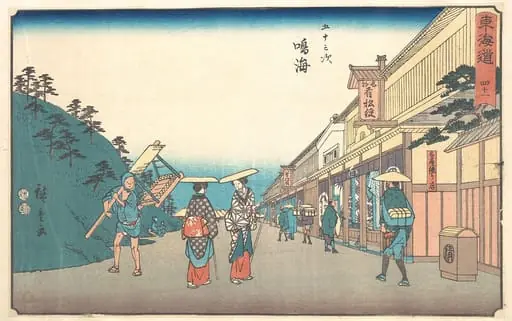
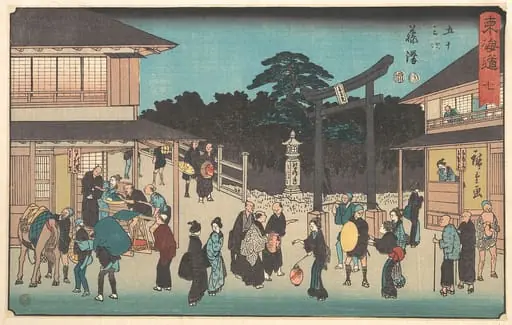
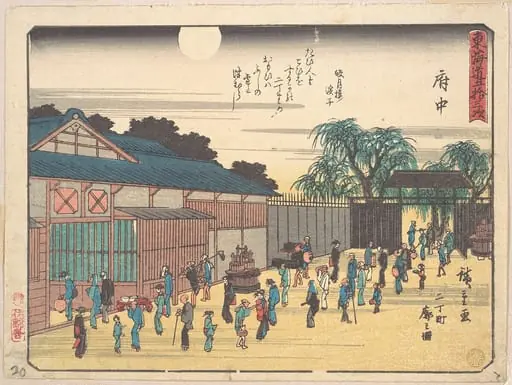
東海道五十三次 浜松|Hamamatsu is an ink print by the Romanticist artist Utagawa Hiroshige. It dates from 1838 and is held in the collection of the Metropolitan Museum of Art. Created circa 1838, this woodblock print portrays the post town of Hamamatsu along the historic Tōkaidō route.
About this work
Overview
Created circa 1838, this woodblock print portrays the post town of Hamamatsu along the historic Tōkaidō route. Rendered in ink and color on paper, the scene captures a quiet village setting where travelers, horses, and a distant building coexist beneath an orange‑tinged sky, framed by trees and distant mountains.
Subject & Meaning
The composition centers on a modest group of figures and mounted riders moving through the foreground, suggesting the flow of traffic on the road. A prominent structure with a blue roof rises in the background, hinting at a local landmark, while birds glide overhead, reinforcing the sense of everyday travel and regional character.
Technique & Style
Employing the ukiyo‑e woodblock method, the artist combines precise line work with layered pigments to achieve depth. Greens dominate the foliage, pinks illuminate the sky, and subtle shading defines the distant hills. The figures are rendered with restrained detail, allowing the overall atmosphere of calm to emerge from the balanced color palette.
History & Provenance
The print forms part of a larger series documenting the fifty‑three stations of the Tōkaidō, a project undertaken by a leading Edo‑period artist. Produced for the commercial market of the time, the work circulated as a popular illustration of travel, and later entered museum collections as an example of early nineteenth‑century Japanese printmaking.
Artist & collection
Artist
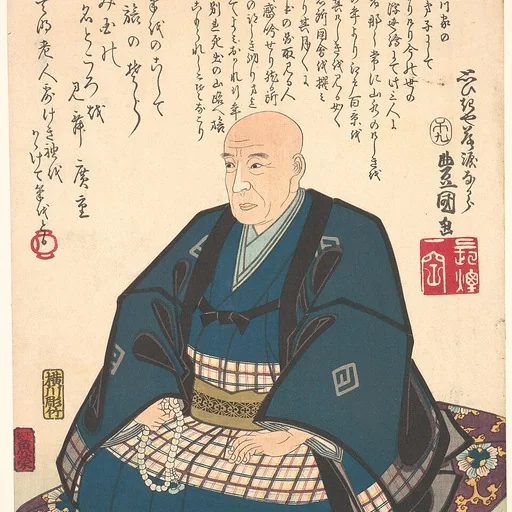
Utagawa Hiroshige (歌川 広重) or Andō Hiroshige (安藤 広重), born Andō Tokutarō (安藤 徳太郎; 1797 – 12 October 1858), was a Japanese ukiyo-e artist, considered the last great master of that tradition.