Artwork
The Fifty-Three Stations of the Tokaido: Otsu
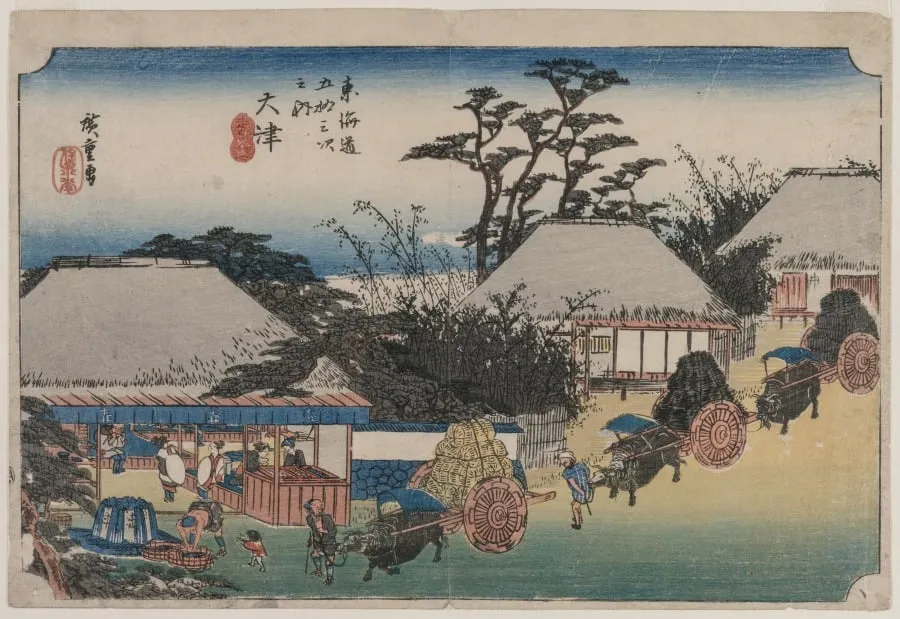
The Fifty-Three Stations of the Tokaido: Otsu is a print by the Romanticist artist Utagawa Hiroshige. It dates from 1834 and is held in the collection of the Cleveland Museum of Art.
About this work
Overview
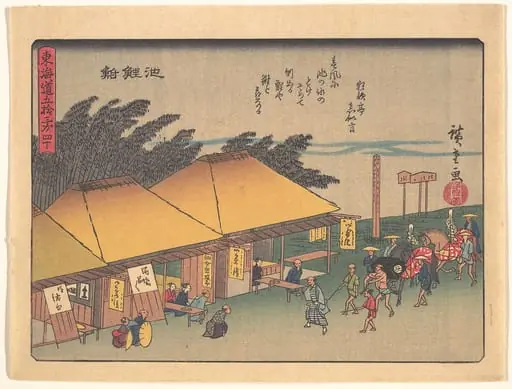
Created in 1834 by Utagawa Hiroshige, this horizontal woodblock print is one of the fifty-three images that illustrate the stations along the historic Tokaido road. It depicts the stop at Otsu, a bustling waypoint where travelers and local commerce intersect, and is part of Hiroshige’s larger series that shifted ukiyo‑e from city nightlife to the rhythms of travel and landscape.
Subject & Meaning
The scene presents a lively village square: pedestrians, horse‑drawn carts, and merchants populate the foreground, while a sizable inn or residence rises behind them. Trees and modest buildings frame the composition, suggesting Otsu’s role as a hub of rest and exchange for travelers moving between Edo and Kyoto.
Technique & Style
Hiroshige employs a restrained palette of soft blues for the sky, earthy browns and greens for architecture and foliage, and brighter hues on figures and wagons to convey motion. The layered color washes and careful line work create depth, while the horizontal format emphasizes the expansive road and surrounding landscape.
History & Provenance
The print belongs to the celebrated Tokaido series, which established Hiroshige as a leading landscape ukiyo‑e artist of the late Edo period. It entered the collection of the Cleveland Museum of Art, where it is currently conserved and displayed as part of the museum’s Asian art holdings.
Context
During the early 19th century, the Tokaido road was Japan’s principal artery, linking the political capital Edo with the imperial seat Kyoto. Hiroshige’s series captured each post town’s character, reflecting contemporary interest in travel, the natural environment, and the everyday life of common people.
Artist & collection
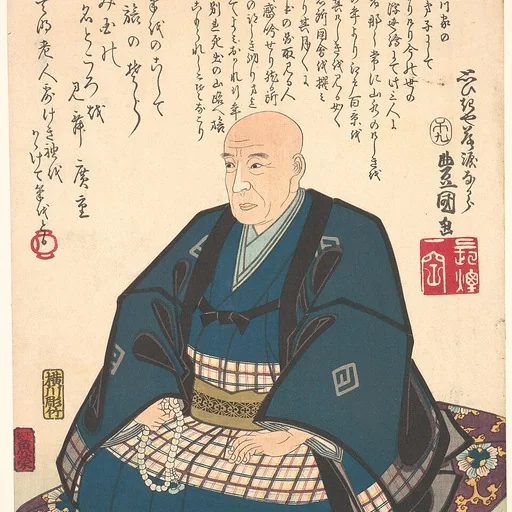
Artist
Utagawa Hiroshige (歌川 広重) or Andō Hiroshige (安藤 広重), born Andō Tokutarō (安藤 徳太郎; 1797 – 12 October 1858), was a Japanese ukiyo-e artist, considered the last great master of that tradition.

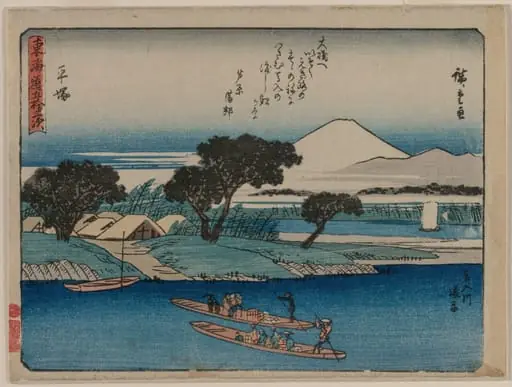 The Fifty-Three Stations of the Tokaido: Hiratsuka
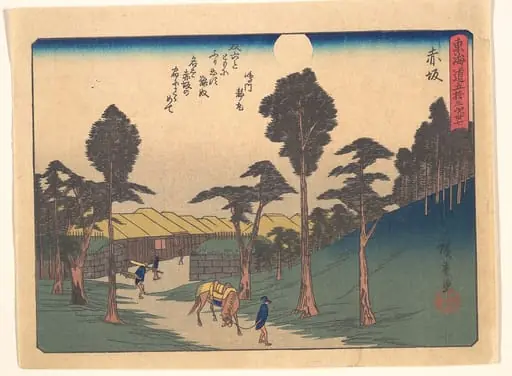 東海道五十三次 赤坂|Akasaka, from the series The Fifty-three Stations of the Tōkaidō Road
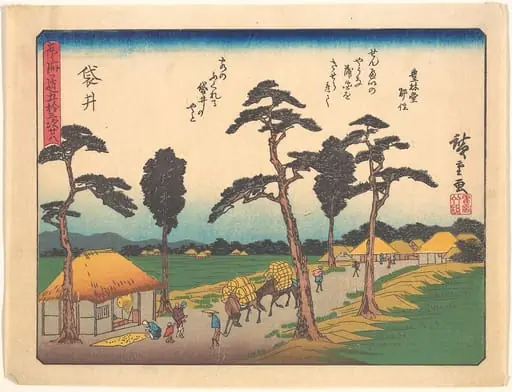 東海道五十三次 袋井|Fukuroi, from the series The Fifty-three Stations of the Tōkaidō Road
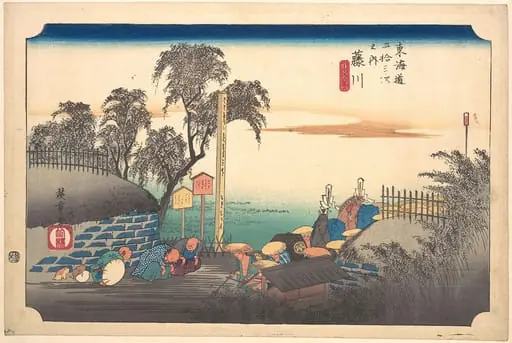 東海道五十三次之内 藤川 棒鼻の図|Station Thirty-Eight: Fujikawa, Scene at the Border, from the Fifty-Three Stations of the Tokaido
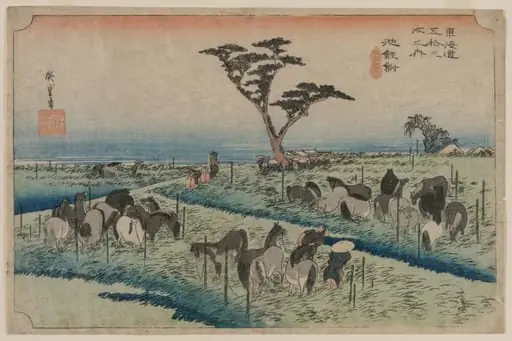 The Fifty-Three Stations of the Tokaido: Chiryu
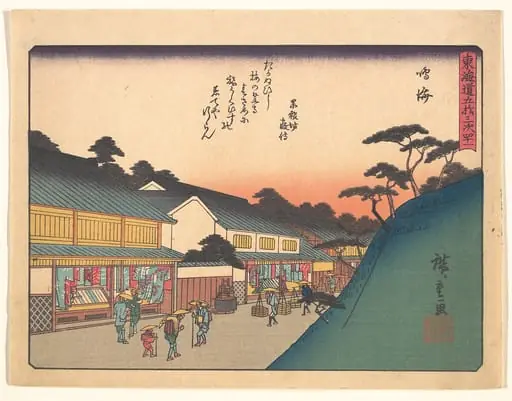 東海道五十三次 鳴海|Narumi, from the series The Fifty-three Stations of the Tōkaidō Road
 東海道五十三次 池鯉鮒|Chiryūshuku, from the series The Fifty-three Stations of the Tōkaidō Road