Artwork
東海道五十三次 鳴海|Narumi, from the series The Fifty-three Stations of the Tōkaidō Road
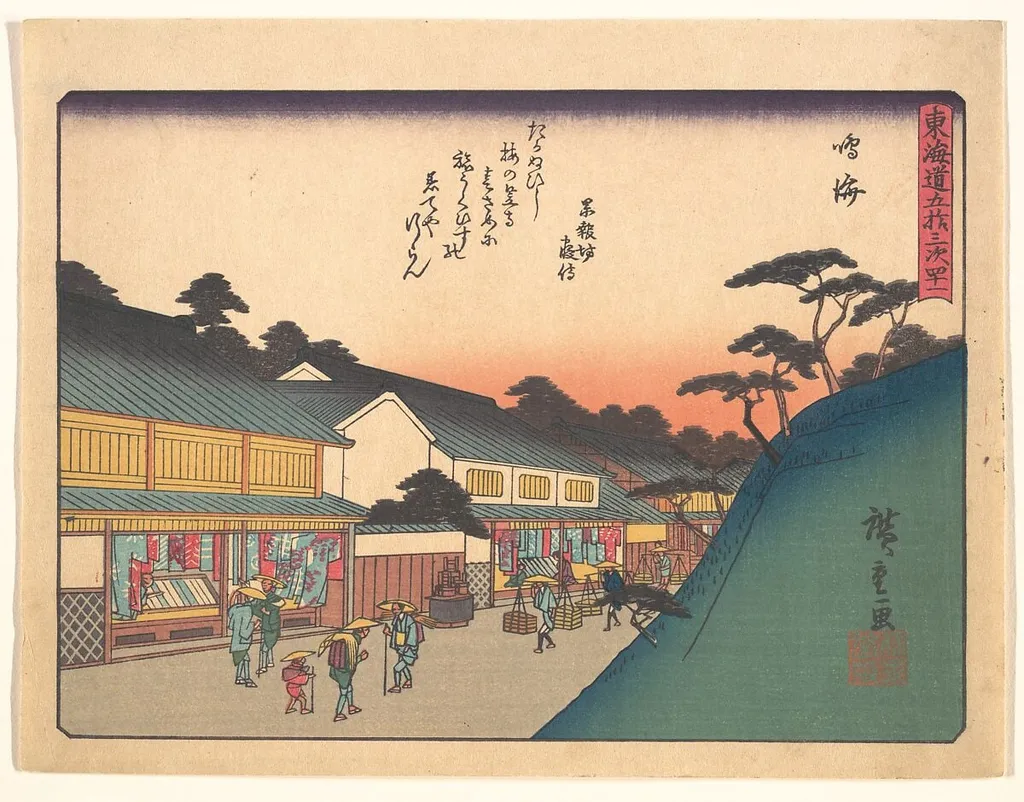
東海道五十三次 鳴海|Narumi, from the series The Fifty-three Stations of the Tōkaidō Road is an ink print by Utagawa Hiroshige. It is held in the collection of the Metropolitan Museum of Art.
About this work
Overview
This woodblock print is part of Utagawa Hiroshige’s series depicting the fifty-three rest stops along the Tōkaidō, the major road linking Edo and Kyoto.
This woodblock print is part of Utagawa Hiroshige’s series depicting the fifty-three rest stops along the Tōkaidō, the major road linking Edo and Kyoto. Created in the 1830s, not 1916, it belongs to the ukiyo-e tradition of landscape prints that shifted focus from urban pleasure quarters to the natural and architectural rhythms of travel. The horizontal format invites the viewer to follow the journey, capturing a moment of quiet transition rather than spectacle.
Subject & Meaning
The scene at Narumi portrays a humble evening along the road, with travelers moving between modest wooden buildings under a fading sky. The presence of people carrying goods and wearing simple attire suggests daily life rather than ceremonial passage. The bridge over the river and the line of trees frame the composition as a threshold—between day and night, between one station and the next—emphasizing the contemplative pace of travel on the Tōkaidō.
Technique & Style
Hiroshige employed bold outlines and flat areas of color to define forms with clarity, a hallmark of ukiyo-e printing. Muted earth tones dominate the landscape, while selective use of vivid red and blue in architectural details draws the eye without overwhelming the scene. The sky’s soft orange gradient suggests dusk, achieved through careful ink washes and layered stencils. The composition avoids depth illusion, favoring rhythmic patterns and spatial economy.
History & Provenance
The print was produced in the early 1830s by Hiroshige’s workshop in Edo, using traditional woodblock carving and hand-coloring methods. It was published by Hoeidō, a prominent print house known for its high-quality landscape series. Original impressions were widely distributed among merchants and travelers, making the Tōkaidō series one of the most reproduced and collected ukiyo-e sets of its time.
Context
During the Edo period, the Tōkaidō was a vital artery for commerce, pilgrimage, and official travel. While earlier ukiyo-e focused on courtesans and actors, Hiroshige’s series reflected a growing public interest in geography and the natural world. His depictions of weather, season, and time of day aligned with emerging tastes for poetic realism, resonating with audiences familiar with the road’s rhythms.
Legacy
Hiroshige’s Tōkaidō series influenced later Japanese artists and European Impressionists, who admired its compositional restraint and sensitivity to atmosphere. Though mass-produced, each impression carried subtle variations in ink and color, preserving the handcrafted quality of the medium. The series remains a key document of 19th-century Japanese life, valued for its quiet observation rather than dramatic flair.
Artist & collection
Artist
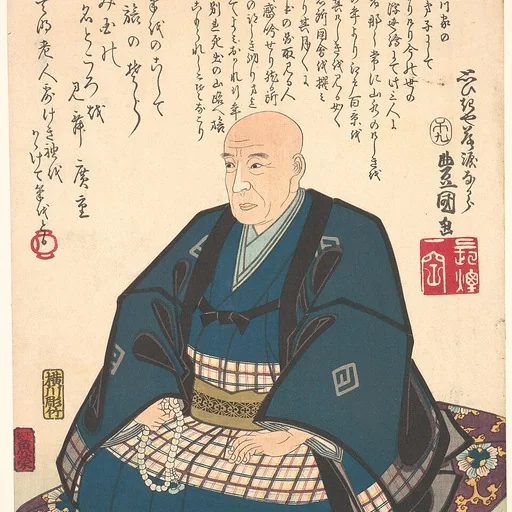
Utagawa Hiroshige (歌川 広重) or Andō Hiroshige (安藤 広重), born Andō Tokutarō (安藤 徳太郎; 1797 – 12 October 1858), was a Japanese ukiyo-e artist, considered the last great master of that tradition.

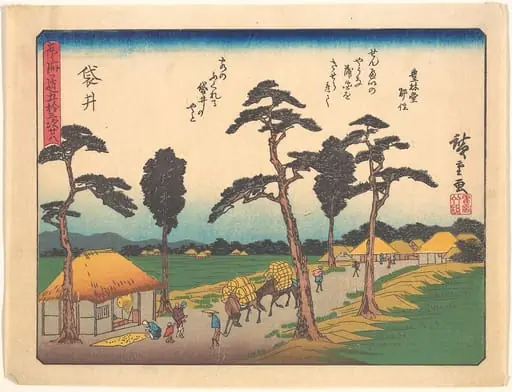 東海道五十三次 袋井|Fukuroi, from the series The Fifty-three Stations of the Tōkaidō Road
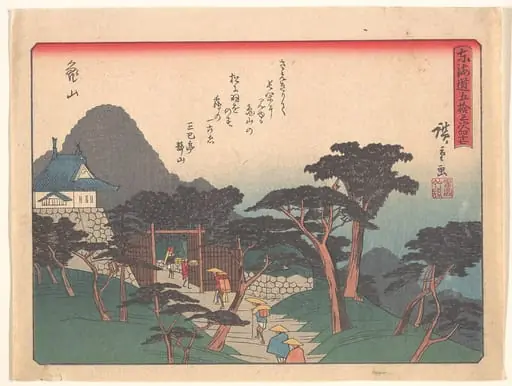 東海道五十三次 亀山|Kameyama, from the series The Fifty-three Stations of the Tōkaidō Road
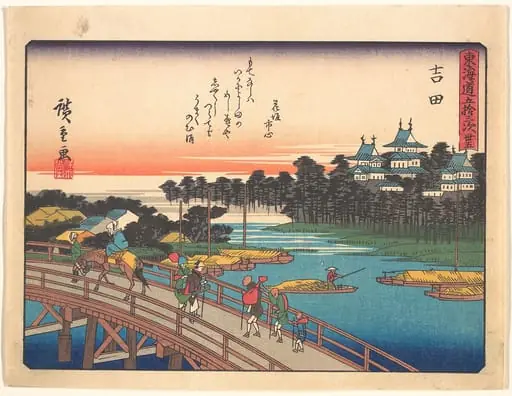 東海道五十三次 吉田|Yoshida, from the series The Fifty-three Stations of the Tōkaidō Road
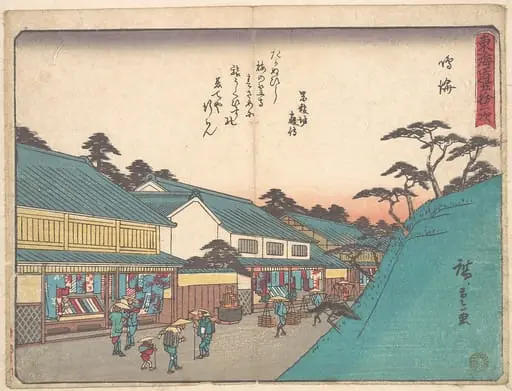 東海道五十三次 鳴海|Narumi
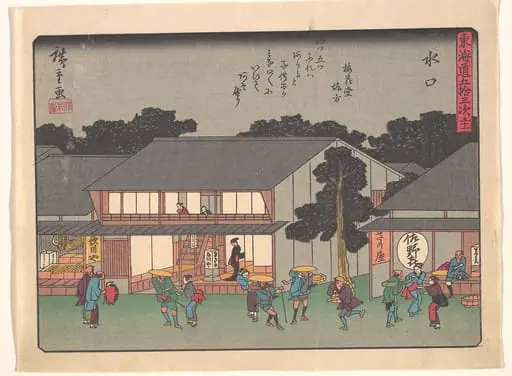 東海道五十三次 水口|Mizukuchi, from the series The Fifty-three Stations of the Tōkaidō Road
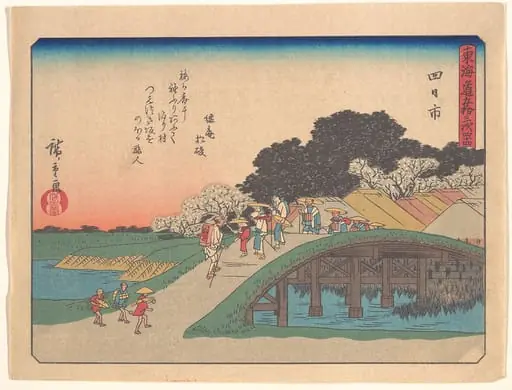 東海道五十三次 四日市|Yokkaichi, from the series The Fifty-three Stations of the Tōkaidō Road
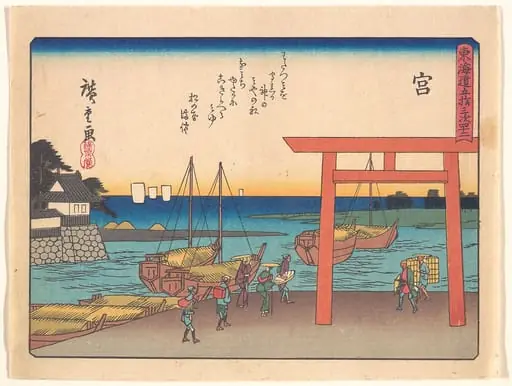 東海道五十三次 宮|Miya, from the series The Fifty-three Stations of the Tōkaidō Road
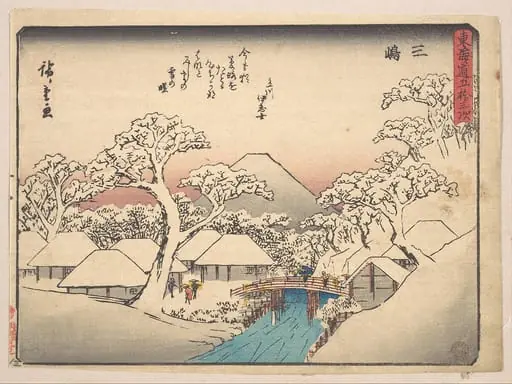 東海道五十三次 三島|Mishima, from the series Fifty-three Stations of the Tōkaidō Road (Tōkaidō gojūsan tsugi, Mishima), also known as the Kyōka (Witty Verse) Tōkaidō
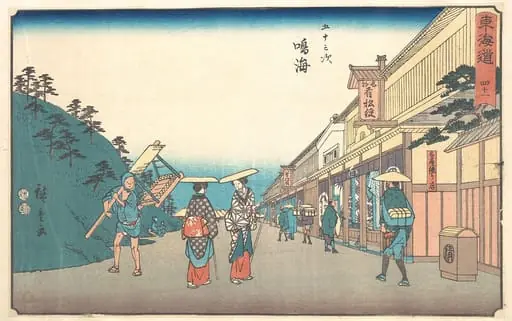 東海道五十三次 鳴海 名産絞り店|Narumi
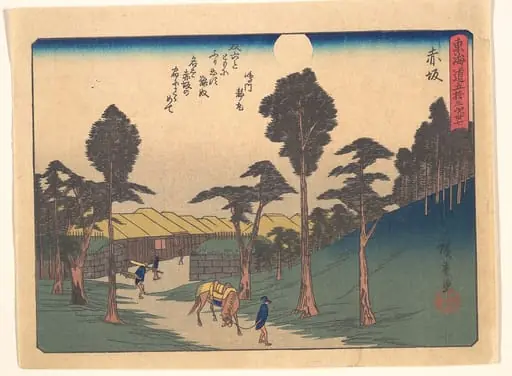 東海道五十三次 赤坂|Akasaka, from the series The Fifty-three Stations of the Tōkaidō Road
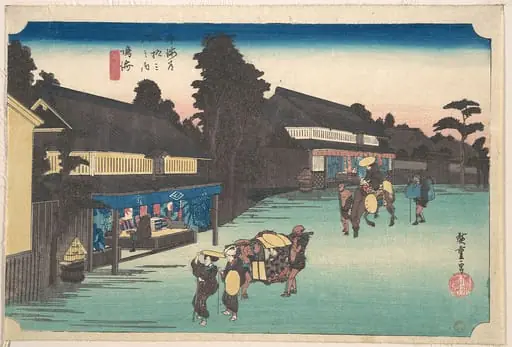 東海道五十三次之内 鳴海 名物有松絞|Narumi, Meibutsu Arimatsu Shibori
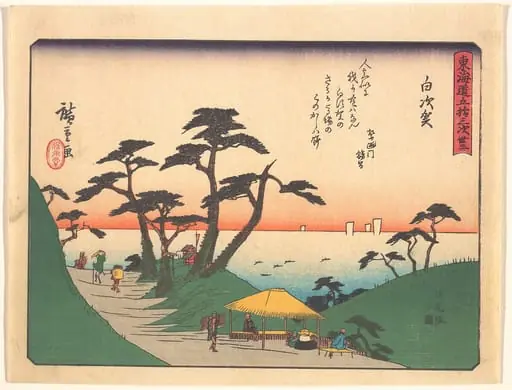 東海道五十三次 白須賀|Shirasuka, from the series The Fifty-three Stations of the Tōkaidō Road