Artwork
東海道五十三次 池鯉鮒|Chiryūshuku, from the series The Fifty-three Stations of the Tōkaidō Road
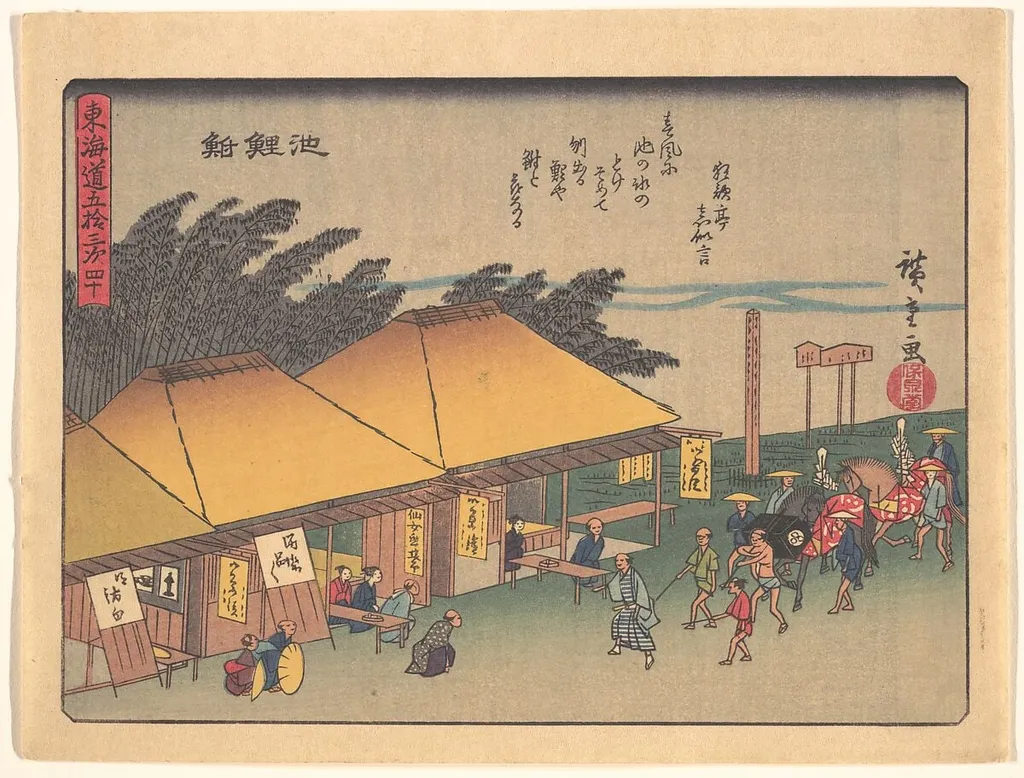
東海道五十三次 池鯉鮒|Chiryūshuku, from the series The Fifty-three Stations of the Tōkaidō Road is an ink print by Utagawa Hiroshige. It is held in the collection of the Metropolitan Museum of Art.
About this work
The artist has used a range of techniques to create depth and texture in the painting, including cross-hatching and shading.
This painting shows a scene of a group of people gathered around a building with a yellow roof. The building appears to be some kind of inn or rest stop, with several people sitting at tables outside. In the foreground, a group of travelers are walking along a road, some on horseback and others on foot. The background of the painting features a few trees and a body of water, possibly a river or lake.
The painting is done in a traditional Japanese style, with bold lines and bright colors. The artist has used a range of techniques to create depth and texture in the painting, including cross-hatching and shading.
The painting is a beautiful example of Japanese art from the early 20th century. To learn more about this style of art, you might want to look up the artist Utagawa Hiroshige.
Overview
Chiryūshuku, from the series The Fifty-three Stations of the Tōkaidō Road, is a woodblock print created by Utagawa Hiroshige in 1916, utilizing ink and color on paper.
Subject & Meaning
The print depicts a scene of everyday life at Chiryūshuku, a post station on Japan’s historic Tōkaidō Road, focusing on an inn or rest stop with travelers, highlighting the scenic aspect of the location.
Technique & Style
Executed in traditional Japanese ukiyo-e style, the work features bold lines, bright colors, and techniques such as cross-hatching and shading to achieve depth and texture.
History & Provenance
Originally part of Hiroshige's series showcasing all fifty-three Tōkaidō post stations, this print is now part of The Metropolitan Museum of Art's collection.
Context
Diverging from typical ukiyo-e themes of urban entertainment, Hiroshige's series emphasized landscape and scenic views, reflecting a shift in artistic focus during the late Edo period.
Legacy
As part of The Fifty-three Stations of the Tōkaidō Road series, Chiryūshuku contributes to Hiroshige's renowned contribution to Japanese art, particularly in popularizing landscape themes in ukiyo-e.
Artist & collection
Artist
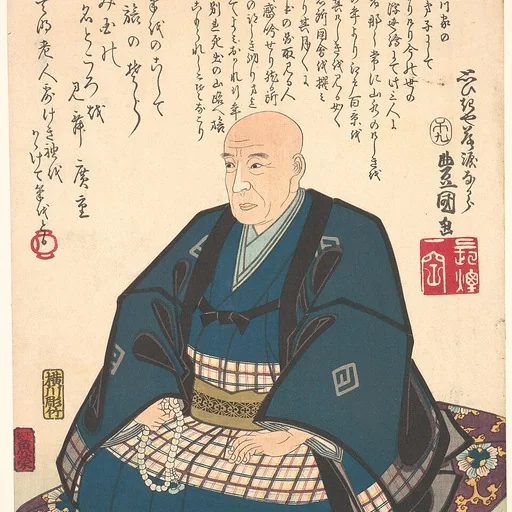
Utagawa Hiroshige (歌川 広重) or Andō Hiroshige (安藤 広重), born Andō Tokutarō (安藤 徳太郎; 1797 – 12 October 1858), was a Japanese ukiyo-e artist, considered the last great master of that tradition.

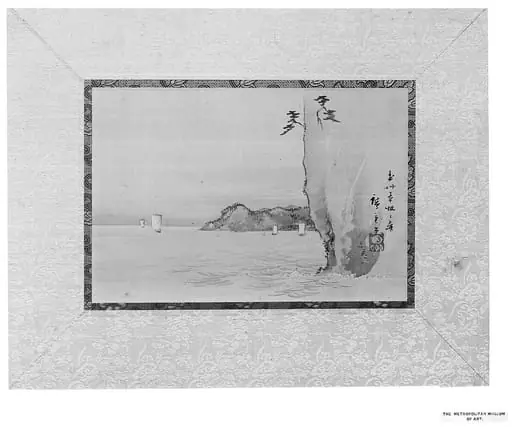
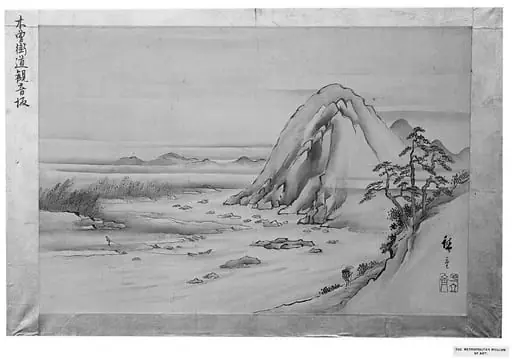
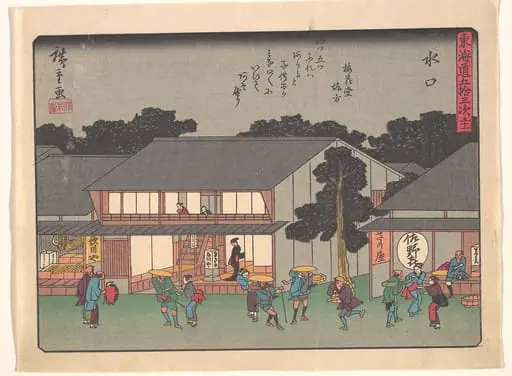 東海道五十三次 水口|Mizukuchi, from the series The Fifty-three Stations of the Tōkaidō Road
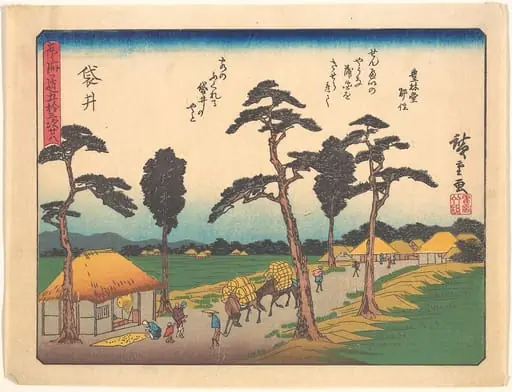 東海道五十三次 袋井|Fukuroi, from the series The Fifty-three Stations of the Tōkaidō Road
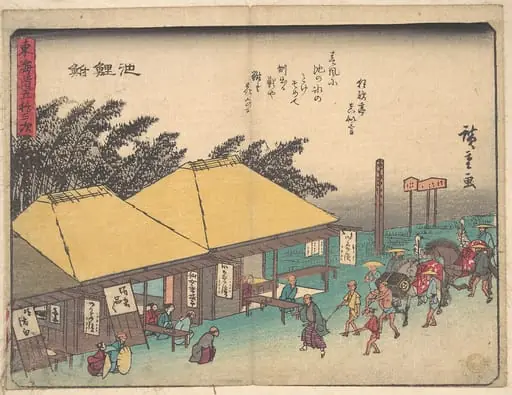 東海道五十三次 池鯉鮒|Chiryu
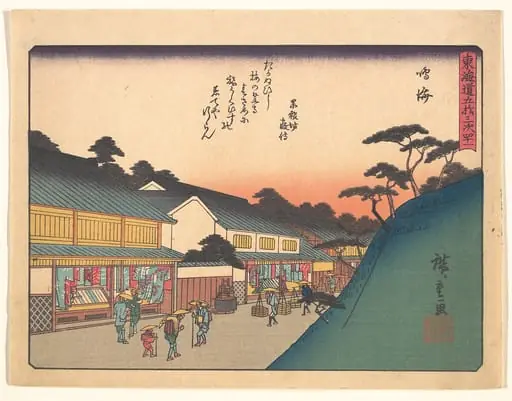 東海道五十三次 鳴海|Narumi, from the series The Fifty-three Stations of the Tōkaidō Road
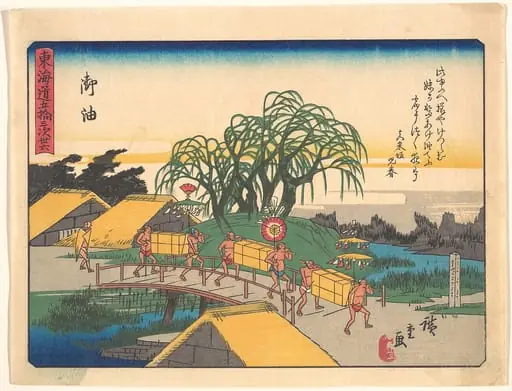 東海道五十三次 御油|Goyu, from the series The Fifty-three Stations of the Tōkaidō Road
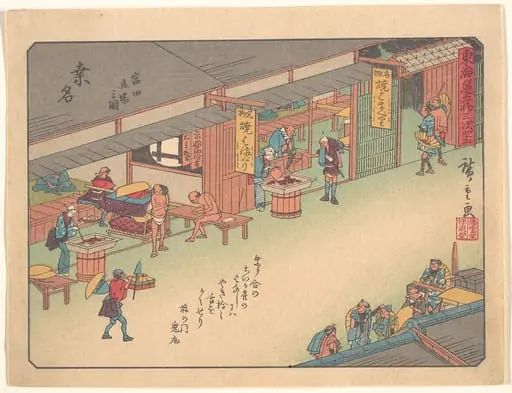 東海道五十三次 桑名|Kuwana, from the series The Fifty-three Stations of the Tōkaidō Road
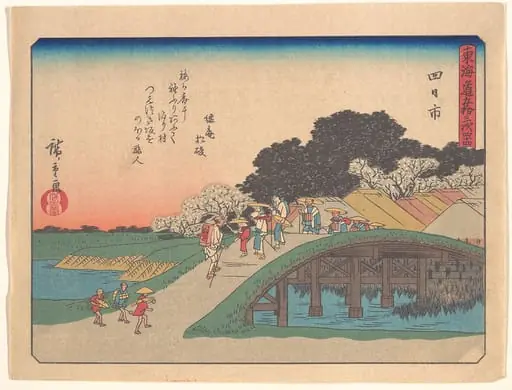 東海道五十三次 四日市|Yokkaichi, from the series The Fifty-three Stations of the Tōkaidō Road
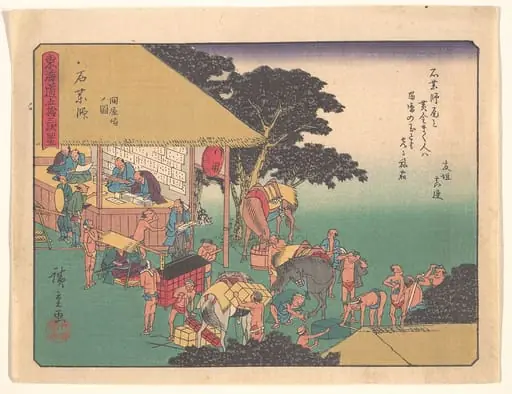 東海道五十三次 石薬師|Ishiyakushi, from the series The Fifty-three Stations of the Tōkaidō Road
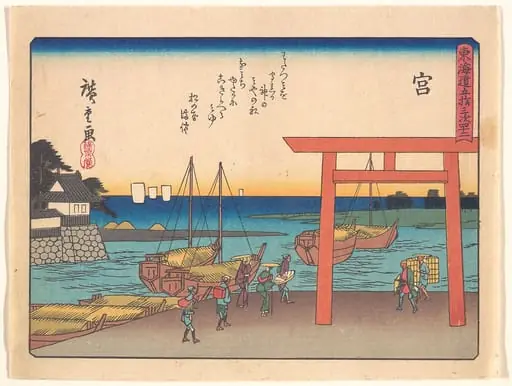 東海道五十三次 宮|Miya, from the series The Fifty-three Stations of the Tōkaidō Road
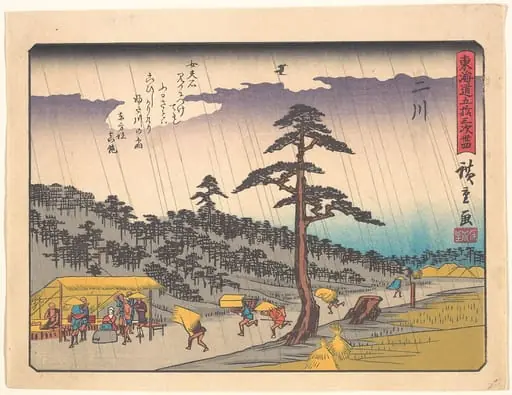 東海道五十三次 二川|Futakawa, from the series The Fifty-three Stations of the Tōkaidō Road
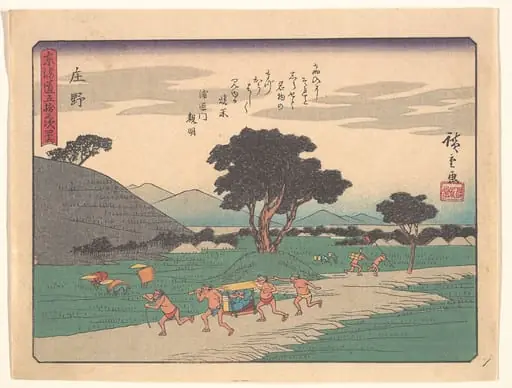 東海道五十三次 庄野|Shōno, from the series The Fifty-three Stations of the Tōkaidō Road
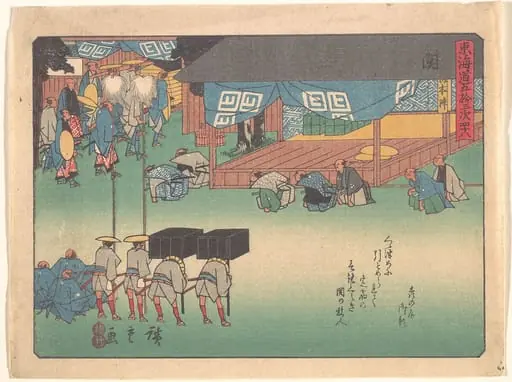 東海道五十三次 関|Seki, from the series The Fifty-three Stations of the Tōkaidō Road