Artwork
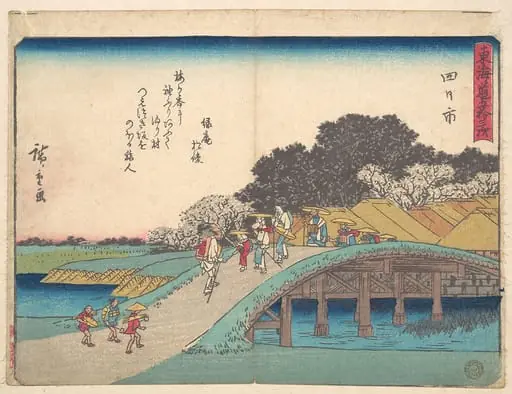
Yokkaichi: View of the Mie River, from the series The Fifty-Three Stations of the Tōkaidō
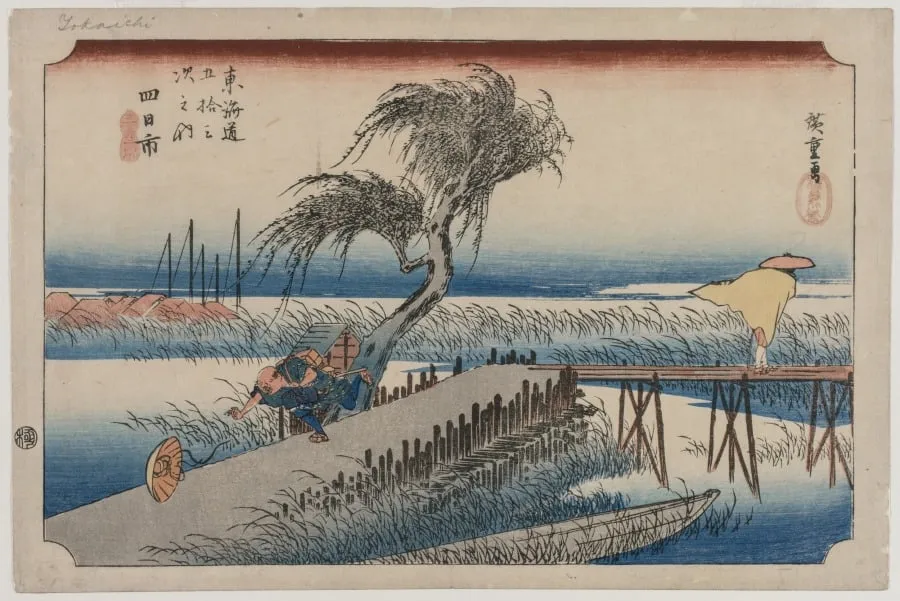
Yokkaichi: View of the Mie River, from the series The Fifty-Three Stations of the Tōkaidō is a print by the Romanticist artist Utagawa Hiroshige. It dates from 1834 and is held in the collection of the Cleveland Museum of Art.
About this work
Overview
Rather than illustrating Yokkaichi’s renowned monthly market, Hiroshige focused on the surrounding wetlands beside the Mie River.
This woodblock print is part of Hiroshige’s first series depicting the fifty-three stations along the Tōkaidō, Japan’s primary travel route between Edo and Kyoto. Rather than illustrating Yokkaichi’s renowned monthly market, Hiroshige focused on the surrounding wetlands beside the Mie River. The scene captures a moment of natural turbulence, transforming a routine waystation into an atmospheric study of wind and water.
Subject & Meaning
The print avoids human commerce, instead portraying the marshland’s response to a sudden gust. Bent reeds, tilted boats, and travelers shielding themselves from the wind suggest a force beyond human control. The absence of the market shifts focus from social activity to environmental presence, implying a quiet reverence for nature’s unpredictability within the structured rhythm of travel.
Technique & Style
Hiroshige uses flowing, curved lines to convey the wind’s motion, with reeds and water rendered in rhythmic, diagonal sweeps. Subtle gradations in ink and careful layering of pale blues and greens suggest atmospheric depth. The composition’s asymmetry and cropped figures enhance the sense of movement, characteristic of his ability to turn landscape into emotional experience through precise, restrained detail.
History & Provenance
Created around 1833–1834, this print was among the earliest in Hiroshige’s Tōkaidō series, published by Hoeidō in Edo. It was widely distributed as a popular travel souvenir, though no contemporary records explain Hiroshige’s decision to omit the market. Its survival in multiple collections indicates early recognition of its compositional strength, even without overt narrative appeal.
Context
The Tōkaidō was a well-traveled route with established visual conventions for each station, often highlighting local landmarks or events. Hiroshige’s choice to depict an unremarkable stretch of marshland defied expectation, aligning with a broader trend among ukiyo-e artists to explore mood over spectacle. His approach reflected a growing interest in transient natural phenomena within Edo-period aesthetics.
Legacy
This print contributed to Hiroshige’s reputation for evoking atmosphere through subtle, everyday scenes. Its emphasis on wind and water influenced later landscape artists, both in Japan and abroad, particularly in how natural forces were rendered without dramatic climax. It remains a quiet example of how restraint in subject matter can deepen emotional resonance.
Artist & collection
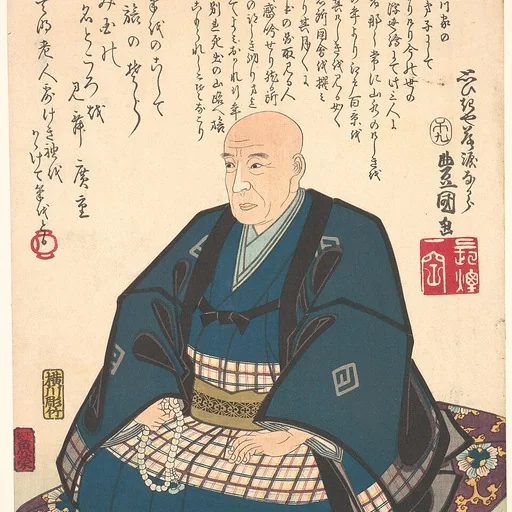
Artist
Utagawa Hiroshige (歌川 広重) or Andō Hiroshige (安藤 広重), born Andō Tokutarō (安藤 徳太郎; 1797 – 12 October 1858), was a Japanese ukiyo-e artist, considered the last great master of that tradition.

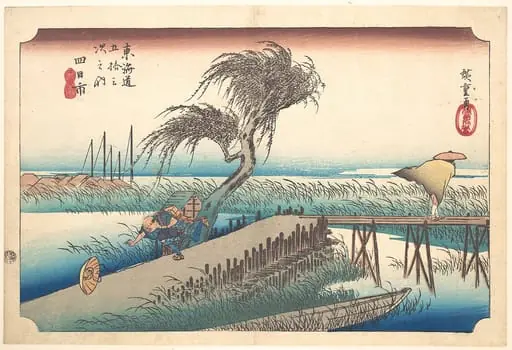 東海道五十三次之内 四日市 三重川|Mie River at Yokkaichi
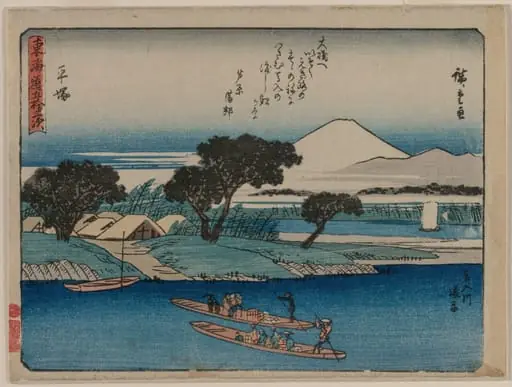 The Fifty-Three Stations of the Tokaido: Hiratsuka
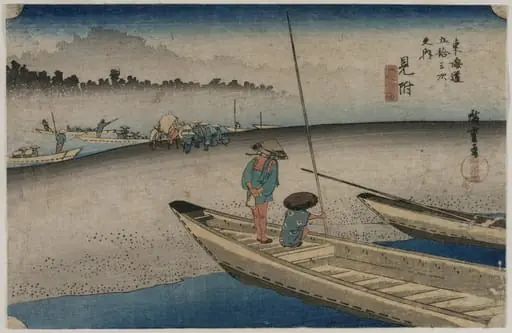 Picture of the Tenryu River near Mitsuke (Station 29), from the series Fifty-Three Stations of the Tokaido
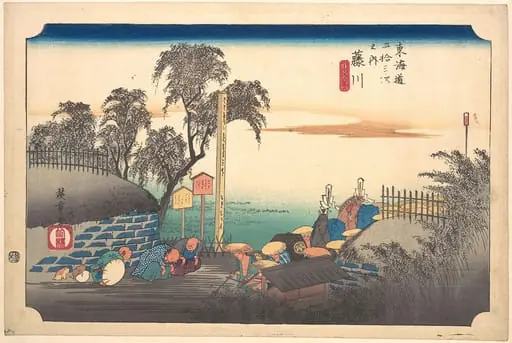 東海道五十三次之内 藤川 棒鼻の図|Station Thirty-Eight: Fujikawa, Scene at the Border, from the Fifty-Three Stations of the Tokaido
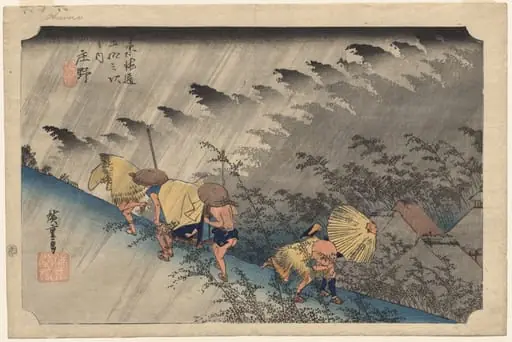 Driving Rain at Shōno, from Fifty-Three Stations of the Tokaidō
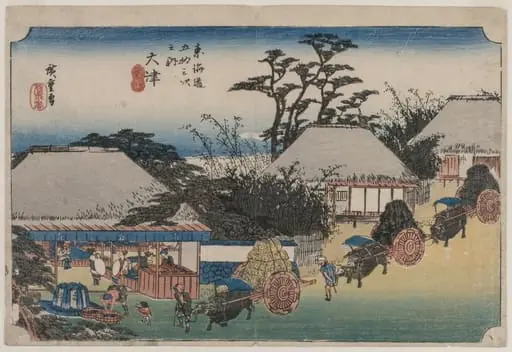 The Fifty-Three Stations of the Tokaido: Otsu
 東海道五十三次 四日市|Yokkaichi