Artwork
Untitled
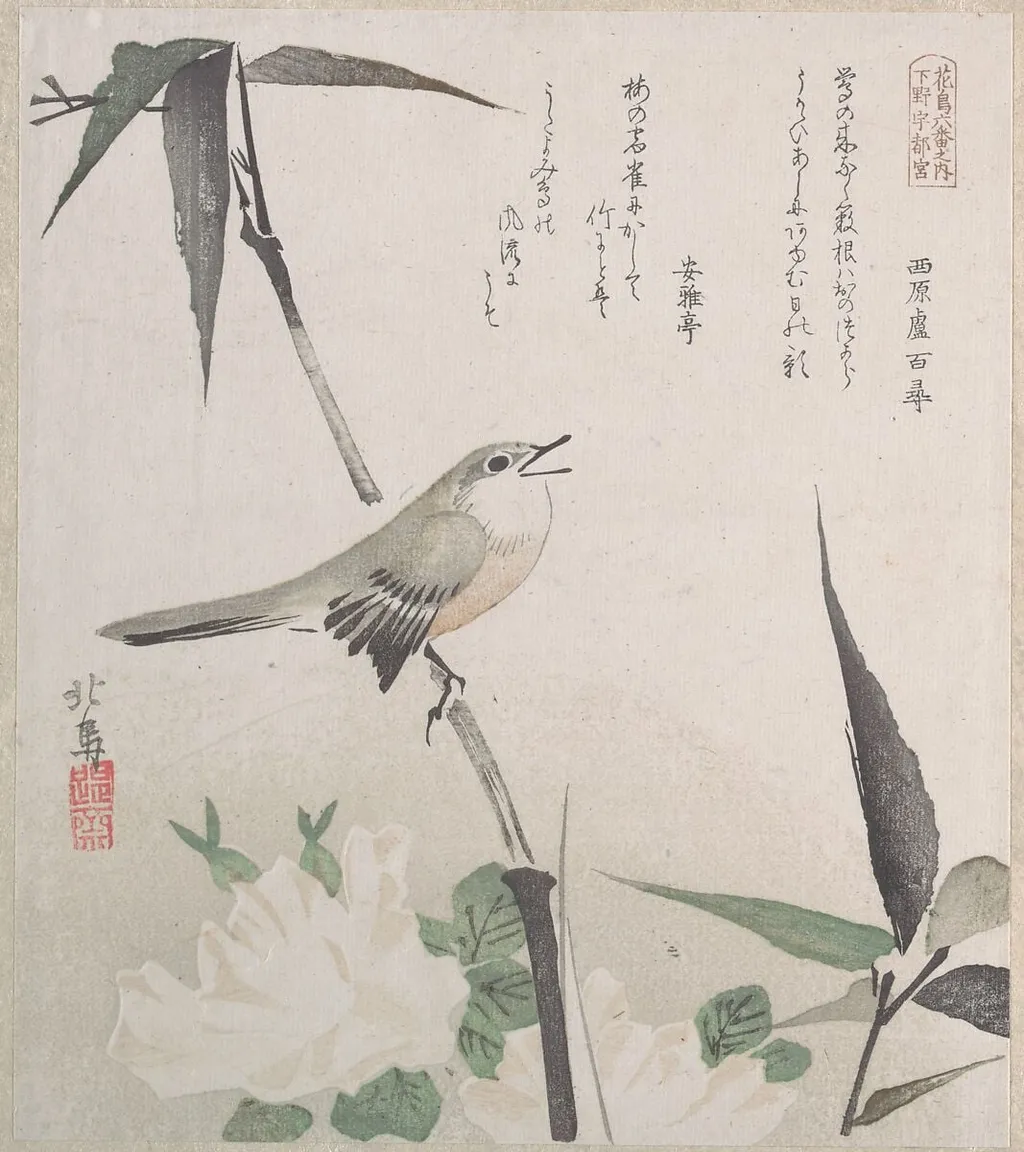
Untitled is an ink print by the Romanticist artist Teisai Hokuba. It is held in the collection of the Metropolitan Museum of Art.
About this work
Overview
This woodblock print, part of a surimono album, was produced by Teisai Hokuba around 1850. Executed in ink and color on paper, it exemplifies the refined aesthetic of late Edo-period private commissions. The Metropolitan Museum of Art holds this work as a representative example of intimate, artist-driven printmaking distinct from mass-produced ukiyo-e.
Subject & Meaning
The composition suggests a quiet moment in nature, evoking seasonal change and the transience of life—common themes in Japanese poetic imagery.
A small bird, perched on a slender branch with wings slightly open, appears mid-song. Below, delicate white flowers contrast with the dark, upward-stretching bamboo leaves. The composition suggests a quiet moment in nature, evoking seasonal change and the transience of life—common themes in Japanese poetic imagery. The absence of a background intensifies focus on the bird and flora, inviting contemplation.
Technique & Style
Hokuba employed clean, minimal lines and restrained color to achieve clarity and balance. The bamboo leaves are rendered with sharp, dark ink strokes, while the flowers and bird are defined with subtle washes. Soft gradients and sparse detailing avoid visual clutter. Cross-hatching is used sparingly to suggest shadow and volume, particularly on the bird’s wings, enhancing three-dimensionality without overwhelming the composition.
History & Provenance
Created as part of a surimono album, this print was likely commissioned by a literary or artistic circle for private circulation. Surimono were often produced in small editions for special occasions, such as New Year’s or poetry gatherings. The work entered The Metropolitan Museum of Art’s collection through documented acquisition, preserving its provenance within the context of Edo-period print culture.
Context
Surimono prints emerged in the early 19th century as luxury items, blending poetry, calligraphy, and fine printmaking. Unlike commercial ukiyo-e, they were not sold publicly but exchanged among elites. Hokuba, known for his delicate naturalism, contributed to this tradition by emphasizing botanical and avian subjects with poetic restraint, aligning with the aesthetic values of literati circles.
Legacy
This print reflects the enduring influence of nature-centered themes in Japanese printmaking. While surimono were never widely distributed, their emphasis on subtlety and craftsmanship influenced later generations of artists and collectors. Today, works like this are studied for their technical precision and their role in bridging visual art with literary culture in Edo-period Japan.
Artist & collection


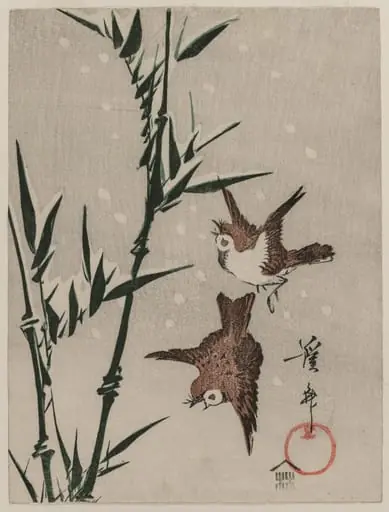 Sparrows, Bamboo and Falling Snow
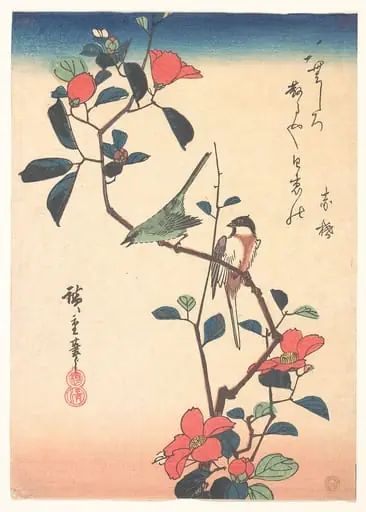 椿に目白と四十雀図|Japanese White-eye and Titmouse on a Camellia Branch
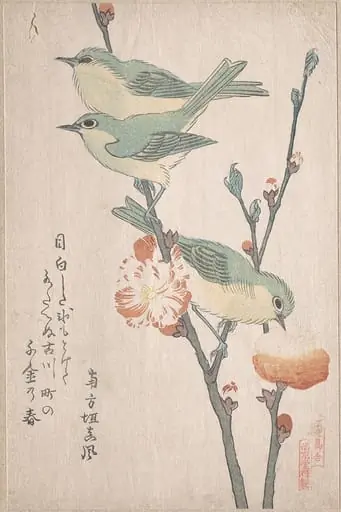 『鳥合』 桃花に目白|Japanese White-eyes on a Branch of Peach Tree,” from the Series An Array of Birds (Tori awase), from Spring Rain Surimono Album (Harusame surimono-jō, vol. 3)
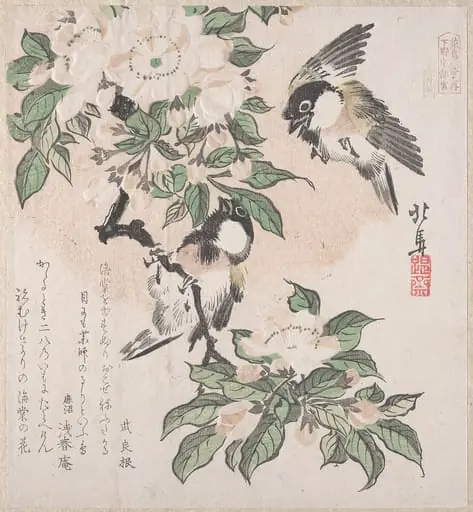 摺物帖 『春雨集』 『花鳥六番之内 下野宇都宮』 海棠に山雀|Spring Rain Collection (Harusame shū), vol. 3: Marsh-tits and Crab Apple Flowers
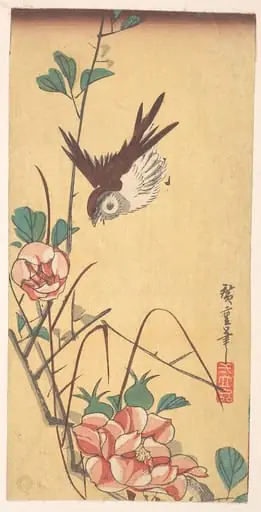 Untitled
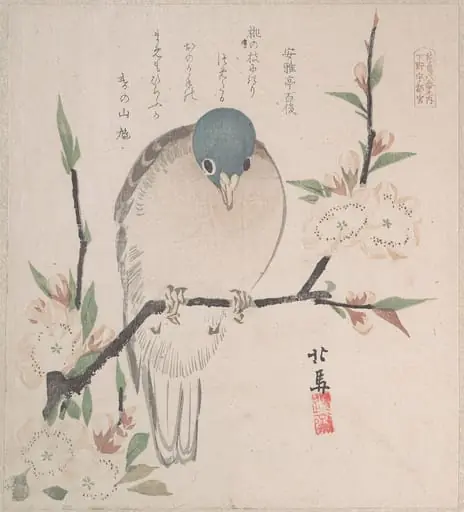 摺物帖 『春雨集』 『花鳥六番之内 下野宇都宮』 桃に山鳩|Spring Rain Collection (Harusame shū), vol. 3: Mountain Dove and Peach Flowers
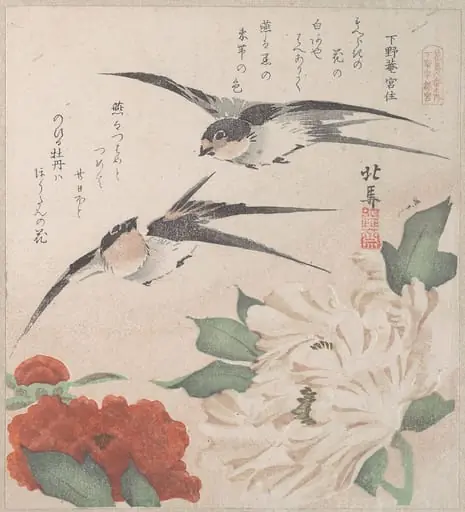 摺物帖 『春雨集』 『花鳥六番之内 下野宇都宮』 牡丹に燕|Spring Rain Collection (Harusame shū), vol. 3: Swallows and Peonies
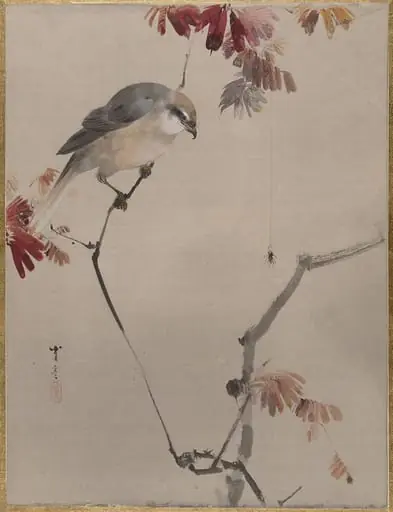 Untitled
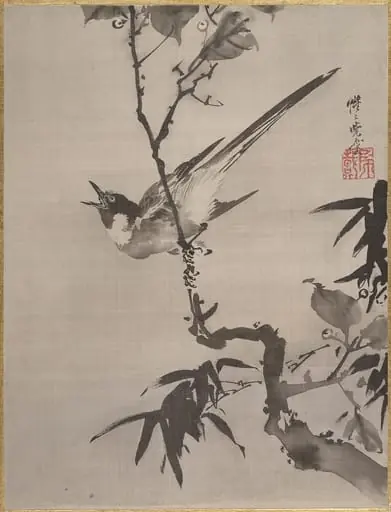 Untitled
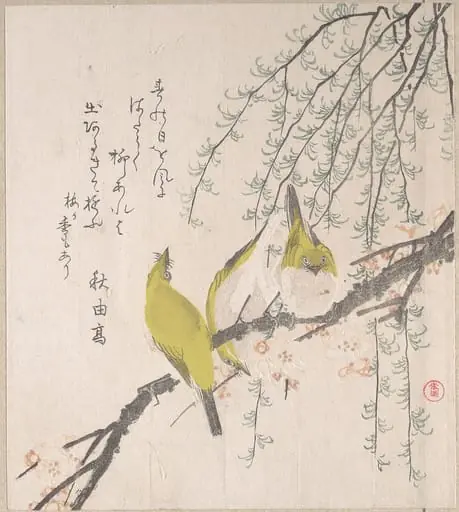 梅と柳に目白|Japanese White-eyes with Plum Tree and Willow, from Spring Rain Surimono Album (Harusame surimono-jō, vol. 3)
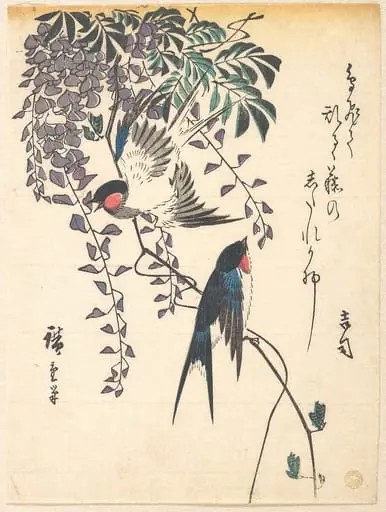 Untitled
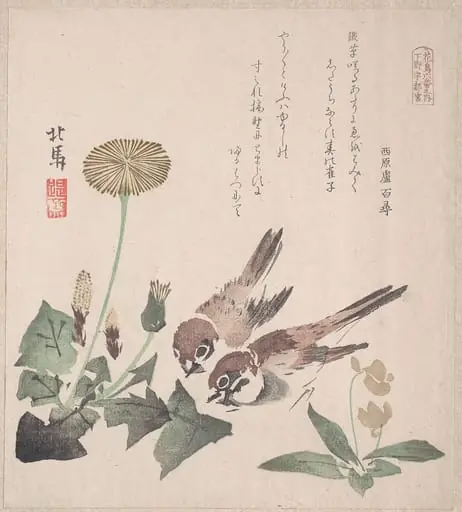 摺物帖 『春雨集』 『花鳥六番之内 下野宇都宮』 タンポポに雀|Spring Rain Collection (Harusame shū), vol. 3: Sparrows and Dandelions