Artwork
名所江戸百景 馬喰町初音の馬場|The First Race Course, Horse-Dealer's Street
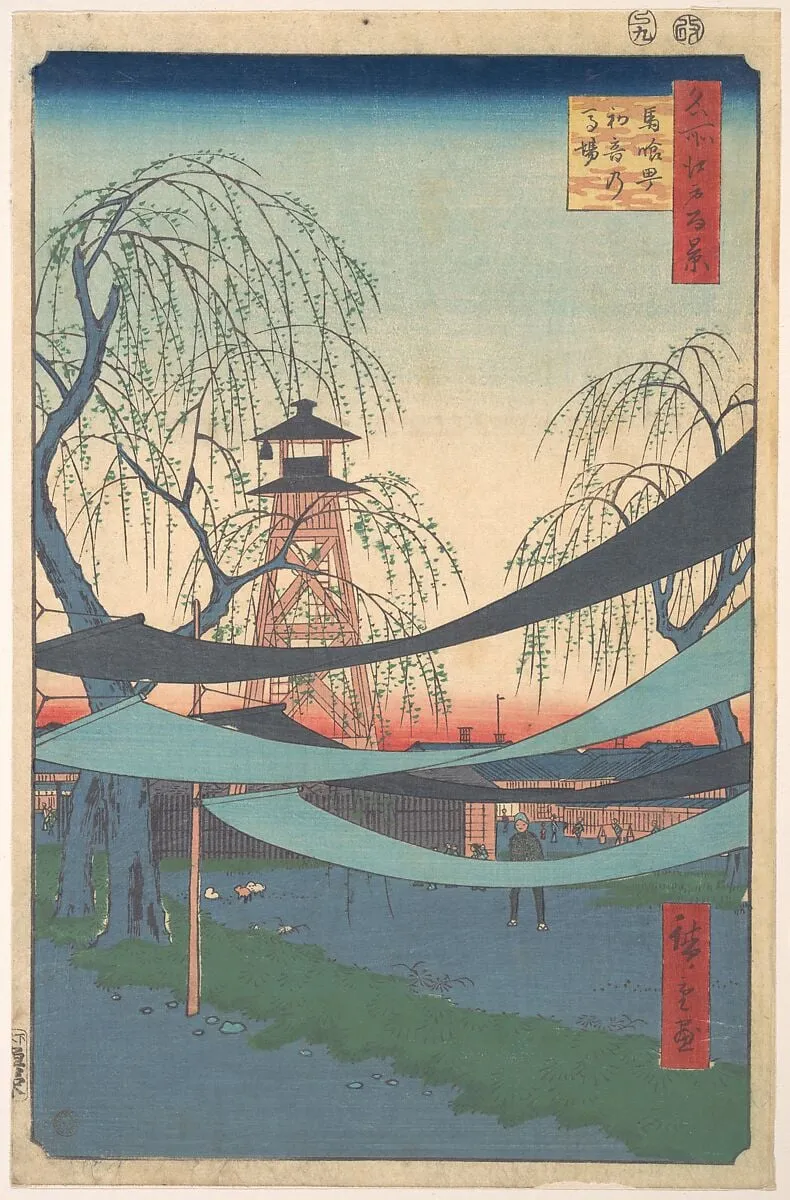
名所江戸百景 馬喰町初音の馬場|The First Race Course, Horse-Dealer's Street is an ink print by the Impressionist artist Utagawa Hiroshige. It dates from 1857 and is held in the collection of the Metropolitan Museum of Art.
About this work
Overview
The composition emphasizes atmosphere over action, capturing a subdued corner of Edo with restrained detail and a contemplative mood.
Created in 1857 by Utagawa Hiroshige, this woodblock print is part of the series “One Hundred Famous Views of Edo.” Executed in ink and color on paper, it belongs to a vertical-format collection that shifted ukiyo-e focus from theatrical subjects to quiet, observed moments in the city’s daily life. The composition emphasizes atmosphere over action, capturing a subdued corner of Edo with restrained detail and a contemplative mood.
Subject & Meaning
The scene depicts a tranquil stretch of Horse-Dealer’s Street near a former racecourse, now quiet and domesticated. A tall wooden tower, possibly a watchtower or pavilion, rises above low rooftops, while a small pond with swimming ducks anchors the foreground. Weeping willows frame the view, suggesting seasonal change and the passage of time. The absence of crowds transforms what was once a site of spectacle into a place of stillness and reflection.
Technique & Style
Hiroshige employed bold, clean outlines and flat areas of color to structure the composition, avoiding excessive detail in favor of emotional tone. Soft gradients in the sky—pink fading into blue—suggest twilight, enhancing the dreamlike quality. The use of minimal cross-hatching for texture, particularly on the tower and tree trunks, adds subtle depth without disrupting the calm. The print’s vertical format draws the eye upward, reinforcing the quiet monumentality of the tower.
History & Provenance
Produced during the final years of the Edo period, the print was released as part of Hiroshige’s last major series, completed shortly before his death. It was printed by skilled artisans using traditional woodblock methods, with multiple blocks for color layers. Early impressions were distributed widely among Edo’s middle class, serving both as souvenirs and as visual records of a changing city.
Context
By the 1850s, Edo’s horse-racing grounds had lost their former prominence, replaced by urban expansion and shifting social habits. Hiroshige’s choice to depict this quiet aftermath reflects a broader cultural turn toward nostalgia and the beauty of ordinary, fading places. His work stood apart from contemporaries who emphasized spectacle, instead honoring the quiet dignity of everyday landscapes.
Legacy
This print exemplifies Hiroshige’s influence on later landscape traditions, both in Japan and abroad. Its emphasis on mood, seasonal nuance, and understated composition resonated with 19th-century European artists, contributing to the Japonisme movement. Today, it remains a key example of how ukiyo-e could convey introspection through the depiction of place, not just people or events.
Artist & collection
Artist
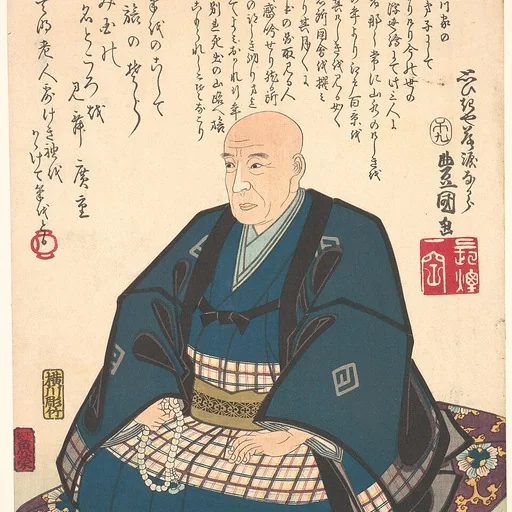
Utagawa Hiroshige (歌川 広重) or Andō Hiroshige (安藤 広重), born Andō Tokutarō (安藤 徳太郎; 1797 – 12 October 1858), was a Japanese ukiyo-e artist, considered the last great master of that tradition.

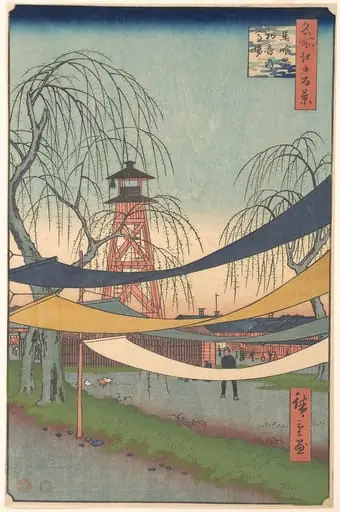 名所江戸百景 馬喰町初音の馬場|Hatsune no Baba; Bakurocho
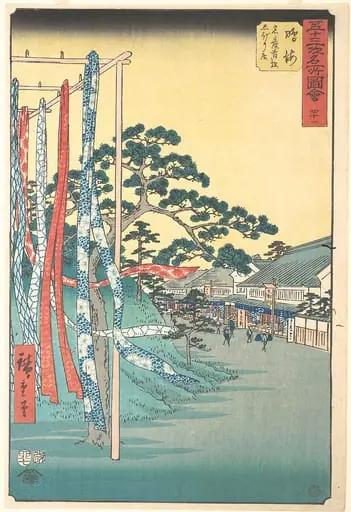 五十三次名所図会 鳴海 名產有松しぼり店|Narumi, Meisan Arimatsu Shibori Mise
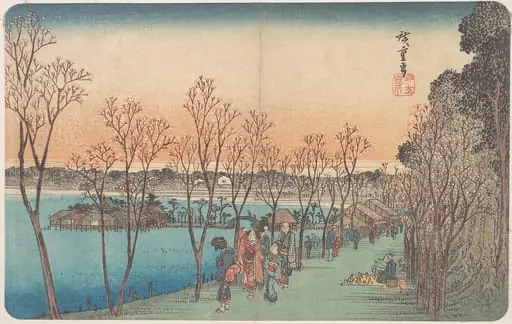 江戸名所 上野不忍の池|Ueno, Shinobazu no Ike
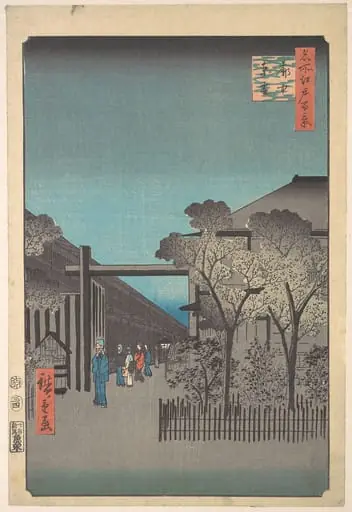 名所江戸百景 廓中東雲|Kakuchu Shinonome
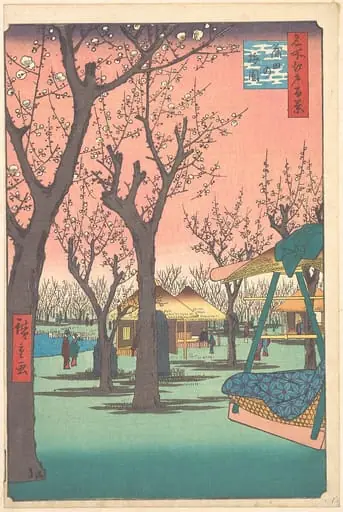 Kamata no Baien|名所江戸百景 蒲田の梅園|Plum Garden at Kamata
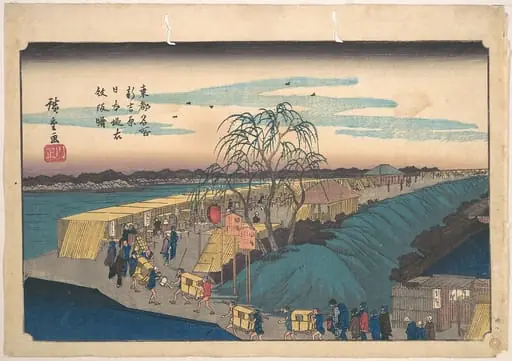 東都名所 新吉原日本堤衣紋坂曙|Shin Yoshiwara Nihon Tsutsumi Emonzaka Akatsuki
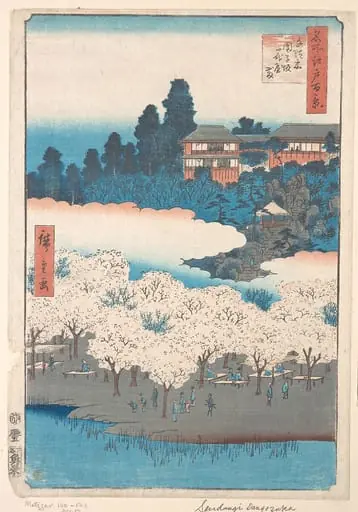 名所江戸百景 千駄木団子坂花屋敷|Sendagi Dangozaka
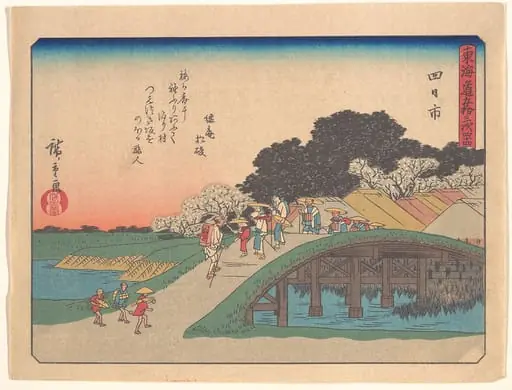 東海道五十三次 四日市|Yokkaichi, from the series The Fifty-three Stations of the Tōkaidō Road
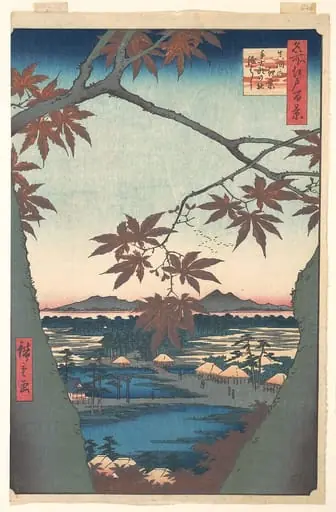 名所江戸百景 真間の紅葉手古那の社継はし|Maples at Mama, from the series One Hundred Famous Views of Edo
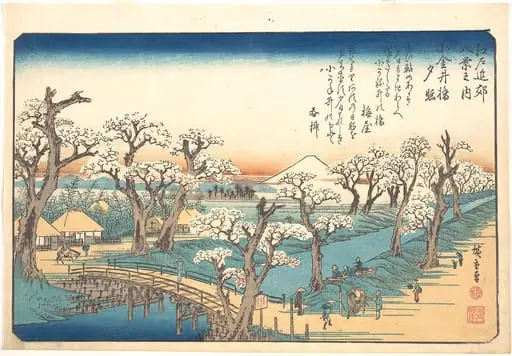 江戸近郊八景之内 小金井橋夕照|Evening Glow at Koganei Border
 Untitled
 五十三次名所図会 見付 天竜川舟渡し|Mitsuke