Artwork
富士三十六景 武蔵越かや在|Musashi, Koshigaya Zai
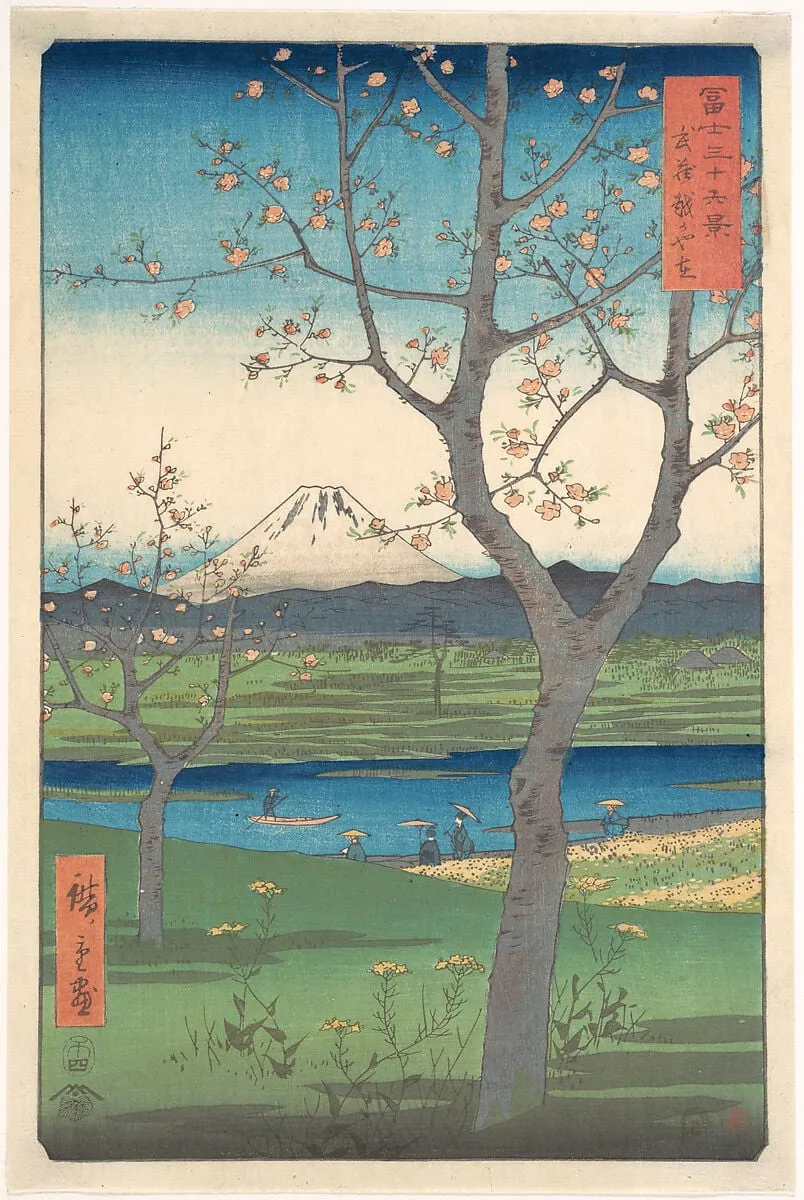
富士三十六景 武蔵越かや在|Musashi, Koshigaya Zai is an ink print by the Impressionist artist Utagawa Hiroshige. It dates from 4 and is held in the collection of the Metropolitan Museum of Art.
About this work
Overview
Utagawa Hiroshige’s woodblock print titled *Musashi, Koshigaya Zai* belongs to his series *Thirty‑six Views of Mount Fuji*. Executed with ink and color on paper, the image presents a tranquil rural landscape where a river winds through verdant fields, cherry blossoms punctuate the sky, and Mount Fuji rises in the distance, its silhouette reflected on the water.
Subject & Meaning
The composition captures a moment of everyday life in the Musashi province: a small boat glides near the riverbank, while distant travelers gaze toward the iconic peak. The juxtaposition of cultivated land, fleeting blossoms, and the enduring mountain suggests a harmony between human activity and the natural world, a recurring theme in Hiroshige’s vision of travel.
Technique & Style
Hiroshige employs the ukiyo‑e woodblock method, layering vivid pigments to delineate foliage, water, and sky. The use of bright reds and greens accentuates seasonal details such as cherry blossoms, while delicate ink lines define the mountain’s outline. The print’s flat areas of color and subtle gradations reflect the artist’s skill in balancing decorative surface with atmospheric depth.
History & Provenance
Created in the 1830s during the late Edo period, the work formed part of Hiroshige’s ambitious series documenting varied perspectives of Mount Fuji. It entered the collection of The Metropolitan Museum of Art, where it remains catalogued as part of the museum’s Japanese prints holdings, providing scholars and visitors access to a representative example of Hiroshige’s landscape oeuvre.
Context
*Musashi, Koshigaya Zai* illustrates Hiroshige’s departure from conventional ukiyo‑e subjects, which often focused on urban entertainment districts.
*Musashi, Koshigaya Zai* illustrates Hiroshige’s departure from conventional ukiyo‑e subjects, which often focused on urban entertainment districts. By turning his attention to provincial scenery, he contributed to a broader appreciation of Japan’s geography, aligning with contemporary travel guides and the growing interest in the nation’s iconic mountain among both domestic and foreign audiences.
Artist & collection
Artist
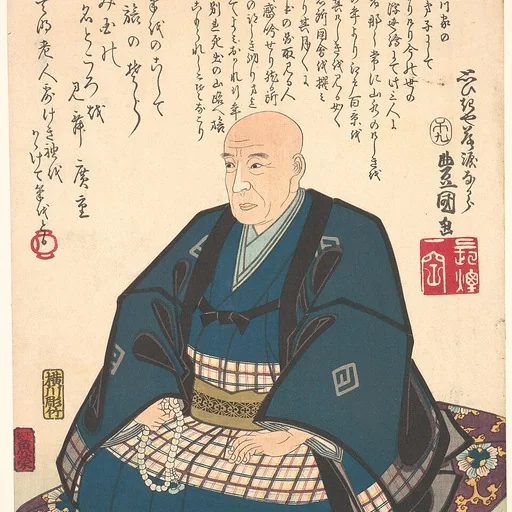
Utagawa Hiroshige (歌川 広重) or Andō Hiroshige (安藤 広重), born Andō Tokutarō (安藤 徳太郎; 1797 – 12 October 1858), was a Japanese ukiyo-e artist, considered the last great master of that tradition.

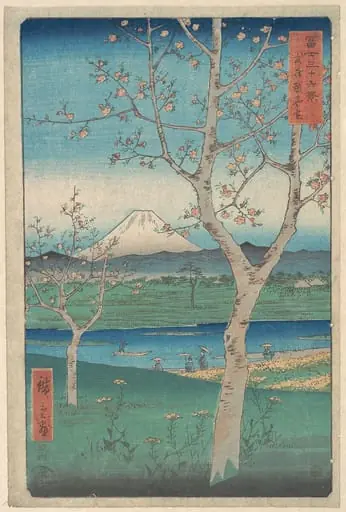 富士三十六景 武蔵越かや在|View of Mount Fuji from Koshigaya, Province of Musashi (Musashi, Koshigaya Zai), from the series Thirty-six Views of Mount Fuji (Fugaku sanjūrokkei)
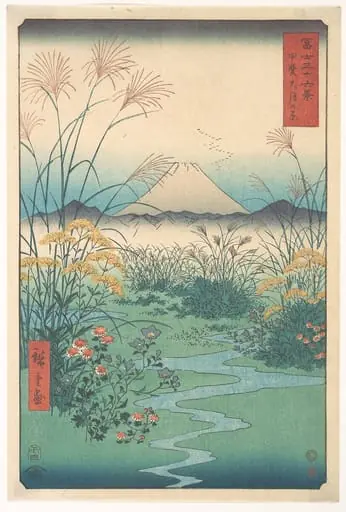 富士三十六景 甲斐大月の原|Kai, Otsuki no Hara
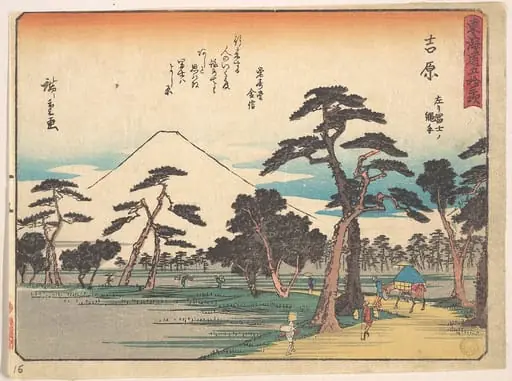 東海道五十三次 吉原 左リ富士ノ縄手|Yoshiwara
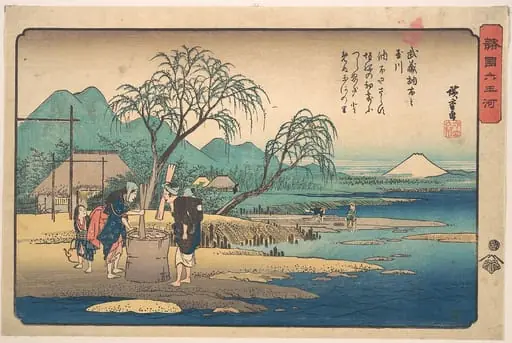 諸国六玉河 武蔵 調布の玉川|Musashi: Chōfu no Tamagawa
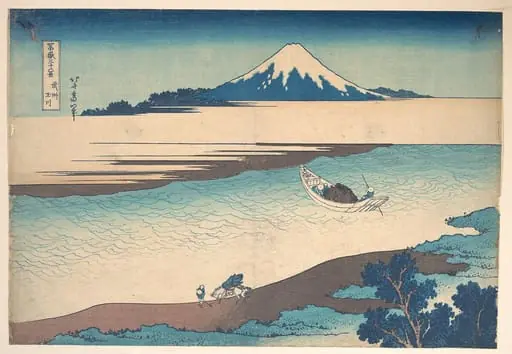 冨嶽三十六景 武州玉川|Fuji—The Tama River, Musashi Province, from the series Thirty-six Views of Mount Fuji (Fugaku sanjūrokkei)
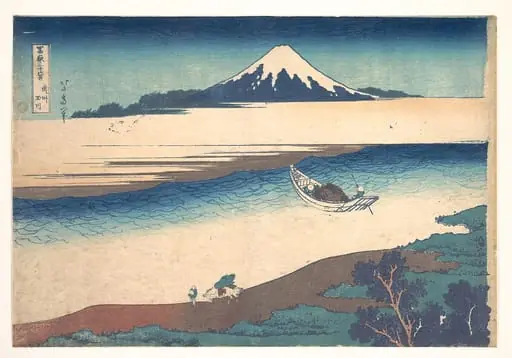 冨嶽三十六景 武州玉川|Tama River in Musashi Province (Bushū Tamagawa), from the series Thirty-six Views of Mount Fuji (Fugaku sanjūrokkei)
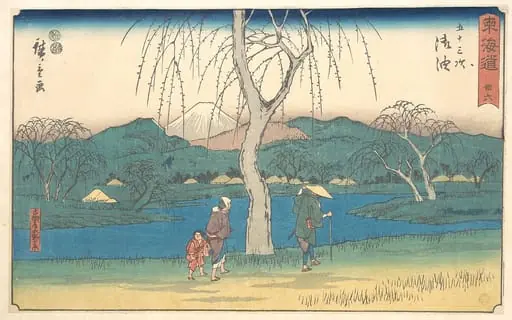 東海道五十三次 御油 古街道本野ヶ原|Goyu
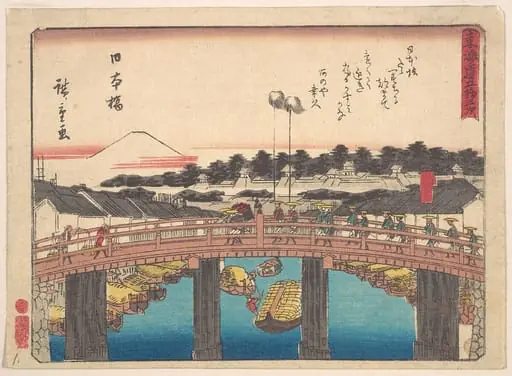 東海道五十三次 日本橋|Nihon Bashi