Artwork
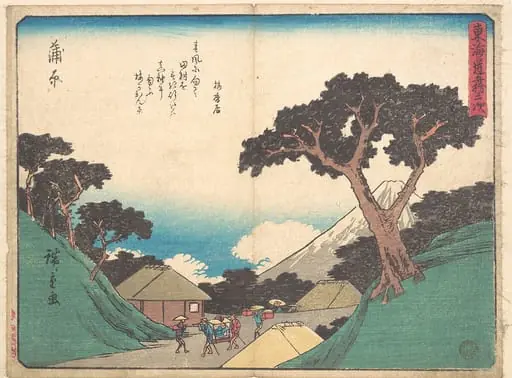
東海道五十三次 蒲原 富士川渡舟|Kambara
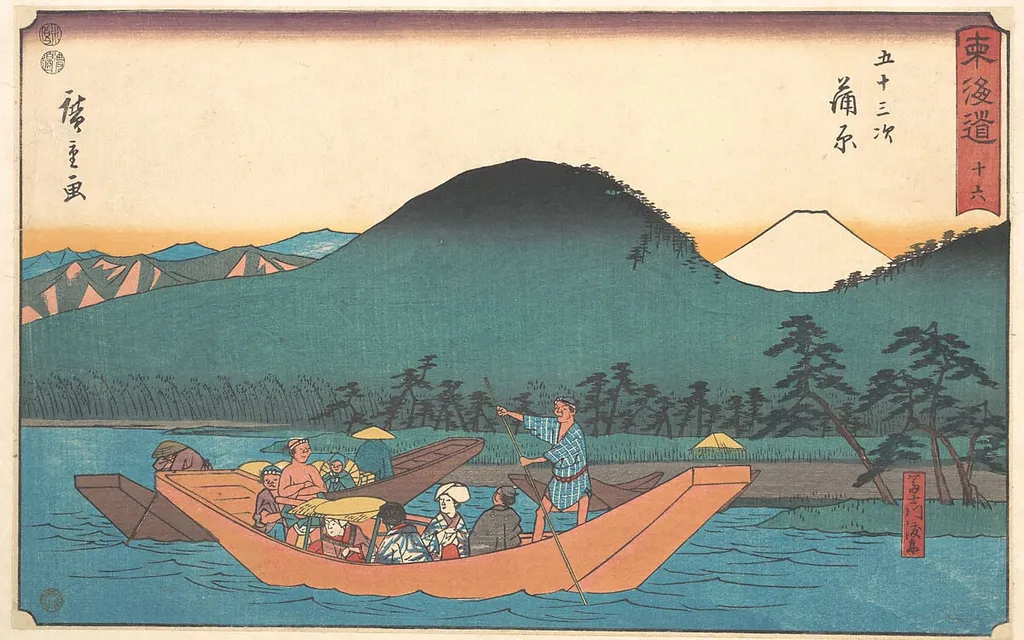
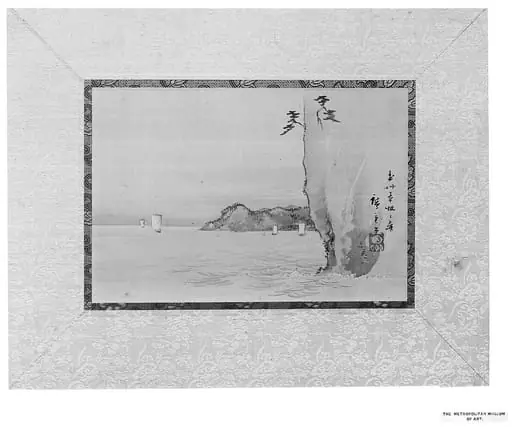
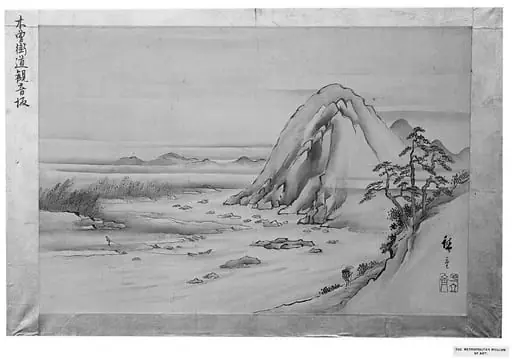
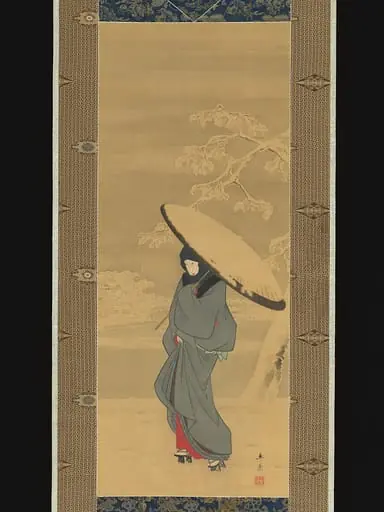
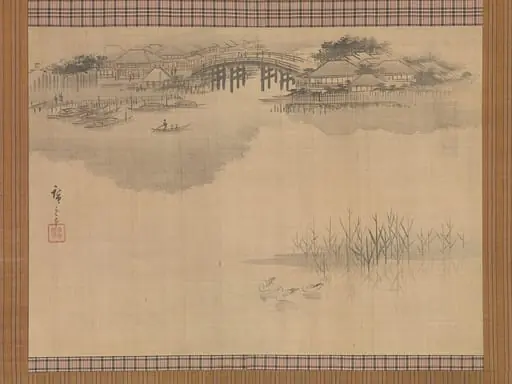
東海道五十三次 蒲原 富士川渡舟|Kambara is an ink print by the Romanticist artist Utagawa Hiroshige. It dates from 1840 and is held in the collection of the Metropolitan Museum of Art.
About this work
Overview
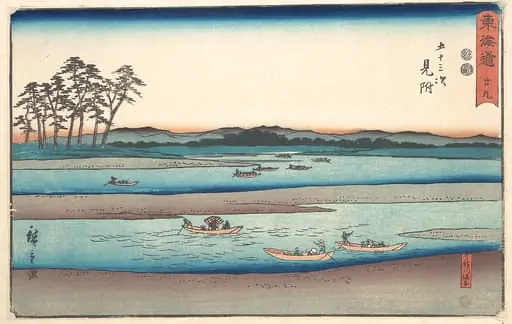
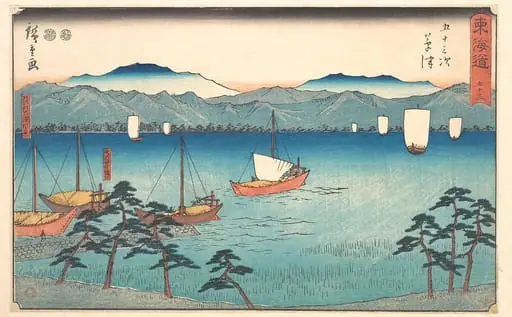
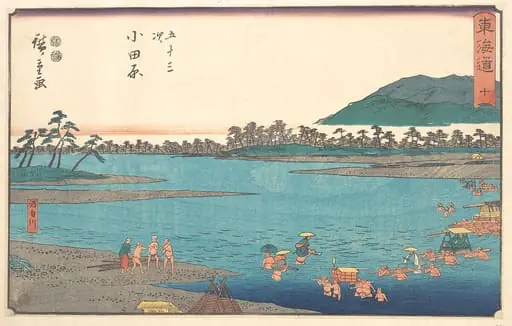
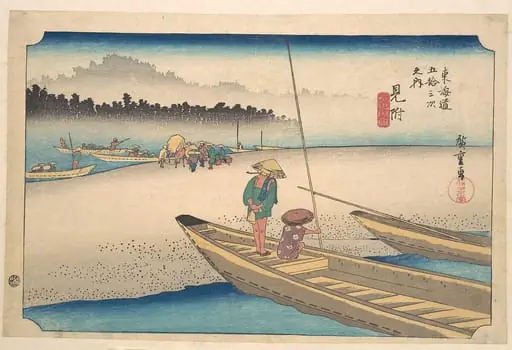
Created circa 1840 by Utagawa Hiroshige, this woodblock print is one of the images in his celebrated series *The Fifty‑three Stations of the Tōkaidō*. Executed with ink and color on paper, the work portrays a river crossing at Kambara, a post town on the historic Tōkaidō route linking Edo and Kyoto.
Subject & Meaning
The scene centers on a flatboat laden with a family and their possessions, while a solitary rower at the stern guides the vessel with a long pole. The composition captures the everyday travel of merchants and travelers, emphasizing the rhythm of movement and the relationship between humans and the natural landscape.
Technique & Style
Hiroshige employs the characteristic ukiyo‑e woodblock process, using bold, flat areas of pigment and simplified forms. The bright blue water, dark green foliage, and contrasting silhouettes of distant mountains illustrate his skill in rendering atmosphere with minimal detail, while the tilt of the boat conveys the force of the current.
History & Provenance
The print was produced as part of the original Tōkaidō series, which circulated widely in the 1840s. It entered the collection of The Metropolitan Museum of Art, where it is currently held and displayed as an example of mid‑nineteenth‑century Japanese printmaking.
Context
During the Edo period, the Tōkaidō road was a major artery for travel and commerce. Hiroshige’s series departed from earlier ukiyo‑e subjects that focused on urban pleasure districts, instead documenting the varied scenery and daily life encountered along this coastal highway.
Artist & collection
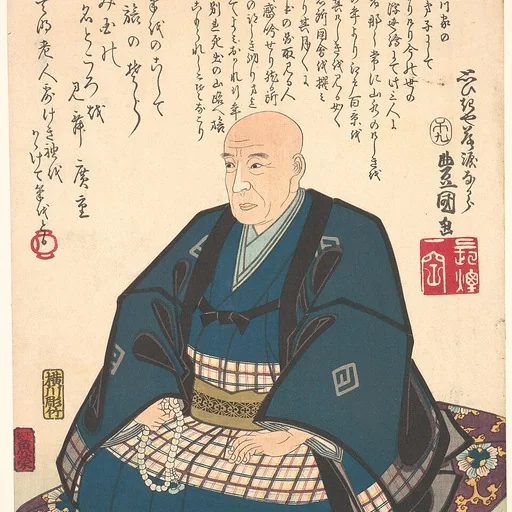
Artist
Utagawa Hiroshige (歌川 広重) or Andō Hiroshige (安藤 広重), born Andō Tokutarō (安藤 徳太郎; 1797 – 12 October 1858), was a Japanese ukiyo-e artist, considered the last great master of that tradition.