Artwork
東海道五十三次之内 川崎 六郷の渡し舟|Kawasaki
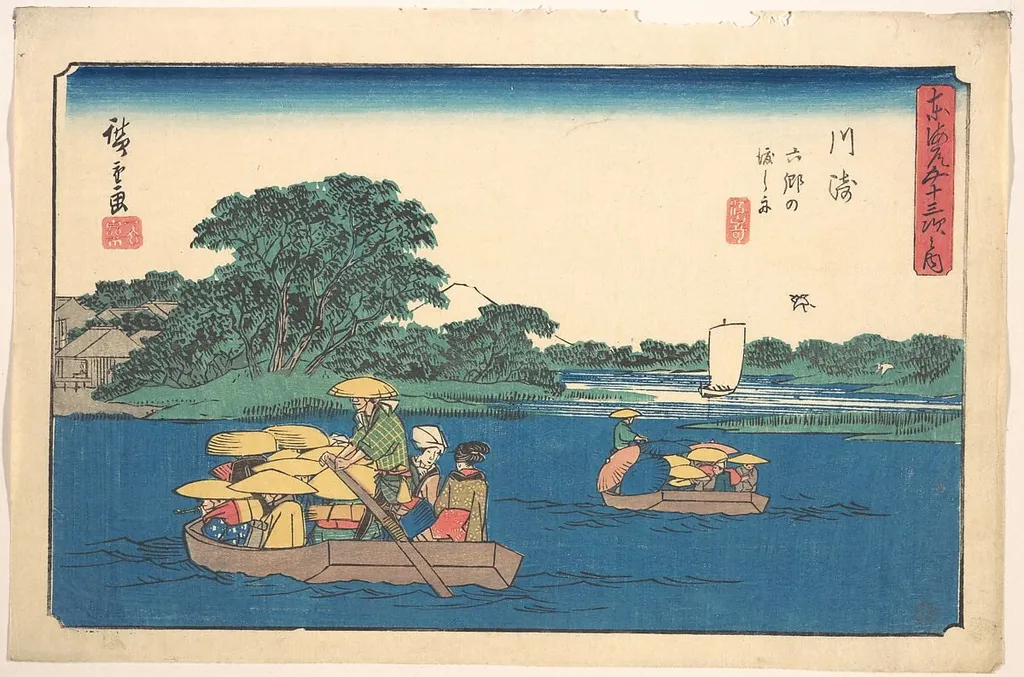
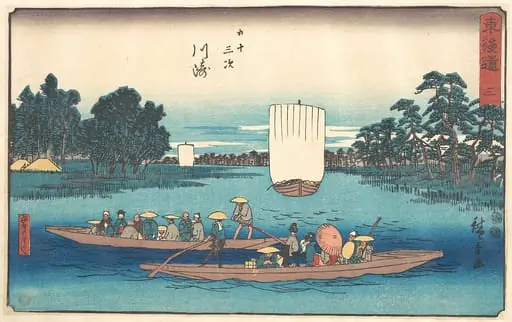
東海道五十三次之内 川崎 六郷の渡し舟|Kawasaki is an ink print by the Romanticist artist Utagawa Hiroshige. It dates from 1842 and is held in the collection of the Metropolitan Museum of Art.
About this work
Overview
It captures a quiet moment along the major road connecting Edo and Kyoto, focusing not on bustling urban life but on the rhythms of travel and nature.
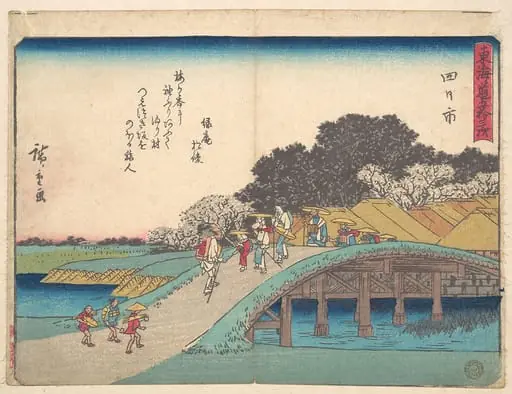
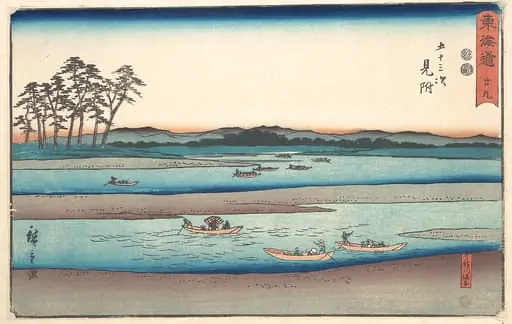
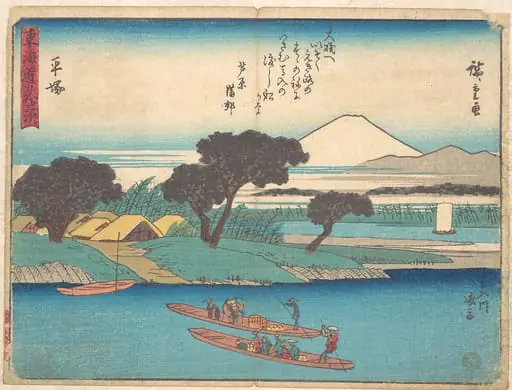
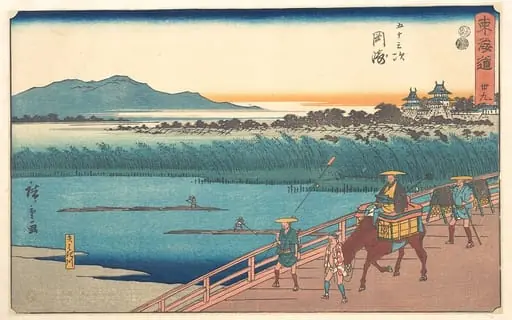
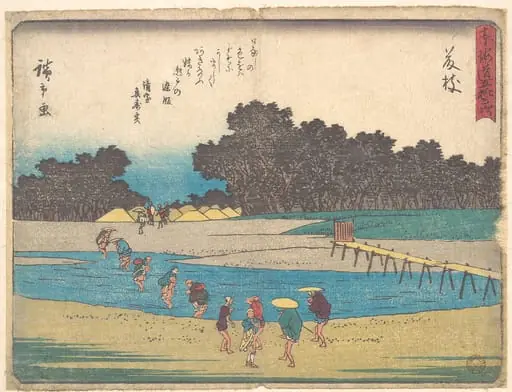
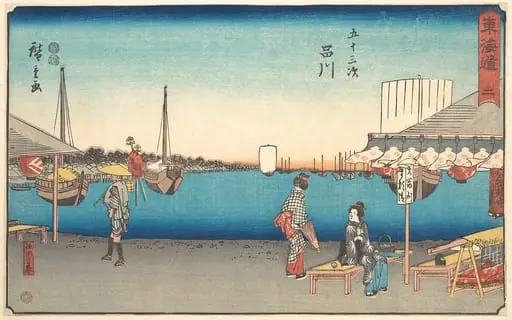
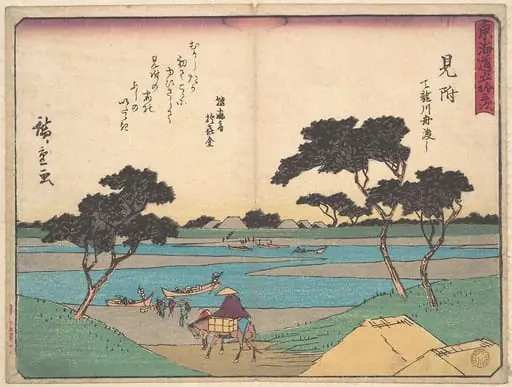
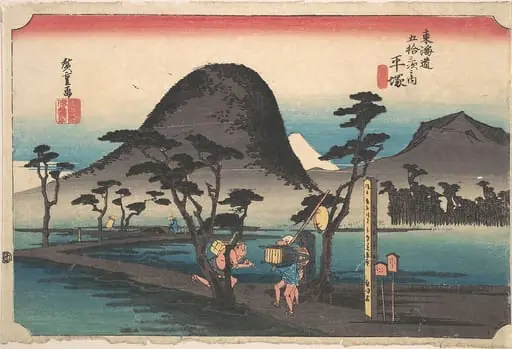
Created around 1842 by Utagawa Hiroshige, this woodblock print is one of fifty-three scenes in the series *The Fifty-three Stations of the Tōkaidō*. It captures a quiet moment along the major road connecting Edo and Kyoto, focusing not on bustling urban life but on the rhythms of travel and nature. The composition emphasizes stillness and spatial depth, typical of Hiroshige’s approach to landscape.
Subject & Meaning
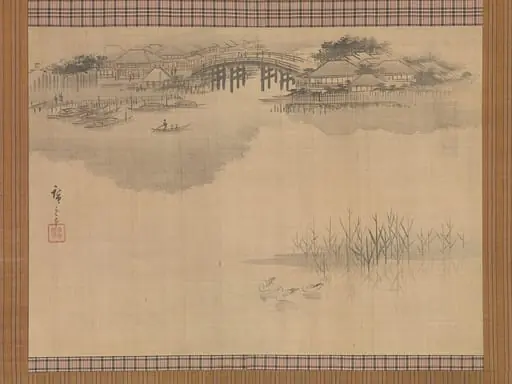
The scene depicts a ferry crossing at Kawasaki, where travelers and goods are transported across the river in small boats. One vessel carries bundled straw, suggesting commerce or daily labor. The distant solitary boat reinforces the theme of transit and solitude. The image conveys the ordinary passage of people along a well-traveled route, reflecting the quiet dignity of common journeys in Edo-period Japan.
Technique & Style
Hiroshige employed fine woodblock carving and layered color printing to achieve subtle gradations in the sky and water. The blue tones are muted yet distinct, with the river’s surface marked by delicate, rhythmic lines suggesting gentle motion. The trees along the shore are rendered with sparse, expressive brushwork, framing the scene without overwhelming it. The composition balances horizontal planes with vertical elements to guide the viewer’s eye across the landscape.
History & Provenance
The print was produced during Hiroshige’s most prolific period, when the *Tōkaidō* series gained widespread popularity among merchants and travelers. Published by Hoeidō, it was part of a commercial print run intended for mass distribution. Surviving impressions are held in major museum collections, including the Museum of Fine Arts, Boston, and the British Museum, attesting to its enduring presence in the print market.
Context
The Tōkaidō road was a vital artery for pilgrimage, trade, and official travel during the Edo period. While earlier ukiyo-e often centered on courtesans and actors, Hiroshige shifted focus to the natural and social landscape of the route. His depictions of weather, seasons, and transit offered viewers a sense of place and movement, aligning with growing public interest in travel and regional identity.
Legacy
Hiroshige’s *Tōkaidō* series influenced later Japanese and Western artists, including Impressionists who admired his use of perspective and atmospheric tone. The calm, observational quality of *Kawasaki* exemplifies a shift in Japanese printmaking toward lyrical landscape over dramatic narrative. Its enduring presence in collections underscores its role in shaping global perceptions of Edo-period Japan.
Artist & collection
Artist
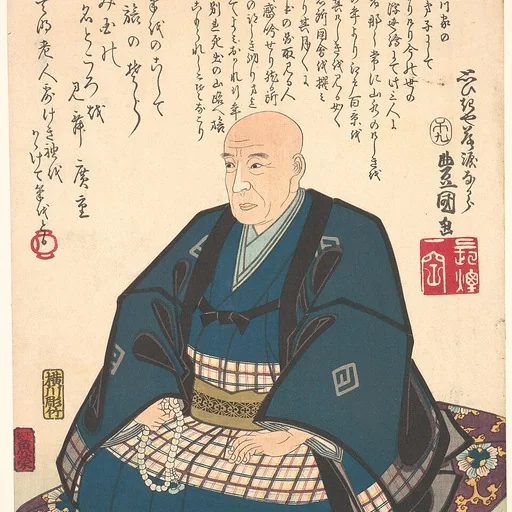
Utagawa Hiroshige (歌川 広重) or Andō Hiroshige (安藤 広重), born Andō Tokutarō (安藤 徳太郎; 1797 – 12 October 1858), was a Japanese ukiyo-e artist, considered the last great master of that tradition.